Safety update: our trekking groups are safe, and our routes are running as planned. Read full flood notice.

Mera Peak Climbing from Khare – 3 Days
Mera Peak Climbing from Khare Quick Information
|
Weather |
Weather | -20 °C to 16°C |
|---|---|---|
|
Duration |
Duration | 3 Days |
|
Accommodation |
Accommodation | Tea house and Tent |
|
Meals Included |
Meals Included | Breakfast, Lunch, Dinner |
|
Best Season |
Best Season | Sept, Oct, Nov, March, April, May |
|
Transportation |
Transportation | N/A |
|
Daily Activity |
Daily Activity | 6 hours on Day 2 and 12 hours on Day 3 |
|
Religion |
Religion | Buddhism |
|
Ethnic People |
Ethnic People | Sherpa |
|
Geographic Terrain |
Geographic Terrain | Rocky moraine, glacial debris, snowfields, ice slopes |
|
Region of Nepal |
Region of Nepal | Everest region, Khumbu |
|
Max. Altitude |
Max. Altitude | 6,470 m / 21,227 ft |
Mera Peak Climbing From Khare Overview
Are you planning your Everest trekking journey, but also want to experience the thrill of mountain climbing? The Mera Peak Climbing from Khare is what you need. Starting from Khare, the short Mera Peak expedition offers stunning mountain views, high-altitude excitement, as well as a real sense of achievement in just a few days. Moreover, Khare is the ideal place to rest, train, and prepare yourself before heading to higher elevations.
Mera Peak, known as the “highest trekking peak in Nepal”, is indeed high in altitude but not highly technical. Most of the climb involves walking on snow and glaciers, where you should use your rope techniques. Also, the high altitude of Mera Peak at 6,470 m makes the climb challenging. Thus, being fit and having a guide is crucial to completing the climb successfully.
The Mera Peak contains three main summits: Mera North (6,476 m), Mera Central (6,470 m), and Mera South (6,065 m). However, this Khare Mera Peak climbing package takes you to the summit of Mera Central. Moreover, Mera Central is the only summit of Mera Peak that the Nepal government has granted permission to climb.
The best part of the short Mera Peak climb, which starts from Khare, is the unforgettable view from the summit. From the top of Mera, you can see five of the world’s highest mountains, including Mount Everest (8,848 m), Kangchenjunga (8,586 m), Lhotse (8,516 m), Makalu (8,485 m), and Cho Oyu (8,201 m), along with other peaks of Khumbu. It’s the moment that stays with you forever, making your effort worthwhile.
The primary advantage of starting Mera Peak from Khare is the time saved. Most full Mera Peak trips take 2 to 3 weeks, but from Khare, you can complete the trip in just 3 days. Day one is usually for practice and gear check, day two for reaching Mera High Camp, and day three for the summit climb. You’ll return to Khare the same day after climbing. Therefore, the short adventure to Mera Peak is the most practical way to achieve the goal in a short amount of time.
Short Mera Peak Climb Highlights
- You’ll reach the summit of Mera Peak (6,470 m) in just 3 days while starting from Khare.
- Experience a climb to the Mera Peak with glacier walks, icy slopes, and a rope-assisted section near the top.
- You’ll practice basic mountaineering skills at Khare before heading up to Mera Peak’s top.
- Witness the world’s five highest peaks’ 360-degree view, including Mount Everest, Lhotse, Makalu, Cho Oyu, and Kanchenjunga from Mera summit.
- Get crampons, ropes, ice axes, and other mountaineering gear in Khare without having to carry them from Kathmandu throughout your trekking journey.
- Stay in Khare tea houses and enjoy the warmth of the Sherpas before and after your climb.
- Experience staying in a tented camp while stargazing at the clear night sky, surrounded by silence.
3 Days Mera Peak Climbing from Khare Itinerary
Day 1


Meeting with Guide and Pre-climbing Training in Khare (5,045 m)
|
Altitude |
5,045 m / 16,551 ft |
|---|
On the first day of the Mera Peak expedition from Khare, you’ll meet our climbing team along with guides. The meeting location is the one we mentioned earlier during the pre-trip meeting in Kathmandu. Once you meet with the climbing guide in Khare, they will check all the climbing equipment you have brought with you. If any essential items are missing, the guide will advise you to rent or purchase the necessary gear from our climbing equipment store in Khare.
After the equipment check, you will participate in a short but much-needed training session on climbing techniques. The training session is kept to boost your confidence and prepare you for the demanding climbs ahead. Moreover, your overnight stay and dinner will be at the tea house of Khare. But please note that today’s accommodation and meals are not included in the trip package. Therefore, you will be responsible for covering the costs of your lodging and food on your own.
Day 2


Ascend From Khare (5,045 m) to Mera High Camp (5,780 m)
|
Trekking Time Average |
6-7 hours Walking / 4-6 km |
|---|---|
|
Accommodation |
Tented Camp |
|
Altitude |
5,780 m / 18,963 ft |
|
Included meals |
Breakfast, Lunch, and Dinner |
From this day, your adventure towards Mera Peak climb begins. Early morning, you’ll have your breakfast and make your way towards Mera High Camp. The day starts early to maximize daylight and avoid afternoon weather changes. As you leave Khare, you’ll begin walking on a steep moraine ridge. A gradual ascent from Khare leads you to the Mera La Pass (5,415 m). After crossing the pass, you’ll reach Mera Glacier.
At Mera La Pass, you’ll take a short break, enjoy your snacks, and adjust clothing layers while enjoying views of Kusum Kanguru, Chamlang, Baruntse, and the first clear sight of Mera Peak’s North Face. After a short break, you’ll continue your walk on the snow slopes of a 20-30° incline where our team moves roped together across crevasse-prone sections of the glacier.
The final walk towards Mera High Camp involves a rocky outcrop and a snow ridge. By early to mid-afternoon, you reach Mera High Camp, lying above the glacier on solid rock. Our climbing team will set up camp, where you’ll have your meals and stay overnight. Before going to sleep, your guide provides a summit briefing that covers rope procedures, expected weather conditions, oxygen strategy, and wake-up time.
Day 3


Ascend From Mera High Camp (5,780 m) to the Summit of Mera Peak ( 6,470 m), Then Descend to Khare (5,045 m)
|
Trekking Time Average |
10-13 hours / 12-13 km |
|---|---|
|
Altitude |
6,470 m/ 21,227 ft |
|
Included meals |
Breakfast and Lunch |
It is the eagerly awaited day on the climbing expedition of Mera Peak from Khare. The day starts with a warm cup of tea at your tented camp. You’ll leave Mera High Camp at around 2 to 3:00 AM with a headlamp and a packed lunch. The initial ascent is a gradual climb over snow-covered slopes.
The route to the summit of Mera Peak (6,470m) involves passing through glacier sections with occasional crevasses, requiring the use of crampons and ice axes. The climb is generally moderate, but the thin air makes the climb physically demanding. Moreover, the final climb to the summit features a short, steep section that requires the use of fixed ropes, depending on the snow and ice conditions.
Reaching the Mera summit is a rewarding experience that is worth every challenge you face along the way. The top of the Mera Peak offers one of the finest panoramic views in the Himalayas, showcasing Everest, Lhotse, Cho Oyu, Makalu, Kanchenjunga, and other surrounding peaks, providing a 360° view on a clear day.
After spending time at the top of Mera, appreciating your hard work, you’ll begin your descent journey. About one and a half to 2 hours of return walk through the same trail, you’ll get to Mera High Camp. There, you’ll take a short stop before continuing the long descent all the way to Khare.
The descent to Khare is challenging for knees, but oxygen levels increase as altitude decreases, bringing a sense of relief. Upon arrival in Khare, you’ll rest and recover from the long summit day. The day’s overnight stay and dinner will be at the tea house of Khare.
What’s Included
- Pre-Meeting in Kathmandu.
- Mera peak climbing permit and Garbage deposit.
- A professional climbing guide and all his expenses. ( 1- 4 pax = 1 climbing guide, 6- 10 pax = 2 climbing guides, 10 – 14 pax = 3 climbing guides).
- Assistant Cook & Transportation: Trekking assistant cook & necessary kitchen helper based on the Member, and they carry camping equipment and a tent from Khare.
- Camping Equipment Utensils: EPI Gas, gas stove or fuel stove for Cooking, Fuel or Kerosene oil, Cooking pot, Mattress, walkie-talkie (talk-back), etc.
- Staff salary and Allowance: All our staff & porters’ daily wages/equipment/food/clothing, etc.
- High Altitude Tents: North Face Dome Tent Space for Two Pax, Wall/Cabin Tent for Dining and Kitchen, etc
- High Camp Lodging & Fooding Service: Chocolate and Three Meals (Breakfast, Lunch, Dinner) are served daily for members and staff.
- Drinks & Beverages: Tea with Biscuits, hot drinking water during climbing Periods, and hot washing water if required.
- Group equipment: Fixing Gear, Fix rope, main rope, snow bar, ice crew, rock pitons, etc
What’s Not Included
- Lodge accommodation/Meals at Khare.
- Personal Travel insurance.
- Personal climbing gear such as Climbing boots, Crampons, Ice axe / Ice hammer, Harness,
- Jammers, Karabiners, Finger eight / ATC guide, Tap sling, etc. (Possible to hire at Khare)
- Tips for guides and staff. ( Highly suggested ).
You Can Hire the Following Equipment at Khare for Climbing Purposes:
Price approximately: USD 100 to USD 150 per pax
- Climbing boot
- Crampons
- Ice axe /Ice hammer
- Harness
- Jumars
- Karabiners
- Finger eight / ATC guide,
- Tap sling,
- Fix / Main Rope
- Snow Bar
- Ice Crew / Rock Piktung
Other Equipment You Can Hire:
- Oxygen cylinder
- Max regulator
- Gloves
- Sun glasses
- Sticks
- Helmet
- High thermos
- Hot Bag
- Water bottle
- Ski Boards
- Sleeping bag
- Clothing (Waterproof trousers & jacket, Down jacket, Socks, etc),
- Walkie-talkie(talk back)
- Thuraya satellite phone and others.
Best Time For 3 Days Mera Peak Climbing From Khare
January
-20°C to -4°C
-20°C to -4°C
February
-20°C to -4°C
-20°C to -4°C
March
-5°C to -1°C
-5°C to -1°C
April
-10°C to 5°C
-10°C to 5°C
May
-10°C to 5°C
-10°C to 5°C
June
3°C to 14°C
3°C to 14°C
July
5°C to 16°C
5°C to 16°C
August
5°C to 16°C
5°C to 16°C
September
0°C to 12°C
0°C to 12°C
October
-6°C to 8°C
-6°C to 8°C
November
-11°C to 1°C
-11°C to 1°C
December
-14°C to -2°C
-14°C to -2°C
The weather in Mera Peak fluctuates throughout the year, varying with the elevation of the area. As the Khare to Mera summit lies at a higher location, the region generally experiences lower temperatures and unpredictable weather. The winter season (December to February) is the coldest, with temperatures dropping as low as -20 °C and rarely rising above -4 °C. Thus, the season makes climbing very harsh, with deep snow, biting winds, and increased avalanche risks.
Spring (March to May) brings warmth and stability, with temperatures ranging from -15 °C in March nights to about 10 °C in May days. This time offers clearer skies, manageable snow levels, and more comfortable conditions for climbing, making it one of the ideal times for climbing Mera Peak.
The summer monsoon (June to August) is the warmest, with daytime highs between 14 °C and 16°C and nights around freezing. However, the heavy rainfall makes this season less suitable for climbing. Moreover, autumn (September to November) comes with dry, stable weather and clear skies, providing another excellent climbing condition. All in all, October is regarded as the best month, characterized by moderate cold temperatures (-6 to 8 °C) and reliable visibility, along with stable snow conditions.
Mera Peak Climbing from Khare

Join our group departures
Available dates.
Our scheduled group tours offer fixed departure dates, providing an excellent opportunity for travelers to join our small group trips.
Note : Our fixed group departure dates, services and price is guaranteed even if the group numbers are 1 person to maximum 18 persons. We will provide a guide cum porter if there is only 1 person to operate the trek and one more assistant guide if group size is above 10 persons. And of course, guide cum porter will carry 10 kg luggage
Mera Peak Climbing from Khare – 3 Days Departure Date
3 Days
Trip Days
15 Sep, 2026
Start Tuesday
17 Sep, 2026
End Thursday
5
Pax Booked
10
Group Size
USD $600
Per Person
Booking Open
Status
3 Days
Trip Days
22 Sep, 2026
Start Tuesday
24 Sep, 2026
End Thursday
5
Pax Booked
10
Group Size
USD $600
Per Person
Booking Open
Status
3 Days
Trip Days
29 Sep, 2026
Start Tuesday
1 Oct, 2026
End Thursday
5
Pax Booked
10
Group Size
USD $600
Per Person
Booking Open
Status
Book a private trip on your own date.
Every journey we create is uniquely tailored to you. Share your interests and passions, and our travel experts will design an unforgettable adventure filled with extraordinary, one-of-a-kind experiences crafted just for you.
Pre-Climbing Training in Khare
On the very first day of the Mera Peak climbing from Khare, it is your pre-climbing training session in Khare. At an elevation of 5,045 m / 16,551 ft, Khare serves as a base for acclimatization and an ideal stop for pre-climbing training. The training session starts as you meet your guide and take a short rest.
Experienced mountain/ Sherpa guides and climbing leaders provide you with training on the nearby slopes around Khare. The training focuses on the proper use of essential climbing equipment and techniques for surpassing high-altitude, glaciated sections. Similarly, in the training, you’ll learn how to fix ropes, use an ice axe, and use other climbing equipment under the guidance of your instructor.
Additionally, the pre-climbing training in Khare teaches you techniques for ascending and descending using jumars and descenders. Furthermore, more than just a training, the day is your chance to ask questions, practice movements at your own pace, and mentally prepare for the climb.
Mera Peak NMA Permit Cost 2027
The table below shows the latest 2027 Nepal Mountaineering Association (NMA) permit cost for Mera Peak climbing:
| Climbing Season | Months | NMA Permit Cost (Per person) |
| Spring | March-May | USD 350 |
| Autumn | September-November | USD 175 |
| Winter | December-February | USD 175 |
| Summer | June-August | USD 175 |
Tea House and Camping Experience on the Mera Peak Climbing From Khare
One of the unique aspects of Climbing Mera Peak from Khare is the opportunity it provides for climbers to experience both tea house and camping accommodations. On the journey to Mera Peak, you’ll spend 2 nights in Khare’s tea house and one night in at tent at Mera High Camp.
Starting from the peak climbing to Mera from Khare, climbers experience traditional hospitality in a mountain village in a local tea house. The tea house is a social setting where travelers from different parts of the world share stories, prepare for the climb, and enjoy the company of locals.
After spending the night at Khare, the climb to the summit begins, and Mera High Camp is your overnight stay point. At this point, the journey transitions into an expedition-style adventure, with a camping experience. Your climbing crew will set up tents, prepare meals in a kitchen tent, and ensure all logistics are taken care of. However, ensure that you bring a sleeping bag and a mat for a comfortable sleep. Moreover, sleeping under a star-filled Himalayan sky, with the sound of the wind across the glacier, is a memory that lasts a lifetime.
How Much Does Mera Peak Climbing From Khare Cost?
The Mera Peak Climbing from Khare costs USD 270 to 750 per person. The price is an approximate cost that varies significantly with factors such as group size and trekking time, and is provided at a discount. Similarly, factors such as trip duration, the need for guides and porters, accommodation and food options, personal equipment, and miscellaneous expenses can affect the cost of Mera Peak Climbing from Khare.
Here is the cost detail table of the Mera Peak Climbing from Khare (after discount):
| No. of Person | Cost during March to May | Cost during Sept to Nov | Cost during Dec, Jan, Feb, June, July, August |
| 1 | USD 750 per pax | USD 625 per pax | USD 570 per pax |
| Group of 2-4 | USD 650 per pax | USD 525 per pax | USD 470 per pax |
| Group of 5-8 | USD 600 per pax | USD 475 per pax | USD 420 per pax |
| Group of 9-12 | USD 550 per pax | USD 425 per pax | USD 370 per pax |
| Group 13-16 | USD 500 per pax | USD 375 per pax | USD 320 per pax |
| Group of 17-20 | USD 450 per pax | USD 325 per pax | USD 270 per pax |
Is the Khare to Mera Peak Summit Route Challenging?
Yes, the climbing route from Khare to the Mera Peak summit is challenging, although the Mera Peak climb is a non-technical trekking peak. The climbing route doesn’t require advanced mountaineering skills. Still, its high altitude, glacier travel section, and physical demands make it challenging for climbers, especially those new to the adventure of mountaineering. If this is not challenging enough for you you can also choose 15 Days Mera Peak Climbing.
The initial phase of the climb from Khare to Mera La is steep, traversing rocky slopes and moraines that test your legs and lungs. Beyond the pass, you’ll step onto the Mera Glacier. On the section, the path is icy, rocky, and uneven, requiring the use of mountaineering boots, crampons, and an ice axe. As you continue walking, the temperature drops, and you feel colder, adding to the challenge of your walk.
The section from Mera High Camp to Mera Summit is the most challenging section of the climb. The summit way takes you into the most challenging territory, where the air contains less than half the oxygen of sea level. The low oxygen levels are the primary challenge of the climb that increases the risk of altitude-related issues.
While most of the climb towards Mera summit is a gradual ascent on snow, the final 50 meters or so to the summit is a steep and narrow ridge, or a snow dome, requiring the use of fixed ropes and a jumar. Moreover, the crevasses, cold temperatures, and unpredictable weather make the climb challenging.
How the Traditional Mera Peak Itinerary Differs From the Khare Start
The traditional Mera Peak itinerary or the 12 Days Mera Peak Climbing, a bit shorter than 15 days classic one follows a classic approach that begins with a flight to Lukla and involves trekking through multiple acclimatization stops, valleys, and villages before reaching Khare and summiting Mera Peak. In contrast, the Khare start route begins directly at Khare, with a primary focus on the high-altitude climb and training.
Here is the comparison table that shows how the traditional Mera Peak route differs from the Khare start:
| Feature | Traditional Mera Peak Itinerary | Khare start Itinerary |
| Starting Point | Fly from Kathmandu to Lukla and trek through the Hinku Valley, passing Chutanga. | Begin directly at Khare. |
| Duration | Around 15 days | 3 days |
| Scenery and Experience | Scenic trek through rhododendron forests, bamboo, and cultural villages, with ascent through the remote Hinku Valley | Skips the scenic and cultural journey. But the ultimate view from the summit is the same. |
| Pace and Physical Demand | Slower pace with moderate trekking days | Faster pace, requiring good physical fitness. |
| Overall Experience | A full Himalayan trekking and climbing adventure. | A compact, high-altitude experience centered on the mountaineering aspect. |
What People Ask About
Khare To Mera Peak Climbing
What is the hardest part of the Mera climb between Khare and the summit?
What gear is specifically essential for the Khare to Mera Peak section?
What’s the success rate of Mera Peak climbs starting from Khare?
Are there risks of frostbite on summit day?
Is altitude sickness common between Khare and the summit?
Related Trips
View Detail For Mera Peak Climbing With Heli Return – 10 Days

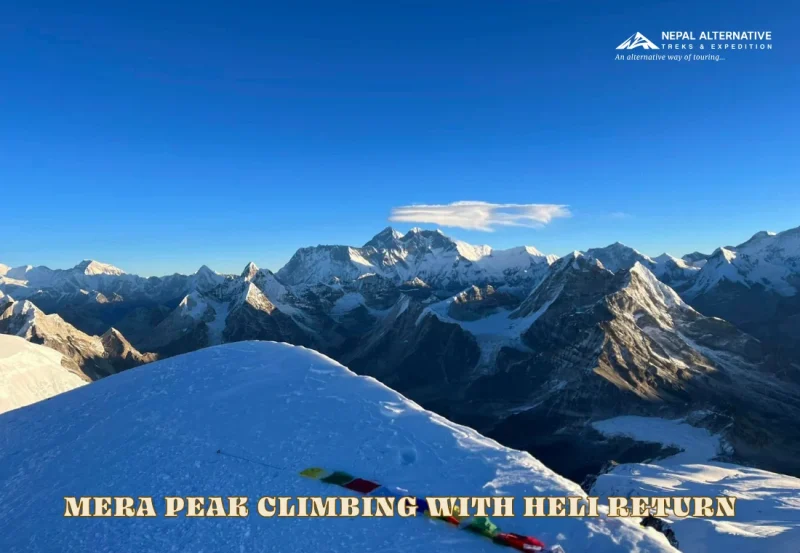
Mera Peak Climbing With Heli Return – 10 Days
View Detail For Tamang Heritage and Langtang Valley Trek – 12 Days
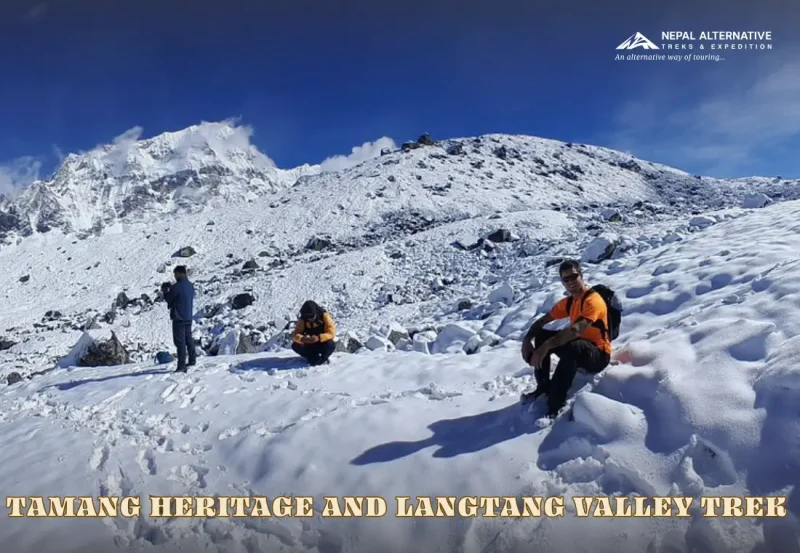
Tamang Heritage and Langtang Valley Trek – 12 Days