Nepal is one of the world’s famous trekking destinations, with countless trekking routes, but none compare to the Upper Mustang Trek, the hidden Himalayan desert kingdom. Here, ancient monasteries, historic caves, and a rich Tibetan Buddhist culture have remained beautifully preserved for centuries, which makes the adventure unique among Nepal’s trekking routes.
The Upper Mustang Trek is one of the most unique but underrated trekking destinations in Nepal. It is located in the northern part of the Annapurna region and falls in a restricted area. Thus, we’ll need a special trekking permit to enter. This journey takes us into the heart of Nepal’s Last Forbidden Kingdom, where time seems to stand still.
The region opened to visitors only in 1992 and is still rich in Tibetan Buddhist culture. That rare isolation is what gives the region its authentic charm today. We’ll explore ancient monasteries, cave dwellings, royal palaces, and traditional villages high in the Himalayas while on the trek. Some of the trek’s highlights include exploring the walled city of Lo Manthang, the centuries-old Ghar Gompa monastery, the mysterious Chhoser sky caves, along with the ancient salt trade route between Nepal and Tibet.
The Upper Mustang region is close to Tibet, and there are many cultural and geographical similarities between the local Mustangi people and their Tibetan neighbors. The people here, often called highlanders, still follow old customs, wear traditional clothing, and speak a dialect close to Tibetan. They even have a local king they deeply respect. This trek is about more than the destination. It’s a chance to experience a living Tibetan Buddhist culture where centuries-old traditions are still part of everyday life.
On the Upper Mustang Drive Trek, we’ll start the journey by driving from Kathmandu to Pokhara. After that, we will take a short flight to Jomsom. From there, we begin walking towards Kagbeni, the gateway to Upper Mustang. Along the way, we’ll pass through remote villages like Chele, Syanboche, Ghyami, and Tsarang (also spelled Charang) before reaching the walled city of Lo Manthang.
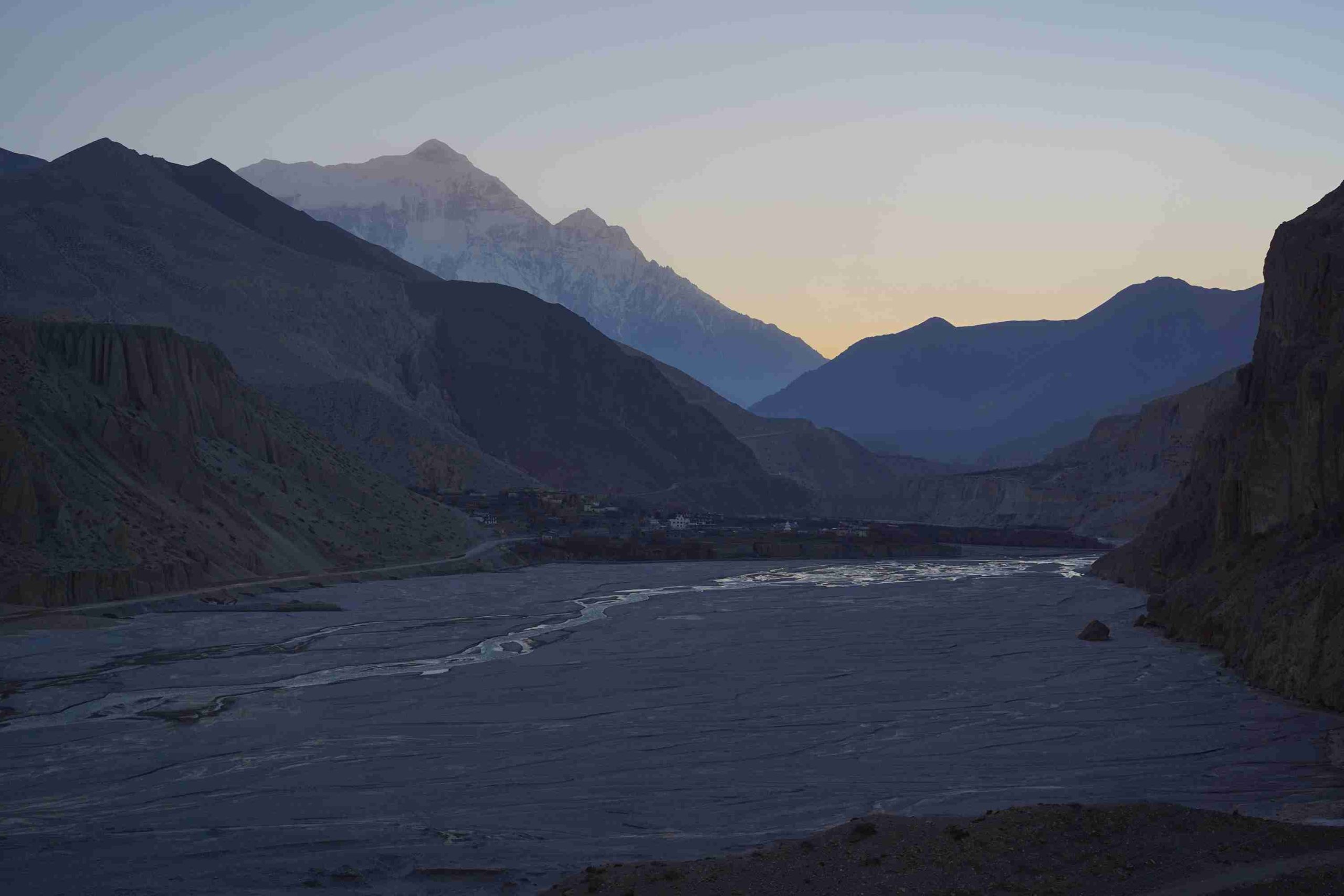
The Upper Mustang trekking route follows the Kaligandaki River and passes through dry, desert-like landscapes surrounded by majestic peaks like Annapurna, Dhaulagiri, Nilgiri, and Fishtail (Machhapuchhre). Similarly, every step on the trek offers a new view at every turn, from deep wind-carved canyons to huge red and ochre cliffs that seem to belong to another world.
This Upper Mustang Trek is perfect for those looking to explore off-the-beaten-path destinations in Nepal, with its mix of cultural beauty, historical sites, and stunning Himalayan views. It is truly an amazing experience of trekking through Upper Mustang. Far from Nepal’s busy trekking trails, the Upper Mustang Trek welcomes you to explore a remote kingdom that few people have traveled through.
Want to see a side of the Himalayas that most people miss? Upper Mustang is a remote, beautiful region where you can explore an ancient kingdom far from the usual tourist crowds. Contact us today to know the departure dates for 2026 or 2027.
Step inside the walled city of Lo Manthang, the capital of the Last Forbidden Kingdom of Nepal.
Explore the multi-story cliff caves of Chhoser, built by humans thousands of years ago for habitation and burial.
Visit some of the oldest Tibetan Buddhist monasteries, including Jampa Lhakhang and Thubchen Lhakhang.
Walk past the 300 m holy mani wall near Ghyami.
Enjoy beautiful views of Mt. Dhaulagiri (8,167 m), Mt. Annapurna I (8,091 m), and Nilgiri (7,061 m).
Experience the traditional lifestyle of the indigenous Lhopa people.
Test your limits by crossing Nyi La (4,010 m) and Lo La (3,950 m) mountain passes.
Traverse the desert-like landscapes of the Upper Mustang region.
Is Upper Mustang Trek Difficult?
The Upper Mustang is a moderately difficult trek, and anyone with reasonable physical fitness can complete the journey safely. A few factors contribute to the difficulty of the Upper Mustang Trek. One of the main factors that make the trek to Upper Mustang challenging is the remote trails and rough terrain. The Upper Mustang trekking route takes you through dry valleys, desert-like landscapes, rocky hills, and dusty trails. Some paths are steep and narrow, with loose gravel that can slow you down. The trek also requires longer days of walking, averaging 5 to 6 hours a day.
Another factor is the limited infrastructure. The Upper Mustang remains untouched by modernization. That means basic teahouses, simple meals, and minimal amenities throughout the trek. Another factor is high altitude. Although the Upper Mustang trekking trail doesn’t reach extremely high elevations like the Everest Base Camp Trek, it still climbs above 3,500 m. At this altitude, it’s common to feel a little tired or breathless, especially if we’re new to high-altitude trekking.
Weather can also contribute to the difficulty of the Upper Mustang Trek. The Upper Mustang region experiences strong winds in the afternoon. It also gets colder, especially at night and in the morning. However, the area falls within the rain shadow region, so precipitation is low. Therefore, you should prepare for changing weather conditions and carry proper clothing throughout the trek.
Questions before you book?
Our Nepal team replies on WhatsApp with trip details, dates, and custom options.
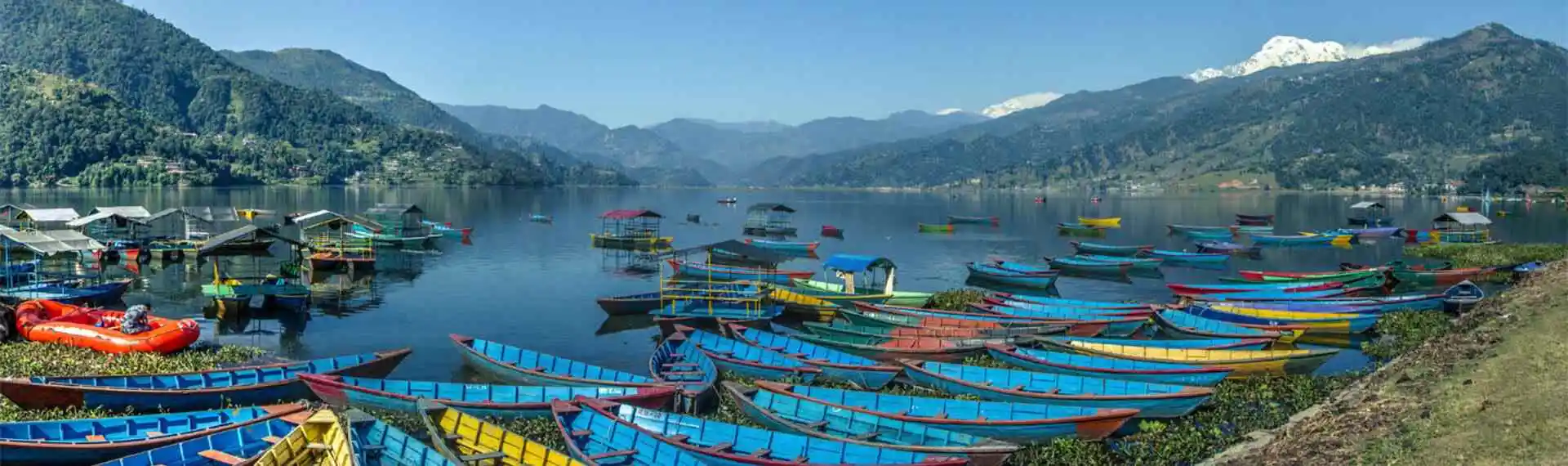
Today is the first day of our 11-day Upper Mustang Trek. The first day is a relaxing journey from Kathmandu to Pokhara. As you leave the city’s chaos behind, you’ll arrive in the beautiful lakeside city, the starting point for adventures in Annapurna and Upper Mustang.
After breakfast at your hotel in Kathmandu, you will board a tourist bus to Pokhara with your trekking guide and management team. Located about 200 km west of Kathmandu, the journey takes about 6 to 7 hours. The road follows the Trishuli River for much of the drive and passes highway towns like Mugling and Dumre. You can capture views of green hills, terraced farms, and Himalayan peaks, including Mount Machhapuchhre, once you cross the Kurintar area.
After reaching Pokhara, we will head toward the Lakeside area beside Phewa Lake and check into our hotel. You can spend the evening relaxing or exploring cafés, local shops, bakeries, and small restaurants around the lakeshore. If the weather is clear, you may also witness beautiful sunset reflections over Phewa Lake with the silhouette of Machhapuchhre rising in the background.
Take this opportunity to try authentic Nepali and Newari dishes before your trek, as food choices become simpler in the teahouses of Mustang. Stay overnight at a hotel in Pokhara.
Day 2
Jomsom Bazzar
Jomsom Bazzar
Pokhara to Jomsom – Trek to Kagbeni (2,800 m)
Day 2 Facts
Trekking Time Average
20 minutes Flight to Jomsom
10 km uphill hike to Kagbeni (6 hours)
Accommodation
Hotel Nilgiri or Hotel Yac McDonald’s
Altitude
2,800 m / 9,186 ft)
Included meals
Breakfast, Lunch, Dinner
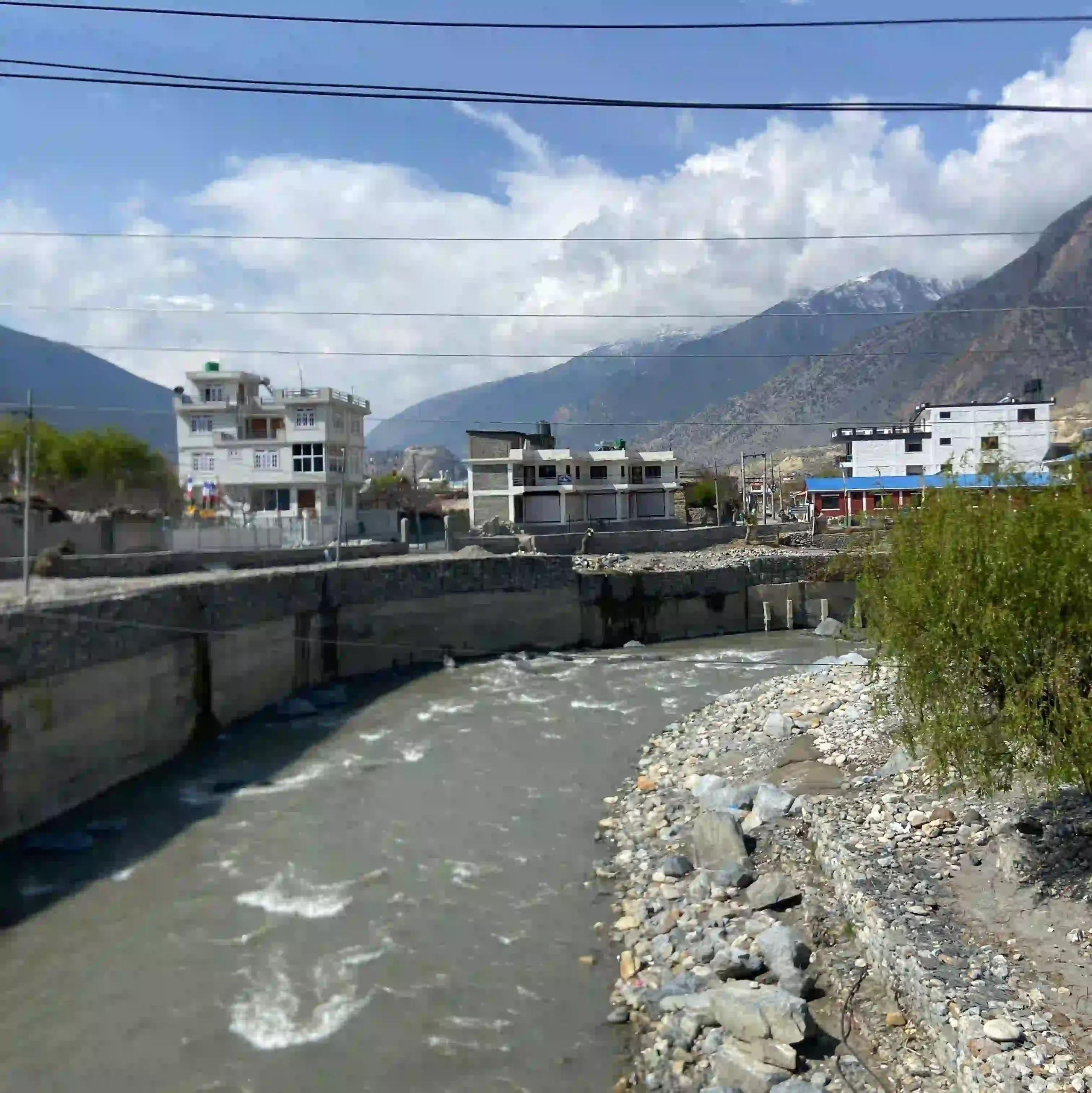
On the second day of the journey, you’ll take a flight from Pokhara to Jomsom, flying through the deep Kali Gandaki Valley with spectacular views of the Annapurna I Massif and Dhaulagiri I.
On this day, you will wake up early, have a hearty breakfast while enjoying the view of Mount Machhapuchhre, and take a short morning flight to Jomsom. The flight takes around 20 minutes and passes directly through the Kali Gandaki Gorge. Keep your camera ready, as you’ll get an aerial view of the Himalayas before your trek even begins.
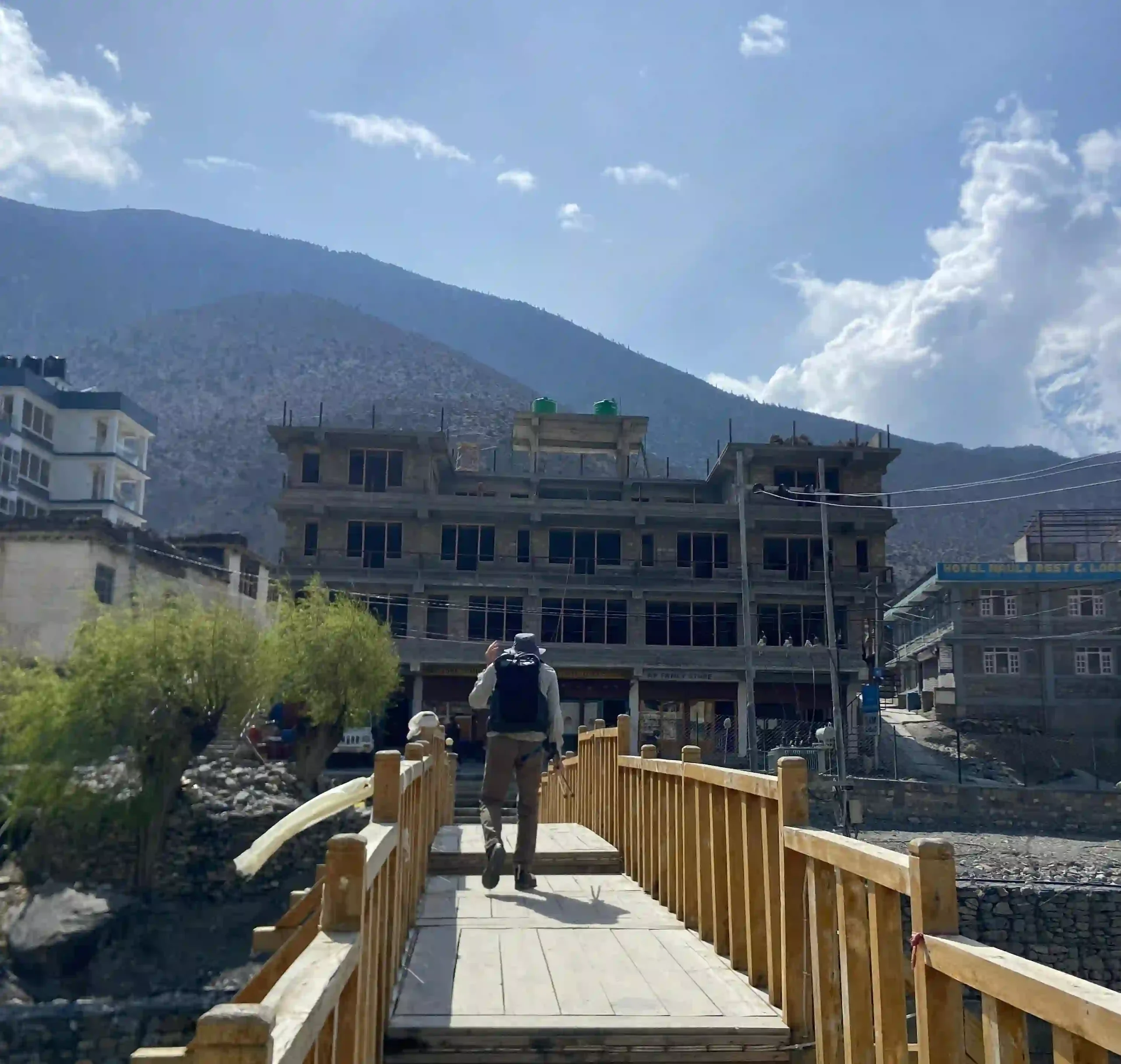
After landing at Jomsom Airport, the trek officially starts. You will follow the Kali Gandaki River route for about 6 hours until you reach Kagbeni. Today’s journey gains nearly 2,000 m in elevation from Pokhara, so walk at an easy pace, drink plenty of water, and allow your body to gradually adapt to the altitude.
Soon after starting the trek, the trail takes you to the Panda Khola area. From there, you will take an alternative route that leads to Lubra Village, one of the last remaining Bon villages in Nepal. You’ll stop here for lunch and explore the unique Bon Monastery before continuing toward Kagbeni, known as the “Gateway to Upper Mustang.”
After arriving in Kagbeni, explore its narrow streets, visit the old monastery, and spin the prayer wheels. End the day with a warm bowl of thukpa or a cup of butter tea to keep warm in the cool mountain breeze. Overnight stay and dinner at Kagbeni.
Day 3
Kagbeni Village
Kagbeni Village
Kagbeni Village
Kagbeni Village
Kagbeni to Chele (3,050 m)
Day 3 Facts
Trekking Time Average
14 km uphill hike
(Avg 6 hours)
Accommodation
Hotel Mustang Gate or Similar category
Altitude
(3,050 m / 10,006 ft)
Included meals
Breakfast, Lunch, Dinner
Today is the start of your journey into Upper Mustang. Once you check into the restricted-area checkpoint, the scenery changes as you leave the Annapurna region and enter a remote landscape of cliffs, canyons, and ancient villages.
The third day of the Upper Mustang trek starts in Kagbeni and ends at Chele. After enjoying breakfast in Kagbeni, you’ll enter the Upper Mustang region and the restricted region of Mustang. Your Upper Mustang trek permits will be checked before you begin the hike along the Kali Gandaki River. The Kagbeni to Chele route takes you through a unique part of the Mustang trekking route, with scattered caves, desert landscape, old chortens (stupas), and eroded canyon walls.
Continuing the trek, you’ll pass through Tangbe village. The village welcomes you with narrow alleyways, red-and-white mud houses, apple orchards, and barley fields, showcasing an authentic look at the Upper Mustang’s culture. Here you can take a short rest before continuing your trek. Soon after, we will reach Chhusang village, where we’ll cross a suspension bridge and begin the climb to Chele. As we go higher, the scenery turns more barren.
As you get to Chele, you’ll check into your lodge. Then you can take a short walk around the village, admire the surrounding red cliffs, and enjoy a peaceful Mustang sunset before dinner. Overnight at Chele.
Day 4
At Chele village
At Chele village
Gyakar Village
Gyakar Village
Chele to Syangboche (3,475 m)
Day 4 Facts
Trekking Time Average
11.5 to 13 km uphill hike
(6 hours)
Accommodation
Hotel Nilgiri or Similar category
Altitude
(3,475 m / 11,401 ft)
Included meals
Breakfast, Lunch, Dinner
Today’s route is one of the challenging parts of the Upper Mustang Trek, with two passes to cross. In return, you’ll enjoy some of the most stunning mountain scenery of the journey.
The day starts as usual with a hearty breakfast and packing your gear. As you begin the day’s trek, you’ll experience a major change in the Upper Mustang landscape, leaving the Kali Gandaki Valley behind and entering the higher trans-Himalayan desert. Although the distance is short, the two passes and constant ups and downs make the day more challenging than the previous days. So, starting early and walking at a steady pace is recommended.
From Chele, your first major success will be crossing Taklam La Pass (3,624 m). The area around the pass is decorated with colorful Buddhist chortens painted in red, white, and black as a symbol of Buddhism. From this point, you can look back toward the Kali Gandaki Gorge and admire the beautiful Nilgiri peaks. Stop there for one of the day’s best photo opportunities, with amazing views of the deep canyon, mountain peaks, and prayer flags fluttering in the mountain air.
After crossing the first pass, we will visit Chungsi Cave Monastery, a holy meditation site believed to have been used by Guru Rinpoche centuries ago, before continuing the climb toward Dajori La Pass (3,735 m). By late afternoon, we arrive at Syangboche for an overnight stay. This peaceful village offers a calm evening with beautiful mountain views and a chance to relax with a warm cup of local butter tea.
Day 5
At Syangboche
At Syangboche
Syangboche to Ghami (3,520 m)
Day 5 Facts
Trekking Time Average
9 to 11 km uphill hike
(5-6 hours)
Accommodation
Hotel Lhoghami or Hotel Royal Mustang
Altitude
(3,520 m / 11,548 ft)
Included meals
Breakfast, Lunch, Dinner
You will trek from Syangboche towards Ghami on the fifth day of the Upper Mustang trail. The route initially ascends the Syangboche Ridge by crossing the tough Yamada La Pass (3,850 m). The trail follows chortens, peaceful villages, and barley fields. Following the forested trail, you will come across another pass, Nyi La Pass (4,010 m). The trail then descends from here until you reach Ghami.
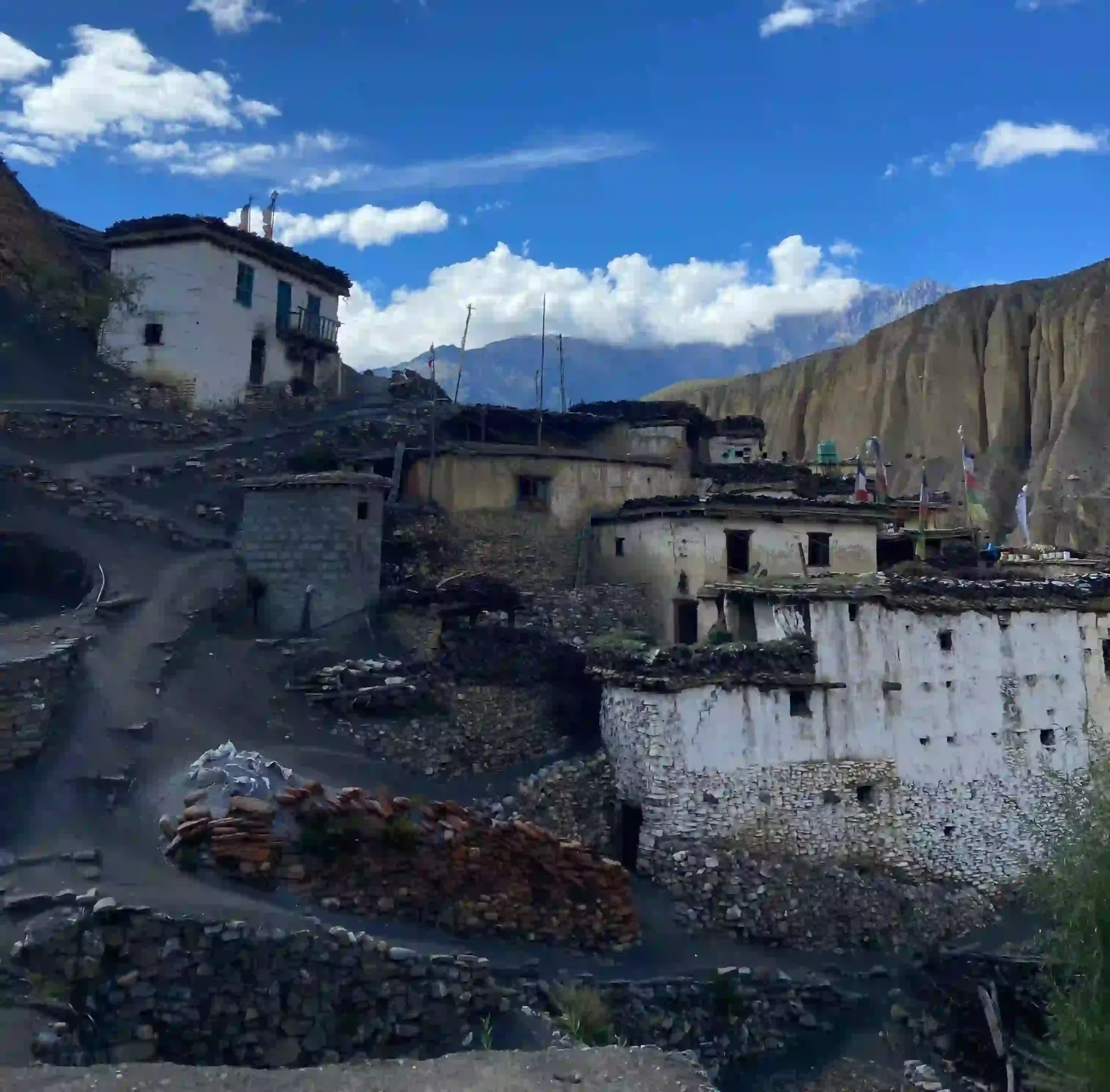
Ghami is known for its red cliffs, whitewashed buildings, and peaceful atmosphere. Every corner of the village tells a story, from the prayer wheels and mani walls to the mud-brick homes built in the traditional Mustangi style. It’s a perfect place to relax after a long hike and experience the deep-rooted culture of the Upper Mustang region.
After checking into your lodge, enjoy a gentle walk around the village and experience the local tradition of wool weaving, a craft practiced in Mustang for generations. Overnight stay at Ghami village.
Day 6
Ghami Village
Ghami Village
Ghami village
Ghami village
Ghami to Tsarang (3,500 m)
Day 6 Facts
Trekking Time Average
15 km uphill hike
(3-4 hours)
Accommodation
Hotel Doma or Damodar Kunda Hotel
Altitude
(3,500 m / 11,483 ft)
Included meals
Breakfast, Lunch, Dinner
Keep your camera ready today. Today is one of the most amazing days of the Upper Mustang Trek, with stunning red cliffs and Nepal’s longest mani wall along the route.
Day 6 takes you from beautiful Ghami village to a wide, dry plateau of Tsarang formed by thousands of years of wind erosion. First, you will cross the Ghami Khola and then trek towards the Ghami Mani Wall. It is nearly 300 m long and covered with thousands of hand-carved prayer stones. The cliffs behind it are full of natural layers of red, ochre, and grey-blue soil that reflect the geological history of the region.
After observing this beautiful area, the next challenge is crossing Chinggel La Pass (3,870 m), the highest point of the day. From the top of this pass, you can see the trans-Himalayan plateau and the Damodar Himal range in the Tibetan border area. Once you cross the pass, the trail drops down into Tsarang village. It is an old settlement that was once the second capital of the ancient Kingdom of Lo.
The Tsarang village is known for its huge white-and-red monastery, the five-story Tsarang Palace, and its old collection of statues, paintings, and Buddhist texts. You can spend the evening exploring Tsarang Monastery or enjoy sunset views over the barren Mustang landscape. Overnight and dinner are at the Hotel Doma or Damodar Kunda Hotel.
Day 7
Tsarang Old Palace
Tsarang Old Palace
Tsarang Red Monastery
Tsarang Red Monastery
Tsarang Village
Tsarang Village
Tsarang to Lo Mangthang (3,700 m)
Day 7 Facts
Trekking Time Average
11-12 km uphill hike
(3 to 5 hours)
Accommodation
Hotel Lotus Holiday Inn, or a similar category
Altitude
(3,700 m / 12,139 ft)
Included meals
Breakfast, Lunch, Dinner
Today, you’ll get to Lo Manthang, the historic walled capital of the former Kingdom of Lo and the cultural center of Upper Mustang.
Your morning starts by exiting the northern gates of Tsarang and descending a rocky trail into the Tsarang Chu canyon. You will cross a long suspension bridge and then trek for the next few hours across a wide trans-Himalayan desert of sand, dust, and scattered stones, while observing the gorgeous views of Annapurna I, Nilgiri, and Tilicho Peak behind you. Starting early helps you avoid the stronger winds that sweep across the plateau later in the day.
After crossing the open plateau, the trail climbs toward the sacred boundary marker, Sungda Chorten (painted in red, white, and black). This ancient monument was the traditional border between Tsarang and the Lo Manthang region. From here, an uphill walk leads to Lo La Pass (3,950 m), where hundreds of prayer flags indicate the arrival point of Lo Manthang. Lo La Pass is one of the highlights of the trek and the best photography spot that offers a wide view of the historic walled city of Lo Manthang.
The entire Manthang Valley opens up in front, and it takes about 45 minutes of walking to reach the walled city below. After entering the walled city, explore Lo Manthang’s historic streets, traditional homes, ancient monasteries, and the former royal palace, which reflect the city’s rich history and Tibetan heritage. Stay overnight at a lodge in Lo Manthang.
Day 8
Lomanthang King’s Palace
Lomanthang King’s Palace
Lomanthang
Lomanthang
Tsarang Village
Tsarang Village
At Summer Palace, Lomanthang
At Summer Palace, Lomanthang
Explore Around Cave and Monasteries in Lo-Manthang
Day 8 Facts
Trekking Time Average
Excursion around
Accommodation
Hotel Lotus or Similar category
Altitude
(3,700 m / 12,139 ft)
Included meals
Breakfast, Lunch, Dinner
Another day in your trek to Upper Mustang begins early in the morning. It’s an exploration day. Enjoy a delicious breakfast, then go on a scenic sightseeing tour outside Lo Manthang. After exiting the city, you’ll trek to the ancient Nyiphu and Garphu Monasteries.
These monasteries lie close to the 2,500-year-old Jhong Caves. After exploring the beautiful monasteries, you’ll begin climbing the Jhong Cave, which comprises a large intersection of caves with 44 different compartments. The day will end with a tour of the Summer Palace of the Late King of Mustang, Raja Jigme Dorje Palbar Bista. After witnessing this historical site, you’ll head towards the Namgyal Gompa. When done exploring, you’ll return to your lodge in Lo Manthang and rest overnight.
Day 9
Marpha
Marpha
Marpha village
Marpha village
Marpha Village
Marpha Village
Lo Manthang to Marpha (2,650 m)
Day 9 Facts
Trekking Time Average
80 km Drive to Marpha
(6 hours)
Accommodation
Hotel Paradise or Similar category
Altitude
(2,650 m / 8,694 ft)
Included meals
Breakfast, Lunch, Dinner
After breakfast in Lo Manthang, you’ll take a long jeep ride to Marpha. It’s your return journey after a successful trek to Upper Mustang and exploration of Lo Manthang. The drive takes about 6 to 7 hours and goes through dry mountains and rocky roads. Along the way, you will pass through Kagbeni and Jomsom. The road follows the Kali Gandaki River and gives amazing views of the Annapurna and Dhaulagiri mountains. The land looks like a desert, which is why many people call Upper Mustang “Mini Tibet.”
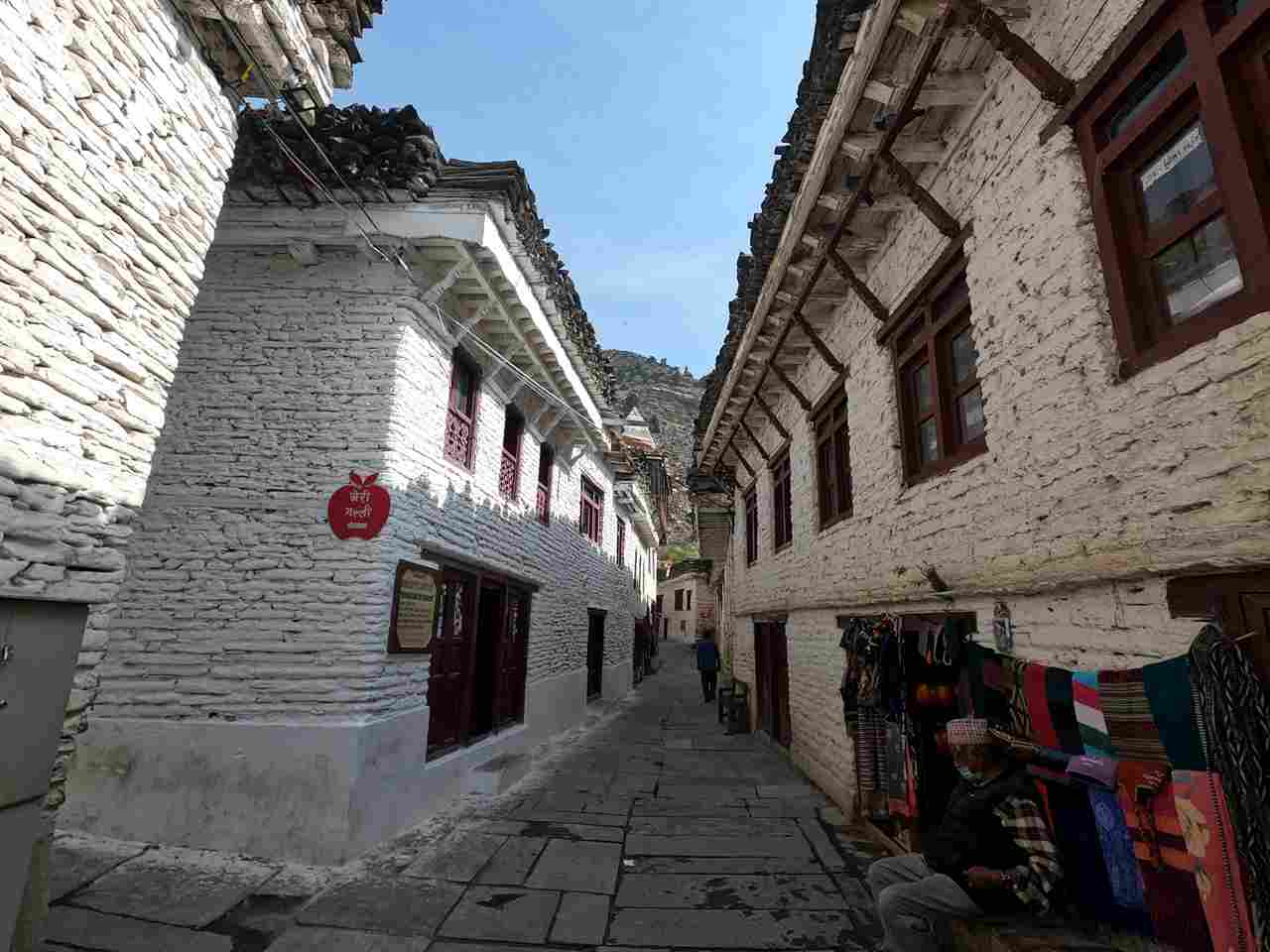
When you reach Marpha, the scenery changes. Marpha is a small, quiet village known for its apple orchards and clean stone streets. The houses are white with flat roofs, and the village feels peaceful. You can try local apple products like apple pie and apple brandy. Also, don’t forget to experience the nightlife of Marpha. Overnight at Marpha.
Day 10
Marpha to Pokhara (850 m)
Day 10 Facts
Trekking Time Average
150 km drive
(6 hours)
Accommodation
Hotel Kausi
Altitude
(850 m / 2,788 ft)
Included meals
Breakfast, Lunch
Today, you’ll leave the Mustang region and drive towards Pokhara, the city from which your adventure started. The morning drive from Marpha follows the rocky riverbed of the Kali Gandaki Gorge, with views of old trade villages like Tukuche and Lete on the way. As you move south, the dry desert landscape of Mustang slowly changes into green hills and pine forests near Ghasa.
After passing Ghasa, the road takes you towards the famous Rupse Waterfall. The journey continues through Tatopani, known for its natural hot springs, before reaching Beni, where the off-road section ends. From Beni, a smooth, non-bumpy drive finally brings you back to Pokhara city.
Since you will start the drive very early in the morning, there is a good chance that you may reach earlier than expected. If that happens and you still have energy, you can go for a short excursion around the Pokhara Valley to visit Davis Falls, Gupteshwor Mahadev Cave, and a few other nearby attractions. Overnight in Pokhara.
Day 11
Pokhara to Kathmandu (1,295 m)
Day 11 Facts
Trekking Time Average
Approx. 200 km drive to Kathmandu (6 hours)
Altitude
(1,295 m / 4,248 ft)
Included meals
Breakfast
Today is the last day of the Upper Mustang Trek adventure. From the hotel in Pokhara, you can enjoy the early morning view of Machhapuchhre before starting your journey back to Kathmandu by tourist bus. The drive passes small towns along the highway, such as Damauli, Dumre, Malekhu, and the Manakamana area, before entering the capital city.
The drive takes 6–7 hours, depending on break times, traffic, and road conditions. Once you arrive in Kathmandu, the 11-day journey through Upper Mustang officially comes to an end. We hope you had a great time during your trek.
What’s Included
Pick up at Tribhuvan International Airport and transfer to the hotel in Kathmandu.
Hotel accommodation (Hotel Kausi), Pokhara.
Mustang Special Permit, Annapurna Conservation Area Project (ACAP), and necessary permits.
Overland transportation as mentioned in the itinerary.
Pokhara to Jomsom by flight.
All lodge accommodation (twin-share basis) along the trip.
All meals (breakfast, lunch, and dinner) during the tour.
One fluent English-speaking, government-registered, experienced, honest, informative, and helpful trekking guide.
1 porter for every 2 trekkers. Please keep luggage weight under 10 kg per person.
Guide and porter’s food, salary, accommodation, transportation, equipment, and insurance.
A trek map, daily oxygen saturation check-up, water purification, company T-shirt, trekking completion certificate, and more.
Assistance for emergency rescue operations.
All government taxes and service charges.
Public liability insurance.
What’s Not Included
Hotel accommodation and meals in Kathmandu.
All kinds of beverages and personal expenses, such as tea, coffee, Coke, Fanta, beer, mineral water, hot water, battery charging, hot showers, desserts, etc.
Personal travel insurance.
International flight tickets.
Nepal tourist visa fee.
Tips for guides and porters (highly suggested).
Add-ons and Options
These add-ons make the 11-day Upper Mustang Trek more comfortable, with porter support, charter flights, luxury camping, adventure activities, and upgraded hotels in Pokhara, Kagbeni, and Lomanthang.
Simple steps to add these add-ons during checkout:
Click “Book the Trip”.
Choose your departure date.
On the checkout page, select any upgrade and activities you want from the add-ons list.
Make payment.
Available add-ons list:
Personal Porter (USD 280 per porter): Lighten your load by hiring a porter to handle your larger bag throughout the trek.
Private Chartered Flight to Jomsom (USD 4000 per charter flight – 17 seats): Reserve a full charter to Jomsom and replace long, rough drives with a short mountain flight.
Luxury Camping Setup (Selected Nights) (USD 100 per night): Upgrade your campsite on specific nights for more comfort, better food, and a premium wilderness feel.
Bungee at Bhotekoshi (USD 200 per person with private transport): Includes a full bungee day at Bhote Koshi, with your transport arranged both ways.
Rafting at Trishuli (USD 150 per person with private transport): Add a Trishuli rafting package, including private vehicle support and a guided river run.
Upgrade Accommodation in Pokhara (5-star category) (USD 150 per night for double/twin share with breakfast): Opt for a 5-star hotel in Pokhara, perfect for resting before or after the trek.
Upgrade Accommodation in Kagbeni at Red House (USD 100 per night for double/twin share with breakfast, lunch, and dinner): Choose Red House in Kagbeni for a more comfortable full-board stopover.
Upgrade Accommodation in Lomanthang at Royal Mustang Resort (USD 1000 for 2 nights for double/twin share with breakfast, lunch, and dinner): Secure a 2-night full-board stay at Royal Mustang Resort for a more refined Lomanthang experience.
Private Vehicle Transfers Pokhara to Kathmandu (car USD 100, jeep USD 150, van USD 200): Travel on your own schedule between Pokhara and Kathmandu with a reserved private vehicle.
Pokhara Sightseeing (USD 30 per person): Add a guided sightseeing tour in Pokhara to connect your trek with the city’s main highlights.
Kathmandu to Pokhara by Flight (USD 120 per person one way / USD 240 round trip): Book one-way or return flights between Kathmandu and Pokhara for quick, convenient connections.
Paragliding in Pokhara (USD 90 per person for 45 minutes): Add a classic paragliding flight over Pokhara for sweeping views of the valley and mountains.
Zipline in Pokhara (USD 80 per person): Add a zipline ride for a fast, fun adventure in the hills near Pokhara.
1-hour Everest Scenic Flight (USD 300 per person): Fly for 1 hour along the Everest region with private airport pick-up and drop-off in Kathmandu. This is a sightseeing flight only with no landing.
Best Season for Upper Mustang Trek
January
-15°C to 5°C
February
-10°C to 8°C
March
-5°C to 12°C
April
0°C to 15°C
May
5°C to 18°C
June
7°C to 20°C
July
8°C to 20°C
August
8°C to 20°C
September
5°C to 18°C
October
0°C to 15°C
November
-5°C to 10°C
December
-10°C to 5°C
The best overall months for the Upper Mustang Trek are Spring (April– May) and Autumn (September–October) because of mild temperatures (12°C to 20°C ) and the festive season. Since Upper Mustang lies in the rain shadow of the Dhaulagiri and Annapurna ranges, it receives very little rainfall during the monsoon, which makes June to August also a great time for trekking.
However, you should avoid planning your trip during the core winter months of December to February. Winter brings extreme alpine conditions to the valley, daytime temperatures drop to a freezing 5°C, and nighttime minimum temperatures plummet to -15°C. Because of this harsh, cold, and heavy snowfall on the high passes, many local residents migrate south to Pokhara or Kathmandu, leaving their teahouses fully closed. The best time for the Upper Mustang trek blog can definitely help you plan your journey based on the view and season you want better.
Upper Mustang Trek Route Map
Trail
Return Trail
This route map illustrates the exact geographic loop and blueprint for the 11-day Upper Mustang Trek. The main map highlights the trekking trail starting from Jomsom (2,720 m) and heading north toward the Tibetan border region. It indicates each trekking day and important villages such as Kagbeni, Chele, Syangboche, Tsarang, and the ancient walled city of Lo Manthang (3,700 m). The map also shows side trails, high mountain passes like Lo La Pass, and famous sites such as Chungsi Cave.
Below the map, there are two charts: the altitude chart and the temperature chart. The Altitude Chart shows the daily elevation changes, starting from Pokhara (822 m) to Upper Mustang, time for acclimatization in Lo Manthang, and a quick descent on day 9 through Marpha. The Temperature Chart shows the average monthly temperatures ranging from -15°C in winter to 20°C in summer.
Our scheduled group tours offer fixed departure dates, providing an excellent opportunity for travelers to join our small group trips.
Note : Our fixed group departure dates, services and price is guaranteed even if the group numbers are 1 person to maximum 18 persons. We will provide a guide cum porter if there is only 1 person to operate the trek and one more assistant guide if group size is above 10 persons. And of course, guide cum porter will carry 10 kg luggage
Book a private trip on your own date.
Every journey we create is uniquely tailored to you. Share your interests and passions, and our travel experts will design an unforgettable adventure filled with extraordinary, one-of-a-kind experiences crafted just for you.
I absolutely recommend this travel agency Absolutnie polecam to biuro turystyczne! Nov 2025 • Couples Absolutnie polecam to biuro turystyczne! Tej (właściciel) jest niesamowicie responsywny i pomocny – odpisywał błyskawicznie o każdej porze dnia i nocy, służył radą i realnie rozwiązywał każdy problem. Na nim można było polegać w 100%.…
Upper Mustang has a long history that goes back thousands of years. Ancient caves in the region show that people lived there very early, although little is known about them. Written records from Tibet and Ladakh mention Mustang as early as the 7th century. In 1380, a leader named Ame Pal founded the Kingdom of Lo after building a strong fortress and defeating local rulers. He established the walled city of Lo Manthang, which became the center of the kingdom.
Because Mustang lies on an important route between Tibet and India, it became a busy center for trade and travel. At the same time, the region faced attacks from bandits, so the gates of Lo Manthang were closed every night for protection. In the late 1500s, Mustang came under the control of Ladakh, and later in the 1760s, it became connected to Jumla in western Nepal. When King Prithvi Narayan Shah united Nepal, Mustang also became part of the country, although it still kept some local independence.
In the 20th century, major political changes affected Mustang. In 1951, Nepal became a constitutional monarchy, and Mustang officially became a district. After China took control of Tibet in 1959, Mustang became a base for Tibetan fighters resisting Chinese rule, so the Nepalese government declared it a restricted area. For many years, Upper Mustang was closed to outsiders. After Nepal’s 1990 democratic movement, the government slowly opened the area to tourism. In 1992, the first foreign trekking groups were allowed to visit, and today Upper Mustang is known for protecting its unique culture and history.
Even after hundreds of years, the rich history of the region is still alive today. You can experience it as you walk into Lo Manthang. As you walk into Lo Manthang, you follow in the footsteps of generations before you. The walled city, built by Ame Pal more than 600 years ago, still has its narrow alleys and mud-brick homes, preserving the look and feel of the ancient kingdom. Monasteries across the region, including Thubchen, Jampa, and Chodey, still preserve ancient murals, manuscripts, and Buddhist traditions. As a result, a trek here feels like walking through a place where history is still alive.
Things To Experience During Short Upper Mustang Trek
During your 11-day Short Upper Mustang Trek in Upper Mustang, you will enter a place that feels like a living museum. The geography of the trans-Himalayan rain shadow, combined with centuries of political history, has preserved its culture, traditions, and heritage in a way that is rarely found anywhere else. Here are the main things you will experience during your journey into the former Kingdom of Lo:
Lo Manthang
Lo Manthang (3,840 m) is one of the last surviving walled kingdoms in the Himalayan region. Known as the “Last Forbidden Kingdom,” Lo Manthang stayed closed to outsiders until 1992. Its remote landscape, political history, and royal restrictions kept the region isolated for centuries.
Founded in 1440 by King Ame Pal, the old settlement is still protected by a mud wall nearly 6 m high, built to defend the ancient Kingdom of Lo from invasions and desert winds. Even today, the alleys, whitewashed mud houses, prayer wheels, and centuries-old traditions make the town feel almost frozen in time.
At the center of the walled city stands the four-story royal palace, which was the residence of the Lo dynasty for nearly 25 generations. The palace may no longer house kings, but it continues to tell the story of Mustang’s royal past. Today, Lo Manthang still offers a close look at traditional Mustang life, where farming, Buddhist practices, and centuries-old customs remain part of everyday life.
Lo Manthang is also home to some of the Himalayas’ oldest Buddhist monasteries, such as Jampa Gompa and Thubchen Gompa, famous for their rare 15th-century wall paintings and handmade clay statues. A short trip north leads to the Chhoser Valley sky caves, where researchers discovered hand-carved cave chambers, ancient burial remains, and meditation rooms believed to be around 2,500 to 3,000 years old. These caves reveal that people were living in this dry Himalayan valley long before modern Nepal existed.
Spin Prayers at the Longest Mani Wall of Ghami
Near the village of Ghami, trekkers can visit one of the most sacred landmarks of Upper Mustang: the massive Ghami Mani Wall. More than 300 m long, it is considered the longest Mani wall in the entire Mustang region, and one of the most photographed religious landmarks in the area. Its bright red, white, and bluish-grey mineral colors represent important Buddhist symbols linked to compassion, wisdom, and protection.
The top of the wall is covered with thousands of slate stones sculpted with the Buddhist mantra “Om Mani Padme Hum.” Many of these stones were engraved slowly over generations by monks, pilgrims, and local families as acts of faith and prayer. You can pass the wall on the left in a clockwise direction, a Buddhist tradition that symbolizes respect and devotion by keeping the sacred wall on the right.
In the strong Mustang winds, the sound of fluttering prayer flags and spinning wheels creates a calm atmosphere that feels connected to the spiritual life of the Himalayan desert.
Kali Gandaki Gorge & River with Shaligram
The Kali Gandaki Gorge (also known as the Andha Galchi) is one of the deepest river gorges on Earth, located between Annapurna I and Dhaulagiri I. The two world’s highest mountain peaks make the gorge even more impressive because of its huge size and unique geology. In some areas, the vertical difference from the riverbed to the mountain summits is more than 5,500 m. Over millions of years, the Kali Gandaki River excavated this canyon through the Himalayas by forming a natural corridor that connected ancient trade routes between Nepal and Tibet.
The Kali Gandaki River is also famous for its Shaligrams, smooth black fossil stones found along its banks. At the edge of Upper Mustang, the village of Kagbeni attracts many pilgrims and travelers who come to look for these fossils along the riverbanks. Geologically, Shaligrams are petrified cephalopods, ancient sea organisms that lived around 150 million years ago in the ancient Tethys Ocean before the Himalayas even existed.
When the Indian and Eurasian tectonic plates collided nearly 50 million years ago, the ocean floor rose upward to form the Himalayan mountains, leaving these fossils trapped inside the rocks. For millions of Hindus, Shaligrams are not ordinary fossils but holy symbols of Lord Vishnu.
Tibetan Buddhist Culture Exploration & Tiji Festival
Since the ancient Kingdom of Lo was closed to outsiders until 1992, this long isolation preserved Tibetan Buddhist traditions, language, architecture, and rituals that have slowly disappeared in many other Himalayan regions. Most monasteries here belong to the Sakya school of Tibetan Buddhism (the Ngor lineage) and can be identified by their walls painted with vertical red, white, and grey stripes.
Even on normal days, trekkers can feel the presence of Tibetan Buddhist culture throughout Upper Mustang, from its monasteries and prayer sites to daily local traditions. Along the trail, trekkers can witness everyday monastery life in village communities. Monks chant morning prayers, butter lamps light in gompas, and both monks and locals turn prayer wheels. These everyday rituals are just meaningful in understanding Mustang’s spiritual traditions as its major events.
However, the cultural highlight of the region is the Tiji Festival held every spring inside the royal courtyard of Lo Manthang. This three-day masked dance ceremony represents the victory of good over destructive forces and drought. Monks dressed in colorful silk robes and large symbolic masks perform traditional dances that tell the story of Dorje Jono defeating a demon threatening the kingdom. On the final day, people destroy a figure made of barley dough that symbolizes evil, while prayers, drums, and Tibetan horns echo all over the walled city.
Ancient Cave Dwellings of Chhoser
North of Lo Manthang, the Chhoser Valley is home to one of Upper Mustang’s archaeological sites. The Chhoser Valley’s cliffs contain a vast network of ancient caves carved by hand. Some caves go several floors up into the rock and are believed to be 2,000 to 3,000 years old, dating back to a time before the Kingdom of Lo existed.
Researchers have found old meditation rooms, storage areas, and living spaces inside the caves. Ancient remains, manuscripts, and other artifacts found there offer clues about the people who lived here and their mysterious way of life. Researchers are still trying to understand who made these caves and what they were used for. This mystery makes the experience even more special for trekkers exploring the area.
Accommodations and Meals during Short Upper Mustang Trek
Accommodations
During the Short Upper Mustang Trek, you can stay in tea houses, guesthouses, or small hotels. Tea houses are the most popular because they are affordable.
The accommodations at the tea houses are comfortable and clean. You will be given pillows, blankets, bedsheets, and mattresses. Remember that during peak season, you mostly have a single room with a twin bed, meaning you might have to share your room with other trekkers. Only a few accommodations have rooms with attached toilets and bathrooms, so you may have to share a bathroom and sink with other trekkers. However, they are cleaned daily, so you don’t have to worry about hygiene.
Accommodation by Village:
Location
Overnight Point
Pokhara
Hotel Kausi
Kagbeni
Hotel Nilgiri or Hotel Yac McDonald’s
Chele
Hotel Mustang Gate or Similar category
Syangboche
Hotel Nilgiri or Similar category
Ghami
Hotel Lhoghami or Hotel Royal Mustang
Tsarang
Hotel Doma or Damodar Kunda Hotel
Lo Manthang
Hotel Lotus Holiday Inn or a similar category
Meals
Nutritious food is essential for trekkers during their treks, so you will be provided with three meals a day: breakfast, lunch, and dinner. Most eateries offer local Nepali foods and some Western food options.
Along the way, trekkers can enjoy Nepali favorites like dal, bhat, and curry, as well as unique dishes from the Mustang region. The Thakali set is one of the most popular meals in the region. This traditional meal includes rice, lentils, vegetables, pickle, and meat or greens, offering a simple but flavorful taste of local culture.
The harsh mountain environment of Upper Mustang makes rice farming difficult. Instead, buckwheat is a local staple. It is used in many traditional foods, including bread, pancakes, and noodles. Yak products, including cheese, meat, and milk, are part of everyday life in Upper Mustang and represent the region’s farming and herding traditions.
To warm up after trekking, visitors can enjoy butter tea at many teahouses. This traditional Tibetan drink, made with tea, butter, and salt, is popular in Upper Mustang for its warmth and energy.
Short Upper Mustang Trek Distance
The total walking distance of the 11-day Short Upper Mustang Trek is approximately 76 km. If you choose to explore the Chhoser Valley and the Shija Jhong cave system on your rest day, your total foot distance will increase by an additional 8 to 12 km. On average, you will cover between 10.5 and 15.3 km per day on foot, which translates to roughly 5 to 6 hours of trekking.
The journey starts with a drive from Kathmandu to Pokhara, followed by a flight to Jomsom Airport. From Jomsom, the official trek towards Upper Mustang begins. The trek takes you via the villages of Kagbeni, Chele, Syangboche, Ghami, Tsarang, and Lo Manthang. After Lo Manthang, you’ll drive back to Marpha via Jomsom.
What makes this specific 11-day itinerary highly efficient is the combination of walking and driving. While a traditional trek requires another 5 to 6 days of walking all the way back down the valley, this optimized package switches to a private four-wheel-drive jeep immediately after you finish exploring Lo Manthang.
Day
Route
Distance
1
Kathmandu to Pokhara
200 km
2
Pokhara to Jomsom, then trek to Kagbeni
69 km (flight)
10 km (walk)
3
Kagbeni to Chele
14 km
4
Chele to Syangboche
11.5 to 13 km
5
Syangboche to Ghami
9 to 11 km
6
Ghami to Tsarang
15 km
7
Tsarang to Lo Manthang
11 to 12 km
8
Explore around caves and monasteries
8 to 12 km
9
Lo Manthang to Marpha
80 km
10
Marpha to Pokhara
150 km
11
Pokhara to Kathmandu
200 km
Travel Insurance For Short Upper Mustang Trek
Travel insurance is crucial for any trek in Nepal, including the Upper Mustang Trek. Who knows what happens next in your life? Thus, buy travel insurance from a reputable company that will be available to assist you 24/7. The insurance cost is USD 200–300 and varies depending on the trip destination, coverage, and your age.
Since Upper Mustang is a remote, high-altitude restricted region, your insurance policy should cover:
Helicopter evacuation: Because Upper Mustang is remote and road travel can take days, trekkers should have insurance that includes emergency helicopter evacuation with coverage up to 4,500–5,000 m.
Acute Mountain Sickness: Lo Manthang is located at a high altitude of over 3,500 m, so your travel insurance should include coverage for altitude sickness and related conditions like HAPE and HACE.
Medical expenses: Your insurance should cover medical costs, including hospital stays, doctor visits, and medicines.
Trip interruption: Your insurance should cover non-refundable expenses, including flights, permits, and trekking fees, if you need to cancel or interrupt your trip.
Baggage loss or delay: Your insurance should cover the cost of replacing essential gear and personal items if your bags are lost, stolen, or delayed.
Main and Alternative Routes for Upper Mustang
Classic Route (Jomsom → Lo Manthang)
The Classic Route is the most popular and main trail to Upper Mustang. It starts from Jomsom, which is accessible by a short flight from Pokhara. It takes you through traditional villages like Kagbeni, Chele, and Tsarang, following the Kali Gandaki Valley, crossing arid desert landscapes, and experiencing Tibetan-influenced culture before reaching Lo Manthang. Popular among adventure seekers, the 14 day Upper Mustang Trek covers a total trekking distance of around 110–120 km round trip and requires strong mental and physical strength to complete.
Pros: Well-maintained trail, easy logistics.
Cons: Can be crowded during peak season. An Upper Mustang Restricted Area Permit is required.
Western Route (Ghemi → Lo Manthang via Dhakmar & Ghar Gompa)
The Western Route is less traveled and more adventurous than the Classic Route. It branches off at Ghemi and passes through Dhakmar and Ghar Gompa before reaching Lo Manthang. This remote trail takes trekkers through hidden caves and barren desert landscapes, with far fewer travelers along the way. Ideal for those seeking an uncrowded Himalayan experience, the 15 day Upper Mustang Alternative Trek covers approximately 115–125 km round trip and takes 14–16 days to complete.
Pros: Less crowded, more adventurous.
Cons: Longer and harder trek, fewer teahouses.
Eastern Route (Lo Manthang → Chhusang via Yara & Tangge)
The Eastern Route is mainly used for returning from Lo Manthang and is suitable for trekkers who want to explore more remote villages. This route passes through lesser-known villages like Yara and Tangge and offers a deeper look into Mustang’s high desert landscapes. Along the way, you can visit cliff-side villages, high desert canyons, ancient monasteries, and cultural sites. The trekking distance is 120–130 km round trip, and the total duration is 12–15 days.
Pros: Very scenic, off-the-beaten-path, avoids crowds.
Cons: Needs careful planning for food, water, and accommodation; higher altitude exposure.
Combined Loop Route (Classic + Western + Eastern)
The Combined Loop Route offers the most complete experience of Upper Mustang. Trekkers reach Lo Manthang via the Classic and Western Routes and return through the Eastern Route. They enter through Kagbeni and complete the loop by exploring Ghemi, Dhakmar, Tsarang, Yara, Tangge, and Lo Manthang. For travelers seeking both comfort and adventure, the Luxury Upper Mustang Trek is a perfect way to explore this remarkable route within 14–16 days while covering a total distance of 135–145 km.
Pros: Most diverse and immersive, great for photography and cultural exploration.
Cons: Requires good fitness, proper acclimatization, and careful planning for accommodation and logistics.
How to Reach Jomsom from Pokhara?
There are two main ways to reach Jomsom from Pokhara: by a short mountain flight or by an overland jeep journey through the Kali Gandaki Valley. The fastest and most popular option is the early morning domestic flight, which takes only 15 to 20 minutes. Small Twin Otter and Dornier aircraft operate between 6:30 AM and 10:00 AM on the Pokhara–Jomsom route, as strong afternoon winds in the Jomsom Valley make later flights unsafe.
However, flights to Jomsom are subject to weather conditions. Fog, low visibility, and changing mountain winds can delay or cancel flights, especially during the monsoon season. Similarly, it is common for flights to be delayed or canceled for a day or longer because of bad weather. Thus, include at least one extra day in your itinerary to prevent missing your next flight or other travel plans.
For travelers who prefer road travel or face flight cancellations, private 4WD jeeps are the most dependable land route. The drive takes around 7 to 9 hours, depending on road conditions, weather, and seasonal landslides. The drive from Pokhara to Beni follows a smoother paved highway, but beyond Beni, the road becomes rough and dusty. Although the journey can be bumpy around Tatopani, Ghasa, and Marpha, you’ll still have the chance to explore apple orchards and witness the transition from green hills to the dry Himalayan desert of Mustang.
Required Permits for Short Upper Mustang Trek
The Upper Mustang Trek needs two permits: the Restricted Area Permit (RAP) and the Annapurna Conservation Area Permit (ACAP). Solo travelers can obtain the RAP through registered trekking agencies in Nepal without needing a second tourist in their group, although a licensed guide is mandatory. Permit applications can also be submitted digitally from abroad using a valid “Visa Application Submission ID” before arrival. The necessary permits are described in detail below:
Restricted Upper Mustang Area Permit
Upper Mustang falls in a restricted area of Nepal that requires a special permit. Without this permit, you cannot access the region above Kagbeni. There is a restricted area permit checkpoint at the exit of Kagbeni Village, where you must present your permit before entering. This permit covers Lo Manthang Rural Municipality (Wards 1–5), Lo-Ghekar Damodarkunda Rural Municipality (Wards 1–5), and Baragung Muktichetra Rural Municipality (Ward 3 and Satang Village, Ward 5).
RAP costs USD 50 per person per day.
Annapurna Conservation Area Entry Permit (ACAP)
The second permit required for the Upper Mustang Trek is the Annapurna Conservation Area Entry Permit. The region lies within the Annapurna Conservation Area of the Annapurna region. This conservation area is home to diverse flora, fauna, ecosystems, and significant cultural heritage sites. Therefore, trekkers must obtain an entry permit to access the area. The Nepal Tourism Board offices in Kathmandu and Pokhara issue the ACAP for trekking.
ACAP costs NPR 1,000 per person for SAARC nationals and NPR 3,000 per person for non-SAARC nationals.
How to Prepare for the Short Upper Mustang Trek
Preparing for the Short Upper Mustang Trek is different from preparing for other popular treks in Nepal. Because you will be trekking through a high-altitude, dry, and windy desert region, you need to focus on building your fitness, protecting yourself from strong winds, and arranging all required permits in advance. Here are some tips for preparation:
Build cardio strength 8–12 weeks before the trek with running, cycling, swimming, or long walks to improve stamina.
Train your legs with stair climbing, squats, lunges, and uphill hiking because Upper Mustang has many rocky climbs.
Practice hiking with your trekking boots and a 5–8 kg backpack to prepare your knees, shoulders, and breathing.
Pack strong windproof clothing because Mustang is famous for powerful valley winds and dusty trails.
Drink plenty of water daily and carry electrolyte powders to avoid dehydration.
Pack a small medical kit with altitude medicine, blister pads, pain relievers, throat lozenges, and moisturizing nasal spray for dry air.
Withdraw Nepalese rupees in Kathmandu, Pokhara, or Jomsom because ATMs are unavailable beyond Jomsom.
Prepare important permits and travel documents in advance because Upper Mustang is a restricted area.
Start walking slowly from the first trekking day (Jomsom) and avoid rushing.
Why Choose Short Upper Mustang Trek?
The Upper Mustang Trek is one of the most unique journeys in the Himalayas. It takes you away from modern civilization into the prehistoric settlements of Nepal. The journey reflects an entirely different part of the country, hidden from the rest of the world, and Nepal’s last Forbidden Kingdom.
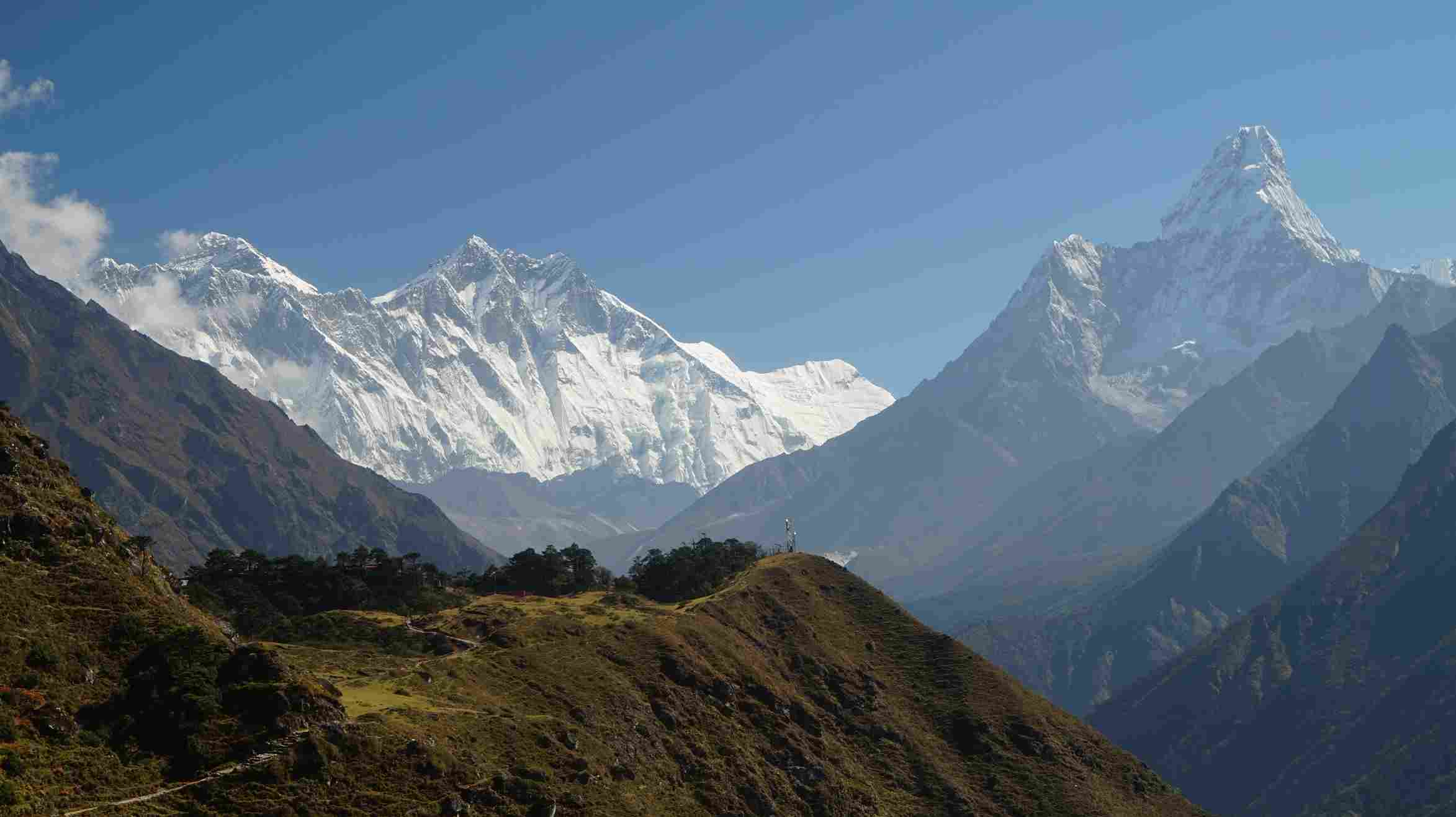
If you’ve been to Everest or Annapurna, you’ll find that Upper Mustang feels very different. While those routes are Nepal’s most popular, they are also the most crowded. Since Upper Mustang is a restricted area, it receives far fewer visitors than Everest or Annapurna. Instead of glaciers and green hillsides, you’ll trek through a unique, desert-like landscape shaped by the Tibetan Plateau.
Traveling through Upper Mustang is like walking into another era. The ancient city of Lo Manthang and the village of Kagbeni are full of old monasteries, cave temples, and historic sites that showcase the region’s rich past. Because it lies close to Tibet, Upper Mustang has a stronger Tibetan Buddhist influence than Everest or Annapurna. This is reflected in its architecture, local language, and daily traditions.
If you’re looking for a trekking experience that’s different from the usual routes, the Upper Mustang Trek is an excellent choice. It combines adventure, history, culture, and spirituality to create an experience that feels different from the well-known Everest and Annapurna treks. This is what makes Upper Mustang one of Nepal’s most special destinations.
Altitude Sickness and Acclimatization Importance for Short Upper Mustang Trek
During the Short Upper Mustang Trek, trekkers rapidly move from the lower valleys near Pokhara into a dry high-altitude desert where oxygen levels decrease with elevation. When you reach places like Lo La Pass (3,950 m), the thinner air can trigger Acute Mountain Sickness (AMS). Common early symptoms are headaches, nausea, dizziness, shortness of breath, poor sleep, and unusual tiredness.
Proper acclimatization is one of the most important safety factors during the trek. Standard itineraries keep daily walking hours between 5 and 6 hours so the body can acclimatize to lower oxygen levels at high altitude. Spending extra time in lower villages like Kagbeni before moving higher improves acclimatization and lowers the risk of severe altitude problems. Our teams also monitor oxygen saturation levels daily, and if symptoms become serious or continue to worsen, they will immediately move you to a lower altitude for safety.
Here are some of the major tips to prevent altitude sickness during the Upper Mustang Trek:
Take your time going higher: Even if you feel good, give your body time to adapt. Once above 3,000 m, aim to gain no more than 500–600 m of sleeping altitude each day.
Take acclimatization days: Spend at least one full day resting and adjusting in Lo Manthang to let your body adapt to the higher altitude.
Stay hydrated: The dry, windy climate of Mustang causes more fluid loss, so drink 3–4 liters of water each day.
Avoid alcohol and sleeping pills: At high altitude, they can reduce breathing during sleep and make it harder to adjust to low oxygen levels, making altitude sickness symptoms more difficult to recognize.
Eat enough even if you don’t feel hungry: High altitude can reduce your appetite, but your body needs extra energy from foods like carbohydrates to handle the demands of trekking.
Know the early signs: Headache, nausea, dizziness, tiredness, and loss of appetite are early signs of altitude sickness. Take these symptoms seriously and give your body time to adjust.
How Much Does Short Upper Mustang Trek Cost?
The Upper Mustang Trek costs between USD 1,460 and USD 1,550 per person. Smaller groups of 1–4 trekkers pay around USD 1,550 per person, while larger groups of 13–18 people can lower the price to around USD 1,460 each. The trek covers the expensive Upper Mustang Restricted Area Permit, Annapurna Conservation Area Permit (ACAP), licensed trekking guide, porter support, teahouse accommodation, three daily meals during the trek, and ground transportation between Pokhara and Jomsom.
It also includes guide insurance, accommodation in trekking villages, airport transfers, and basic first-aid support during the journey. However, trekkers should still prepare extra personal spending money for hot showers, charging devices, Wi-Fi, snacks, bottled drinks, tips for guides and porters, travel insurance, and international airfare to Nepal. Since Upper Mustang is a restricted Himalayan region with costly permits and remote logistics, the trek is more expensive than many other trekking routes in Nepal.
Short Upper Mustang Trekking vs Jeep Tour
A long, high-altitude trek from Jomsom to Lo Manthang requires time, energy, and preparation. If the trek doesn’t suit you, that is completely okay. For those who prefer a more comfortable journey, a jeep tour allows you to experience the region’s unique landscapes, ancient settlements, and historic villages from the comfort of a vehicle.
Whether you choose trekking or a jeep journey, both offer different ways to connect with the region’s beauty. While trekking provides a deeper connection with the land and people, jeep tours offer greater comfort, shorter travel time, less physical challenge, and easier access to the region.
Both ways of exploring Upper Mustang have their own unique appeal. The choice depends on your time, comfort level, and the kind of adventure you want.
Factors
Upper Mustang Trekking
Upper Mustang Jeep Tour
Duration
10–12 days
5–7 days
Physical Difficulty
Moderate to strenuous
Easy, with minimal physical challenge
Cultural Exploration
Deep, with close interaction with locals and villages
Moderate, mostly through stops at key sites
Landscape Experience
Slowly changing landscapes with beautiful views along the way
See more places in less time with faster transitions between sights
Altitude Sickness Risk
Higher, because you gradually gain altitude while trekking
Lower, but rapid altitude gain by vehicle can still cause symptoms
Flexibility
High, with the flexibility to adjust your daily pace and rest stops
Limited, as the journey follows a fixed driving schedule
Physical Fitness Needed
Good fitness required
Minimal fitness required
Best For
Adventure seekers, fitness enthusiasts, culture lovers, and travelers with more time
Travelers with limited time, older travelers, families, and those with health or mobility concerns
Required Gears And Equipment for Short Upper Mustang Trek
Bodywear
Clothing layers
Trekking pants
Thermal underwear
Rain jacket or poncho
Hat or beanie
Down or fleece jacket
Gloves
Buff or scarf
Long-sleeved trekking shirts
Footwear
Trekking boots
Moisture-wicking socks
Backpack
Large backpack with a rain cover
Daypack to carry essential items during the day
Electronics
Camera and extra batteries
Portable chargers for electronic devices
Power bank
Others
Trekking pole
Refillable water bottle with water purification tablets
Sunscreen and lip balm
Insect repellent
Cash
Necessary documents
Personal accessories
What People Ask About
Upper Mustang Trek
Do you need a guide and porter for the Upper Mustang Trek?
Yes, a licensed guide is mandatory for the Upper Mustang Trek under Nepal government regulations, while a porter is optional but highly recommended. The restricted-area permit system, limited infrastructure, and high-altitude conditions make guides essential for safety, navigation, logistics, and cultural interpretation.
Is the Upper Mustang Trek itinerary customizable?
Yes, the Upper Mustang Trek itinerary is customizable based on your fitness level, acclimatization needs, travel duration, and side-trip preferences. Our itineraries range from 11–15 days, with flexible overnight stops and optional jeep-supported areas.
Is a drone allowed during the Upper Mustang Trek?
No, drones are not allowed during the Upper Mustang Trek without official authorization. Flying a drone in the restricted Upper Mustang region needs permits from the Civil Aviation Authority of Nepal (CAAN), local authorities, and military clearance.
Is travel insurance mandatory for 11 Days Upper Mustang Trek?
Yes, travel insurance is mandatory for an 11-day Upper Mustang Trek. Policies should cover high-altitude trekking above 4,000 m, emergency helicopter evacuation, medical treatment, trip cancellations, and delays.
Can I take hot showers during the Upper Mustang Trek?
Yes, you can take hot showers during the Upper Mustang Trek, but they are rarely free. Most teahouses charge around USD 2–6 per use.
Is solo trekking allowed in Upper Mustang?
No, solo trekking is not allowed in Upper Mustang because the region falls within a restricted area where being accompanied by a licensed guide is mandatory. You can trek to the region without your friend, but you must hire a licensed guide.
What documents do I need for the Upper Mustang permit?
You need a valid passport, a current Nepal tourist visa, passport-sized photographs, and travel insurance to obtain a permit for the Upper Mustang Trek.
When is the best time to trek to Upper Mustang?
The best times to trek to Upper Mustang are spring (March to May) and autumn (September to November). The stable weather, favorable temperature, and clear skies make the season the best to witness the beauty of Upper Mustang and the mountain views.
How many acclimatization days are needed for Upper Mustang?
Generally, 1-2 acclimatization days are needed for the Upper Mustang Trek. However, the need depends on how your body performs with changing altitude and atmosphere. So, the acclimatization days are needed depending on how your body adapts to the altitude.
Is there an ATM or cash access in Mustang, Nepal?
Yes, you can access cash in Mustang, but only in Jomsom. After Jomsom, there are no reliable ATM facilities on the way to Upper Mustang. Even in Jomsom, ATMs can be out of cash, so consider carrying enough cash from Kathmandu or Pokhara.
Is photography allowed at the Lo Manthang palace?
Yes, photography is allowed in the outdoor areas of the Lo Manthang Royal Palace. However, it is not allowed to take photos inside the palace or of sacred objects unless you have permission.
Is a direct flight from Kathmandu to Jomsom available?
No, there are no direct flights from Kathmandu to Jomsom. To reach Jomsom from Kathmandu, you have to get to Pokhara first (by ground or air), then take a flight or drive to Jomsom.
How much does the Upper Mustang Trek Cost?
The cost of the Upper Mustang Trek ranges from USD 1,460 to 1,550 per person, depending on group size. Other factors, such as itinerary duration, preferred level of comfort, whether to hire a porter, and trip customization, can affect the trek’s cost.
What are the necessary permits for the Upper Mustang Trek?
The Restricted Area Permit (RAP) and the Annapurna Conservation Area Permit (ACAP) are the necessary permits for the Upper Mustang Trek.
How difficult is the Upper Mustang Trek?
The Upper Mustang Trek is a moderately difficult trek, suitable for trekkers with a basic level of physical fitness. However, trekkers should be prepared to walk 5-8 hours daily for about 8 days across different landscapes. Also, they should be prepared for a slight altitude sickness risk as the trek takes you above 4,000 m.
Where is Upper Mustang located?
Upper Mustang is a remote region in north-central Nepal, within Mustang District, and lies north of the Annapurna and Dhaulagiri mountain ranges. Also, border the Tibet Autonomous Region of China.
Can I trek Upper Mustang during the monsoon?
Yes, you can trek in Upper Mustang during the monsoon season (June to August), as the region lies in the “rain shadow” of the Annapurna and Dhaulagiri mountain ranges. The region is generally dry and sunny, even during the monsoon, making it a good choice for trekking.
What is the highest point of the Upper Mustang Trek?
The highest point of the Upper Mustang Trek is 4,010 m at Nyi La. Altitude sickness is a major concern at that elevation. So, walking slowly, staying hydrated, eating well, and acclimatizing are essential.
Why is the Upper Mustang permit so expensive?
The Upper Mustang permit is expensive because the region is a restricted area. The permit helps limit the number of visitors, protect the raw mountain environment, and preserve the region’s unique Tibetan Buddhist culture and traditions.
Let our local mountain experts craft a personalized itinerary around your schedule, fitness level, and travel goals — safe, authentic, and rooted in Nepal Alternative Treks’ trail experience.
Need assistance? Our travel expert Tej Bahadur Gurung is here to help! Please fill out the form below to initiate a chat and get your queries resolved quickly.


 Poland5.0 /5