Mountain, Forest, Village, Glacier, Hot Spring, Waterfall
Region of Nepal
Region of Nepal
Annapurna Region, Kaski
Max. Altitude
Max. Altitude
4,130 m / 13,550 ft
Annapurna Base Camp with Poon Hill Trek Overview
The Annapurna Base Camp (ABC) with Poon Hill Trek is one of the most popular treks in Nepal and an iconic Himalayan journey that takes you into the Annapurna Sanctuary and to the foot of Mount Annapurna (8,091 m). The journey starts from lowland villages near Pokhara, then passes through terraced farms, dense rhododendron forests, and traditional Gurung and Magar settlements. Afterward, the journey takes you to a natural amphitheater of mountain peaks. One unique aspect of the ABC Trek is how quickly the landscape transforms from subtropical greenery to high alpine terrain within a day.
Generally completed in 7 to 10 days, this trek is one of the most popular treks in the Annapurna region. Similarly, the trek is perfect for travelers looking for a balanced adventure that is challenging enough to feel worthwhile, yet achievable for beginners. Likewise, the trek to ABC is graded moderate, which makes it accessible to first-time trekkers with average fitness and no previous mountaineering experience.
Reaching the foot of the world’s 10th-highest peak, Mount Annapurna, is a highlight in itself. But the stunning views of the Annapurna range that surround you will make your adventure exceptional. By the time you reach the base camp, mountains like Annapurna I, Annapurna II, Annapurna III, Machhapuchhre (Fishtail), Annapurna South, and Hiunchuli will completely surround you. It feels like you are inside the mountains, not just looking at them.
Another unique part of this trek is the local life you see along the way. The villages in the Annapurna region are home to the Gurung and Magar communities, not just a destination for tourists. In addition, there’s also a psychological arc to the journey. At the start, the trek feels welcoming and full of life. Early in the trip, you take the famous Poon Hill trek for sunrise. After that, the journey changes direction both physically and mentally towards Annapurna Base Camp.
Ready to experience this adventure? Send us an inquiry, and we will reply within 12 hours with available departure dates for 2026, group size options, and the booking form.
Highlights of 10 Days Annapurna Base Camp with Poon Hill Trek
Stand at the foot of Mount Annapurna, the world’s 10th-highest mountain.
Walk through traditional villages of Ghorepani, Tadapani, and Chhomrong and experience the local culture and hospitality.
Enjoy the gorgeous sunrise view from the top of the Poon Hill View Tower.
See amazing views of Annapurna I-IV, Dhaulagiri, Machhapuchhre (Fishtail), Nilgiri, and other peaks throughout the ABC trek route.
Trek through diverse landscapes and vegetation, including low subtropical, alpine, and arctic terrain of the Annapurna region.
Explore the Annapurna Conservation Area and witness its diverse flora and fauna.
Soak and relax at the hot water pool at Jhinu Danda.
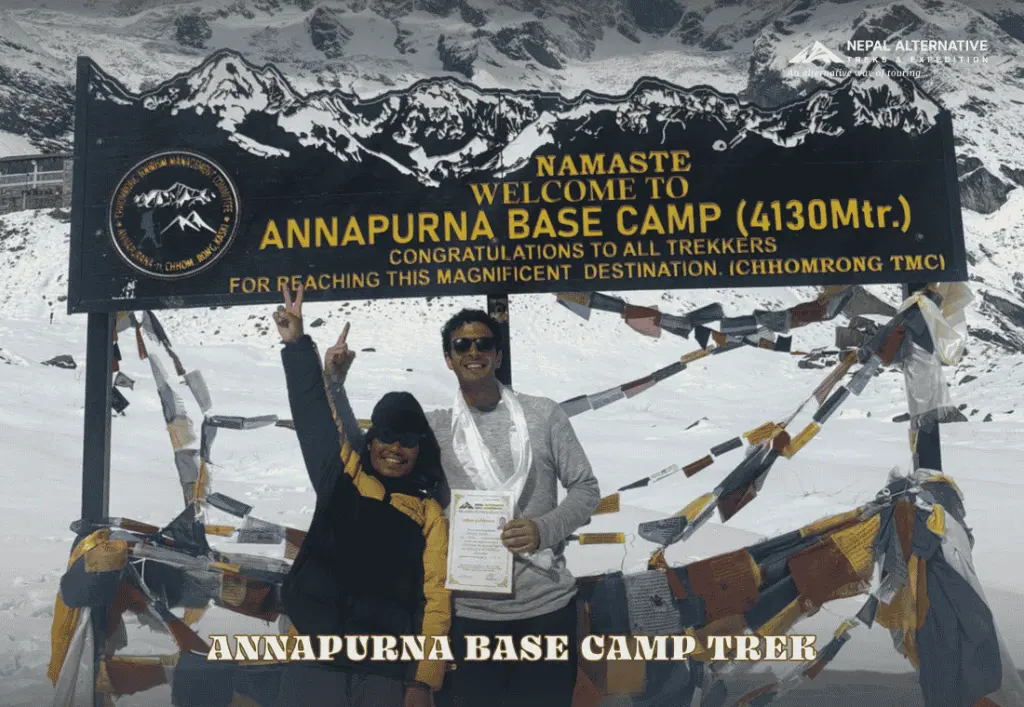
Watch the sunrise over the Annapurna range right from the base camp of Annapurna.
Difficulty of ABC Trek
Regarding the Annapurna Base Camp trek difficulty, the trek is considered moderate. It’s not extremely hard, but it’s not easy either, making it a moderately challenging trek. You’ll need to walk about 5 to 7 hours each day on trails that go up and down, with some steep stone steps, especially between Lower and Upper Sinuwa. The walk from Deurali to base camp is one of the toughest parts because of the high altitude and rough path.
If you’re physically fit and can handle long walks, you’ll be able to complete the trek. But if you’re not used to hiking or regular exercise, it can feel tiring. Many people say their legs feel shaky by the end of the day. The trek gets even harder in winter when it snows. The trails can become slippery, and the cold, thin air makes walking and breathing more difficult. In that season, crampons and warm gear are a must.
Still, with strong willpower, basic fitness, and the right mindset, reaching Annapurna Base Camp is possible.
10 Days Annapurna Base Camp with Poon Hill Trek Itinerary
Day 1
Hille Village
Hille Village
Tikhedhunga Village
Tikhedhunga Village
Tikhedhunga Waterfall
Tikhedhunga Waterfall
Ulleri Village
Ulleri Village
Drive from Pokhara to Sudame – Trek to Banthanti
Day 1 Facts
Trekking Time Average
35-45 km drive (2-3 hours)
10-12 km Uphill Hike (4 hours)
Accommodation
Machhapuchhre Guest House or Similar category
Altitude
(2,100 m / 6,930 ft)
Included meals
Lunch, Dinner
Your Annapurna Base Camp trek begins with a two-hour drive from Pokhara to Sudame along the Baglung Highway, marking the first day of the trek. During the drive, you’ll catch beautiful morning views of Mount Annapurna I and the Machhapuchhre (Fishtail). Once you reach Sudame, the real adventure along the ABC trek trail starts. You’ll begin walking through charming hillside villages like Hile and Tikhedhunga, where the stone steps and terraced farms give a glimpse into traditional village life.
As you continue uphill on the route, you’ll pass the famous Tikhedhunga Waterfall and arrive at Ulleri Village after climbing a steep staircase. The uphill walk to Ulleri can be challenging. After a few more ascents through rhododendron forests, you’ll reach Banthanti (2,100 m), where you’ll spend the night at a cozy teahouse. This marks the first real day on your Annapurna Base Camp trek itinerary, setting the pace for what lies ahead on the beautiful Annapurna Base Camp path.
On the second day’s itinerary of the Annapurna Base Camp trek, today’s trek takes you deeper into the forest. From Banthanti, the route goes steadily uphill through a thick rhododendron forest. If you are trekking in spring (February to April), these trees are covered in red, pink, and white flowers, making the whole forest look incredibly beautiful.
The path has a mix of mud, stone steps, and tree roots, so you need to watch your step, especially if it rained the night before. You’ll continue the trek until you reach a small resting point called Nangethanti, where you can take a break near the waterfall and enjoy the quiet surroundings. After a short rest, the trek continues uphill for about 1.5 hours toward Ghorepani. It is a traditional village and a key stop on the Annapurna Base Camp, where you can catch the views of the Annapurna Massif, Nilgiri, and Dhaulagiri. Day’s overnight stay and dinner are at Ghorepani.
Day 3
Hike to Poon hill
Hike to Poon hill
Cheering group at Poon hill
Cheering group at Poon hill
A beautiful nature trail towards Tadapani
A beautiful nature trail towards Tadapani
Rhododrendon forest
Rhododrendon forest
Trek to Tadapani
Day 3 Facts
Trekking Time Average
14 km Up / Downhill Hike
(5-7 hours)
Accommodation
Hotel Grand View or Similar category
Altitude
(2,650 m / 8,745 ft)
Included meals
Breakfast, Lunch, Dinner
Day 3 Annapurna Base Camp trek starts early with a morning hike to the famous Poon Hill viewpoint. This spot is just an hour above Ghorepani and is one of the highlights of the trek. From here, you’ll witness an incredible sunrise lighting up the Himalayas, including peaks of Annapurna, Dhaulagiri, Machhapuchhre (Fishtail), Nilgiri, and Himalchuli. After enjoying the views, you’ll return to Ghorepani for a warm breakfast before continuing the journey.
The trek via Ghorepani to Tadapani takes you through peaceful rhododendron forests, passing spots like Gurung Hill, Deurali, and Banthanti. This part of the Annapurna Base Camp trekking route is a mix of uphill and downhill trails. As you reach Tadapani at 2,650 m, you’ll feel one step closer to Annapurna Base Camp. It’s a perfect place to rest and prepare for the next part of your journey.
Day 4
Hotel Grand View, Tadapani
Hotel Grand View, Tadapani
Sun Set view from Tadapani
Sun Set view from Tadapani
Chuile Village
Chuile Village
The view from Chhommrong
The view from Chhommrong
Rhododendron on way to Chhomrong
Rhododendron on way to Chhomrong
Breakfast in Chhomrong
Breakfast in Chhomrong
Trek to Chhomrong Village
Day 4 Facts
Trekking Time Average
9-12 km Down/Uphill Hike
(5-7 hours)
Accommodation
Hotel Panorama/ Excellent View
Altitude
(2,130 m / 6,988 ft)
Included meals
Breakfast, Lunch, Dinner
After breakfast in Tadapani, you’ll start your journey through a peaceful forest filled with rhododendron trees. The route goes downhill first, taking you to the quiet village of Chuile. Then, you’ll hike uphill through Gurung village. This part of the ABC trek trail is both calming and scenic, with beautiful nature all around.
As you reach the final part of the trek, you’ll walk along a ridge with open views of the stunning Machhapuchhre Peak. Soon after, you’ll arrive at Chhomrong, one of the most beautiful Gurung villages on the path. Moreover, the village offers warm hospitality, great views, and is an overnight stop on the day.
Day 5
Wooden Bridge
Wooden Bridge
Drying grains
Drying grains
Chhommrong Village
Chhommrong Village
Blue flowers of blue stick Primula
Blue flowers of blue stick Primula
Trek to Bamboo
Day 5 Facts
Trekking Time Average
8-11 km Uphill Hike (4-5 hours)
Accommodation
Trekking Guest House or Similar category
Altitude
(2,300 m / 7,590 ft)
Included meals
Breakfast, Lunch, Dinner
On the fifth day, your trek continues as you leave Chhomrong and hike downhill toward the Chhomrong Khola. After crossing a suspension bridge, you’ll begin climbing uphill again to reach Sinuwa village along the Annapurna Base Camp trail. At Sinuwa, you will have lunch.
After lunch at Sinuwa, you’ll continue walking through a dense forest filled with bamboo and rhododendron trees. The path then leads you downhill to Bamboo village, your destination for the day. This peaceful stop along the ABC trek trail offers a cool, calm atmosphere and is a refreshing place to rest before continuing the day’s journey.
Day 6
At Durali 3200m.
At Durali 3200m.
At Himalaya 2900m.
At Himalaya 2900m.
Wooden Bridge
Wooden Bridge
101 Waterfall
101 Waterfall
Trek to Deurali
Day 6 Facts
Trekking Time Average
8-10 km Uphill Hike (5-6 hours)
Accommodation
Panorama View Hotel or Similar category
Altitude
(3,200 m / 10,499 ft)
Included meals
Breakfast, Lunch, Dinner
Today, you’ll begin your trek from Bamboo. At first, you will climb through foggy Bamboo forests toward Dovan. Leaving bamboo forests, you’ll begin ascending through rocky paths towards an exposed ridge. As you climb higher, you’ll pass through Dovan and continue to the Himalaya village.
From Himalaya, the trail follows the beautiful Modi River upstream toward Deurali. The route becomes more open with fewer trees and more mountain views. You can even take a short exploration to the Hinku Cave, an ice cave formed out of icy mountain water. Continuing the trek, you’ll reach Deurali (3,200 m), where you’ll spend the night surrounded by towering peaks.
Day 7
Fishtail View from MBC
Fishtail View from MBC
Deurali Waterfall
Deurali Waterfall
At Machhapuchhre Base Camp 3700m.
At Machhapuchhre Base Camp 3700m.
Sun Rise at ABC
Sun Rise at ABC
Trek to Annapurna Base Camp
Day 7 Facts
Trekking Time Average
7.5-9 km Uphill Hike (4-6 hours )
Accommodation
Annapurna Sanctuary Lodge or Similar category
Altitude
(4,130 m / 13,550ft)
Included meals
Breakfast, Lunch, Dinner
Today is the day you have been waiting for. The day starts with the climb alongside the Modi River towards the pristine alpine shrubs. You may see naturally stacked rock slabs. An arduous climb past another icy cave will bring you to Machhapuchhre Base Camp (3,700 m), located right below the sharp peak of Mount Fishtail. From here, you get stunning views of the Fishtail Mountain, known for its unique shape. You’ll also pass the lovely Deurali Waterfall before reaching MBC.
You’ll enjoy lunch at Machhapuchhre Base Camp and start on the trail’s last section. After about an hour of walking through vast rocky fields, you will reach Annapurna Base Camp (4,130 m), your journey’s ultimate destination. From here, you’ll get 360-degree views of snowy peaks like Annapurna I, Annapurna South, Hiunchuli, and Dhaulagiri. Spend your evening witnessing the sunset over the Himalayan peaks and stargazing under a clear sky at night. Stay overnight at ABC.
Your day starts early at Annapurna Base Camp. Wake up to a golden sunrise over the Annapurna range and enjoy peaceful views of Annapurna massif, Hiunchuli, and Machhapuchhre. Before breakfast, take a walk to the Memorial Chorten. It’s a special moment on the adventure, surrounded by snow-covered peaks.
After enjoying your breakfast, you’ll begin to trek back by heading downstream along the Modi River towards Deurali. Further, you will continue climbing down through the Himalaya, Dovan, until you reach Bamboo. It’s a long but rewarding day filled with nature, mountain air, and the comfort of walking back through landscapes you now know well. Overnight in Bamboo.
Day 9
Chhommrong Khola Bridge
Chhommrong Khola Bridge
Jhinu Danda
Jhinu Danda
Namaste Guest House, Jhinu
Namaste Guest House, Jhinu
Natural hot pool, Jhinu
Natural hot pool, Jhinu
Trek to Jhinu Danda
Day 9 Facts
Trekking Time Average
8.5-11 km downhill Hike (5-6 hours)
Accommodation
Park Himalaya/ Namaste Lodge
Altitude
(1,600 m / 5,280 ft)
Included meals
Breakfast, Lunch, Dinner
Leaving Bamboo, you’ll begin trekking through lush forests and then climb along the narrow ridge towards Sinuwa village. From Sinuwa, the trail gradually drops towards the Chhomrong River. Cross the river and climb the stone steps towards Chhomrong Village.
From Chhomrong, the trail continues downhill along an exposed ridge to reach Jhinu Danda. This cozy village is at a lower altitude and is well known for its natural hot springs. After a long day on the Annapurna Base Camp path, you can soak in the warm water and relax your sore muscles. It’s the perfect way to end the day. Overnight stay in Jhinu Danda.
Day 10
At Modi River
At Modi River
Jhinu Suspension Bridge
Jhinu Suspension Bridge
Bus to Pokhara
Bus to Pokhara
At Pokhara, Fewa Lake
At Pokhara, Fewa Lake
Trek to Samrung – Drive to Pokhara – Overnight in Pokhara
Day 10 Facts
Trekking Time Average
20 minutes downhill hike (1-2 km) +
2-4 hours drive to Pokhara (55-60 km)
Altitude
(820 m / 2,690 ft)
Included meals
Breakfast
It’s your last day at the Annapurna region and the Annapurna Base Camp Trek trail. Have your morning meal at Jhinu Danda, then begin a short downhill trek to Samrung. From Samrung, you’ll hop on a jeep and drive back to Pokhara via Nayapul.
Once in Pokhara, you can relax by Fewa Lake, take a peaceful stroll, or enjoy the city’s vibrant cafés and lakeside vibes. After completing the ABC trek, a restful night in Pokhara is the perfect way to celebrate the journey.
What’s Included
Pick Up and Drop Off at Hotel in Pokhara before/after Trekking.
Lodge ( Twin share basis) accommodation during the trek.
All meals ( Breakfast, Lunch, Dinner ) during the trek.
One experienced, first aid trained, fluent English speaking, friendly, and government-authorized trekking guide
1 Porter per 2 Trekkers and keep luggage weight under 10kg per person.
Guide/ Porter’s food, accommodation, salary, insurance, transportation, and equipment.
Entire overland transportation as mentioned in the itinerary.
Annapurna conservation area project ( ACAP) and necessary permits.
A trekking map, a duffel bag, an oxygen saturation check-up every day, water purification, a first aid kit box, a company t-shirt, and a trekking completion certificate.
Government tax and service charge.
Assistance for emergency rescue evacuation.
Public Liability Insurance.
What’s Not included
Hotel accommodation and meals in Kathmandu/Pokhara.
Hard and soft drinks such as tea/coffee, Coke, Fanta, mineral water, beer, dessert, hot shower, hot water, battery charge, laundry, phone bill, bar bill, etc.
Personal Travel Insurance.
International Flight Tickets.
Nepal Tourist Visa Fee.
Tips for guides and porters ( Highly suggested).
Add-ons and Options
Add-ons support your Annapurna Base Camp Trek with easy travel, essential gear, city tours, rafting, flights, and Pokhara stays. These add-ons can be included directly when you reserve your trek.
Go to the Join Our Group Departure or Book the Trip area, select the departure date you prefer, and continue through to checkout. On the checkout screen, you will see a menu of optional extras such as transport upgrades, trekking gear rental, sightseeing tours, and adventure experiences. You’re free to pick as many as you want and to increase the quantity for each option, so they are all added to your booking total before you confirm payment.
List of available add-ons:
Kathmandu to Pokhara by VIP Sofa Tourist Bus (USD 15 per person one way / USD 30 round trip): Travel by tourist bus with sofa-style seats between Kathmandu and Pokhara.
Private Vehicle Transfers Kathmandu to Pokhara (car USD 100, jeep USD 150, van USD 200): Use private cars, jeeps, or vans for more comfortable travel between Kathmandu and Pokhara.
Gear Rental (sleeping bags USD 10, jackets USD 10, Crampons/Spikes USD 10, poles USD 10): Rent essential trekking gear like sleeping bag, warm jacket, a pair of crampons/spikes, and a pair of walking poles instead of buying everything yourself.
Pokhara Sightseeing (USD 30 per person): Explore Pokhara’s lakeside, viewpoints, and key attractions with a guided tour.
Rafting at Trishuli River (USD 45 per person): Add a Trishuli rafting day for extra adventure around your trek.
Kathmandu City Tour (USD 30 per person): Visit temples, Durbar Squares, and markets in Kathmandu with a local guide.
Kathmandu to Pokhara by Flight (USD 120 one way / USD 240 round trip): Fly between Kathmandu and Pokhara to shorten travel time.
Paragliding in Pokhara (USD 90 per person for 45 minutes): Enjoy tandem paragliding over Pokhara with views of the Annapurna range.
Zipline in Pokhara (USD 80 per person): Try a zipline ride in the Pokhara area for a short, exciting add-on.
Pokhara to Kathmandu by Private Transport (car USD 100, jeep USD 150, van USD 200): Return from Pokhara to Kathmandu in a private vehicle for a smoother road journey.
Hotel Accommodation in Pokhara (USD 50 per night for a double/twin share room with breakfast): Stay in a comfortable Pokhara hotel with breakfast included before or after your ABC trek.
Everest Aerial Tour 1 hour (USD 300 per person): Take a 1-hour aerial tour around Everest, including private airport transfers from your hotel in Kathmandu. This is a scenic, in-air tour without a landing.
Best time to do ABC Trek
January
-15°C to -5°C
February
-15°C to -5°C
March
-10°C to 0°C
April
-5°C to 10°C
May
0°C to 15°C
June
5°C to 20°C
July
10°C to 25°C
August
10°C to 25°C
September
5°C to 20°C
October
-10°C to 5°C
November
-10°C to 5°C
December
-15°C to 5°C
Based on the weather patterns data above, the best months to trek to Annapurna Base Camp are March, April, May, September, October, and November. These months fall into spring (March to May) and autumn (September to November), the two most popular trekking seasons in Nepal.
In spring (March to May), the temperatures gradually rise from -10°C to 20°C, and the trail is covered with blooming rhododendrons and lush greenery. The weather is stable, and visibility is excellent, especially for seeing peaks like Annapurna I, Machhapuchhre, and Hiunchuli.
In autumn (September to November), the temperature ranges from -10°C to 20°C. After the monsoon clears the dust, the skies become clear. This is when you get the most stunning mountain views, particularly during sunrise from Poon Hill and Annapurna Base Camp.
Our scheduled group tours offer fixed departure dates, providing an excellent opportunity for travelers to join our small group trips.
Note : Our fixed group departure dates, services and price is guaranteed even if the group numbers are 1 person to maximum 18 persons. We will provide a guide cum porter if there is only 1 person to operate the trek and one more assistant guide if group size is above 10 persons. And of course, guide cum porter will carry 10 kg luggage
Book a private trip on your own date.
Every journey we create is uniquely tailored to you. Share your interests and passions, and our travel experts will design an unforgettable adventure filled with extraordinary, one-of-a-kind experiences crafted just for you.
Annapurna Base Camp Trek Firstly I want to thank Tej (Managing Director of the company) for his outstanding help and dedication to make the trek as best as possible. Communication was absolutely wonderful: Fast, helpful, insightful, on the point and never pushy. The online payment process is great and reliable.…
My second time trekking through your agency was also amazing as last time. Thanks very much for organizing so professionally my trek for a month to ABC, Manang and Ganesh himal. My porter cum guide Chanda is very friendly, helpful, informative and taking care of me. It is never enough…
Thanks Nepal alternative treks for great trekking’ I was in bad condition at the high altitude but my guide was very good at checking my condition and encouraged me to go on. He was all the time helper at taking many pictures at the summit. John Rueynski USA
Very well-organized agency and an excellent guide. I found flexibility to change the hotel upon and the guide helped out a lot while trekking and settling on tea house. Great trekking great guide. Would appreciate this whole team. I would come next time again to Nepal if time available for…
Top 4 Things to Experience During Annapurna Base Camp with poon Hill Trek
The most significant experiences during the Annapurna Base Camp Trek include the sunrise view from Poon Hill, cultural diversity in the villages, a hot bath at Jhinu Hot Springs, gorgeous mountain views from Annapurna Base Camp, and Machhapuchhre Base Camp.
Sunrise View from Ghorepani Poon Hill Viewpoint
Poon Hill is one of Nepal’s most famous viewpoints, and for good reason. This famous viewpoint offers a 360° sight of the Himalayas, including Annapurna, Dhaulagiri, Machhapuchhre (Fishtail), Hiunchuli, Nilgiri, and Gangapurna. On clear mornings, the first light of day turns the snowy peaks into glowing shades of gold, which is a highlight of the location. While sunrise is the most popular, sunset views are equally stunning.
To get to the viewpoint, trekkers wake up before dawn in Ghorepani and hike for about an hour up stone staircases through rhododendron forests. They reach Poon Hill just in time to watch the sunrise over the Annapurna and Dhaulagiri ranges, as the first golden light touches the mountain peaks.
Local Culture in Villages Like Ghorepani, Tadapani, and Deurali
You will experience the Annapurna region’s diverse culture and tradition during the trek. Most of the region’s residents belong to the Gurung, Magar, and Thakali ethnic groups. Each ethnic group has its unique language, dress, culture, customs, festivals, and beliefs. For example, the women from the Gurung community wear Lungi while men wear Bhangro. Magar women wear traditional attire known as Chaubandhi cholo, while men wear Kaachhad. Similarly, you can experience the Ghatu dance that belongs to the Gurung community, and the Maruni dance of the Magar communities.
Likewise, you will also come across ancient monasteries and stupas, which reflect the influence of Tibetan Buddhism. Some ethnic groups also follow their indigenous religion. But one thing is common to them all: their warm and friendly hospitality. The teahouses, lodges, and homestays are common accommodations in the Annapurna region. Locals run these places along the trails. They offer authentic local cuisine, which you can taste during the trek. Thus, the trek to Annapurna Base Camp is not only an adventure but also a rich cultural exploration.
Relax Bath in the Jhinu Hot Springs After a Long Day’s Trek
After long trekking days, nothing feels better than a dip in the Jhinu Danda hot springs. After the hike to Annapurna Base Camp, you’ll descend to Bamboo and Jhinu Danda. At 1,600 m in elevation, the village is famous for its natural hot springs. To reach the hot springs, you must take a 30-minute hike on steep trails from the village.
The hot spring pools lie on the Modi Khola Riverbank, and lush trees surround them. You can soak and relax your tired muscles in the hot water while enjoying the views. Depending on the river conditions, you can also dip into the icy river waters. However, this is not possible when the river current is too strong, and the river level is too high. The hot springs will rejuvenate you, and you can return to the village to stay overnight.
Jaw-Dropping Views at Annapurna Base Camp and Machhapuchhre Base Camp
Reaching Machhapuchhre Base Camp (MBC) and Annapurna Base Camp (ABC) is the ultimate reward of the trek. From MBC, you’ll see the iconic Fishtail Peak up close, along with other towering summits. A few hours further, ABC opens into a natural amphitheater surrounded by mountains such as Annapurna I, Hiunchuli, Gangapurna, and Machhapuchhre.
Meals and Accommodation During Annapurna Base Camp with Poon hill Trek
Meals Options For Annapurna Base Camp with on Hill Trek
There are various meals during the trek, and you can find several options at the teahouses. However, the lower elevations (Pokhara, Ghorepani, Chhomrong) offer a wide range of meal options (from traditional Nepalese, Tibetan, and Western dishes), as you go higher (Deurali, Annapurna Base Camp), food choices become more limited and prices increase. However, we provide three meals daily: breakfast, lunch, and dinner at the finest tea house. Here’s the sample of the meal we provide:
Meal
Option
Breakfast
Porridge, pancakes, muesli, toast, Nepali set breakfast
Lunch
Dal Bhat (rice with lentil soup), momo, thukpa, fried rice, chowmein, sandwiches
Dinner
Dal Bhat, curry, spaghetti
Tips for trekkers:
Hot water is available but with an extra cost
Bring snacks and energy bars for trekking.
Refill your bottle from taps along the trail (after purification). But use a purification tablet to filter water.
Buying 4–5 bottles of mineral water every day is impractical due to the high cost and limited availability.
Accommodation During 10 Days Annapurna Base Camp Trek
You will stay in teahouses, lodges, and homestays during the Annapurna Base Camp Trek. They are budget-friendly and provide basic facilities. Generally, rooms with attached bathrooms are not available during the trek. Instead, you’ll have shared bathrooms. The room has a twin-sharing bed with a modest wooden frame, along with a mattress, pillow, and blanket.
Dining is in a communal dining area, often with a heater in the center. Moreover, charging facilities, Wi-Fi, and hot showers are also available at the tea house but cost extra. The facilities of the tea houses become minimal as you ascend to higher elevations.
You will stay at the following teahouses during the trek:
Day
Teahouse Name
Location
Day 1
Machhapuchhre Guest House
Banthanti
Day 2
Hotel Super View
Ghorepani
Day 3
Hotel Grand View
Tadapani
Day 4
Hotel Panorama/ Excellent View
Chhomrong
Day 5
Trekking Guest House
Bamboo
Day 6
Panorama View Hotel
Deurali
Day 7
Annapurna Sanctuary Lodge
Annapurna Base Camp
Day 8
Trekking Lodge
Bamboo
Day 9
Park Himalaya/ Namaste Lodge
Jhinu Danda
Day 10
Not applicable
Pokhara
ABC Trek Distance, Transport, and Communication Guide
Planning the Annapurna Base Camp trek starts with understanding the practical details, including how far you travel, which route you take, how you get there, and how you stay connected along the way.
How Far Is Annapurna Base Camp from Pokhara?
The total distance from Pokhara to Annapurna Base Camp is approximately 81.1 km. As the trek begins, you cover about 10 to 14 km per day on foot, with each walking day taking between 5 and 7 hours, depending on the route. The distance may sound long on paper, but once you are on the trail, the constantly changing landscape keeps every kilometer interesting.
Transportation Options for the Annapurna Base Camp Trek
Getting to Pokhara from Kathmandu:
The ABC trek starts from Pokhara, and you have two main options to get there from Kathmandu:
By Air: A domestic flight from Kathmandu to Pokhara takes just 25 minutes and operates daily.
By Road: Tourist buses, public buses, private cars, and jeeps all run between Kathmandu and Pokhara. The overland journey takes approximately 6 to 7 hours.
Getting from Pokhara to the Trek Starting Point:
From Pokhara, the only way to reach Sudame, the starting point of the trek, is by road. A jeep is the most practical option, as the road to Sudame is unpaved and includes rough, bumpy sections that are not suitable for regular vehicles.
Communication Options Along the ABC Trek
Mobile Network (NTC / Ncell): Nepali SIM cards from NTC or Ncell provide good coverage in the lower parts of the trail, up to Chhomrong. Beyond that, signals become weak and unreliable.
Wi-Fi at Teahouses: Many teahouses along the route offer Wi-Fi, but the connection is slow and comes at an extra charge.
Satellite Phones: In areas with no mobile coverage, some teahouses and guides carry satellite phones that can be used in emergencies.
What are the Permit Requirements for ABC with Poon Hill Trek?
Annapurna Conservation Area Permit is only required for the Annapurna Base Camp Trek. The permit allows trekkers to enter the Annapurna Conservation Area, which is a protected region, and supports environmental conservation and sustainable tourism. Without this permit, you cannot legally trek through the area.
Trekkers can obtain the ACAP permit in person, either in Kathmandu or Pokhara. In Kathmandu, an ACAP permit can be issued at the Nepal Tourism Board (NTB) Office, located in Bhrikutimandap, Kathmandu. Likewise, in Pokhara, an ACAP permit can be obtained at the Nepal Tourism Board (NTB) Office, located in Damside, Pokhara. These offices are open from Sunday to Friday, 10:00 AM to 5:00 PM and remain closed on Saturdays and public holidays.
The ACAP permit fees are NRs 3,000 for foreign nationals, NRs 1,000 for SAARC nationals, and free for children under 10 years of age.
Note:As of recent policy changes, Trekker’s Information Management System (TIMS) card is no longer required for the Annapurna Base Camp Trek, which was mandatory before.
Preparation for Annapurna Base Camp with Poon Hill Trek
Physical preparation
Trekking to Annapurna Base Camp requires several hours of hiking each day, with steep climbs and descents. So, you must be physically fit. Some simple exercises can help you prepare, like running, cycling, or brisk walking, to improve your stamina. For leg strength, do exercises like squats and lunges. Regular hikes with a backpack will also help you get used to trekking.
Mental preparation
Mental preparation is as important as being physically ready for the ABC trek. Choosing the best time for the trek will help you avoid mental weakness. You will have to walk for several hours, so you must be prepared mentally. You have to push yourself in challenging situations. You must prepare your mind for what you’ll encounter on your trekking journey. You must stay positive throughout your trip.
Acclimatization
Acclimatization is very important because the ABC trek takes you above 4,000 m. As you go higher, the air gets thinner, which can cause altitude sickness. To reduce this risk, you should plan your trek with acclimatization days to let your body adjust. Stay well hydrated and limit caffeine, as it can contribute to dehydration at altitude.
Gear and Equipment
Knowing what to pack for the Annapurna Base Camp is essential, as packing the right gear and equipment for the journey makes a real difference between a comfortable journey and an unnecessary struggle on the trail. Here is the list of gear trekkers should consider packing while planning an Annapurna adventure:
Clothing
Thermal Tops and Bottoms
Trekking Shirts
Trekking Pants
Fleece Jacket or Down Jacket
Waterproof Jacket and Pants
Hiking Socks
Gloves
Hat
Foot Wear
Trekking Boots
Sandals or Lightweight Shoes
Backpack
Daypack (20-30L)
Duffel Bag
Sleeping Gear
Sleeping Bag
Other Essentials
Trekking Poles
Water Bottles and Purification Tablets
Headlamp
First Aid Kit
Sunglasses
Sunscreen and Lip Balm
Snacks
Accessories
Gaiters
Microspikes
Travel Towel
Personal Toiletries
Annapurna Base Camp Elevation
Annapurna Base Camp, situated at the base of the world’s tenth-highest peak, Mount Annapurna (8,091 m), lies at an impressive height of 4,130 m / 13,550 ft above sea level. Reaching the altitude is one of the major achievements and a moment one can cherish for a lifetime. However, the journey is not easy, but of course, stunning through diverse terrain, lush forests, and rocky paths within the Annapurna Conservation Area.
ABC sits at an altitude of 4,130 m, where altitude-related issues are a significant concern. The higher the elevation, the lower the oxygen level, and the difficulty in breathing will increase accordingly. Thus, trekkers should be well aware of the challenges that might arise throughout the trek before attempting to conquer the height of the iconic base camp.
However, one can’t directly reach an elevation of 4,130 m; instead, trekkers should pass through numerous villages before reaching the altitude. Here is a brief breakdown of the elevation trekkers pass through to get the ultimate height of 4,130 m:
Pokhara: Pokhara is the gateway to ABC and lies at an elevation of 822 m / 2,696 ft.
Sudame: The trek to ABC begins from the village of Sudame, located at 1,537 m / 5,042 ft.
Banthanti: At an elevation of 2,100 m / 6,930 ft, Banthanti is the first stop on the journey to ABC.
Ghorepani: A famous village on the way to Annapurna Base Camp, Ghorepani lies at an altitude of 2,800 m / 9,240 ft.
Tadapani: The village lies at an elevation of 2,650 m / 8,745 ft.
Chhomrong: One of the most beautiful Gurung villages of the Annapurna region, Chhomrong lies at an elevation of 2,130 m / 6,988 ft.
Bamboo: Located in the dense bamboo forest, the village lies at 2,300 m / 7,590 ft.
Deurali: The last destination before reaching Annapurna Base Camp, Deurali lies at an elevation of 3,200 m / 10,499 ft.
Is Annapurna Base Camp Harder Than Everest Base Camp Trek?
Annapurna Base Camp Trek Vs Everest Base Camp Trek is a dilemma for trekkers. The answer to this question can vary depending on personal preference. Both trek destinations are moderately difficult treks and have no age restrictions. However, altitude plays a crucial role in determining the trek’s difficulty. The Everest Base Camp trek reaches 5,364 m / 17,598 ft. At this altitude, the oxygen level is much lower, and trekkers often feel short of breath or face symptoms of altitude sickness. On the other hand, the Annapurna Base Camp trek goes up to 4,130 m / 13,550 ft. While still high enough to cause altitude issues, it is not as extreme as Everest.
Moreover, the Everest Base Camp trek usually takes 12 to 14 days, including rest days for acclimatization. The long duration adds to the difficulty but also gives trekkers more time to adjust to the elevation. The Annapurna Base Camp trek is shorter, taking 7 to 12 days depending on the route and pace.
Likewise, the Everest Base Camp trail passes through Sagarmatha National Park and features steep paths, rocky ground, and narrow ridges. It is more rugged and can get crowded during the high season. The Annapurna Base Camp trail has stone staircases, terraced fields, rhododendron forests, and alpine meadows. The paths are well-maintained, and the climb is more gradual.
Not to mention, trekkers need to fly to Lukla, the starting point of the Everest Base Camp trek, either from Kathmandu or Ramechhap Airport. During the busy season and bad weather conditions, flights are often delayed, canceled, or diverted to Ramechhap Airport. This also adds to the challenge of the EBC trek. On the other hand, Pokhara is the starting point of the ABC trek and is easily accessible by both road and air from Kathmandu.
Hence, based on altitude risk, longer trekking days, flight delay probability, and trail conditions, the Everest Base Camp trek is generally considered more challenging than the Annapurna Base Camp Trek.
To help you decide, here’s a clear side-by-side comparison of both treks covering key factors such as altitude, duration, trail conditions, permits, crowd levels, and cultural experience.
Factors
Annapurna Base Camp Trek
Everest Base Camp Trek
Maximum Elevation
4,130 m / 13,550 ft
5,364 m / 17,598 ft
Trek Duration
7–10 days
12–14 days
Difficulty Level
Moderate
Moderate to Challenging
Altitude Sickness Risk
Moderate
Moderate to Higher
Starting Point
Pokhara
Lukla
Trek Region
Annapurna Region
Everest Region
Trail Type
Stone staircases, terraced fields, rhododendron forests, alpine meadows
Sherpa villages, glaciers, icefalls, and high Himalayan peaks
Cultural Experience
Gurung, Magar, and Thakali communities
Sherpa culture, Buddhist monasteries, and Namche Bazaar
Crowd Level
Moderate
High, especially during peak seasons
Permits Required
ACAP
Sagarmatha National Park Permit and Khumbu Pasang Lhamu Rural Municipality Permit
Physical Fitness Required
Average fitness; suitable for beginners
Good fitness; previous trekking experience recommended
Iconic Highlights
Poon Hill sunrise, Machhapuchhre, ABC amphitheater
Kala Patthar, Khumbu Icefall, Namche Bazaar
Suitable For
First-time trekkers, families, and moderate hikers
Experienced trekkers and those comfortable at high altitude
Now that you know what the journey looks like, all that’s left is to experience it yourself. If you have any questions regarding the trip, contact us directly at Nepal Alternative Treks. Our experts are ready to guide you 24/7.
What people ask about
Annapurna Base Camp with Poon Hill Trek
Is Annapurna harder than Everest Base Camp?
The Annapurna Base Camp trek is generally considered easier than the Everest Base Camp trek. Annapurna has a lower maximum altitude of 4,130 m, while Everest Base Camp is at 5,364 m. The Annapurna trek also has shorter daily walking hours and less steep sections than Everest.
Which is better, Annapurna Circuit or Annapurna Base Camp?
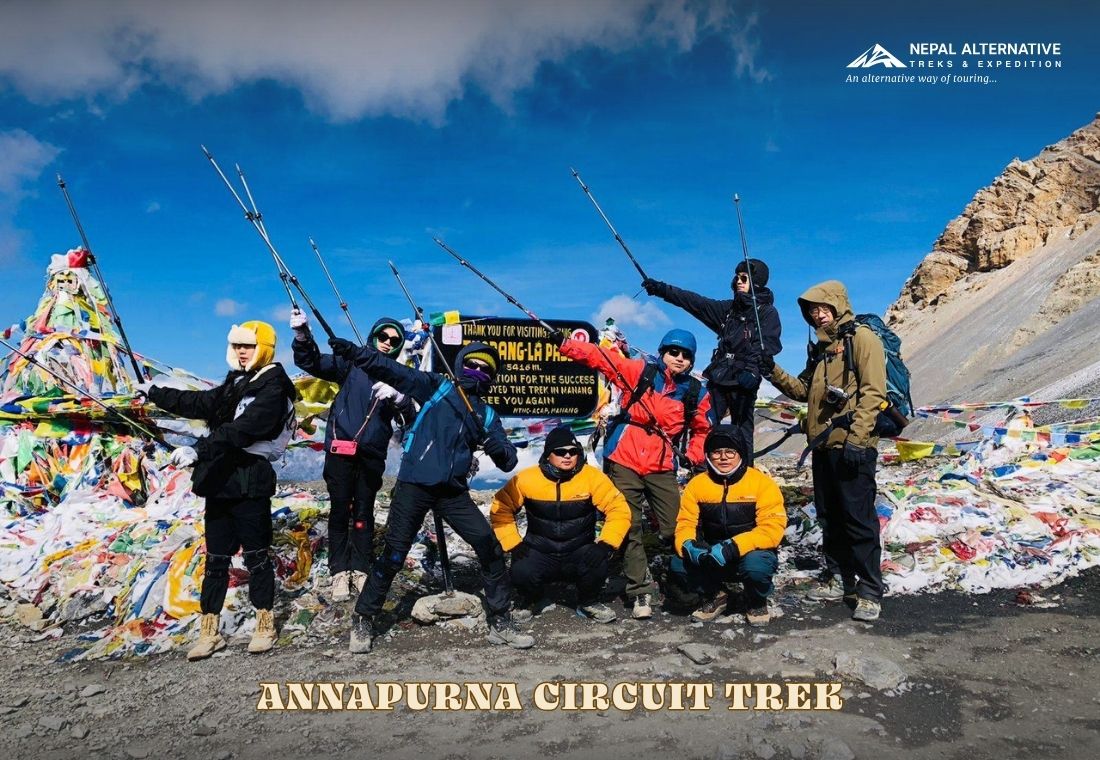
The choice between the Annapurna Circuit and Annapurna Base Camp depends on what you want. The Annapurna Base Camp trek is better for those seeking a shorter, easier journey with close-up mountain views. On the other hand, the Annapurna Circuit is ideal for trekkers wanting a longer, more challenging adventure with diverse landscapes and the high-altitude Thorong La Pass.
How crowded is the Annapurna Base Camp Trek route?
The Annapurna Base Camp Trek can get quite busy, especially during the peak seasons, spring and autumn. Many trekkers choose this route because it is popular and offers beautiful views. So, you might see a lot of people on the trail, particularly around the base camp and in the main lodges.
How many days from Pokhara to Annapurna Base Camp?
The trek from Pokhara to Annapurna Base Camp usually takes about 7 to 9 days. This includes the time to travel from Pokhara to the starting point of the trek, trek to the base camp, and return to Pokhara. Still, the exact number of days can vary depending on your pace and the route you take.
Which village is closest to Annapurna Base Camp?
The closest village to Annapurna Base Camp is Deurali. The village is located along the trek route and serves as a common stop for trekkers on their way to the base camp. Also, Deurali village is situated at a lower altitude, which helps trekkers acclimatize before reaching the higher elevations of the base camp.
Can you do the ABC trek without a guide?
No, you cannot do the Annapurna Base Camp trek without a guide. Nepal now requires most foreign trekkers to trek with a licensed guide for safety and regulation purposes, so solo trekking without one is generally not permitted.
Are Wi-Fi and other communication media available during the ABC Trek?
Yes, Wi-Fi and other communication services are available on the Annapurna Base Camp trek, but they are limited and less reliable as you move higher. Most teahouses along the route offer paid Wi-Fi, and mobile network coverage is available in many areas, though signals are weak or inconsistent.
Is Travel Insurance Required For Annapurna Base Camp Trek?
Yes, travel insurance is highly recommended and required for the Annapurna Base Camp trek. Due to risks like altitude sickness, injuries, and unpredictable weather, most trekking agencies ask for proof of insurance, especially one that covers high-altitude trekking and emergency helicopter evacuation.
Can I trek with my period?
Yes, you can trek to Annapurna Base Camp while on your period. With proper preparation like carrying enough sanitary products, maintaining hygiene, staying hydrated, and managing cramps, the trek is achievable even for those on their period.
How does my family get updated about my trek?
Your family can stay updated during the ABC trek through time-to-time communication rather than constant contact. Most accommodation points along the route offer paid Wi-Fi, and mobile network coverage is available in many sections, which allows you to send messages or make calls when the signal is available. If you’re trekking with a guide or agency, they can also provide updates in case of emergencies.
Need assistance? Our travel expert Tej Bahadur Gurung is here to help! Please fill out the form below to initiate a chat and get your queries resolved quickly.


 Bucharest, Romania5.0 /5


 Belgium5.0 /5