Mountain, Forest, Hill, Village, Waterfall, Terrace
Region of Nepal
Region of Nepal
Annapurna Region, Kaski
Max. Altitude
Max. Altitude
3,210 m/10,531 ft
Ghorepani Poon Hill Trek Overview
The Ghorepani Poon Hill Trek is one of the most popular short and one of the best weekend and family-friendly adventures in the Annapurna region. The trek is easy to moderately difficult, with well-maintained trails that make it a great choice for first-time trekkers, families with children, older travelers, and anyone with limited time. You can enjoy this trek any time of the year, as each season offers something unique, from colorful rhododendron flowers in spring to clear mountain views in autumn and winter.
The route to Ghorepani Poon Hill lies within the Annapurna Conservation Area, Nepal’s largest protected area, known for its rich biodiversity, diverse flora, and wildlife. The journey takes you through forests of rhododendron, oak, and pine, and a quiet village surrounded by terraced fields. The fresh mountain air, the sound of birds, and the peaceful Himalayan surroundings make the journey relaxing and enjoyable from start to finish.
The highlight of the trek is Poon Hill (3,210 m), a well-known sunrise viewpoint. Poon Hill offers views of the Annapurna range, including Annapurna I, Annapurna South, Annapurna II, and Annapurna IV, along with Dhaulagiri, Nilgiri, Tukuche Peak, Lamjung Himal, Machhapuchhre (Fishtail), and Hinchuli. Watching the sunrise over the Himalayan peaks is a memorable experience. Also, this amazing sight is one of the main reasons why this route is known as the Annapurna Sunrise Trek.
This 4-day Ghorepani Poon Hill trek starts with a short drive from Pokhara to Hile, from where you follow the Bhurungdi River to Ulleri. Then the trail climbs higher to Banthanti and goes through dense forests to reach Ghorepani, home to warm and welcoming Magar and Gurung communities. After an early morning hike to Poon Hill to watch the sunrise, you’ll walk down to Tadapani and continue to Ghandruk, one of Nepal’s largest Gurung villages.
During the trek, we stay in comfortable teahouses and local lodges, where you’ll enjoy delicious traditional meals and experience the friendly mountain lifestyle. The journey ends with a scenic drive back to Pokhara. As it starts and ends in Pokhara, it is considered an easily accessible adventure from the city.
Ghorepani Poon Hill Trek Major Highlights
Visit popular tourist destinations like Ghorepani, Ghandruk, and Poon Hill.
View Machhapuchhre (Fishtail), Hiunchuli, Annapurna South, Nilgiri, Tukuche, and the Dhaulagiri range from the top of Poon Hill.
Experience the Gurung culture, traditions, and heritage along the trek.
Walk through the famous 3,000+ stone steps leading up to Ulleri village.
Get a chance to witness the varied biodiversity of the Annapurna Conservation Area.
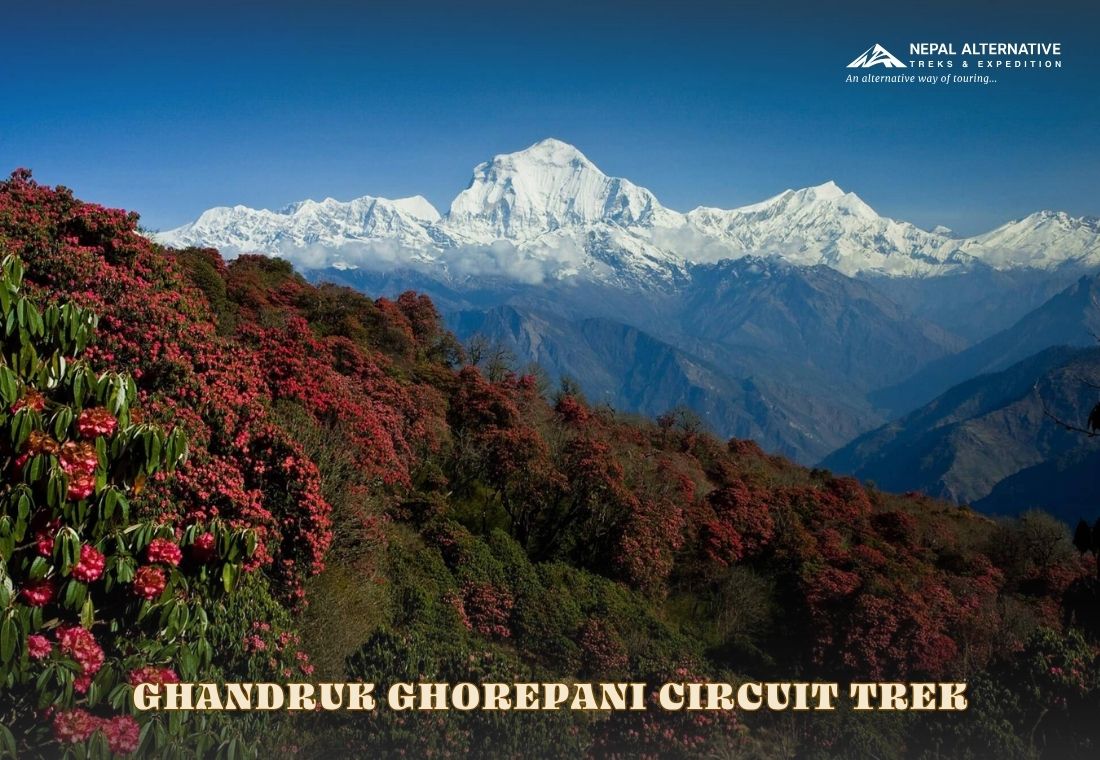
Walk through the dense rhododendron forest with its beautiful colors, especially during spring.
Stay in cozy teahouse accommodation during the trek and enjoy an authentic mountain experience.
Experience diverse landscapes, including forests, terraced fields, and mountain vistas.
Explore traditional stone houses, local museums, and one of Nepal’s largest Gurung settlements, Ghandruk.
Experience a mix of river valleys, rhododendron forests, terraced farmland, and high-altitude viewpoints, even on a short trek in the Annapurna region.
Difficulty of the Ghorepani Poon Hill Trek
The Ghorepani Poon Hill trek is an easy-to-moderate adventure in Nepal’s Himalayas. The route is gentle, allowing those with minimal preparation to finish comfortably. The highest point, 3,200 m above sea level, is manageable, and the risk of altitude sickness is low. Therefore, the trek is suitable for all ages and fitness levels.
However, consider several key factors when trekking to Poon Hill. For less active individuals, the trek can be demanding, as it requires uphill hiking over diverse terrain. The toughest section of the trek is a steep climb of about 3,000 stone steps to reach Ulleri Village. Additionally, trekking during the off-season often presents extra difficulties. However, with proper preparation, most trekkers can complete the journey smoothly.
On the go and need trip info?
Chat on WhatsApp — we’ll share departure dates and help shape your route.
Drive to Hile from Pokhara – Trek to Banthanti (2,210 m)
Day 1 Facts
Trekking Time Average
70 km drive ( 2.5 hours)
10 km uphill hike to Banthanti (4 hours)
Accommodation
Machhapuchhre Guest House or similar category
Altitude
2,210 m / 7,251 ft
Included meals
Lunch, Dinner
Your Ghorepani Poon Hill trek begins with a 2.5-hour drive from the city of Pokhara to Hile. Along the drive, you’ll enjoy beautiful views of towering peaks like Annapurna I and Machhapuchhre in the distance. Once you reach Nayapul, the journey continues towards Birethanti, the gateway village where you’ll register at the Annapurna Conservation Area Project (ACAP) permit checkpost. The Annapurna Conservation Area is Nepal’s largest protected area, home to over 100 mammal species and more than 400 bird species. You will finally reach Hile and begins hike.
From Hile, the trail follows the Bhurungdi Khola through terraced rice and millet fields and the villages of Sudame and Lamdawali before reaching Tikhedhunga, known for its beautiful waterfall. Here, the landscape gradually shifts from open farmland to dense forest.
Continuing the trek, you’ll cross a suspension bridge over the river and reach the base of the famous Ulleri stone staircase, one of the most challenging yet iconic sections of the trek. This steep uphill trail has more than 3,000 stone steps, built by the local Magar community. The climb tests your stamina, but the beautiful oak forest and scenic river views along the way make the effort worthwhile. After about 4 hours of trekking, you’ll reach Banthanti, where you’ll stay for the night.
Day 2
Banthanti to Ghorepani Breakfast
Banthanti to Ghorepani Breakfast
Nangethanti Stream
Nangethanti Stream
Lower Ghorepani
Lower Ghorepani
Ghorepani Village
Ghorepani Village
Trek to Ghorepani (2,800 m)
Day 2 Facts
Trekking Time Average
12 km uphill hike
(4 hours)
Accommodation
Hotel Super View or Similar category
Altitude
(2,800 m / 9,186 ft)
Included meals
Breakfast, Lunch, Dinner
Wake up to the sound of birds chirping and the fresh mountain air of the Annapurna region. After breakfast at your accommodation, continue the day’s trek. The trail passes through beautiful forests of rhododendron, oak, pine, fir, and birch trees. This area is home to many bird species and langur monkeys, as you head deeper into the Annapurna Conservation Area.
Continuing the trek, the path follows stone steps through the forest until you reach Nangethanti, a peaceful spot beside the Nangethanti Stream where you can take a break. After a short rest, the journey continues, and the views begin to open up. The dense forest gradually gives way to open ridges, offering your first clear views of the high Himalayas.
As you approach Ghorepani, the majestic peaks of Annapurna, Dhaulagiri, and Nilgiri come into view, motivating you to continue your journey. Upon arrival, you’ll check in to Hotel Super View. The village is home to welcoming Gurung and Magar communities who have lived here for generations. Known for its friendly atmosphere and beautiful surroundings, Ghorepani is the perfect place to relax after a day of trekking. Enjoy a warm dinner and rest early in preparation for tomorrow’s pre-dawn hike.
Day 3
At Poon Hill 3210m.
At Poon Hill 3210m.
At Deurali
At Deurali
At Tadapani village
At Tadapani village
Trek to Tadapani (2,650 m)
Day 3 Facts
Trekking Time Average
14 km (Poon Hill hike + Tadapani descend)
(5-7 hours)
Accommodation
Hotel Grand View or similar category
Altitude
2,650 m /8,694 ft
Included meals
Breakfast, Lunch, Dinner
This is the day you’ve been waiting for. You’ll wake up early, around 4:00–4:30 AM, for a one-hour hike to Poon Hill (3,210 m), the most famous viewpoint on the trek. The route from Ghorepani to Poon Hill follows a well-maintained stone staircase through rhododendron forests. Once at the top, you’ll be rewarded with panoramic views of Annapurna, Machhapuchhre (Fishtail), Dhaulagiri, Nilgiri, and Himalchuli.
As the sun begins to rise, the mountain peaks gradually glow in shades of pink and gold. Watching the sunrise over the Himalayas is one of the most memorable experiences in the Annapurna region and the true highlight of the trek. After enjoying the sunrise, return to Ghorepani for breakfast and prepare your backpack for the day’s descent.
From Ghorepani, the trail passes through beautiful rhododendron forests to Deurali and Thapla Danda (Gurung Hill, 3,200 m), another excellent viewpoint offering impressive views of the Annapurna range. From there, you’ll descend through peaceful forests to Banthanti for lunch before continuing along scenic forest trails to the village of Tadapani.
Tadapani is an important trail junction where the routes to Annapurna Base Camp and Khopra Ridge diverge, so you’ll see trekkers heading in different directions. You’ll spend the night at the cozy Hotel Grand View.
Day 4
Before you Leave for Tadapani to Pokhara Trip
Before you Leave for Tadapani to Pokhara Trip
At Ghandruk Village
At Ghandruk Village
Syauli Bazzar
Syauli Bazzar
Birethanti Waterfall
Birethanti Waterfall
Trek to Ghandruk Village – Drive to Pokhara (820 m)
Day 4 Facts
Trekking Time Average
10 km Downhill Hike to Ghandruk (4 hours)
60 km drive to Pokhara (2.5 hours)
Altitude
(820 m / 2,790 ft)
Included meals
Breakfast, Lunch
It’s the final day in the Annapurna region and the end of your 4-day Ghorepani Poon Hill trek. After breakfast in Tadapani, you’ll continue walking downhill through forests and small settlements toward Ghandruk village. Ghandruk is one of the most famous villages in the region, known for its rich Gurung culture, traditional houses, and warm hospitality. The views of Annapurna and Machhapuchhre from here are simply stunning.
Once you reach Ghandruk, you’ll stop for lunch and can visit the Gurung Museum to learn about the local lifestyle and traditions. After the break, you’ll travel by jeep back to Pokhara. The scenic drive passes through Kimche, Syauli Bazaar, Birethanti Waterfall, Nayapul, and Naudanda, offering one last glimpse of the beautiful countryside before arriving in Pokhara. You’ll reach the city by late afternoon and spend the night there, marking the end of your short yet memorable Poon Hill adventure.
What’s Included
Pick Up and Drop Off At your hotel in Pokhara before and after Trek.
All meals (breakfast, lunch, and dinner) during the trek.
Lodge accommodation (twin-share basis) during the trek.
One experienced, well-trained, government-authorized, English-speaking trekking guide specializing in the Ghorepani trekking route, along with the required porters (one porter for every two trekkers).
Guide and porter expenses, including food, accommodation, salary, insurance, and transportation.
Overland transportation as mentioned in the itinerary.
ACAP (Annapurna Conservation Area Project) permit and all necessary trekking permits.
A trekking map, duffle bag, daily oxygen saturation checks, water purification tablets, a company T-shirt, first aid kit, trekking completion certificate, and other essential support.
Assistance with emergency rescue evacuation.
Government taxes and service charges.
Public liability insurance.
What’s Not included
Hotel accommodation and meals in Kathmandu and Pokhara.
Hard and soft drinks such as tea, coffee, Coke, Fanta, mineral water, alcoholic beverages, laundry, phone bills, and other personal expenses.
These add-ons make the short Ghorepani Poon Hill Trek easier and more comfortable, with porter support, travel options, basic gear, city tours, rafting, flights, and hotels in both Pokhara and Kathmandu.
Steps to add available add-ons:
Click “Book the Trip” on the Ghorepani Poon Hill Trek page.
Pick your departure date.
On the checkout page, choose any add-ons you wish from the add-ons list.
Below are extra services we provide for the Ghorepani Poon Hill Trek:
Personal Porter (USD 80 per porter): Hire a private porter so your heavy gear is carried for you and you can focus on walking and scenery.
Kathmandu to Pokhara by VIP Sofa Tourist Bus (USD 15 per person one way / USD 30 round trip): Travel between Kathmandu and Pokhara on a tourist bus with sofa-style seats for an easy and budget-friendly journey.
Private Vehicle Transfers Kathmandu to Pokhara (car USD 100, jeep USD 150, van USD 200): Choose a private car, jeep, or van between Kathmandu and Pokhara for a more comfortable and flexible drive.
Gear Rental (sleeping bags USD 10, jackets USD 10, poles USD 10): Rent basic trekking gear such as sleeping bag, warm jacket, and a pair of walking poles instead of bringing your own.
Guided Pokhara Sightseeing (USD 30 per person): Join a guided city tour to explore Pokhara’s main attractions.
Rafting at Trishuli River (USD 45 per person): Add a rafting day on the Trishuli River for fun rapids and a refreshing break after your trek.
Guided Kathmandu City Tour (USD 30 per person): Explore Kathmandu’s famous temples, heritage squares, and bustling markets with a local guide.
Kathmandu to Pokhara by Flight (USD 120 one way / USD 240 round trip): Fly between Kathmandu and Pokhara to save time and arrive more rested than by road.
Paragliding in Pokhara (USD 90 per person for 45 minutes): Experience a 45-minute tandem paragliding flight over Pokhara with sweeping mountain and lake views.
Zipline in Pokhara (USD 80 per person): Add a high-speed zipline ride near Pokhara for a short, thrilling burst of adventure.
Pokhara to Kathmandu by Private Transport (Car USD 100, jeep USD 150, van USD 200, private bus USD 450): Travel back to Kathmandu from Pokhara in a private car, jeep, van, or private bus for a smoother, more relaxed road trip.
Hotel Accommodation in Pokhara (USD 50 per night for double/twin share room with breakfast): Stay in a comfortable hotel in Pokhara on a double/twin sharing basis with breakfast included before or after your trek.
Hotel Accommodation in Kathmandu (USD 50 per night for double/twin share room with breakfast): Add hotel nights in Kathmandu with breakfast included at the beginning or end of your journey.
Everest View Mountain Flight 1 hour (USD 300 per person): Enjoy a 1-hour mountain flight to see Everest, with private airport transfers in Kathmandu. This is a scenic air tour only without landing.
Best Season to trek Ghorepani Poon Hill Trek
January
-8°C to 12°C
February
-5°C to 14°C
March
0°C to 15°C
April
2°C to 15°C
May
4°C to 18°C
June
5°C to 20°C
July
6°C to 22°C
August
5°C to 18°C
September
0°C to 14°C
October
-5°C to 15°C
November
-8°C to 16°C
December
-10°C to 5°C
Spring (March to May) and Autumn (September to November) are the best times to do the Poon Hill trek. Spring is the pre-monsoon season, starting in March and lasting until May. One of the highlights of trekking during this time is the chance to witness rhododendrons blooming along the trail. The weather is mild, with temperatures ranging from 0°C to 18°C. Similarly, Autumn is the post-monsoon season, spanning from September to November. The weather is pleasant, with temperatures ranging from -8°C to 16°C. The skies are clear, and the mountain views are spectacular.
However, the Monsoon (June to August) and Winter (December to February) seasons are less favorable for the Poon Hill trek due to the challenges they bring. June, July, and early August receive heavy rainfall, making the trails slippery and less suitable for trekking. During the monsoon, temperatures typically range from 5°C to 22°C. Winter begins in December and lasts until late February. Temperatures range from -10°C to 12°C, and the cold weather, along with snow-covered trails, can make trekking to Poon Hill more challenging.
Our scheduled group tours offer fixed departure dates, providing an excellent opportunity for travelers to join our small group trips.
Note : Our fixed group departure dates, services and price is guaranteed even if the group numbers are 1 person to maximum 18 persons. We will provide a guide cum porter if there is only 1 person to operate the trek and one more assistant guide if group size is above 10 persons. And of course, guide cum porter will carry 10 kg luggage
Book a private trip on your own date.
Every journey we create is uniquely tailored to you. Share your interests and passions, and our travel experts will design an unforgettable adventure filled with extraordinary, one-of-a-kind experiences crafted just for you.
I did the Poon Hill trek with Kumar who was friendly, accommodating of my pace, and knowledgeable. The scenery was absolutely beautiful and the hiking was amazing. The only negative I would say is that I felt like it ended too soon and wished I'd gone for a longer hike.…
I had a fantastic experience with Nepal Alternative Treks on the Poon Hill Trek. Everything was well organized, and our guide was friendly, knowledgeable, and very supportive throughout the journey. The sunrise view from Poon Hill overlooking the Annapurna and Dhaulagiri ranges was absolutely breathtaking and the highlight of the…
Poon Hill Our trip to Poon Hill was very well organized. Dilal took care of us during the trek, and it was clear that he was an experienced guide and mountaineer. 🙂 The most difficult moments came after the trek, when we were returning to Pokhara, where there was unrest.…
First taste of Nepal but not last Tej was very helpfull to build our first treck, and even without the best weather, we really enjoyed these days hiking: forest, view on some high mountains, and discovering the culture (it was Nepalese New Year and we shared nice time with our…
Ghorepani Poon Hill is a journey through the combination of natural beauty and cultural diversity. Besides, travelers can experience numerous things during the trek, including:
Sunrise Viewpoint from Poon Hill
Doubtlessly, the viewpoint of Poon Hill is the highlight of the trek to Ghorepani Poon Hill. The spectacular sunrise view over the tip of the mountain in the time of the rising sun is jaw-dropping from the viewpoint. Watching the first ray of the sun illuminating the mountain peaks of Annapurna and Dhaulagiri mountain ranges will stay in anyone’s heart and eye for a lifetime.
Panoramic Views of the Annapurna Ranges
Get ready to witness and be surrounded by some of the world’s renowned mountains throughout the trekking journey to Ghorepani. Among various peaks, the panorama of the Annapurna ranges is impressive. The mountains remain visible for much of the trek, but it is prettier from Poon Hill. Located at 3210 m, the viewpoint is well-renowned and reachable within 2 hours of hiking from Ghorepani village. Poon Hill offers impressive views of the Annapurna massif, including Annapurna South (7,219 m), Annapurna IV (7,525 m), and Annapurna II (7,937 m).
Warm Hospitality & Unique culture
The journey to Ghorepani Poon Hill is known for a trip through the unique culture and warm hospitality of the Gurung and Magar communities. Experience warm hospitality in the villages we’ll pass through and tea houses where we’ll stay overnight. Trekkers can learn about the traditional Nepalese lifestyle and enjoy cultural exchange with locals.
Ghorepani Village
Located at 2,800 m (9,186 feet) in Gandaki province, Ghorepani is a picturesque village surrounded by lush forests, rhododendron groves, and terraced fields. The town is primarily famous as a base camp of Poon Hill and offers stunning mountain views. Magar ethnic groups are predominant in the Ghorepani village and have their own distinct cultures and traditions. Moreover, a visit to Ghorepani is a remarkable experience.
Exquisite flora and fauna of Annapurna Conservation Area Project
The trek to Ghorepani Poon Hill takes place within the Annapurna conservation area, so trekkers can expect to witness exquisite flora and fauna. Trekkers pass through lush forests where they can witness wildlife, including langurs, musk deer, and various bird species.
Family-friendly Short Treks In Nepal
The Ghorepani Poon Hill trek is located in the Annapurna region in the Myagdi District in the Dhaulagiri Zone of Nepal. The trek is one of the finest vacation options due to its easy nature and shorter duration. 3,200 m above sea level is the highest elevation of the trek, which is generally safe and has minimal risk of altitude-related issues. The trek is ideal for trekkers of every age group and fitness level, requiring no previous trekking experience or a high fitness level.
The trek to Ghorepani Poon Hill can be completed within 4 days, making it a top choice among trekkers with limited time. Likewise, the trek passes through numerous local villages where trekkers can learn about the local culture and way of life, making the journey worthwhile while adding authenticity to the experience. Although the trek is short and easy, it offers an unparalleled close-up view of the mountain ranges.
Meals and Accommodation
The package covers all meals, including Breakfast, Lunch, and Dinner, throughout the trekking journey in Ghorepani Poon Hill. Likewise, we provide a choice among Western and Nepali foods for your meal. Yet, we suggest trying Nepalese cuisine, such as dal bhat (rice with lentil soup and vegetables), which is healthy and tasty.
In addition, we manage secure, comfortable accommodations throughout the trip. The accommodation points offer twin-sharing beds with limited amenities but provide a good night’s sleep after a long day of walking. You will stay at Machhapuchhre Guest House in Banthanti, Hotel Super View in Ghorepani, and Hotel Grand View in Tadapani. Please note that in Pokhara, you will need to arrange your own accommodation.
Required Permits
Trekking to Ghorepani Poon Hill requires one mandatory permit, including the Annapurna Conservation Area Permit (ACAP). As the trek to Poon Hill takes place within the Annapurna Conservation Area, obtaining this permit is essential for the trek. The cost of the ACAP is NPR 3,000 for foreigners and NPR 1,000 for SAARC nationals, while children below 10 years of age can enter free of charge. However, you don’t need to worry about obtaining the permit, as Nepal Alternative Treks will manage it on your behalf.
ACAP: NPR 3,000 for foreigners and NPR 1,000 for SAARC nationals.
Note: Children below 10 years are free.
How to reach Pokhara from Kathmandu
Pokhara is 201 km away from Kathmandu and is easily reachable by both road and air. The road connecting the two cities is well-developed, allowing cars, buses, and jeeps to travel smoothly. If you choose to travel by road, there are several options.
For ground transportation to Pokhara, you can choose public buses and jeeps, tourist buses, or deluxe and VIP buses. Public buses and jeeps leave from Gongabu Bus Park and are the cheapest option, costing around NRs 800 (~USD 8), though the journey may be less comfortable. Tourist buses, departing from Balaju Bus Park, provide a more comfortable ride than public transport for about NRs 1,200 (~USD 12). For extra comfort, deluxe and VIP buses are available with air-conditioning, sofas, and sometimes onboard services, with fares ranging from NRs 1,200 (~USD 12) to NRs 1,700 (~USD 17) or more.
Needless to say, flying is the fastest option. Many daily flights operate from Tribhuvan International Airport in Kathmandu to Pokhara Airport. Airlines such as Buddha Air, Yeti Airlines, and Shree Airlines operate this route. The flight takes about 25 minutes, and tickets cost between NRs 10,000 (~USD 100) and NRs 15,000 (~USD 150). Prices are higher during festival times like Dashain and Tihar.
Why Choose Ghorepani Poon Hill Trek?
Incredible views with minimal effort
Along the Poon Hill Trek, you’ll witness some of the world’s highest mountains, including Annapurna I, Annapurna South, Dhaulagiri, and Machhapuchhre, without needing high-altitude trekking or weeks of trekking. In just a few days, you can enjoy the stunning Himalayan scenery that many longer and more difficult treks offer. On top of that, you’ll witness an amazing sunrise, as the first golden rays light up the mountain peaks, making the adventure an ideal option among every trekker.
Perfect for beginners and families
If you are a beginner in the trekking field, your best destination could be the Ghorepani – Poon Hill trek. It does not require technical climbing skills, special equipment such as crampons, or experience with extreme altitude. Anyone with a reasonable level of fitness can enjoy it, including beginners, families with older children, and seniors who are comfortable walking for a few hours each day. Many trekkers choose it as their first Himalayan adventure and state that it is worth it.
Short Trek that fits Time-Conscious Trekkers
The trek to Poon Hill can be completed in just 4 days, making it ideal for a short holiday or a long weekend. Unlike longer treks such as Annapurna Base Camp (8–10 days) or the Annapurna Circuit (2 weeks or more), it lets you experience the beauty of the Himalayas without taking a long break from work or daily life.
Low altitude risk
With a highest point of 3,210 m, this trek has a much lower risk of altitude sickness than treks that reach 4,000–5,000 m or higher. Trekkers complete this journey without experiencing severe symptoms of altitude sickness, a need for acclimatization, or the need for medication like Diamox. This makes the trek more comfortable and suitable for first-time trekkers and anyone looking for a less physically challenging Himalayan adventure.
Budget Friendly
At just USD 250–280, the Poon Hill Trek is one of the most affordable ways to experience the Himalayas. Compared to many other popular treks in Nepal, it offers incredible mountain views, comfortable accommodation, and an authentic trekking experience at a reasonable cost. Thus, this is an ideal choice among budget-conscious trekkers.
Ghorepani Poon Hill Trek Distance & Elevation
Day
Route
Trek Distance
Elevation
Elevation Gain/Loss
1
Drive Pokhara → Hile, then trek to Banthanti
10 km
2,210 m
Starts 1,430 m (Hile) → gains 780 m
2
Banthanti → Ghorepani
12 km
2,800 m
Gains 590 m
3
Ghorepani → Poon Hill (side hike) → Tadapani
14 km
Poon Hill peak 3,210 m; Tadapani 2,650 m
Climbs 410 m to Poon Hill, then descends to 2,650 m (net 150 m loss from Ghorepani)
4
Tadapani → Ghandruk, then drive to Pokhara
10 km trek + 60 km drive
Ghandruk 1,940 m; Pokhara 820 m
Loss 1,740 m
Do we need permits for the Poon Hill Trek?
Yes, the trek to Poon Hill requires permits. The Poon Hill Trek requires an Annapurna Conservation Area Permit (ACAP). The trek to Ghorepani Poon Hill takes place within the Annapurna Conservation Area. An ACAP is a mandatory entry permit for anyone trekking within the Conservation Area.
Managed by the National Trust for Nature Conservation (NTNC), the Annapurna Conservation Area Project works closely with local communities to protect nature, maintain trekking trails, and improve local livelihoods. Thus, the ACAP fee is not just an entry fee, as the funds support its project and the welfare of the area.
The ACAP permit is valid for one continuous trek within the Annapurna Conservation Area. In other words, the same permit covers all routes within the conservation area. For instance, after covering the Ghorepani-Poon Hill trek route, if you want to extend your adventure to Annapurna Base Camp, you don’t need a new permit. One ACAP covers the entire trip as long as you stay inside the Annapurna Conservation Area.
The cost of ACAP is:
Nationality
Cost Per Person
Foreign Nationals
NPR 3,000
SAARC Nationals
NPR 1,000
Note: While the TIMS system technically still exists, checkpoints are not asking for it as of mid-2026. So, TIMS is generally not issued for the Ghorepani Poon Hill Trek.
Ghorepani Poon Hill Trek vs Annapurna Base Camp Trek
The Ghorepani Poon Hill Trek and the Annapurna Base Camp (ABC) Trek are two of Nepal’s most popular trekking adventures in the Annapurna region. No doubt, both treks take trekkers through amazing Himalayan scenery. But the treks cater to different types of trekkers, and choosing between the adventures depends on your available time, fitness level, and the type of Himalayan adventure you’re seeking.
Feature
Ghorepani Poon Hill Trek
Annapurna Base Camp Trek
Duration
4-6 days
8-10 days
Maximum Elevation
3,210 m (Poon Hill)
4,130 m (Annapurna Base Camp)
Difficulty Level
Easy to Moderate
Moderate
Best For
Beginners, families, short holidays
Adventure seekers, experienced beginners, and longer vacation
Main Highlight
Sunrise from Poon Hill viewpoint
Standing at the base of Annapurna I
Mountain Views
Annapurna, Dhaulagiri, Machhapuchhre, Nilgiri
Annapurna I, Annapurna South, Hiunchuli, Machhapuchhre, Gangapurna
Trail Type
Circular route through villages and rhododendron forests
Out-and-back route into the Annapurna Sanctuary
Landscape
Forests, terraced fields, Gurung and Magar villages
Forests, waterfalls, rivers, alpine terrain, and glacial basins
Reasonable fitness, some trekking experience is helpful
Cost
USD 250-280
USD 530-590
Overall Experience
Scenic, relaxing, and accessible
Immersive, adventurous, and worthwhile
Mountains That We Can See From Poon Hill
From Poon Hill’s summit (3,210 m), you get a wide 180°+ view of the Annapurna and Dhaulagiri ranges. On a clear day, you can see around 300 km of the Himalayas, an amazing view that’s usually only possible after a long trek or challenging climb.
Annapurna Range (east to south):
Annapurna I (8,091 m), 10th highest mountain in the world
Annapurna South (7,219 m)
Annapurna III (7,555 m)
Nilgiri (7,061 m)
Machhapuchhre / “Fishtail” (6,993 m), the sacred, unclimbed peak, one of the most photographed in Nepal
Hiunchuli (6,441 m)
Gangapurna (7,455 m)
Dhaulagiri Range (west):
Dhaulagiri I (8,167 m), 7th highest mountain in the world
Tukuche Peak (6,920 m)
Other visible peaks:
Fang / Annapurna Fang (7,647 m)
Lamjung Himal (6,983 m)
Are there waterfalls on the Ghorepani Poon Hill Trek?
Yes, the Ghorepani Poon Hill Trek has many waterfalls and small river cascades. You will see most of them in the lower parts of the trail around forest areas. From Hile to Tikhedhunga, the trail follows the Bhurungdi Khola and passes small waterfalls. Some teahouses in Tikhedhunga are close to the water, and after Tikhedhunga, you cross a suspension bridge above many waterfalls before starting the long climb to Ulleri.
The waterfalls continue as you walk through the forest toward Banthanti and Ghorepani. On the way down through Tadapani and Ghandruk, you cross mountain streams and suspension bridges while waterfalls drop from the steep hills. The amount of water is highest during and after the monsoon season, so the waterfalls can look much stronger at this time.
Why does the Ghorepani trail have so many stone steps?
The Ghorepani trail has so many stone steps because they protect the path from heavy rain and make steep areas safer to walk. The Annapurna region gets strong monsoon rain, which can quickly wash away soil on steep hills. Flat stones cover the ground and hold the soil in place. They also give rainwater a clear path to flow away instead of cutting through the trail.
The stone steps also have a long history. Ghorepani means “Horse Water” and was once an important stop for horses and mule caravans that carried salt, grain, and other goods between mountain villages and trade areas. Stone steps gave animals a firm surface on sharp paths where mud could become slippery. Local people still use these trails to travel between villages, carry goods, and reach farms and schools. Many of the steps have been built and repaired with stone from the surrounding hills.
Packing List for Poon Hill Trek
The Poon Hill trek is a short and easy trek in the Himalayas. The trek takes about 4 days, and the highest point is about 3,210 m. At this height, you may notice the air feels a little thinner, but it’s much lower than places like Everest Base Camp (5,364 m) or high mountain climbs where the weather changes frequently. Because of this, you don’t need the special equipment that experienced mountaineers or people on long, high-altitude expeditions bring. Just good layering and comfortable footwear are enough for the trek.
Clothes
2-3 quick-dry T-shirts
1 thermal top and bottom for cold mornings and nights
1 fleece or warm jacket
1 waterproof rain jacket
2 pairs of trekking pants
Warm hat, sun hat, light gloves, and a buff/scarf
Underwear and socks (bring 2-3 pairs of hiking socks)
Shoes
Comfortable, broken-in hiking boots
Sandals or slippers for the teahouse
Gear
30-40L backpack
Sleeping bag (rated to about 0°C to -5°C)
Headlamp for the early morning hike to Poon Hill
Trekking poles
Reusable water bottle (2L+) and a water filter or purification tablets
Health and Toiletries
Basic first-aid kit and any medicines
Sunscreen, lip balm, sunglasses
Toothbrush, toothpaste, hand sanitizer, wet wipes, small towel, and toilet paper
Documents and Money
Passport and copies
ACAP permit
Cash (Nepali rupees)
Travel insurance
Electronics
Phone or camera
Power bank
Charging adapter
Offline map
Extras
Snacks
Rain cover for your backpack
Earplugs
Ziplock bag for permits
Frequently Asked Questions by Ghorepani Poon Hill Trekkers
What is the difficulty level of the Ghorepani Poon Hill trek?
The Ghorepani Poon Hill trek is considered a low-moderate level trek. It involves walking for several days on well-marked trails with some steep sections, but it’s generally manageable for most people with average fitness. The trek’s difficulty comes from the altitude and the length of the daily hikes, but it is suitable for beginners who are in good shape.
What is Ghorepani famous for?
Ghorepani Poon Hill is known for side trips besides the Annapurna Base Camp. In the past, Ghorepani was a rest stop for horses carrying goods for trade, but now transportation has improved. The village itself is known for its charming scenery, traditional mountain culture and as a gateway to beautiful natural trails.
Is Poon Hill worth it?
Yes, the Poon Hill is worth it. The views from Poon Hill are amazing, offering wide, clear views of some of the most impressive Himalayan mountains. we can see Dhaulagiri, Nilgiri, Machhapuchhare, Annapurna II, and Lamjung, all of which are great for photography.
How much does it cost to do the Poon Hill Trek?
The cost of the Poon Hill Trek typically ranges from USD 250 to 280 per person. This includes expenses such as permits, transportation, guide and porter fees, accommodation, and meals. Still, the final cost can vary based on the trekking package chosen, the comfort level in lodges, and additional services like private guides or cultural activities.
Can you do Poon Hill in 2 days?
Yes, you can do Poon Hill Trek in 2 days. However, it requires a very fast pace and long days of walking. To finish the adventure in two days, you have to take a private 4WD jeep from Pokhara to Ulleri or Banthanti then trek to Ghorepani. Next day, you’ll hike to Poon Hill, and descend all the way back to Ulleri then take jeep back to Pokhara.
What is the height of Ghorepani?
Ghorepani is a village in central Nepal, about 2,800 m / 9,186 ft high, in the Annapurna Conservation Area. It’s a stunning village in Nepal’s Myagdi District and lies 17 km from Beni and 65 km from Pokhara. Additionally, its name literally translates to “horse water” (from ghoda meaning horse, and pani meaning water).
Can you see Annapurna 1 from Poon Hill?
Yes, we can see Annapurna I from Poon Hill, in fact, it is one of the major peak visible from the viewpoint. Along with Annapurna I, you can witness the view of Annapurna South, Hiunchuli, Machhapuchhre (Fishtail), Nilgiri, and Dhaulagiri I.
What is the highest point in the Poon Hill Trek?
The highest point in the Poon Hill Trek is the summit of Poon Hill itself, which stands at an elevation of 3,210 m / 10,531 ft. Poon Hill is the main attraction of the trek because it offers amazing views of the Annapurna and Dhaulagiri mountains, especially at sunrise. Reaching this point is a highlight of the trek.
What is the difference between the Annapurna Circuit and Poon Hill?
The Annapurna Circuit and Poon Hill treks are different in length, difficulty and overall experience. The Annapurna Circuit is a challenging high-altitude trek that takes 11 to 18 days and loops around the entire Annapurna massif. Poon Hill, on the other hand, is a much shorter and easier trek that takes 3 to 4 days and is best known for its beautiful sunrise views from a famous viewpoint.
How is the trek from Ghandruk to Ghorepani?
The trek from Ghandruk to Ghorepani is a popular part of the Poon Hill trek. It covers about 19 km and takes roughly 7-8 hours. The trekking trail goes through scenic landscapes, including a charming village and lush forests, offering beautiful views along the way.
How many kilometers from Ulleri to Ghorepani?
The trek from Ulleri to Ghorepani is about 10 kilometers long and takes around 4 to 5 hours, depending on your pace. Additionally, the Ulleri to Ghorepani trail goes through lovely forests and past waterfalls, with great views of the Himalayas.
What is the history of Ghorepani?
The Ghorepani Poon Hill trek in Nepal has a long history linked to trade and migration. Before it became a popular trek, this path was an old trade route that connected the lowlands of Nepal with Tibet.
How long is the Poon Hill Trek from Pokhara?
The distance from Pokhara to Poon Hill is about 45-51 km and takes 3-4 days to complete, depending on the specific trekking route. Besides, you can extend the trek, depending on your preference and time availability.
How long is the Ghorepani Poon Hill Trek?
The Ghorepani Poon Hill Trek is generally 4 days long, starting and ending at Pokhara. The trek takes you through beautiful villages, rhododendron forests, and terraced hills. Despite its relatively short duration, the trek offers spectacular sunrise views of the Annapurna and Dhaulagiri mountain ranges from Poon Hill.
Is Poon Hill an easy trek?
Yes, the Poon Hill Trek is considered an easy-to-moderate trek. This makes it one of the best options for beginners and families with a reasonable level of fitness. Most people can comfortably complete the trek without experiencing severe challenges.
Is Poon Hill better than Mardi Himal?
Whether Poon Hill is better than Mardi Himal depends on the experience you’re looking for. If you’re a beginner, traveling with families, and seeking a shorter trek with well-maintained trails, the Poon Hill Trek is a better option. If you prefer peaceful trails, high-altitude walks, and close views of Mount Machhapuchhre and the Annapurna massif, the Mardi Himal could be a better option.
Can I charge my phone on the Poon Hill trek?
Yes, you can charge your phone at most teahouses along the Poon Hill Trek. Many lodges offer charging facilities in the dining area or guest rooms, though a small fee applies. But it is good to carry a power bank as it provides a reliable backup for your phone.
Can children or older adults do the Poon Hill trek?
Yes, children or older adults can do the Poon Hill Trek. The trail is well-established and does not require technical climbing, which makes it one of Nepal’s most family-friendly treks.
What surprised you most about trekking to Poon Hill?
The biggest surprise of the Poon Hill trek is the number of uneven stone steps along the way. Although the trek is an easy beginner trek in the Himalayas, the trail includes more than 3,000 stone steps climbing up to Ulleri that surprise many trekkers. Besides, the pre-dawn crowd at the top of Poon Hill also surprises the trekkers.
What mistakes should first-time trekkers avoid on the Poon Hill trek?
The biggest mistake first-time trekkers make on the Poon Hill Trek is assuming it is just an easy beginner walk. But in reality, the trek includes long sections of steep stone steps, especially the climb to Ulleri. Other common mistakes include carrying too much weight, wearing unsuitable shoes, walking too fast at the beginning, and not drinking enough water.
Let our local mountain experts craft a personalized itinerary around your schedule, fitness level, and travel goals — safe, authentic, and rooted in Nepal Alternative Treks’ trail experience.
Need assistance? Our travel expert Tej Bahadur Gurung is here to help! Please fill out the form below to initiate a chat and get your queries resolved quickly.


 British5.0 /5

 France5.0 /5