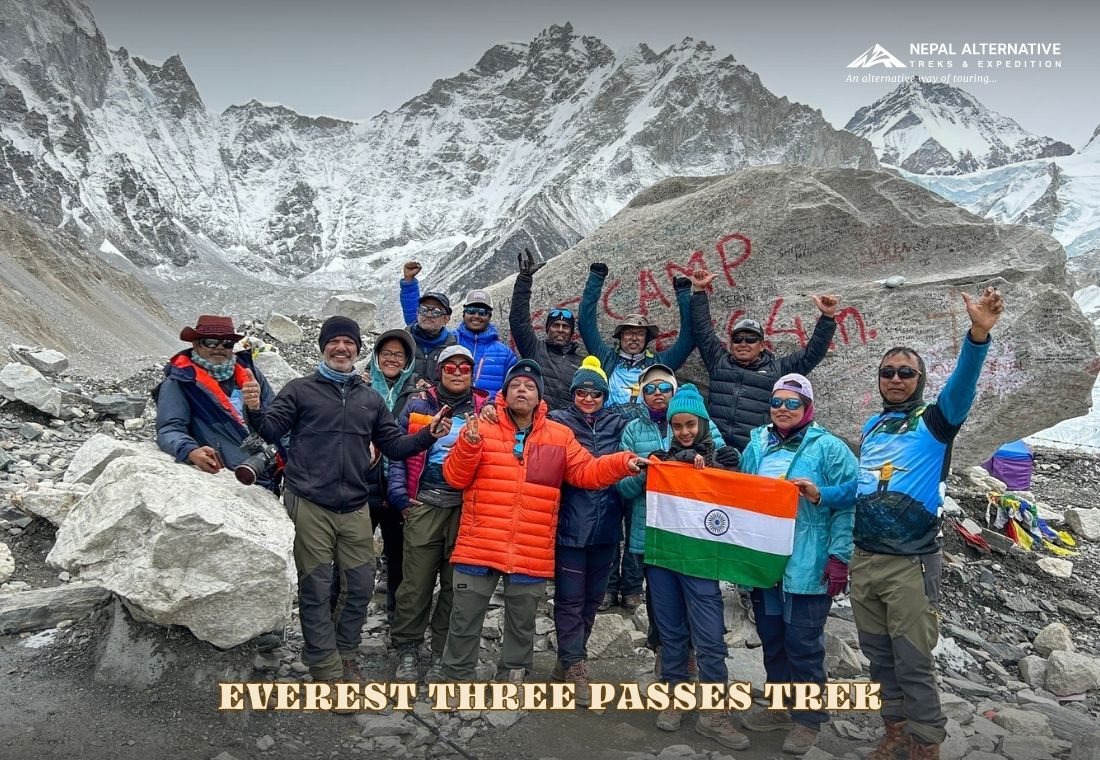
The Everest Base Camp (EBC) Trek takes you to the base of the world’s highest peaks. So, it’s not just a trek, but a chance to experience the beauty and history of Mount Everest. If you search across popular travel platforms, “which is the most popular trekking route in Nepal?”, the answer will pop up as the Everest Base Camp (EBC) Trek. This iconic trek is on countless bucket lists, dreams they’ve had for years before making it happen.
The EBC route takes you through the same trail where Tenzing Norgay and Edmund Hillary once traveled and lets you breathe the fresh mountain air and spend two weeks surrounded by the world’s highest peaks. This is one of the most legendary trekking routes in the world, with a history that inspires adventurers from every corner of the globe. Since the first successful climb of Mount Everest in 1953, the Khumbu region has welcomed climbers, trekkers, and adventurers from around the world. Its historic legacy and stunning mountain views have made Everest Base Camp a dream destination for trekkers from around the world.
Located in the Khumbu region, the trek leads you to the base of Mount Everest while passing through exceptional high-altitude landscapes that leave you in admiration. However, more than just witnessing high-altitude beauty, the adventure offers an experience through changing landscapes, cultures, and altitudes.
The rich Sherpa culture of the region is a major highlight of the trek. The Khumbu region is their home, and their warm welcome is a big part of the experience. As you trek, you’ll enjoy the warm hospitality of the Sherpa community and stay in family-run teahouses. You’ll also get to learn about a mountain lifestyle built around yaks, high-altitude living, and centuries-old traditions. Buddhist culture is part of the journey from start to finish. You’ll see colorful prayer flags, carved mani walls, and visit ancient monasteries, including Tengboche Monastery.
The trip to Everest Base Camp begins with an aerial flight to Lukla from Kathmandu or Ramechhap during peak season to ease congestion at Kathmandu’s airport. Then, the trek takes you through some of the well-known highlights, including Namche Bazaar, Tengboche Monastery, Khumbu Glacier section, and the iconic viewpoint of Kala Patthar. Besides, the trek takes 12 to 14 days to reach and return from Everest Base Camp and passes through Sagarmatha National Park, a UNESCO World Heritage Site known for its diverse flora and fauna.
Accommodation on the trek is in simple but comfortable family-run teahouses, where you’ll find a warm place to sleep and hearty meals. You can enjoy traditional Nepali food like dal bhat or choose pizza, pasta, and other familiar dishes. Hot showers, WiFi, and charging services are available along the trek, but come with an extra charge. The higher you go, the more these services tend to cost.
Beyond the well-known highlights, several lesser-known aspects make this trek even more meaningful. For instance, the Everest Trek offers views of the Himalayas, including Mount Everest, Ama Dablam, Cho Oyu, Nuptse, Pumori, Lhotse, Makalu, and Lobuche, enhancing its overall beauty. Likewise, early mornings in the region offer different light conditions that transform the landscape and vary from day to day.
Many people wonder if they can complete the Everest Base Camp Trek and ask, “Can I actually do this?” The answer is yes for many trekkers, as it does not involve technical climbing or skills like those required for Mount Everest. That said, it is physically demanding. Expect long days of walking, with most days lasting 5 to 7 hours on challenging mountain trails. Being reasonably fit and doing regular cardio training before your trip will make the journey easier. Also, altitude sickness is the major challenge of the trek, so proper acclimatization is required. Still, Everest Base Camp is achievable for first-time trekkers with good preparation and patience.
With years of experience and local, government-licensed Sherpa guides, we provide both fixed departures and private trips to fit your schedule. Send us an inquiry or message us on WhatsApp, and we’ll reply within 12 hours with available 2026 dates, group size options, and the booking form.
Take a scenic mountain flight from Kathmandu (or Ramechhap) to Lukla at the legendary Tenzing-Hillary Airport, the world’s most thrilling airport.
Explore Namche Bazaar, the Sherpa capital, the highest trading town in the Khumbu region, and gateway to Everest.
Have a hearty breakfast while watching Mount Everest in a comfortable atmosphere from Hotel Everest View.
Explore the Everest Base Camp, Khumbu Glacier, and Icefall.
Watch the sunrise over Mount Everest from Kala Patthar.
Trek through Sagarmatha National Park, a UNESCO World Heritage Site rich in diverse Himalayan flora and fauna.
Visit the various Sherpa settlements, such as Phakding, Namche Bazaar, Debuche, Dingboche, and Lobuche.
Cross thrilling suspension bridges over deep river gorges, including the iconic Hillary Suspension Bridge.
Admire the Everest Himalayas view, including Mt. Everest, Lobuche, and Cho Oyu.
Take a spiritual visit to ancient monasteries such as Tengboche, Pangboche, Khumjung, Nangkartshang, and several others.
See the claimed Yeti scalp, an abominable snowman, at Khumjung Monastery.
Learn about the diverse flora and fauna of the Sagarmatha National Park.
Get first-hand experience of the Sherpa people’s culture, traditions, local customs, and hospitality.
Pass through several suspension bridges, including the Hillary Suspension Bridge, decorated with prayer flags over deep river valleys.
EBC Trek Difficulty
The Mount Everest Base Camp Trek is a moderately challenging yet achievable adventure. To complete the adventure, you can complete this trek without any climbing experience, but you do need to be in good physical shape. The biggest challenge you’ll face at each stage of the trek is the high altitude. Similarly, unpredictable weather, remote location with minimal facilities, and mental challenges add to the overall difficulty of the EBC Trek.
High Altitude
The high altitude of the trek to Everest Base Camp is a significant challenge, as the higher elevation can cause altitude sickness, also known as Acute Mountain Sickness (AMS). 5,555 m (18,225 ft) is the highest elevation of the trek at the Kala Patthar. Likewise, 5,364 m (17,598 feet) at Everest Base Camp is another of the trek’s highest elevations. Thus, trekkers gain significant altitude, making breathing difficult, and are likely to face AMS.
Longer Trekking Duration
The trek to Everest Base Camp takes 12-14 days round-trip and covers about 130 km (80.8 miles). Trekkers must be ready to walk for 5 to 6 hours daily throughout the adventure. The long walks over harsh terrain can be physically and mentally challenging for trekkers.
Unpredictable Weather
Another major challenge of the Everest Base Camp Trek is unpredictable weather that changes even without warning. You may start your day with clear skies and, within an hour, find yourself walking into clouds with reduced visibility. Cold winds can be intense in open spaces like Kala Patthar, making it feel very cold, even on a sunny day.
Furthermore, lower altitude places like Lukla and Namche Bazaar may experience continuous rain during the monsoon. However, trekkers at higher altitudes often find themselves above cloud level, where they can face snowstorms. Likewise, the sections above Dingboche are covered in ice and snow, making the path slippery and difficult to traverse.
Limited Facility
The facilities and infrastructure in the Everest region are limited as you move higher. Facilities are available at lower elevations but become limited at higher altitudes. Therefore, trekkers should be ready to adjust to the limited facilities during their trip to EBC. Everest Base Camp VS EBC Luxury Trek is a must-read if you are thinking of the Everest region trekking options for better planning.
Moreover, limited connectivity and power are also significant challenges of the trek to EBC. While many teahouses offer Wi-Fi, it’s often slow, unreliable, and comes with a fee that increases with altitude. Likewise, the availability of food and other supplies becomes more limited and expensive as you gain elevation.
12 Days Everest Base Camp Trek Itinerary
Day 1
At Lukla Airport
At Lukla Airport
Mustard Flower
Mustard Flower
Phakding Village
Phakding Village
Rhododendron Flower
Rhododendron Flower
Fly to Lukla – Trek to Phakding (2,640 m)
Day 1 Facts
Trekking Time Average
35 mins Flight
8 km Uphill hike
(Avg 3 hours)
Accommodation
Khumbu Traveler’s Guest House or Hotel Sherpa
Altitude
(2,640 m / 8,745 ft)
Included meals
Lunch, Dinner
The Everest Base Camp Trek 12 days itinerary begins at Kathmandu. The day begins early as you pack your bags and drive to Tribhuvan International Airport to catch a flight to Lukla. The 35-minute flight from Kathmandu to Lukla Airport (Tenzing-Hillary Airport) takes you over the stunning forested hills and deep valleys.
However, the flight to Lukla will be redirected from Kathmandu to Ramechhap, especially during peak season, because Tribhuvan International Airport gets very busy. So it’s good to be prepared. If your flight leaves from Ramechhap, you’ll need to travel about 5 extra hours from Kathmandu to reach there.
Once you get to Lukla, you’ll start your first hike along the beautiful Dudh Koshi River, walking through small Sherpa villages and crossing hanging suspension bridges. The hike to Phakding is mostly downhill or gently sloping, making it a good warm-up. Along the way, you’ll pass by blooming rhododendrons (in spring), mustard fields, and mani stones that give you a feel of the culture and nature on the very first day of the EBC trek trail. You’ll spend the night in Phakding village.
Day 2
Tenzing hillary suspension bridge
Tenzing hillary suspension bridge
Jorsalle Waterfall
Jorsalle Waterfall
Tuktuk village
Tuktuk village
Namche Bazaar with Mt. Kongde
Namche Bazaar with Mt. Kongde
Phakding to Namche Bazaar (3,440 m)
Day 2 Facts
Trekking Time Average
7.4-11 km Uphill hike
(Avg 5 to 7 hours)
Accommodation
Sun Shower Hotel or Khumbu Lodge
Altitude
(3,440 m / 11,352 ft)
Included meals
Breakfast, Lunch, Dinner
After a hearty breakfast at your teahouse in Phakding, you walk northward along the banks of the stunning Dudh Koshi River. The initial phase of the trek takes you through mountainside forests and the small villages of Zamfute and Tok Tok. Along the way, you’ll cross five different suspension bridges over the Dudh Koshi River. At the end of Tok Tok village, you’ll see an attractive waterfall, especially stunning from June to September.
Continuing through the villages of Bankar and Chhumuwa, you’ll arrive at Monjo, the gateway to the UNESCO-listed Sagarmatha National Park. Here, your permits are checked and registered at the national park entry office before you proceed. From Monjo, the trail descends to Jorsalle, the last major stop before Namche and your lunch point.
After Jorsalle, the trail crosses the Bhote Koshi River and begins climbing towards Namche Bazaar. You’ll then reach the famous Tenzing Hillary Suspension Bridge, one of the highest suspension bridges in the region. Right after the bridge, the hardest part of the day begins, the two hours of steep uphill walk. As you surpass the difficult section, you reach Namche Bazaar, your day’s destination.
Day 3
Mt. Everest from Everest View hotel
Mt. Everest from Everest View hotel
Yeti Skull
Yeti Skull
Khumjung village
Khumjung village
Khunde village
Khunde village
Acclimatization Day in Namche Bazaar
Day 3 Facts
Trekking Time Average
8 km Uphill hike
(Avg 3 hours)
Accommodation
Sun Shower Hotel or Khumbu Lodge
Altitude
(3,750 m / 12,303 ft)
Included meals
Breakfast, Lunch, Dinner
Day 3 is a rest day, which is crucial for any Himalayan trek, including for Everest Base Camp. After ascending from Lukla to Namche Bazaar, the altitude gain is 800 m, and spending an acclimatization day is necessary to allow your body to adjust to the lower oxygen levels. The day follows the golden rule of high-altitude trekking: climb high, sleep low.
On the day, you have an option to take a day’s hike. Popular hiking points for the day include Everest View Hotel (3,880 m) and Khumjung village. Hotel Everest View is recognized by Guinness World Records as one of the world’s highest-placed hotels and offers surreal views of mountain peaks from a comfortable level. Watching unobstructed sights of Mount Everest, Lhotse, Ama Dablam, and Thamserku while settling in on the terrace with a hot cup of tea or coffee is a moment to remember. Moreover, the hike to Everest View Hotel is about 4 km and typically takes 2-3 hours round-trip from Namche Bazaar.
The hike to Khumjung village is equally memorable. There, you can visit the famous Khumjung Monastery, which houses a mysterious “Yeti” skull. From there, you can continue walking towards Khunde village, passing the small Syangboche Airport along the way. You can also visit the Edmund Hillary School, built by the famous climber (Edmund Hillary) himself. After the day hike, you’ll trek back to Namche Bazaar for the night.
Day 4
Tyangboche Monastery
Tyangboche Monastery
Tyangboche Stupa
Tyangboche Stupa
Debuche Village
Debuche Village
Namche Bazaar to Debuche (3,820 m)
Day 4 Facts
Trekking Time Average
10-12 km Uphill hike
(Avg 5 to 7 hours)
Accommodation
Rivendell Lodge or Good Luck Hotel
Altitude
(3,820 m / 12,533 ft)
Included meals
Breakfast, Lunch, Dinner
Following the 12-day Everest Base Camp Trek itinerary, today you leave Namche Bazaar with the fresh energy of the earlier day’s acclimatization. As you leave Namche, you’ll climb out of town heading northeast through stunning hillside with wide, open views of the Everest range and the valleys below. The trail first leads you to Kyangjuma(also sometimes spelled Kenjoma) village after an uphill climb.
From Kyangjuma, the trail descends toward the Dudh Koshi River. After a while of trekking, you’ll get to Phunki Tenga, a peaceful riverside village and a perfect destination for lunch break. After lunch, the trail leads you towards Tengboche, which is only about 2 km from Phunki Tenga, but it is very steep. The route passes through dense pine and rhododendron forests and over a number of small streams.
As you get to Tengboche, the view that greets you is among the most celebrated in trekking, as the great peaks of Everest, Nuptse, Lhotse, Ama Dablam, Thamserku, and Kwangde surround you. Many trekkers describe the view as the single most beautiful sight of the entire trek. Also, take some time to explore Tengboche Monastery, then make a short descent through rhododendron and juniper forest to Debuche for an overnight stay.
Day 5
Pangboche Stupa
Pangboche Stupa
Pangboche Village
Pangboche Village
Somare village
Somare village
Dingboche village
Dingboche village
Debuche to Dingboche (4,350 m)
Day 5 Facts
Trekking Time Average
9-12 km Uphill hike
(Avg 5 hours)
Accommodation
Hotel Good Luck or Similar category
Altitude
(4,350 m / 14,355 ft)
Included meals
Breakfast, Lunch, Dinner
As usual, the day begins with a hearty morning meal but with a jaw-dropping view of Mount Ama Dablam. After breakfast, the trek from Debuche crossing a suspension bridge over the Imja Khola River before beginning an ascent into the Khumbu’s open upper valleys. After a steady uphill walk of roughly 2-3 hours from Debuche, you’ll get to Pangboche. In the village, you can explore the Pangboche monastery, the oldest in the Khumbu region, which houses sacred relics and artifacts, including a skull.
After Pangboche, the landscape changes as you head towards Dingboche. On the way, you get to Shomare, where you’ll have lunch before a challenging climb to Dingboche. As you leave Shomare, each step is worth it, offering closer views of Ama Dablam, Nuptse, Lhotse, and other surrounding peaks. As you get to Dingboche, you’ll feel a different level of peacefulness even at such a high altitude. You’ll enjoy the sound of the river flowing east of the village along with a 360° mountain view.
Day 6
At Dingboche Sun set
At Dingboche Sun set
Acclimatize hike to Nangkartshang
Acclimatize hike to Nangkartshang
Picturesque Stone
Picturesque Stone
Acclimatization at Dingboche
Acclimatization at Dingboche
Acclimatization/Excursion around
Day 6 Facts
Trekking Time Average
5-5.7 km round trip
(4 hours hike)
Accommodation
Hotel Good Luck or Similar category
Altitude
(4,350 m / 14,355 ft)
Included meals
Breakfast, Lunch, Dinner
Today is another rest day on your Everest Base Camp trek itinerary. On the day, your guide will take you to the Nangkartshang Peak (5,083 m), a popular viewpoint of the region. The viewpoint was named after the century-old Nangkartshang monastery. The path takes you through steeper and rugged sections with a series of switchbacks (zigzag climbs) up the hillside, but every effort is worth it. From the top of the viewpoint, you can catch the unobstructed sights of Mount Taboche (6,367 m), Ama Dablam (6,856 m), Island Peak (6,189 m), Lhotse (8,516 m), and Mount Everest (8,848.86 m).
After spending time at the viewpoint enjoying the Himalayan views, you’ll walk back down to Dingboche. The rest of the day is yours; you can explore around the village, have coffee at the cafe, and rest. Besides, don’t forget to enjoy the sunset view at Dingboche. Overnight in Dingboche.
Day 7
Mt. Tawache
Mt. Tawache
Thukla
Thukla
Everest climber’s memorial park
Everest climber’s memorial park
2 Nights 3 Days Lobuche Peak Climbing
2 Nights 3 Days Lobuche Peak Climbing
Dingboche to Lobuche (4,900 m)
Day 7 Facts
Trekking Time Average
8-9 km Uphill hike
(Avg 4.5 to 6 hours)
Accommodation
National Park Hotel or Similiar category
Altitude
(4,900 m / 16,170 ft)
Included meals
Breakfast, Lunch, Dinner
After breakfast in Dingboche, you’ll continue your EBC trek journey with an uphill walk to Lobuche village. The trail passes just above Pheriche village, visible in the flat valley to your left. Pheriche is home to a medical aid post run by the Himalayan Rescue Association (HRA), which provides altitude-sickness consultations during the trekking season. After around two hours of steady, moderate walking, you reach Thukla/Dughla (4,620 m), your lunch point.
After lunch, you have to walk through Thukla Pass at 4,830 m, which is the steepest section of the day. At the top of the pass, you reach one of the most remarkable places on the entire Everest Base Camp route: the Thukla Pass Memorial, also called Chukpi Lhara. At 4,800 m high, this site has over 100 memorials dedicated to climbers and Sherpas who died while exploring the region’s Himalayas.
From Thukla, you’ll continue trekking uphill along the Khumbu Glacier towards Lobuche village. You may feel the altitude more today, so take it slow and steady. As you reach Lobuche, the mountain views get even more stunning, adding beauty to this part of the Everest Base Camp trek trail. Overnight in Lobuche.
Day 8
Lobuche Glacier
Lobuche Glacier
At Gorakshep
At Gorakshep
Sun Set from EBC
Sun Set from EBC
At Everest Base Camp
At Everest Base Camp
Lobuche to Gorak Shep (5,100 m) – Excursion to EBC (5,364 m)
Day 8 Facts
Trekking Time Average
12-15 km
(8-10 hours)
Accommodation
Himalayan Inn or Similiar Category
Altitude
(5,100 m / 16,830 ft)
Included meals
Breakfast, Lunch, Dinner
This is the most awaited day of the 12 days trek to EBC. After an early breakfast in Lobuche, you leave the village and trek toward Gorak Shep. The trail is mostly flat for about an hour, then it turns into a steady uphill climb for the next two hours until you reach Gorak Shep. Likewise, the path takes you along the side of the Khumbu Glacier, with tall, icy ridges rising on both sides.
About 20 minutes into the walk, you come across a sign for the Pyramid Research Center, a high-altitude research station from Italy, on the south side of Everest. Once you reach Gorak Shep, you’ll take a short break before continuing your hike to the Everest Base Camp. At the village, have lunch before continuing toward EBC.
From Gorak Shep, the trek heads northeast towards the final iconic base of Mount Everest. The path is rough and uneven, with rocky ground and bits of ice sticking out from the glacier beside you. It follows the edge of the Khumbu Glacier, one of Nepal’s longest glaciers. One of the unique parts of this section is the sound of ice cracking below your feet.
The views from base camp are raw and overwhelming: the Khumbu Icefall, and the peaks of Pumori, Lingtren, Khumbutse, and Nuptse. After a visit to the Everest Base Camp, taking some photos, soaking in the views, and congratulating yourself, you’ll return to Gorak Shep for the overnight stay.
Day 9
Kallapathar
Kallapathar
Mt. Pumori
Mt. Pumori
Retracing to Pheriche
Retracing to Pheriche
Pheriche Village
Pheriche Village
Hike to Kala Patthar – Trek to Pheriche (4,250 m)
Day 9 Facts
Trekking Time Average
12-17 km
(Avg 6 to 9 hours)
Accommodation
Everest Trekker’s Kitchen Lodge or Similar category
Altitude
(4,250 m / 14,025 ft)
Included meals
Breakfast, Lunch, Dinner
Today is another exciting part of the MtEverest Base Camp trekking adventure. You’ll wake up early for a short but tough climb to Kala Patthar. You must leave Gorak Shep at around 3-4 AM. Turning on your headlamp, you proceed uphill in complete darkness. At first, the trail is rocky and sandy. As you go higher, the air becomes thinner, so it feels harder to breathe and walk. Along the way, you can see glaciers, snow-covered mountains, and wide open landscapes.
When you reach Kala Patthar, the view is the best reward. You can see Everest and the surrounding peaks, such as Nuptse and Pumori. Similarly, the view of sunrise over Everest is the primary highlight and is what the viewpoint is well-known for. Take the time to appreciate the beauty of the Everest Himalayas up close and celebrate your success. After some time, descend back to Gorak Shep, have lunch, and make your way to Pheriche.
From Gorak Shep, you return the route southward along the glacier moraine via Lobuche and the Thukla Pass memorial. Every step of the descent brings more oxygen. After Lobuche, the pathway connects with the route to Pheriche and eventually gets to the day’s destination.
Day 10
Himalayan Thar
Himalayan Thar
Debuche Village
Debuche Village
Pheasant
Pheasant
Namche Bazaar
Namche Bazaar
Pheriche to Namche Bazaar (3,440 m)
Day 10 Facts
Trekking Time Average
14-20 km Downhill hike
(Avg 6 to 8 hours)
Accommodation
Sun Shower Hotel or Khumbu Lodge
Altitude
(3,440 m / 11,352 ft)
Included meals
Breakfast, Lunch, Dinner
After breakfast in Pheriche, you’ll begin your journey downhill towards Namche Bazaar, witnessing the beauty of the Everest region from a different angle. You’ll pass through small villages like Somare and Pangboche. The Pheriche to Namche route descends to cross the Imja River and then climbs slightly before reaching Debuche village. After Debuche, you’ll get to Tengboche, where you can stop for lunch.
After enjoying a delicious lunch, you’ll continue the descent journey. Begin walking downstream along the Dudh Koshi River, then cross Phunki Tenga and ascend upstream to Kenjoma. The last part of the descent is easier as the path becomes gentler. Finally, you’ll arrive at Namche Bazaar, the lively Sherpa town. Overnight stay in Namche.
Day 11
Dudhkoshi River
Dudhkoshi River
At Manju Village
At Manju Village
Phakding
Phakding
At Lukla
At Lukla
Namche Bazaar to Lukla (2,800 m)
Day 11 Facts
Trekking Time Average
17-19 km Downhill hike
(Avg 8 hours)
Accommodation
Hotel Ganesh Himal or Similiar category
Altitude
(2,800 m / 9,240 ft)
Included meals
Breakfast, Lunch, Dinner
This is the final day of the trek, marking the end of the trek to Everest Base Camp. Wake up to the mesmerizing view of Kongde Ri Peak (6,137 m). After breakfast, you’ll begin trekking downhill toward the Dudh Koshi River. As you walk along the route, pine and rhododendron forests surround you, and colorful prayer flags flutter above the suspension bridges.
Similarly, the route goes back along the same path through the villages of Jorsale, Monjo, and Bankar, places that once felt new and unfamiliar but now feel like old companions. You’ll cross the same suspension bridges that you crossed on day two, including the iconic Tenzing Hillary Suspension Bridge. As you arrive in Phakding, you’ll stop for lunch. After lunch, the trail takes you through the villages of Tok Tok and Chheplung before reaching Lukla. The day’s overnight stay and dinner are at Lukla.
Day 12
Lukla Airport
Lukla Airport
Boudhanath Stupa
Boudhanath Stupa
Pashupatinath Temple
Pashupatinath Temple
Kathmandu Durbar Square
Kathmandu Durbar Square
Lukla to Kathmandu (1,295 m)
Day 12 Facts
Trekking Time Average
35 mins Flight
Altitude
(1,295 m / 4,273 ft)
Included meals
Breakfast
The twelfth day marks the completion of the Everest Base Camp Trek in Nepal. You’ll take a scenic morning flight to Kathmandu from Lukla. During the flight, enjoy one last view of Everest, other Himalayan peaks, and the EBC route. Also, before landing at Kathmandu, you can catch a stunning aerial view of the entire city, including a few of the UNESCO World Heritage Sites.
Once you land at Kathmandu, our representatives will pick you up and drop you off at your hotel. The rest of the day is free for rest, shopping, or sightseeing. After you have completed the Everest Base Camp trek, take time to relax and reflect on the adventure after you have returned after the trek. Overnight stay in Kathmandu.
What’s Included
Pick Up at Tribhuvan International Airport and Transfer to Hotel in Kathmandu.
Kathmandu-Ramechhap-Kathmandu ground transportation when Lukla flights are operated from
Ramechhap during peak trekking seasons.
Lodge (Twin share base ) accommodation during the trek.
All meals ( Breakfast, Lunch, Dinner ) during the trek.
One experienced, well-trained, fluent English-speaking, friendly, specialized in the Everest region, and government-authorized trekking guide
1 Porter per 2 Trekkers and keep luggage weight under 10kg per person.
Guide and porter’s food, accommodation, salary, insurance, and transportation, etc.
Kathmandu/ Lukla/Kathmandu round trip by flight.
Sagarmatha National Park fee and Pasang Lhamu Rural Municipality Entry fee.
Overland transportation as mentioned in the itinerary.
A trekking map, duffel bag, first aid kit box, Oxygen saturation check-up every day, water purification, and company
T-shirt, and trekking completion certificate.
Assistance for emergency rescue evacuation.
All kinds of service charges and government taxes.
Public Liability Insurance.
What’s Not included
Hotel accommodation and meals in Kathmandu.
Hard and soft table drinks such as tea/coffee, Coke, Fanta, mineral water, beer, hot shower, hot water, laundry, phone bill, etc.
Personal Travel insurance.
International Flight Tickets.
Nepal Tourist Visa Fee
Tips for guides and porters ( Highly suggested)
Add-ons and Options
You can make your Everest Base Camp trek more comfortable and flexible by adding city tours, helicopter flights, porter service, hotel upgrades, and gear rental according to your needs and budget.
To add these extra services, simply click “Book Now” or scroll to “Join Our Group Departures,” choose your preferred departure date, and complete your booking through WeTravel. During the WeTravel checkout process, you’ll be able to select and customize your preferred add-ons before confirming your booking.
Here are the add-ons provided for EBC Trek:
Full Day Kathmandu City Tour (USD 30 per person): Full-day Kathmandu sightseeing tour, additional activity with an expert guide and transport, visiting major UNESCO sites before or after your EBC trek.
Kathmandu to Lukla by Helicopter (USD 500 per person): Helicopter transfer from Kathmandu to Lukla adds on for a faster, more comfortable journey with fewer delays and stunning aerial views.
Personal Porter (USD 220 per porter): Personal Porter add-ons to carry up to 20 kg of your gear, letting you trek comfortably with a light daypack and enjoy a more relaxed experience.
Helicopter Return from Gorakshep to Kathmandu (USD 1,300 per person): Fly by helicopter from Gorakshep to Kathmandu after the trek, which saves time and lets you enjoy scenic aerial views.
Accommodation Upgrade in Kathmandu (USD 50 per person based on twin share or double bed): Upgrade from a standard 3-star hotel to a more comfortable, higher-standard stay with enhanced amenities before and after your Everest Base Camp trek.
Gear Rent: Rent essential high-altitude trekking gear, including down jacket (USD 12), sleeping bag (USD 12), a pair of poles (USD 12), and a pair of Crampons or Spikes (USD 12).
1-hour Everest Scenic Flight (USD 300 per person): Enjoy a 1-hour mountain flight to see Everest and the Himalayan range from the air, with private airport pick-up and drop-off in Kathmandu included. This is a scenic flight only with no landing.
On the go and need trip info?
Chat on WhatsApp — we’ll share departure dates and help shape your route.
The weather on the Everest Base Camp trek changes a lot depending on the month. January and February are the coldest months, with temperatures dropping as low as -17°C, especially in high places like Lobuche or Gorak Shep. There can be snow on the trail, but the skies are usually clear. From March to May, the weather gets warmer and more stable. April is one of the best months to go, with sunny days, colorful rhododendrons blooming, and great mountain views.
June to August is the monsoon season. It often rains, the trails can be muddy, and flights to Lukla might get delayed. From September to November, the skies clear up again. October is another good time to trek because the weather is dry and cool, and the views are amazing. December is cold, but it’s still a good time to go if you’re prepared for snow and freezing nights.
Our scheduled group tours offer fixed departure dates, providing an excellent opportunity for travelers to join our small group trips.
Note : Our fixed group departure dates, services and price is guaranteed even if the group numbers are 1 person to maximum 18 persons. We will provide a guide cum porter if there is only 1 person to operate the trek and one more assistant guide if group size is above 10 persons. And of course, guide cum porter will carry 10 kg luggage
Book a private trip on your own date.
Every journey we create is uniquely tailored to you. Share your interests and passions, and our travel experts will design an unforgettable adventure filled with extraordinary, one-of-a-kind experiences crafted just for you.
Uncomplicated and fair, it couldn't be better Uncomplicated and fair, it doesn't get any better than this. I came across this agency when I was looking for a porter for the EBC. All the other agencies wanted to persuade me to go with a group with a guide, but here…
Amazing company and experience! My trek to EBC/Chola Pass/Gokyo was as amazing as it was because of Nepal Alternative Treks! From the start Tej sent me a WhatsApp message to ensure everything was taken care of before my arrival to Kathmandu. Once I arrived he met me for tea and…
20 Day Trek This is the second trek we did with Nepal Alternative Trekking. We were very satisfied with the excellent service we received from our guide and our porter. They were both very skilled and professional.
A Slick Production Tej provided a slick production from top to bottom. He took care of every detail which allowed for twelve days of jaw-dropping and worry-free trekking. I would like to give a special shout out to our guide Nauser who took such good care of us on the…
Is There an Age Limit for the Everest Base Camp Trek? (made changes on the content)
Age Group
Recommended?
Notes
Under 12
Generally not recommended
Only possible with careful preparation and family support.
13 to 17
Yes
Needs to be accompanied by a responsible adult, such as a parent or guardian.
18 to 50
Yes
Health, strength, and fitness matters.
51 to 59
Yes
Include extra time in schedule.
60 to 70 and above
Yes
Consult a doctor before starting and take your time while trekking.
One of the questions people most often ask before booking the EBC trek is whether it’s really achievable for themselves, their child, or even an older parent. In most cases, the answer is yes, as long as you approach it with proper preparation, a good pace, and good planning. Similarly, there is no legal or official age limit for the Everest Base Camp Trek.
The Everest Trek doesn’t require a certain age but does ask for a certain level of readiness, including good physical fitness, mental preparedness, and the patience to take things slowly. Besides, when it comes to the EBC trek, physical fitness matters far more than age. With the right preparation, people of nearly any age can successfully complete it.
Children (Under 12)
The Everest adventure is a moderate-to-challenging journey with no strict age limit, but most experts suggest a minimum age of around 10–12 to complete the trek. This is mainly due to the higher risk of altitude sickness above 3,500 m, unpredictable weather, and the difficulty young children may have in recognizing or communicating symptoms. That said, with proper preparation, previous trekking experience, medical clearance, and a flexible itinerary, some families have successfully completed the trek with children as young as 9 or 10.
Teenagers (13–17 years)
Teenagers are one of the best-suited groups for the EBC trek. The age group’s travelers usually have the fitness to handle the demands, recover quickly, and bring strong energy to the journey, though they still need proper acclimatization and supervision. Many travel experts suggest 16–17-year-olds travel with a parent or guardian, while younger teens are better suited to a private itinerary with a reliable guide.
Adults (18–50 years)
Most trekkers in this group can complete the EBC trek with proper preparation and acclimatization. Likewise, being an adult doesn’t automatically mean you’re ready; fitness matters far more than age. The trek involves long days at high altitude, and the most common challenge isn’t age but lack of preparation. With the right preparation, a good guide, and a willingness to take it slow, the trek is achievable for adults aged 18–50.
Trekkers in Their 50s (50–59 years)
The EBC trek is especially popular among people in their fifties. Many trekkers in their fifties complete it successfully, but it’s wise to have a thorough medical check, especially if there are any cardiovascular concerns. Also, they should consider a slightly longer itinerary with extra acclimatization days to reduce the risk of altitude sickness. At this age, trekkers should consider investing in good gear, a porter, and a private guide for both comfort and safety.
Senior Trekkers (60–70 years and above)
There’s no age that automatically makes someone too old for the Everest Base Camp trek, as many people in their 60s, 70s, and even 80s have completed it successfully. However, preparation is especially important among senior trekkers, including a full medical check-up, such as cardiovascular and joint health, which is essential, along with a slower pace and extra acclimatization days. Moreover, the support of an experienced guide and porter is highly recommended.
Questions about the itinerary, fitness requirements, or what to pack? Contact us directly at info@nepalalternativetreks.com! Our experts are ready to guide you through your epic Himalayan journey.
What Makes the Everest Base Camp Trek Culturally Unique?
While talking and planning the Everest Base Camp Trek, most people focus on its natural side but are unaware of its unique cultural charm. The Khumbu Valley is far more than a trail to a famous destination. The region is a living cultural area defined by Sherpa culture, Tibetan Buddhist traditions, yak caravans, stone villages, and a mountain way of life that has existed for generations.
The Sherpa people are believed to have migrated from eastern Tibet to the Solu-Khumbu region around the 15th and 16th centuries. They brought Tibetan Buddhism, which still shapes their culture, traditions, and architecture today. Daily life in the Everest region includes farming crops such as potatoes and barley and raising yaks for food and transport. In villages, you’ll see children going to school, people weaving, elders praying, and yaks moving through fields.
Likewise, Buddhism is part of everyday life in the Khumbu region. Along the way, you can see important monasteries along the route, like Tengboche and Pangboche, where monks pray, and ceremonies are held. If your trek coincides with local festivals, you may witness Mani Rimdu (held at Tengboche Monastery in October or November during the full moon of the ninth Tibetan month) and Dumje (celebrated in June or July across Sherpa villages, including Namche Bazaar, Pangboche, and Khumjung).
Moreover, staying in teahouses lets you experience Sherpa hospitality. Staying in family-run teahouses gives trekkers a firsthand experience of local life, food, and traditions as they aren’t hotels but homes.
How to Prevent Altitude Sickness in the Everest Base Camp Trek
Most travelers assume that cold, terrain, and distance are major factors that make the trek to Everest challenging. But, the real factor that makes the journey demanding is the altitude sickness that most of the trekkers underestimate, which they shouldn’t. The journey takes you from Lukla (2,860 m) to Everest Base Camp (5,364 m) and Kala Patthar (5,555 m) within just 10-12 days. Thus, your body must adapt to nearly 2,700 m of net elevation gain while also covering a 130 km round-trip.
Most trekkers who suffer serious altitude-related issues on EBC did one of three things: moved too fast, minimized early symptoms, or dehydrated themselves. Thus, you should keep in mind that the mountain will be there tomorrow; you may not be. So, walk slowly, taking breaks from time to time, don’t ignore early symptoms of AMS, and drink as much water as you can till the time you reach the Base Camp.
Here is the clear order of severity of altitude sickness that the Everest region follows, and for which you should be ready to handle:
Stage
Symptoms
Location to Watch
Action
Mild AMS
Headache, fatigue, poor sleep, mild nausea
Namche, Tengboche
Rest, hydrate, do not ascend
Moderate AMS
Continuous headache, vomiting, and extreme fatigue
Dingboche, Pheriche
Rest and descend 300-500 m if no improvement is seen even after 24 hours
High-Altitude Cerebral Edema (HACE)
Confusion, loss of coordination, inability to walk straight
Lobuche, Gorak Shep
Emergency descent + Gamow bag + evacuation
High-Altitude Pulmonary Edema (HAPE)
Wet cough with frothy/pink mucus, breathlessness at rest
Gorak Shep, Base Camp trail, Kala Patthar
Emergency descent + Gamow bag + evacuation
Everest Base Camp Trek’s Cuisine
Dal Bhat is a staple meal for trekkers, served almost daily at every trekking destination, including on the Everest trail. The dish is nutritious and perfect for energizing your body during a trek. Dal Bhat has adequate carbohydrates and protein required for the body during the Everest adventure. Beyond dal bhat, the Khumbu has an interesting food culture shaped by Sherpa and Tibetan traditions, including Sherpa Stew (Syakpa), Tibetan bread (locally called Kur), Thukpa, Tsampa porridge, and Yak products.
In addition, hot drinks are essential on the EBC trek for both warmth and maintaining hydration. Butter tea (Sherpa tea) is the most popular drink on the entire EBC trail and a part of Sherpa culture. Ginger lemon honey tea is the trekker’s medicine, as many EBC trekkers drink it morning and evening throughout the upper section of the trek.
EBC Trek Accommodation Details
Accommodations along the Everest Base Camp Trek route are usually tea houses, lodges, and guesthouses. The tea houses and lodges are budget-friendly and offer basic amenities such as beds, blankets, and pillows. The rooms are twin-sharing with shared bathrooms and communal dining spaces.
Although you have a choice among luxury options at lower elevations, including Lukla and Namche Bazaar, tea houses are the only option as you gain elevation. The luxury hotel provides all the facilities, including a hot shower, charging, and an attached bathroom. However, the teahouses lack the facilities and cost extra if you prefer those.
The accommodation on the 12-day EBC Trek package includes:
Location
Accommodation Name
Type
What to Expect
Phakding
Sherpa Guide Lodge / Hotel Sherpa
Lodge / Hotel
Comfortable stay with basic facilities
Namche Bazaar
Khumbu Lodge or similar category
Lodge
Better facilities, hot shower, Wi-Fi (paid), bakery nearby
Debuche
Rivendell Lodge or similar category
Lodge
Simple rooms, scenic surroundings
Dingboche
Hotel Good Luck or similar category
Lodge
Good acclimatization stop, basic but comfortable
Lobuche
New EBC Lodge / National Park Hotel
Lodge
Limited facilities, shared rooms, cold conditions
Gorak Shep
Hotel Buddha / Himalayan Inn
High-altitude lodge
Very basic stay, minimal services due to altitude
Pheriche
Trekker’s Kitchen Lodge or similar category
Teahouse
Simple rooms with limited facilities
Kathmandu
Hotel (3 star)
Hotel
Comfortable rooms, private bathroom, Wi-Fi
Everest Base Camp Luxury Option
If you are someone who can’t compromise on luxury and isn’t okay with basic accommodation stays, the Everest Base Camp Luxury Trek can be your best option. The luxury trek to Everest provides a perfect balance between adventure and comfort. Even in the high altitude location, you experience maximum comfort with the best available accommodation point in the mountain. Besides, as per travelers’ preferences, the Everest Luxury Trek features services like helicopter transport, upgraded meals, and other personalized services.
Cost of Everest Base Camp Trek
The Everest Base Camp Trek cost generally ranges between USD 1,190 to USD 1,250 per person for a standard 12-day itinerary. Still, the cost is not fixed and varies based on several factors such as travel season, group size, level of service, and personal preferences.
Moreover, the package to EBC cost covers most of the expenses like transportation, accommodations, meals, guide, and porter fees, as well as permits during the trek. However, the personal expenses, tips, and travel insurance are not covered. Likewise, customization of the itinerary will add extra cost for the trek. Similarly, snacks, drinks, and packaged food are also included in the trekker’s expenses.
NOTE: If you’re considering the Everest trek in 2026 or 2027, it’s a good idea to plan early and book your trek today and secure your spot, as the popularity of the trek is growing. Early pre-booking helps improve availability and gives you time to prepare physically, mentally, and financially for the journey ahead.
Trekkers have numerous options for reaching Everest Base Camp. Each route to EBC offers a unique trekking experience. Here are three popular routes for the hike to Everest Base Camp:
Classic EBC route
The classic or traditional route to EBC is widely preferred and famous. The route begins with a flight from Kathmandu or Ramechhap to Lukla and passes via the Dudh Koshi River of the Khumbu Valley. It takes 12-14 days round-trip from Kathmandu to Lukla, EBC, and back. The extension option to the classic EBC route is possible with Gokyo Lake, known as the EBC with Gokyo Lake Trek.
Route from Jiri to EBC
A route from Jiri to Everest Base Camp offers a unique route to the iconic adventure. The journey for this alternative route begins with a drive from Kathmandu to Shivalaya, passing through Jiri. From there, the trek to the EBC begins with a hike to Kenja. The trek continues via Junbensi, Nunthala, and Bupsa, reaching Phakding on the fifth day. Afterward, the route follows the same route as the classic trek. This route is longer than the classic one but offers a unique experience and brings trekkers close to rural Nepalese life.
Route from Salleri:
This route also serves as the alternative trekking trail to Everest. The route is ideal to travel by Jeep due to the gravel road conditions. The journey begins with a drive from Kathmandu to Thamdanda via Salleri. As travelers arrive in Thamdanda, their trek begins. From there, they’ll start hiking toward Paiya. And once the trekking section leads to Phakding, it is similar to the classic trek.
Everest Base Camp Trek vs Annapurna Base Camp Trek
Both the Everest Base Camp (EBC) and the Annapurna Base Camp (ABC) Treks are classic Nepal treks and bucket-list destinations for adventure seekers. However, both treks vary, and trekkers choose one based on the experience they want. The EBC trek is the classic Everest adventure. It’s higher, tougher, and more well-known. On the other hand, ABC is a shorter, lower-altitude trek in the Annapurna region of Nepal.
Feature
Everest Base Camp Trek
Annapurna Base Camp Trek
Location
Khumbu Region, northeastern Nepal
Annapurna Region, central Nepal
Maximum Altitude
5,555 m at Kala Patthar
4,130 m at Annapurna Base Camp
Trek Duration
12-14 days
7-10 days
Difficulty Level
Moderate to Challenging
Moderate
Mountain Views
Everest, Lhotse, Nuptse, Ama Dablam, Pumori, and Thamserku
Annapurna I, Machhapuchhre (Fishtail), Hiunchuli, Annapurna South, and Gangapurna
Starting Point
Lukla
Nayapul
Trail Type
High-altitude alpine trails, rocky terrain
Forest trails, stone staircases, terraced fields, alpine landscapes
culture
Buddhist
Hindu+Buddhist
Altitude Sickness Risk
High
Moderate
Crowds
Very busy in peak season
Busy but slightly less congested
Scenic Highlights
Sherpa villages, Tengboche Monastery, Khumbu Glacier, Kala Patthar
Gurung and Magar villages, bamboo forests, waterfalls, rhododendron forests, hot springs, and Annapurna Sanctuary
Cost
USD 1,990 to 1,250 per person
USD 360 to 420 per person
Required Permits
Sagarmatha National Park + Khumbu Pasang Lhamu Rural Municipality Permit
ACAP (Annapurna Conservation Area Permit)
Accessibility
Requires a mountain flight to Lukla
Easily accessible by road from Pokhara
Best For
Adventure seekers wanting to experience Mount Everest
Trekkers seeking diverse scenery with a shorter itinerary
Lukla Flights and Weather Conditions
Trekkers must fly from Kathmandu to Tenzing-Hillary Airport in Lukla to start the Everest Base Camp Trek. Weather conditions in Lukla change rapidly, and flights can often be disrupted. The airport is prone to fog and high winds. Even during spring and autumn, when the seasons are more stable, the weather in Lukla can get foggy. Also, flight operations are influenced by seasonal factors.
Peak Season Flight Operation: March, April, May, September, October, and November are the peak times to trek to Everest. During that time, air traffic diverted the Lukla flight from Kathmandu to Manthali Airport in Ramechhap. Ground transportation takes 4-5 hours to get to Manthali from Kathmandu. Moreover, the flight from Manthali to Lukla is a 25-minute scenic flight.
Off-Season Flight Operation:January, February, June, July, and August are considered off-season for trekking in the Everest region. The flight to Lukla operates as usual from Kathmandu’s domestic airport during that time. However, the trekking season is not ideal, and unavoidable circumstances can harm the flight.
Elevation Overview of the EBC Trek
Understanding the elevation profile of the Everest trek is one of the most important things you can do before you start the journey. The trek begins at Lukla (2,860 m) and ascends to Everest Base Camp at 5,364 m, with the highest point being Kala Patthar at 5,555 m. The total elevation gain on the 12 days EBC Trek is 2,685 m from start to finish.
Stage By Stage Elevation Profile
Lukla → Phakding (2,860 m → 2,610 m): It is the first day of the trek with a gentle descent, dropping around 250 m alongside the Dudh Koshi River. The easy walk to Phakding helps trekkers to get familiar with the Khumbu region’s landscape.
Phakding → Namche Bazaar (2,610 m → 3,440 m): This is the first serious climb of the trek with a gain of around 830 m. Expect breathlessness on the final climb and possibly a mild headache by the time you reach Namche.
Namche Bazaar → Debuche (3,440 m → 3,820 m): On the day, you’ll gain a moderate altitude of about 380 m. Still, most trekkers feel well at this stage if Namche acclimatization was done properly.
Debuche → Dingboche (3,820 m → 4,410 m): The day takes you to the upper Khumbu Valley and gains an altitude of 590 m. By the time they reach Dingboche, trekkers experience heavy legs, reduced appetite, and more restless sleep, all common signs and symptoms of altitude sickness.
Dingboche → Lobuche (4,410 m → 4,900 m): This section gains 490 m with more symptoms of altitude sickness. The climb to Thukla Pass is steep and exhausting, and many trekkers feel their worst here. Even when the path is flat, it’s hard to breathe.
Lobuche → Gorak Shep → Everest Base Camp (4,900 m → 5,100 m → 5,364 m): The last 264 m elevation gain up to Base Camp may not sound like a lot, but at that elevation it feels very tough. Most trekkers have to stop every few minutes to catch their breath.
Kala Patthar → Pheriche (5,555 m → 4,371 m): The day includes both altitude gain and loss. During the Kala Patthar hike from Gorak Shep, you’ll gain 328 m, and during Pheriche, you’ll lose 793 m.
Pheriche → Namche Bazaar (4,371 m → 3,440 m): It’s a long and downhill journey that loses an elevation of 931 m.
Namche Bazaar → Lukla (3,440 m → 2,860 m): It’s a final trekking day with a steady descent along the now-familiar Dudh Koshi valley. On the day, you’ll lose 580 m.
How can we Prevent Altitude Sickness During the EBC trek?
You can prevent altitude sickness during the Everest Base Camp trek by:
Not skipping acclimatization days even if you feel fine.
Following the planned itinerary while avoiding rushing the trek.
Staying hydrated.
Knowing the signs and symptoms of altitude sickness and not ignoring them.
Descending immediately if not feeling for a longer time.
Below are some of the first-hand experiences on how I prevented altitude sickness on my EBC journey:
Namche Saved Me
Each itinerary to the Everest Base Camp includes the first acclimatization day at Namche Bazaar. almost skipped the acclimatization hike that day because I felt fine, but that would have been a mistake. And I’m glad that I didn’t skip. So, I recommend that you not skip either. Even though I didn’t feel like it, I hiked up to the Everest View Hotel viewpoint (3,880 m) and then returned to Namche to sleep. This follows the “climb high, sleep low” rule, which helped my body adjust to the altitude.
That single acclimatization hike made the next day’s walk much easier than expected, even though I was gaining elevation. The people in my group who stayed in Namche all day instead of doing the hike were the ones who started getting headaches when we reached Tengboche.
The Dingboche acclimatization day mattered more than I expected
By the time I reached Dingboche (4,410 m), I had a mild headache and didn’t feel like eating. These were early signs of altitude sickness. Dingboche is another acclimatization stop on the way to the EBC journey. After learning the value of an acclimatization day in Namche, I hiked to Nagarjun Hill.
Hiking uphill when I wasn’t feeling my best didn’t seem like a good idea. But acclimatization is all about giving your body a small challenge and then letting it recover. I hiked up, took in some of the amazing mountain views, and returned to Dingboche for an overnight stay. I felt much better the next morning, and my headache was gone. So, this is when I learned that acclimatization while following the “climb high, sleep low” rule is the best way to prevent altitude sickness on the EBC trek.
I had to Remind Myself to Keep Drinking Water
I drank about 4-5 liters of water a day, even though I rarely felt thirsty in the cold. Garlic soup is a favorite on the Everest trail, and each teahouse’s owner recommend you. Whether it was the garlic or simply the warm, salty soup, it seemed to help people stay comfortable at high altitude.
Diamox was a Precaution, not a Rescue Plan
On my doctor’s recommendation, before the trip, I started a low dose of Diamox the day before reaching 3,000 m. It was a preventive measure, not something I took after getting sick. I noticed two things after taking the medication: I was constantly needing to use the bathroom, and my fingers had a slight tingling feeling. I knew these were normal effects of the medication. Looking back, I’d suggest getting medical advice before the trek and deciding what you’ll have beforehand. Also, don’t make a medical decision while you’re starting a trek.
The moment I actually got worried
Between Lobuche and Gorak Shep, I saw someone from another group start stumbling and speaking unclearly, which showed how quickly altitude can affect people. These were warning signs that his altitude sickness was getting worse and could become more serious. His guide immediately decided to go back down. They didn’t wait around to see if he would feel better later. That moment taught me the most important lesson of the trek. When altitude sickness gets serious, go down.
Internet, Wi-Fi, and Mobile Network on the Everest Base Camp Trek
Everest Link Wi-Fi
Everest Link is the most common internet service in the Khumbu region, used by most teahouses. It offers Wi-Fi along the trekking route from Lukla to Everest Base Camp, including at Base Camp itself, making it the world’s highest internet service. You can buy Everest Link cards at teahouses along the route, but prices increase as you climb higher. The cards are valid for 30 days and work in the Everest region, as well as in the Mera, Upper Mustang, and Langtang regions. Moreover, the network runs on solar-powered towers and helps local communities access services such as online medical consultations.
Mobile SIM (Ncell / NTC)
Ncell and NTC are two major mobile networks you can use in the Everest region. It is a good idea to carry both SIM cards because network coverage varies from one village to another.
Ncell: It provides better coverage in lower parts, including Lukla and Namche Bazaar. It also works well around Tengboche, but the signal becomes weak and unreliable above Dingboche.
Nepal Telecom (NTC): It is known for providing good coverage in the higher areas of Everest, like Dingboche, Lobuche, Gorak Shep, and even Everest Base Camp. Thus, many trekkers prefer NTC for a more reliable signal beyond Namche Bazaar.
Internet and Mobile Coverage by Altitude
Lukla to Namche Bazaar (2,800-3,440 m): Here, you’ll get the best signal. Mobile data and Wi-Fi are most reliable.
Tengboche (3,867 m): Internet and mobile signals become weaker, with slower and less reliable connections.
Dingboche and Pangboche (4,000 m+): Limited coverage and slow internet speeds.
Lobuche to Gorak Shep (4,900-5,164 m): Mobile internet is very limited or even unavailable.
Everest Base Camp (5,364 m): No reliable mobile network or public Wi-Fi at Base Camp. But you may occasionally get enough signal for a phone call or text message, although internet access is unavailable.
Everest Base Camp Trek Distance
The journey to Everest Base Camp is unique and takes about 130 kilometers on a round trip. Yet, the distance varies depending on the chosen route and any side trips.
Here is the distance overview of the Everest Base Camp Trek:
The Everest Base Camp Trek route goes through the Sagarmatha National Park. Hence, they need to obtain an entry permit. The costs for the entry permit are:
SAARC Nationals: Rs 1500 per person
Non-SAARC Nationals: Rs 3000 per person
Note: Children under the age of 10 get free entrance. Additionally, you can obtain the permit from Kathmandu or at the national park entrance.
Khumbu Pasang Lhamu Rural Municipality Permit
Another permit trekkers need for the Everest Base Camp Trek is the Khumbu Pasang Lhamu Rural Municipality Permit. The permit cost for both SAARC and non-SAARC nationals Rs 3,000 per person. The cost increases to Rs 3,500 per person after the first four weeks. Moreover, trekkers can obtain the Khumbu Pasang Lhamu Rural Municipality Permit upon arrival in Lukla or at the Sagarmatha National Park counter.
Travel insurance
Another important piece of paperwork you should have for the Everest Base Camp Trek is your insurance. Travel insurance while on an Everest expedition is highly recommended. Buying insurance in your home country is best, as no insurance company in Nepal offers coverage for foreigners.
Similarly, insurance is crucial because it provides financial assistance and protection in the event of unforeseen and unavoidable circumstances. Make sure to buy insurance that covers emergency medical expenses, including medical evacuation above 4,000 m. Additionally, it should cover repatriation expenses, rescue missions, and property loss, and provide 24/7 assistance
How to Be Prepared For 12 Days Everest Base Camp Trek
Trekkers must be physically and mentally prepared for the 12-day Everest Base Camp Trek. The trails to the EBC get challenging and rugged as we ascend to higher elevations. So, prepare yourself physically and mentally in advance. The trek is one of the most demanding and one of the longest treks in Nepal. So, you need to be completely ready for this trek.
The EBC Trek is not suitable for people with physical illnesses or those with limited experience. Even many experienced trekkers find it hard to trek because it pushes their bodies to their limits. In addition, if you decide to do this trek despite your lack of experience, we highly recommend hiring an experienced guide.
Most importantly, being passionate about the trek is key to being prepared for the EBC Trek. Still, here are some ways to prepare yourself for the trek:
Train your body
Start walking for hours on uneven paths and on the hills to build stamina.
Involve in exercises like lunges and squats to strengthen leg muscle that helps to prevent minor injuries.
Involve in cardiovascular exercise like running, cycling, and swimming to improve breathing and endurance.
Prepare Mentally
Be ready for the challenges, as the trek is strenuous and involves walking for 6-7 hours daily. Prepare yourself mentally for unpredictable weather, limited facilities, and walking on varied terrain.
Stay positive and understand that the elevation goes a long way.
Stay Hydrated and Eat Well
Drink lots of water every day and stay hydrated.
Maintain a proper diet, rich in carbohydrates and protein, to keep your body’s energy levels
Money, ATM, and Payment Facilities on the Everest Base Camp Trek
One thing that will surprise you on the EBC trek is how modern conveniences disappear. Once you leave Kathmandu, ATMs and banking facilities become rare. It is wise to carry enough cash from Kathmandu before flying to Lukla. Almost everything from teahouse rooms to water requires cash. So plan ahead for how many Nepalese rupees you need, which notes to carry, and where to exchange money.
ATM
Tribhuvan International Airport (Kathmandu): Plenty of ATMs available
Kathmandu: Numerous ATMs, the best place to withdraw most of the cash you’ll need for the trek.
Lukla: ATMs are available, but they may not always work, so don’t rely on them.
Namche Bazaar (3,440 m): This is the last reliable place to withdraw cash before heading higher. Still, they can run out of cash, reject international cards, or stop working due to a network issue.
Above Namche: There are no ATMs for the rest of the Everest Base Camp trek.
Cash Is the Primary Payment Method
Payment method in the Everest region generally means cash in Nepali Rupees. Credit and debit cards are rarely accepted (only in lower areas), and digital payment options like mobile wallets or tap-to-pay aren’t available in most places.
Everest Base Camp Trek Safety Guidelines
The safety and security of trekkers are important to our company. We check every route and trail before the trek. Similarly, we ensure all belongings are safe and that everything is under control. So you will be safe with us.
Here are the safety protocols that Nepal Alternative Treks takes to provide our valuable clients:
We provide a standard itinerary with a proper acclimatization plan.
Our guide focuses on your slow ascent while allowing your body to adjust to the changed surroundings.
Our guide and porter carry the necessary medication (like Diamox).
You’ll be taken to a lower elevation immediately if severe symptoms (confusion, breathlessness at rest, inability to walk) occur.
Here are the safety measures that trekkers should follow:
Carry trekking poles are essential for balance on uneven and icy terrain.
Always carry layered clothing, waterproof gear, and extra gloves.
Be cautious of avalanches and rockfalls, especially around Lobuche and Gorak Shep.
Drink only boiled and purified water.
Equipment Checklist for Everest Base Camp Trek
On the 12-day EBC Trek, trekkers must ascend and descend rugged, varied terrain. Thus, trekkers must carry proper equipment and gear to tackle the route’s challenges posed by weather variations. Here is a complete equipment checklist for the journey:
Clothing Items
The first necessary checklist for the EBC trek is the clothing items. Trekkers will have to travel from lowland regions to highland sections throughout the journey. The temperature varies significantly according to the area. The temperature is generally warmer in lower regions like Lukla and Phakding. Meanwhile, temperatures can drop at higher elevations, like in Dingboche, Lobuche, Gorak Shep, Everest Base Camp, and Kala Patthar. Thus, trekkers have to prepare proper clothing for the changing temperatures. Some essential clothing items you should pack include:
Down jackets
Windproof/waterproof jackets,
Long-sleeved jackets, lightweight pants
Moisture-wicking thermal innerwear
Hiking Pants
Sweaters
Hats
Scarves
Gloves
Footwear
Comfortable trekking boots
Moisture-wicking socks
Gaiters
Equipment and Supplies
Comfortable backpack
Trekking pole
Refillable water bottles,
Headlamps
Charging cables
Adapters
Toiletries
Power banks
Sleeping bags
Miscellaneous
In addition to clothing, equipment, and gear, you can also carry items to make your trek more comfortable. Some essential miscellaneous items you should consider carrying include:
Books and diaries
Sun protection
Sunglasses
Snacks
Tea bags
Menstrual hygiene products (for females)
Why Choose Nepal Alternative Treks for the Everest Base Camp Trek
Based in Kathmandu, Nepal Alternative Treks offers several Everest trekking options, from classic 12-day Everest Base Camp trek to longer adventures including Gokyo Lakes, a helicopter return, or the challenging Three Passes route. The company uses local guides and porters for its EBC treks. Reviews say our team is reliable, helpful, and well prepared for both the moderate route and the challenging ones.
Here are clear points on why you should choose Nepal Alternative Treks for your Everest Base Camp Trek:
Multiple EBC itinerary options: The trekking agency has several EBC Trek packages from the standard 12-day trek to routes with Gokyo Lakes, a helicopter return, or the challenging Everest Three Passes trek. This lets you choose the itinerary that best fits your time and fitness level.
Experienced guide specifically on the Khumbu route: Nepal Alternative Treks (NAT) ensures to provide an experienced and government-licensed guide who specializes in guiding the Khumbu region. Our previous EBC client states that our guide’s ability to handle difficult terrain, find the best routes, and support trekkers is top-notch.
Personal support from founder: NAT’s founder handles every logistics from flights, permits, and guide arrangements directly rather than through a large booking system. Trekkers also get quick answers to their questions before the trek.
Flexibility in route: When weather changes, health issues, or altitude challenges arise, guides adjust the plan and suggest better options instead of strictly following the original itinerary.
Fair and transparent pricing: At NAT, the price of the EBC trek is fair while still providing good value with experienced guides and reliable porter support.
Last minute booking: NAT can handle last-minute EBC trek bookings which helps trekkers manage tight flight and permit arrangement even during peak season.
We Offer Last-Minute Booking
For those looking to book the last-minute Everest Base Camp Trek in Nepal, Nepal Alternative Treks is here to serve you. You can contact us 24 hours before your scheduled date of departure. We will arrange everything for a smooth departure and experience on your trek.
You do not have to worry about any hidden or extra charges. The package cost will remain the same. We will provide you with an online briefing before you begin the trek. There will be no compromises when it comes to providing you with the best services. But we offer 24/7 customer service, and our departure dates are 100% guaranteed. So rest assured and Plan you trip to our 12 Days Everest Base Camp Trek.
Everything You Need to Know About the Everest Base Camp Trek
Is the Everest Base Camp trekking route safe for trekkers?
Yes, Everest Base Camp Trekking is safe for trekkers. The route is well-established, easy to follow, and busy with other trekkers, with plenty of teahouses along the way. If you prepare well, take your time to acclimatize, and listen to your body, it’s a safe and achievable journey for most trekkers.
How to prevent chances of Acute Mountain Sickness During Everest Base Camp Trek?
The best way to prevent chances of Acute Mountain Sickness (AMS) on the Everest Base Camp trek is to walk slowly and give your body time to adjust to the altitude. Also, follow a proper itinerary with acclimatization days, stay well hydrated, eat regularly, and avoid rushing.
What are the biggest risks during the Everest Base Camp Trek?
The biggest risks during the Everest Base Camp trek are altitude-related issues, weather fluctuations with snowstorms, high winds, and dense fog, and physical challenges of walking 5-7 hours daily for 10-12 days on varied terrain.
Can I return by helicopter from EBC?
Yes, you can return from the Everest Base Camp region by helicopter, and it’s actually a common option. For the option, trekkers have to choose the EBC Trek with a helicopter return package.
Can You Trek To Everest Base Camp On Your Own?
No, you can’t trek to Everest Base Camp on your own, as a trekking guide is mandatory in the Khumbu region. Since 2023, Nepal has required foreign trekkers in the Everest region to be accompanied by a licensed guide.
Is Everest Base Camp worth it?
Yes, Everest Base Camp is worth it, especially for an adventure seeker. The trek offers everything that you seek in your Himalayan adventure, from unmatched mountain scenery, Sherpa cultural immersion, and a sense of achievement.
What To Pack for the Everest Base Camp Trek?
For the Everest Base Camp trek, pack lightweight but essential gear, including layered clothing (base layers, fleece/down jacket, waterproof shell), trekking boots, warm socks, a sleeping bag rated for cold temperatures, and a daypack. Also carry sunglasses, sunscreen, water bottles, trekking poles, a basic first aid kit, toiletries, a headlamp, and a power bank.
How busy is the Everest Base Camp Trek Route?
The Everest Base Camp trek is quite busy during peak seasons (spring and autumn), with many trekkers, climbers, guides, and porters sharing the route and popular stops. Besides these seasons, the route is quieter and more peaceful.
What’s the oxygen level at Everest Base Camp?
At Everest Base Camp, the oxygen level is about 50% less than at sea level. This reduced oxygen is why many trekkers feel breathless or fatigued there. The body needs time to adapt through acclimatization, which is why the Everest Base Camp trek package includes slow ascent and rest days.
Can I stay in Everest Base Camp?
Yes, you can stay at Everest Base Camp, but the standard trek doesn’t include it because there are no accommodation facilities there. Still, if you want to experience sleeping at the EBC, you can customize your itinerary accordingly during your booking. For this, you have to hire camping teams, which add to your trek costs.
What is the hardest day of the Everest Base Camp?
The day from Lobuche to Gorak Shep, followed by the hike to Everest Base Camp, is considered one of the hardest days of the EBC trek. It is a 7-9-hour walk day with a combination of high-altitude pressure, the rugged, uneven glacier moraine terrain, and less oxygen.
How can I avoid getting sick on the EBC trek?
You can avoid getting sick on EBC by properly acclimatizing, staying hydrated, eating freshly cooked foods, maintaining good hygiene, and avoiding caffeine and alcohol.
What is the best month to go to Everest Base Camp?
October and April are the best months to visit Everest Base Camp because they offer the most stable weather, clear skies, and crisp, moderate temperatures.
Is winter a good time for the Everest Base Camp trek?
Yes, winter (December to February) can be a good time for the Everest Base Camp Trek if you are prepared for extreme cold and prefer peace over crowds. During the season, the mountain views are at their finest, the trails are stunning with a snowy landscape, and the skies are clear. But freezing temperatures, high-altitude winds, and short daylight make the time challenging for beginners and those who aren’t well-prepared.
How many hours of walking is the Everest Base Camp?
Reaching Everest Base Camp requires 5-7 hours of daily walking for 10-12 days. The trek covers about 130 km (80 miles) round-trip, starting in Lukla, trekking up to EBC and Kala Patthar, then returning to Lukla.
What is the success rate of the EBC trek?
The success rate for the Everest Base Camp trek ranges from 85% to 95% for a guided journey on a standard itinerary with an acclimatization schedule. For independent trekkers or those with a fast schedule, the rates range from 70% to 75%.
What are the hidden costs of the Everest Base Camp trek?
The hidden costs of the Everest Base Camp trek include travel insurance, daily device charging, hot showers, Wi-Fi, bottled water, and tips for the guide and porters. For these hidden costs, you can budget around USD 300-500.
Can I do EBC without hiking experience?
Yes, you can do the Everest Base Camp trek without hiking experience, but you must be physically and mentally fit for the adventure. Although the trek doesn’t involve any technical climbing, it does involve a 130 km walk over uneven, high-altitude terrain. So, good physical fitness, mental strength, and proper preparation are mandatory for trekkers without hiking experience.
How many acclimatization days do I need for the EBC Trek?
2 days of acclimatization are needed for the EBC Trek. Every standard trek to EBC includes acclimatization days at Namche Bazaar and Dingboche to let your body adjust to the changing temperatures and conditions. While those two days are mandatory, you can add acclimatization days if you want.
Can I complete the EBC trek in 10 days?
Yes, you can complete the EBC trek in 10 days, but it will be a fast-paced trek that carries a higher risk of altitude sickness. The 10 days of trek cut down the acclimatization days, which are non-negotiable on a challenging trek like EBC.
Is Kala Patthar worth climbing?
Yes, Kala Patthar is absolutely worth climbing. While Everest Base Camp is the ultimate destination of the trek, it doesn’t offer a view of Mount Everest. But Kala Patthar offers the closest and unobstructed view of Mount Everest along with other surrounding peaks.
What questions should I ask before booking an EBC trek?
Before booking an EBC trek, you should ask about cost inclusion and exclusion, what their bad-weather rebooking policy is, what are the safety measures they follow on the trail, and how they handle emergency cases.
What mistakes do first-time EBC trekkers make?
First-time EBC trekker overpack, try to avoid acclimatization, ignore to stay hydrate, and use new, unbroken hiking boots. Similarly, first time trekkers also underestimate the effects of high altitude, increasing their risk of experiencing acute mountain sickness.
Everest Base Camp Trekking with Helicopter Return – 9 Days
From $2,150.00
Difficulty: Moderate
View Trip Details
Tailor-made Himalayan journeys
Ready for your next Himalayan adventure?
Let our local mountain experts craft a personalized itinerary around your schedule, fitness level, and travel goals — safe, authentic, and rooted in Nepal Alternative Treks’ trail experience.
Need assistance? Our travel expert Tej Bahadur Gurung is here to help! Please fill out the form below to initiate a chat and get your queries resolved quickly.


 Deutsch5.0 /5