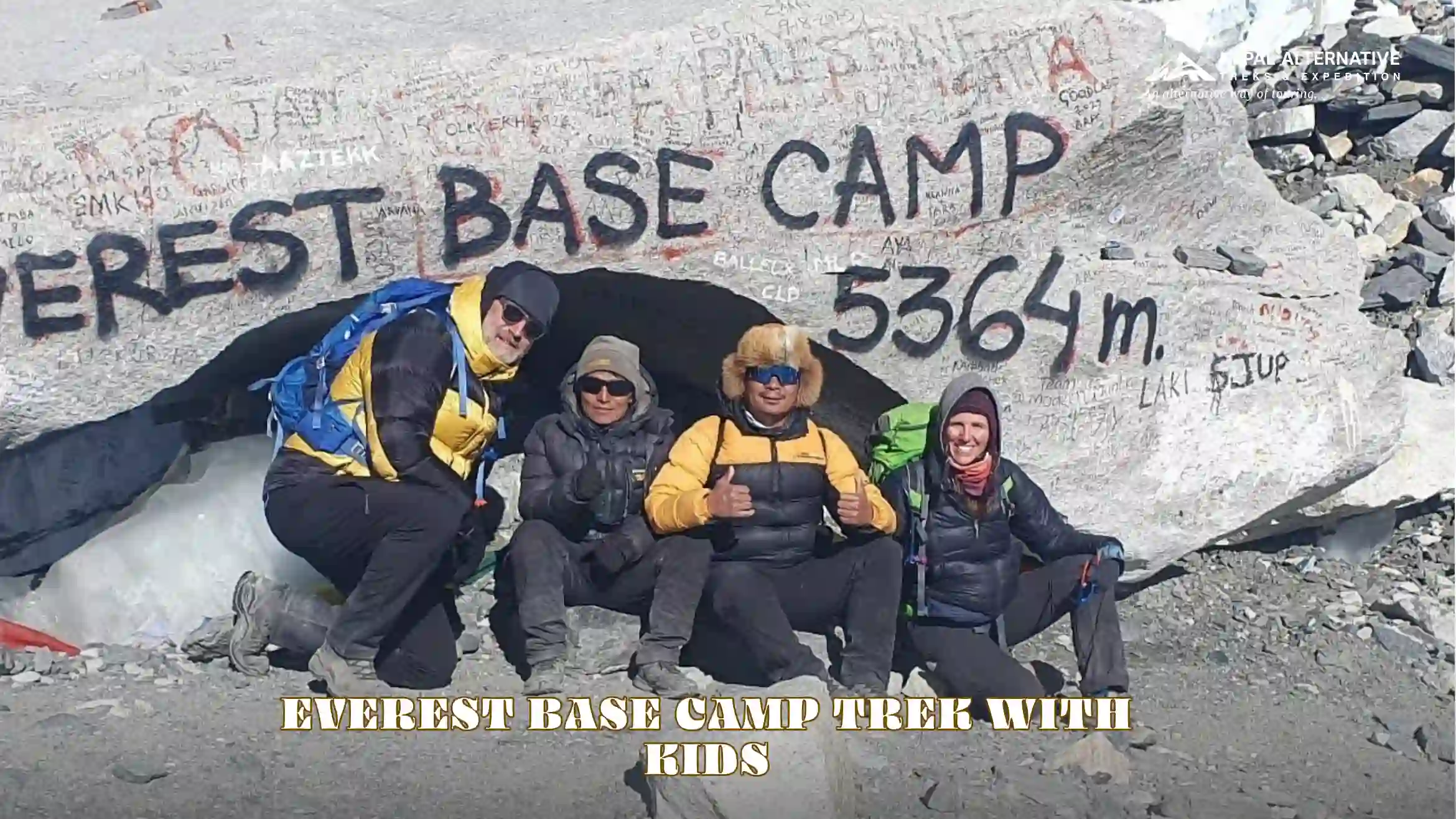
Imagine standing beneath the world’s highest mountain with your children, surrounded by snow-covered peaks and the quiet villages of the Khumbu region. For many families, the Everest Base Camp trek is a dream adventure. But when children are part of the journey, there is more to consider than the views and the excitement of reaching base camp.
The Everest Base Camp trek with kids is possible for families, especially when the children have hiking experience and the itinerary allows enough time to adjust to the altitude. However, this is not an ordinary family holiday. The trail reaches 5,364 m at Everest Base Camp, and several nights are spent at high elevations where the risk of altitude sickness increases.
This guide covers whether you can do the Everest Base Camp trek with kids, age requirements and fitness considerations, altitude risks, itinerary, accommodation, packing list, best seasons, and alternatives to the full Everest Base Camp trek. It will help you decide whether this adventure is right for your family.
Can You Do the Everest Base Camp Trek with Kids?
Yes, families can do the Everest Base Camp trek with children. However, hiking experience, physical fitness, and ability to cope with high altitude all matter. The standard Everest Base Camp route involves several hours of walking on most days. The trail includes steep stone steps, rocky paths, suspension bridges, and long uphill sections. As the trek gains altitude, even a short walk can feel tiring. Children may also struggle with cold mornings, simple accommodation, changes in appetite, and nights at high elevations.
Therefore, before you book the trek, consider whether your child can walk for several hours on uneven ground on consecutive days. They should also feel comfortable telling you when they are tired or unwell. This is important because younger children may not always explain the early symptoms of altitude sickness. Likewise, your itinerary matters just as much as your child’s fitness. A rushed schedule can leave little room for extra rest or an early descent. A flexible itinerary allows your family to slow down or turn back without feeling that the entire holiday has failed.
You do not have to reach Everest Base Camp for the trip to be worthwhile. A family trek can still be memorable if you explore Namche Bazaar, visit Sherpa villages, and enjoy views of Everest from a lower altitude.
What Is the Best Age for the Everest Base Camp Trek with Kids?
There is no single age that makes the Everest Base Camp trek safe for every child. Nepal does not have a universal minimum age for this trek, although individual trekking companies may set their own age limits. Instead of focusing only on age, consider your child’s experience, maturity, and ability to manage long days outdoors.
An older child who already enjoys hiking may cope better with the trail than a younger child who has never walked for several hours at a time. However, age and fitness alone cannot predict how a child will respond to high altitude. Most importantly, never assume that a child is ready for the trek simply because they are old enough or physically active. High altitude creates challenges that ordinary fitness cannot fully prepare them for.

How Difficult Is the Everest Base Camp Trek for Children?
The Everest Base Camp trek is a challenging high-altitude walk. Children need the stamina to walk for several hours on multiple consecutive days. The difficulty of EBC Trek results from a combination of altitude, trail conditions, cold weather, and the limited facilities available in the mountains.
Long Walking Days and Steep Trails
Most trekking days involve around 5 to 7 hours of walking. Some days are shorter, and others take longer. The route includes steep climbs, stone steps, narrow paths, and suspension bridges above deep valleys. The climb from Phakding to Namche Bazaar is a good example. The trail crosses suspension bridges and rises steeply toward the main Sherpa town. For a child who has never hiked in the mountains, this day can feel much harder than expected.
Further, higher on the trail, the ground becomes rockier and the air thinner. Walking at a comfortable pace and taking regular breaks can help, but no family should expect every day to feel easy.
Cold Weather and Basic Accommodation
The temperature drops as you climb higher on the EBC Trek, especially at night and before sunrise. Children may find it difficult to get out of a warm sleeping bag for an early start.
Also, you stay in teahouses along the route. These are mountain lodges with simple rooms and shared facilities. Rooms usually become more basic at higher elevations, and heating is limited. Hot showers, charging points, and Wi-Fi may cost extra. The availability of these services also varies between lodges. Pack enough warm clothing and prepare your child for simple living conditions before the trek. Familiar snacks, a warm sleeping bag, and a comfortable daily routine can make the experience easier.
High Altitude Makes Everything Harder
Altitude is one of the biggest challenges of the Everest Base Camp trek with kids. The amount of oxygen available decreases as you climb, so walking and sleeping can become more difficult.
A child who feels energetic at a lower altitude may become tired, lose their appetite, or develop a headache higher on the trail. These symptoms should never be dismissed as ordinary tiredness without careful assessment.
Altitude Sickness on the EBC Trek with Kids
Altitude sickness is a major concern for parents who plan to trek to Everest Base Camp. Altitude sickness affects children the same way it affects adults. The risk increases significantly above 3,500 m.
Children often cannot describe their symptoms clearly. Watch for these common symptoms of altitude sickness in children instead of waiting for them to complain:
- Unusual irritability or mood changes
- Refusal to eat or drink
- Excessive tiredness or sleeping more than usual
- Pale skin or vomiting
- Loss of interest in playing
A child who refuses food, becomes unusually quiet, or seems much less active than normal may be unwell. Do not assume that these changes are simply due to tiredness or a difficult walking day. Severe symptoms can include confusion, difficulty walking straight, or breathlessness at rest. These require urgent medical attention and immediate descent when appropriate.
How High Will Your Family Sleep During the Trek?
The standard Everest Base Camp route passes through several villages at progressively higher elevations.
| Trekking stop | Altitude |
|---|---|
| Phakding | 2,640 m |
| Namche Bazaar | 3,440 m |
| Dingboche | 4,350 m |
| Lobuche | 4,900 m |
| Gorak Shep | 5,164 m |
| Everest Base Camp | 5,364 m |
| Kala Patthar viewpoint | 5,545 m |
Note: Everest Base Camp and Kala Patthar are trekking destinations rather than overnight stops on the standard itinerary.
Why Acclimatization Days Matter
Acclimatization days matter because they give the body time to adjust to high altitude. Most standard Everest Base Camp itineraries include a rest day in Namche Bazaar and another in Dingboche. A rest day does not mean staying inside the lodge. Your guide may suggest a short walk to a higher viewpoint, followed by a return to the same village for the night. The activity should depend on how everyone feels.
For a family trek, these rest days are essential parts of the plan. Do not remove them to shorten the holiday or make room for another activity. Even with proper acclimatization, altitude sickness can occur. If your child develops symptoms, stop going further and seek medical advice. If symptoms worsen, it requires immediate descent. Do not wait until the next morning to see whether the child feels better.
Pheriche has a seasonal medical aid post operated by the Himalayan Rescue Association. However, medical services in the Everest region are limited, and families should not depend on a particular facility being available. Speak with a pediatrician or travel-health clinician before the trek, especially if your child has an existing medical condition. This guide cannot determine whether a particular child can safely tolerate high altitude or recommend medication for them.
How Many Days Do You Need for the Everest Base Camp Trek with Kids?
Most Everest Base Camp treks take around 12 to 14 days, although the exact duration depends on the route, flight arrangements, acclimatization schedule, and return plan.
Families with children should consider a longer itinerary rather than trying to complete the trek in the shortest possible time. Extra days provide more flexibility if a child needs additional rest or the weather delays a flight. You should also allow spare days in Kathmandu before and after the trek. Flights to and from Lukla can be delayed or canceled, so a tight international flight connection is not a good idea.
What If Your Child Cannot Reach Everest Base Camp?
If your child cannot reach EBC, then that’s OK. Reaching base camp should never become a condition for a successful family holiday. If your child feels unwell at Dingboche or another stop, continuing toward higher elevations may not be appropriate. Your guide should help arrange a safe response, which may include medical assessment and descent.
Nonetheless, you can still enjoy the Everest region without completing the full route. The Everest View Trek up to Namche Bazaar offers mountain views, Sherpa culture, local bakeries, and access to shorter walks. A family can have a memorable trip even if base camp remains out of reach.
What Is a Typical Day Like on the EBC Trek with Kids?
A trekking day starts early with breakfast at the teahouse. After breakfast, your family walks toward the next village with regular breaks for water, snacks, and rest. The exact schedule depends on the route, weather, and pace of the group. Some days need a steady climb, while others include long uphill sections and rocky ground.
Children cross the suspension bridges, see mountain views, and small villages along the trail. However, the excitement can fade when they become tired or cold. A flexible schedule helps prevent the day from becoming a struggle.
Plan for the following conditions:
- Walking time: Many days require around 5 to 7 hours on the trail, with longer days possible.
- Trail conditions: Expect stone steps, rocky paths, steep climbs, and exposed sections.
- Weather: Conditions can change quickly, and mornings at higher elevations can be very cold.
- Food: Teahouses offer meals, but familiar snacks from home can help when your child has a poor appetite.
- Accommodation: Rooms are simple, and shared toilets are common.
- Facilities: Hot showers, charging points, and internet access may be limited or cost extra.
The walk from Gorak Shep to Everest Base Camp and back can be particularly demanding. The high altitude, uneven ground, and length of the outing make it a day when parents and guides must assess the child’s condition carefully.
Kala Patthar is another optional challenge. The viewpoint is visited before sunrise for mountain views, but the early start and cold conditions may be too much for a child who has slept poorly or feels tired. There is no need to attempt it if the conditions are not suitable.
How to Prepare Your Child for the Trek to Everest Base Camp
Parents should prepare their children for the EBC Trek before they arrive in Nepal. Below are some preparation tips parents can take into account to prepare their children for the long trekking days to EBC:
Build Hiking Experience Before the Trip
Start with local walks and gradually increase the distance. Choose trails with gentle climbs, uneven ground, and different weather conditions when possible. If your child has never completed a long hike, do not make Everest Base Camp their first major trekking experience. Shorter hikes help the family understand how the child handles tiredness, discomfort, and changes in weather.
Also, have them practice walking in the footwear and small daypack they’ll use on the trek. New boots can cause blisters, so make sure the footwear is comfortable before departure.
Prepare for Cold Weather and Simple Lodges
Explain that the trek will not feel like a hotel holiday. Your child may need to wear several layers, share bathroom facilities, and sleep in a basic room. Let them practice putting on their jacket, gloves, hat, and other layers without help. This can make cold mornings easier.
You can also explain that some days may feel difficult and that the family may change the plan. Children should know that they will not be blamed if they need a rest or cannot continue.
Arrange a Medical Consultation Before Departure
Talk to a healthcare professional who understands high-altitude travel with children. Discuss the planned sleeping elevations, the child’s medical history, and what to do if symptoms develop. Ask about any vaccinations, prescription medicines, and emergency arrangements that may be relevant to your family. Do not use an adult medication plan for a child without medical guidance.
What to Pack for the Everest Base Camp Trek with Child
A suitable packing list helps keep children warm, comfortable, and prepared for changing mountain conditions. You don’t need to pack every item a child uses at home, but warmth, sun protection, and familiar essentials should come first. The essential packing list includes:
- Base layer
- Warm fleece or insulating layers
- A down or other insulated jacket
- Waterproof jacket and trousers
- Warm gloves and a winter hat
- Comfortable trekking trousers
- Wool or thermal socks
- Broken-in hiking boots
- Comfortable shoes or sandals for the lodge
- Sleeping bag
- Sunglasses with suitable UV protection
- High-SPF sunscreen and lip balm
- A reusable water bottle or hydration system
- Snacks your child already enjoys
- Personal prescription medicine
- Basic personal hygiene items
- A small comfort item, such as a favorite soft toy
Should You Hire a Guide and Porter for a Family Everest Base Camp Trek?
A guide and porter can make the trek more manageable for families. A guide helps with the route, daily schedule, local arrangements, and decisions about whether the group should continue. A porter carries the larger bags so parents and children can focus on walking.
Choose an experienced trekking guide who understands altitude risks and can communicate clearly with both adults and children. Ask how the trek company handles medical concerns, route changes, and emergency evacuation. It is also important to agree that the guide can recommend stopping the ascent when necessary. Reaching base camp should never take priority over a child’s health.
Lukla Flight Delays and Travel Insurance for Families
The flight to Lukla is one of the main logistical challenges of the EBC trekking. Weather can delay, change, or cancel flights, and the departure airport may vary by season or operating conditions. During busy trekking periods, some flights to Lukla operate from Ramechhap rather than Kathmandu. This usually requires a road transfer before the flight. For families, these changes can affect the whole itinerary. Keep spare days at both ends of the trek and avoid an international flight home immediately after your planned return from Lukla.
Travel insurance is another essential part of your preparation. Check that the policy covers trekking at the elevations on your itinerary, emergency medical treatment, and helicopter evacuation where appropriate. Confirm that children are covered under the same conditions and review any age restrictions. A helicopter evacuation can be expensive and depends on weather and operational conditions. It is not a guaranteed substitute for a safe itinerary or suitable insurance.
When Is the Best Time for the Everest Base Camp Trek with Kids?
The main trekking seasons for Everest Base Camp are spring (March to May) and autumn (September to November). Both seasons offer good mountain views, but weather and trail conditions vary from year to year.
Spring (March to May)
Spring is a popular season for trekking in the Everest region. Temperatures generally become warmer as the season progresses, and rhododendrons bloom at lower elevations. The weather can still be cold at higher altitudes, especially at night. Families should pack suitable winter clothing and prepare for changing conditions.
Autumn (September to November)
Autumn is another popular period for the Everest Base Camp trek. October often provides favorable trekking conditions and clear mountain views, although the trails and teahouses can be busy. Book accommodation and flights in advance during busy periods. Families should also allow enough time for acclimatization and possible travel delays.
Is Winter or Monsoon Suitable for a Family Trek?
The monsoon season, from around June to August, brings more rain to lower elevations. Trails can become muddy, visibility may be poor, and flight delays are possible. Thus, it is not an optimal time to do the trek.
Likewise, Winter, from December to February, can bring very cold nights and challenging conditions at higher elevations. Some facilities may have limited availability, and families need suitable equipment and a carefully planned route. It’s not recommended to do the EBC Trek during winter for families with kids.
Conclusion
The Everest Base Camp trek can be a special experience for families who enjoy the outdoors and are prepared for the challenges of high-altitude travel. Children can discover mountain life, learn about Sherpa culture, and see the Himalayas from a perspective that few ordinary holidays offer. However, the full trek is not suitable for every child. Long walking days, cold nights, basic accommodation, and altitude can make the journey difficult even for an active young trekker.
Before you book, make sure your child has suitable hiking experience, consult a healthcare professional about the planned elevations, and choose an itinerary with proper acclimatization and spare days. Work with an experienced guide and make sure everyone understands that the plan may change.
Frequently Asked Questions About the Everest Base Camp Trek with Kids
Can a child complete the Everest Base Camp trek?
Yes, some children complete the trek with their families. However, suitability depends on the child’s hiking experience, health, maturity, and response to altitude. No age or fitness level guarantees a safe or successful trip.
Is the Everest Base Camp trek safe for children?
The trek carries risks for children and adults, especially because of high altitude, cold weather, and limited medical facilities. A suitable itinerary, medical advice, experienced guide, proper acclimatization, and willingness to turn back can help manage these risks, but they cannot eliminate them.
How many days should we allow for the Everest Base Camp trek with kids?
Around 12 to 14 days is a common starting point for planning the standard route, but families may need a longer itinerary. Allow additional time for acclimatization, rest, and possible flight delays. Your child’s needs should determine the final schedule.
Can children get altitude sickness on the Everest Base Camp trek?
Yes. Children can develop altitude sickness, and they may not always explain their symptoms clearly. Watch for headaches, nausea, unusual tiredness, appetite changes, dizziness, and changes in behavior. Stop ascending if symptoms develop and seek appropriate medical advice.
Do children need previous trekking experience?
Previous trekking experience is strongly helpful, although the amount of experience needed varies by child. Start with shorter hikes and build up to longer walks over consecutive days. This helps your family assess whether the child is ready for the physical demands of the route.
Is Kala Patthar necessary for an Everest Base Camp family trek?
No. Kala Patthar is an optional viewpoint above Gorak Shep. It offers famous views of Everest, but the early start, cold weather, and high altitude can make it especially demanding. Families should skip it if a child is tired, unwell, or struggling with the altitude.
What happens if my child cannot continue the trek?
Your guide should help you assess the situation and arrange a safe plan. Depending on the symptoms and conditions, the next step may be medical assessment and descent to a lower altitude. Do not continue climbing simply to keep the original itinerary.
Can we take a helicopter if our child becomes unwell?
Helicopter evacuation may be an option in some emergencies, but it depends on weather, aircraft availability, location, and the child’s condition. Appropriate insurance and a clear emergency plan are important. Do not treat helicopter evacuation as a replacement for acclimatization or a flexible itinerary.