Trip Facts

Weather

Weather -10°C to 13°C

Duration

Duration 6 Days

Difficulty

Difficulty Moderate to Challenging View Difficulty Detail

Accommodation

Accommodation Lodge

Meals Included

Meals Included Breakfast, Lunch, Dinner

Best Season

Best Season Sept, Oct, Nov, Mar, Apr, May

Transportation

Transportation Flight

Religion

Religion Buddhism

Ethnic People

Ethnic People Sherpa

Geographic Terrain

Geographic Terrain Low Alpine Valleys, High Alpine Hills, Glacial Moraines, Lakeshores, and Arid Valleys

Region of Nepal

Region of Nepal Everest Region, Khumbu

Max. Altitude

Max. Altitude 5,357 m / 17,575 ft

Gokyo Lake Trek with Helicopter Return Overview

The Gokyo Lake Trek with Helicopter Return is a 6-day trek in Nepal’s Everest region. The journey takes you from Lukla through Phakding, Namche Bazaar, Dole, and the upper Gokyo Valley. You will explore the beautiful Gokyo Lakes and hike to Gokyo Ri at 5,357 m for wide views of Mount Everest, Cho Oyu, Lhotse, Makalu, and many other peaks across the Everest region.

The trek also brings you close to the Ngozumpa Glacier, the largest glacier in the Everest region. Along the route, you pass suspension bridges, rhododendron forests, riverside trails, yak pastures, and Sherpa settlements. You also enter Sagarmatha National Park, home to some of the best-known Himalayan landscapes in Nepal.

The main difference from a normal Gokyo trek is the return journey. After exploring Gokyo and completing the Gokyo Ri hike, you return to Kathmandu by helicopter instead of trekking back through Machhermo, Dole, and Namche. This saves several days of walking and avoids repeating the same trail. The route also includes an acclimatization day in Namche Bazaar before you continue to higher elevations. The trek follows established mountain trails through Sherpa villages and the Sagarmatha National Park.

The trek is challenging because of its high altitude and long uphill sections. It is suitable for fit first-time trekkers who prepare well, walk at a steady pace, and follow their guide’s acclimatization advice. The helicopter return reduces the total walking days, but it should not be treated as a shortcut for altitude sickness.

Gokyo Lake Trek with Helicopter Return Highlights

  • Trek through the Everest region from Lukla to the remote Gokyo Valley.
  • Explore the turquoise Gokyo Lakes surrounded by high Himalayan peaks.
  • Hike to Gokyo Ri at 5,357 m for panoramic mountain views.
  • See Mount Everest, Cho Oyu, Lhotse, Makalu, Ama Dablam and Thamserku.
  • Walk beside the Ngozumpa Glacier in the upper Gokyo Valley.
  • Experience Sherpa villages, Buddhist monasteries, mani walls and mountain trails.
  • Enjoy a scenic helicopter flight from Gokyo to Kathmandu.
  • Save several trekking days by avoiding the return walk through Dole and Namche.
  • Stay in traditional teahouses in Phakding, Namche Bazaar, Dole, and Gokyo.
  • Explore Namche Bazaar, the main Sherpa trading town of the Khumbu Valley.
  • See Himalayan valleys, glaciers, ridges, and villages from the air on the return flight.
How Difficult Is the Gokyo Lake Trek with Heli Return?

The Gokyo Lake Trek with Heli Return is a challenging high-altitude trek. The helicopter return shortens the overall itinerary but does not make the ascent to Gokyo easier, as you still walk from Lukla through Phakding, Namche, and Dole to reach the Gokyo Valley.

The main difficulty comes from altitude and terrain. As you gain elevation, the air becomes thinner and even a normal walking pace feels more strenuous. Trails include rocky and uneven sections, stone steps, steep climbs, and exposed mountain ground, with snow or ice making higher sections more technical in colder periods. The most demanding part is the climb to Gokyo Ri at 5,357 m, which requires an early start and a steady, controlled pace.

Daily walking involves several consecutive days on the trail, with some stages relatively comfortable and others involving sustained uphill effort, especially on the final approach to Gokyo and during the Gokyo Ri ascent. A guide can adjust the group’s pace according to conditions and fitness, but good pre-trek preparation is key to managing these sections.

Altitude sickness remains a risk despite the helicopter return, since you still sleep at progressively higher elevations and exceed 5,000 m on the Gokyo Ri climb. The acclimatization day in Namche is therefore essential. If you develop symptoms such as headache, dizziness, nausea, unusual fatigue, or breathing difficulties, inform your guide immediately so they can assess your condition and advise on next steps. Weather can also affect the helicopter return: even on a clear morning, conditions may deteriorate later, and flights operate only when weather and safety standards are met.

Gokyo Lake Trek with Helicopter Return Itinerary – 6 Days

Day 1

Fly from Kathmandu to Lukla and Trek to Phakding (2,640 m)

Day 1 Facts

Trekking Time Average

35 minutes flight
8 km Uphill hike (3 hours)

Accommodation

Khumbu Traveller’s Guest House

Altitude

2,640 m / 8,661 ft

Included meals

Lunch, Dinner

Your Gokyo Lake Trek with Helicopter Return begins with an early morning flight from Kathmandu to Lukla. The short mountain flight offers views of green hills, deep valleys, and the Himalayan landscape before landing at Tenzing Hillary Airport in Lukla. After landing at Lukla, you meet your trekking crew, arrange your duffel bags, and begin walking toward Phakding on foot.

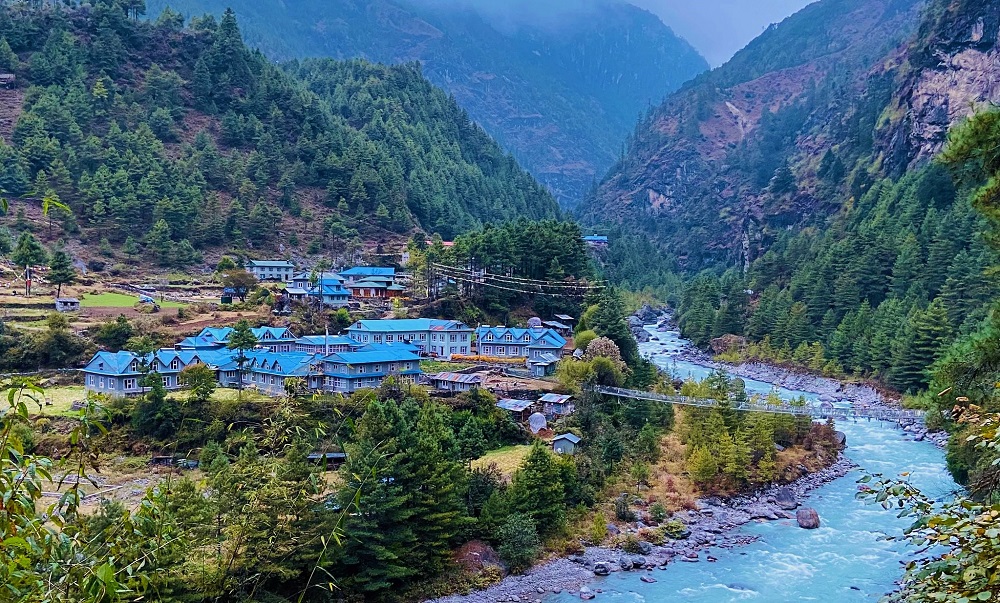
The route descends through Chaurikharka village and follows the Dudh Koshi River. You will pass stone houses, prayer wheels, small bridges, and cultivated fields. The first day is kept short to help you adjust to the walking routine before the trail gains more altitude. Once in Phakding, you check into Hotel Sherpa or Sherpa Guide Lodge for the night. You can use the remaining time to rest and prepare for the next day. Rest well and drink plenty of water.

Day 2

Trek from Phakding to Namche Bazaar (3,440 m)

Day 2 Facts

Trekking Time Average

11 km Uphill hike (5-6 hours)

Accommodation

Hotel Sun Shower

Altitude

3,440 m / 11,286 ft

Included meals

Breakfast, Lunch, Dinner

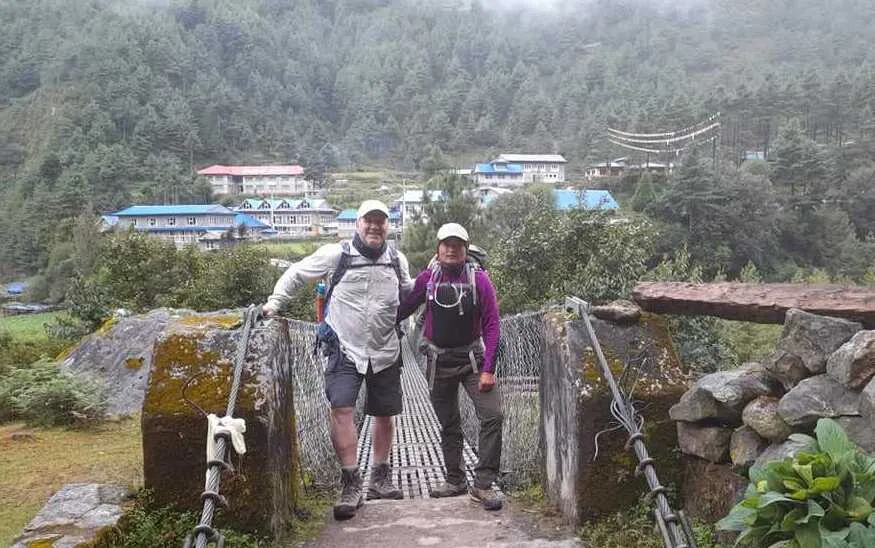
After breakfast, you continue your trek from Phakding toward Namche Bazaar. The trail follows the Dudh Koshi River once again through pine forest and Sherpa settlements. You cross several suspension bridges, including the well-known Hillary Suspension Bridge. Your permits are checked at Monjo before you enter Sagarmatha National Park.

The route then becomes steeper as you climb toward Namche Bazaar. On a clear day, the first distant view of Mount Everest may appear along the final uphill section. Take a slow and steady pace, especially as the altitude begins to increase.

Namche Bazaar is the main trading and service center in the Khumbu region. It is also an important stop for altitude acclimatization. After reaching Namche, you settle into Khumbu Lodge and have time to rest. The surrounding hills and mountain views give you your first strong sense that you are moving deeper into the Everest region.

Day 3

Acclimatization Day in Namche Bazaar

Day 3 Facts

Accommodation

Hotel Sun Shower

Altitude

3,440 m / 11,286 ft

Included meals

Breakfast, Lunch, Dinner

Day 3 of the Gokyo Lake Trek with heli return itinerary is set aside for acclimatization, which is important before continuing toward the higher Gokyo Valley. However, this is not a complete rest day. You will take a short hike to a higher point near Namche, then return to sleep at the same elevation. This supports gradual adjustment to the lower oxygen level at high altitude.

The hike may include a walk to Everest View Hotel, Khumjung village, or Syangboche Airstrip, from where you can enjoy views of Everest-region peaks, surrounding ridges, and Sherpa villages. Your guide will set a suitable pace and monitor how everyone is feeling. Inform the guide early if you have a headache, nausea, unusual fatigue, dizziness, or loss of appetite.

If you don’t want to hike to viewpoints, you can also explore the town and its surrounding trails at a relaxed pace. Staying active with a short walk is generally more useful than spending the entire day inside the lodge. Nonetheless, return to Khumbu Lodge for lunch and a relaxed afternoon. Use the time to organize your gear, refill water bottles, and rest for the next section of the Gokyo Lake Trek. A typical acclimatization day hike lasts around 3 to 4 hours.

Day 4

Trek from Namche Bazaar to Dole (4,020 m)

Day 4 Facts

Trekking Time Average

12 km Uphill hike (6-7 hours)

Accommodation

Dole Resort

Altitude

4,020 m / 13,189 ft

Included meals

Breakfast, Lunch, Dinner

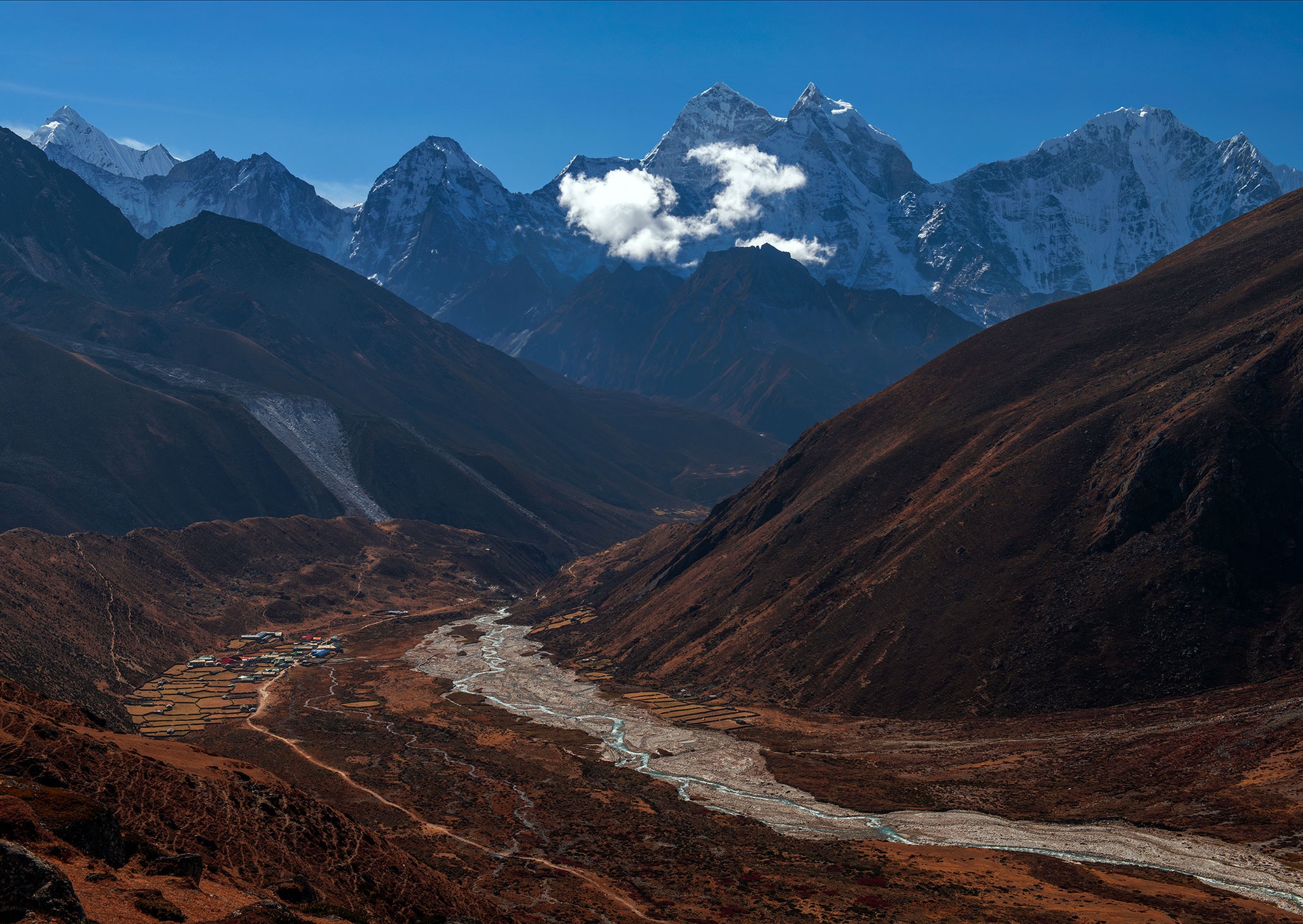
On day 4, the trail leaves Namche Bazaar and heads toward Dole. After leaving Namche, the trail climbs toward Mong La, a high ridge with broad views across the Khumbu Valley. From here, the route turns away from the main Everest Base Camp trek trail and enters the quieter Gokyo Valley. The trail descends through forest toward Phortse Tenga before climbing again.

As you gain elevation, the landscape becomes more alpine, and the air gets thinner. Pine and rhododendron forests become less common, and you’ll walk along the open slopes, grazing land, and mountain settlements. You may also see yaks and dzopkyos carrying supplies along the trail.

The walking pace should remain steady rather than fast. This is a rewarding day, but the repeated ascents and descents can feel demanding. After reaching Dole, you stay at Dole Resort and have time to rest. The village lies above 4,000 m, so drinking water and avoiding alcohol are important. This overnight stop also provides an important break before the longer climb toward the Gokyo Lakes.

Day 5

Trek from Dole to Gokyo Lake (4,750 m)

Day 5 Facts

Trekking Time Average

14 km Uphill hike (6-7 hours)

Accommodation

Hotel Thanka Inn

Altitude

4,750 m / 15,584 ft

Included meals

Breakfast, Lunch, Dinner

Today is the longest and most demanding walking day of this short Gokyo Lake Trek with Heli Return. It takes you deeper into the Gokyo Valley. The trail climbs from Dole through an increasingly open high-altitude landscape. You pass mountain slopes, small settlements, and areas used for grazing livestock. As you move higher, the views become wider, and the surrounding peaks become more prominent.

You trek past Machhermo, where many standard Gokyo itineraries stop for the night, then continue toward Gokyo. Beyond Machhermo, the trail rises into a more rugged alpine landscape. You may see the first of the Gokyo Lakes before reaching the main settlement beside the third lake. The turquoise Gokyo Lakes sit among the high mountains near the Ngozumpa Glacier and form the main scenic attraction of this trek.

Arrive at Gokyo and check in at Gokyo Resort. This is a high-altitude day, so the focus is on reaching the lodge safely rather than walking fast. Eat well, stay hydrated, and rest early for the Gokyo Ri climb the next morning.

Day 6

Climb Gokyo Ri and Fly to Kathmandu by Helicopter

Day 6 Facts

Trekking Time Average

4 km Uphill hike (4 hours)

Altitude

1,295 m / 4,249 ft

Included meals

Breakfast

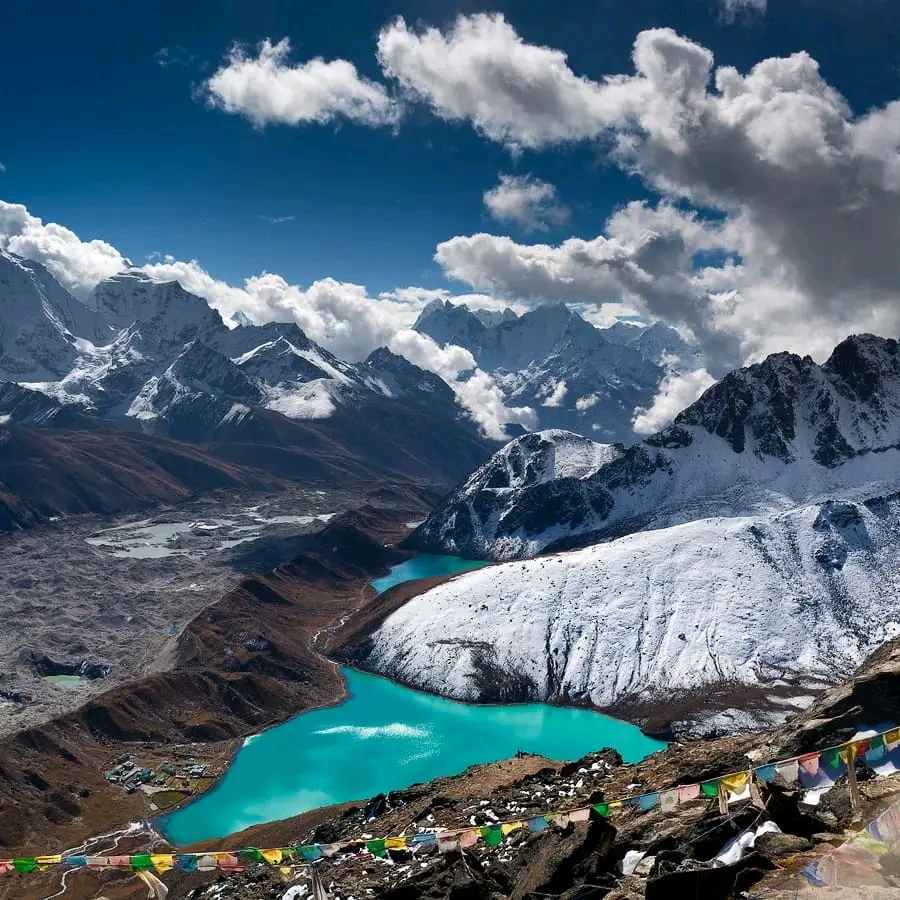
The final day begins early with a hike to Gokyo Ri at 5,357 m, the highest point of the trek. The climb is steep and demanding because of the altitude, but reaching the viewpoint gives you a wide Himalayan panorama. From Gokyo Ri, you can see views of Everest, Cho Oyu, Lhotse, Makalu, Ama Dablam, and other peaks. The viewpoint also overlooks the Gokyo Lakes and the Ngozumpa Glacier. The viewpoint is one of the main reasons travelers choose the Gokyo Valley Trek.

After completing the Gokyo Ri hike, you return to Gokyo and prepare for the helicopter flight to Kathmandu. The helicopter return removes the need to retrace the trail through Dole and Namche, making this version of the Gokyo Lake Trek suitable for travelers with limited vacation time. The flight is subject to suitable weather and safe flying conditions. Once you arrive in Kathmandu, the 6-day Gokyo Lake Trek with Helicopter Return comes to an end.

What do you get in the Trip?

Cost Includes

  • Tribhuvan International Airport pickup and transfer to hotel in Kathmandu
  • Lodge accommodation (sharing basis) during the trip
  • All meals (breakfast, lunch, dinner) along the trek
  • One highly experienced, first aid–trained, fluent English-speaking, friendly, and government-authorized trekking guide
  • Porters (one porter for two people)
  • Guide and porter’s food, accommodation, salary, insurance, transportation, and equipment
  • Overland transportation as mentioned in the itinerary
  • Kathmandu to Lukla flight tickets
  • Gokyo to Kathmandu helicopter flight
  • Sagarmatha National Park entry fee, Pasang Lhamu Rural Municipality entry fee, and all necessary permits/documents
  • Trekking map, daily oxygen saturation check-ups, beanie, first aid kit, water purification tablets/solution, fresh seasonal fruits, trekking completion certificate, company T-shirt, etc.
  • Government tax, service charges, etc.
  • Assistance with emergency rescue evacuation
  • Public liability insurance

Cost Excludes

  • Hotel accommodation and meals in Kathmandu
  • Soft drinks, alcoholic beverages, and personal expenses such as tea/coffee, hot water, bottled water, hot showers, device charging, laundry, phone bills, and bar bills
  • Personal travel insurance
  • International flight tickets
  • Nepal tourist visa fee
  • Tips for the guide and porters (highly recommended)

Add-ons and Options

You can make your Gokyo Lake Trek with helicopter return more comfortable by adding better rooms, a private porter, city tours, and rental gear. These extras help you travel lighter, sleep more comfortably, and see more of Nepal before or after your trek.

How to add extras:

  1. Click “Book the Trip” or choose “Join our group departures.”
  2. Select your preferred group date or private date.
  3. On the checkout page, tick the add-ons you want.

Available add-ons:

  • Accommodation Upgrade (USD 200): Where available, you can stay in upgraded lodges with more comfortable rooms, warmer bedding, and better facilities. This can include stops such as Namche, Dole, Machhermo, and Gokyo. Rooms are on a double or twin-share basis with a private bathroom where possible.
  • Private Porter (USD 120 per porter): Hire a private porter to carry extra baggage. This lets you walk with only a light daypack and focus on the scenery, the Gokyo Lakes, glaciers, and mountain views.
  • Kathmandu Heritage Sightseeing Tour (USD 30 per person): Visit key cultural sites in Kathmandu with a private guide and vehicle. You can see famous temples, stupas, and historic squares in a short, guided tour.
  • Pokhara Tour (USD 30 per person for city tour): Spend time in Pokhara with lakeside walks, a short boat ride on Phewa Lake, and relaxed views of the mountains. This is a good way to unwind after your trek.
  • Gear Rental: Rent essential trekking gear instead of bringing everything from home. Items available to rent include a sleeping bag (USD 10), a down jacket (USD 10), a pair of walking poles (USD 10), and a pair of crampons or spikes (USD 10).
  • 1-hour Everest Scenic Flight (USD 300 per person): Take a one-hour mountain flight from Kathmandu to see Everest and the Himalayan range from the air. This is a scenic flight only, with no landing. Private airport pick-up and drop-off in Kathmandu are included.

Weather Variation on Gokyo Lake Trek With Helicopter Return

January
-10°C to -4°C
February
-9°C to -3°C
March
-7°C to -1°C
April
-4°C to 3°C
May
0°C to 8°C
June
3°C to 11°C
July
5°C to 13°C
August
5°C to 13°C
September
2°C to 10°C
October
-2°C to 5°C
November
-6°C to -1°C
December
-9°C to -3°C

Temperatures on the Gokyo Lake Trek vary widely by month and altitude. In winter, nights in Gokyo and on the climb to Gokyo Ri can drop well below zero, while daytime sun can feel warm on clear days. Spring and autumn offer the most stable weather, with cold nights and comfortable walking temperatures during the day. Summer and monsoon months are milder but often cloudy, with more rain at lower elevations and possible snow at higher points.

Note: Ranges are indicative for the Gokyo Valley and Gokyo Ri area. Actual temperatures depend on altitude, wind, and daily weather.

Route Map

Trail
Return Trail

Join our group departures

We do not have any scheduled group trips, but you are welcome to pick a date that suits you best.

Book a private trip on your own date.

Every journey we create is uniquely tailored to you. Share your interests and passions, and our travel experts will design an unforgettable adventure filled with extraordinary, one-of-a-kind experiences crafted just for you.

Private Booking
Additional Trip Information

Why Choose a Gokyo Lake Trek with Helicopter Return?

You should choose a Gokyo Lake Trek with helicopter return if you want to experience the main attractions of the Gokyo Valley without spending several additional days walking back along the same route. The helicopter return also adds a different way to experience the Khumbu landscape. Depending on weather and visibility, you may see valleys, glaciers, villages, ridges, and Himalayan peaks from above.

Here are some benefits of adding a helicopter return during Gokyo Lake trekking:

  • Saves trekking days: A standard Gokyo itinerary requires you to walk back toward Lukla after visiting the lakes and Gokyo Ri. The helicopter option removes this return section. This can make a meaningful difference for travelers working with a short holiday schedule.
  • Adds a scenic helicopter experience: The return helicopter ride provides an aerial view of the Everest region after the trekking portion of your journey. Mountain valleys, glaciers, and high-altitude terrain look very different from the air.
  • Makes better use of limited vacation time: For travelers from the USA, UK, Europe, Australia, and other countries with limited annual leave, the main advantage is the shorter return. You can spend your available trekking days reaching the Gokyo Valley rather than using additional days to walk back.
  • Combines trekking with a faster return: This package does not turn the Gokyo trek into a sightseeing tour. You still experience the trails, Sherpa settlements, altitude gain, and the Gokyo Ri climb on foot. The helicopter simply changes how you leave the high mountains after completing the main trekking section.

What You See on the Gokyo Lake Trek with Heli Return

During the Gokyo Lake Trek with heli return, you will see Gokyo Valley, high-altitude Gokyo Lakes, Gokyo Ri, Ngozumpa Glacier, and Himalayan peaks, including Mount Everest, Cho Oyu, Lhotse, Makalu, Ama Dablam, and Thamserku.

Gokyo Lakes

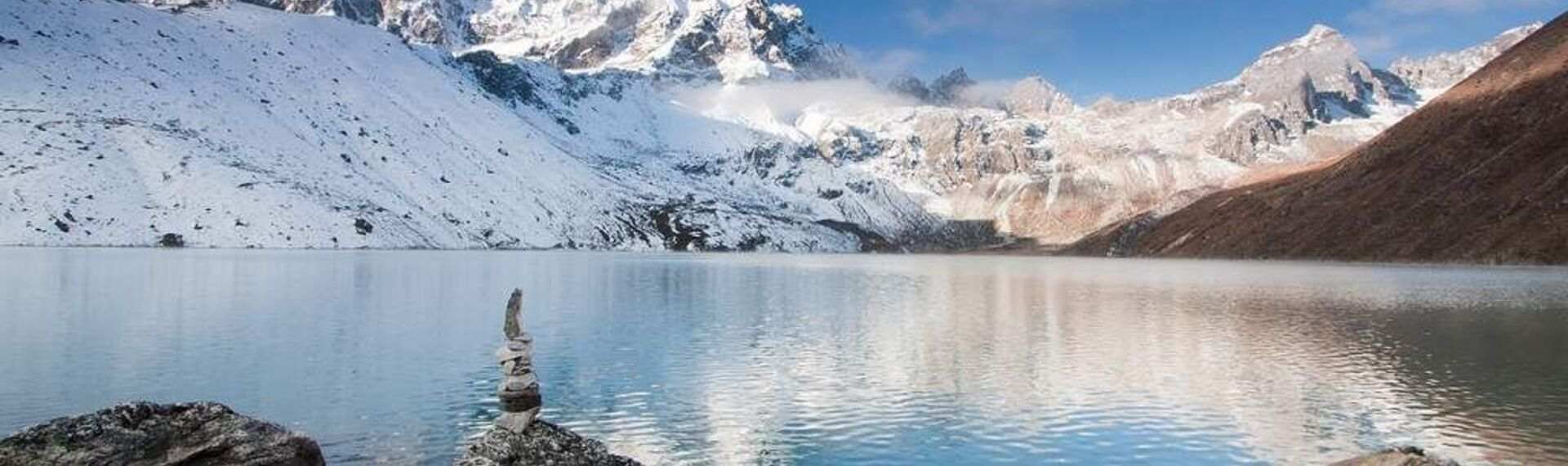
The Gokyo Lakes are the main attraction of the valley. These high-altitude glacial lakes sit near Gokyo village, surrounded by rocky slopes, glaciers, and Himalayan peaks. The blue-green color of the lakes stands out against the dry mountain landscape.

The lake system includes several connected lakes in the upper Gokyo Valley. Our itinerary brings you to the main Gokyo Lake area, where you can spend time taking in the surrounding landscape before the Gokyo Ri climb.

Gokyo Ri

Gokyo Ri stands at about 5,357 m and is the highest point of this itinerary. The climb is steep and demanding because of the altitude. The viewpoint is one of the main reasons travelers choose the Gokyo route.

From the summit, you can look across the Gokyo Lakes and Ngozumpa Glacier. On a clear day, the panorama includes Mount Everest, Cho Oyu, Lhotse, Makalu, Ama Dablam, and other peaks.

Ngozumpa Glacier

The trail into Gokyo takes you close to the Ngozumpa Glacier, a major glacial feature of the Everest region. The glacier extends through the upper Gokyo Valley and forms an important part of the landscape around the lakes.

Its presence becomes more obvious as you move higher toward Gokyo. The combination of glacier, lakes, and high peaks gives this section a very different character from the lower Khumbu Valley.

Himalayan Mountain Views

The Gokyo route provides views of some of the highest peaks in the Himalayas. Mount Everest and Cho Oyu are among the major mountains associated with the route. Depending on weather and visibility, you can also see Lhotse, Makalu, Ama Dablam, and Thamserku.

The best mountain panorama comes from higher viewpoints such as Gokyo Ri. Lower sections of the trek offer more varied views through forests, valleys, and Sherpa settlements.

Sherpa Villages and Khumbu Culture

The trek passes through traditional settlements in the Khumbu region. Namche Bazaar is the largest settlement and serves as an important trading and trekking center. Dole and Gokyo are much smaller mountain settlements.

Along the route, you can see stone buildings, prayer flags, mani walls, and Buddhist cultural features. These settlements provide a closer look at life in the high-altitude Sherpa communities of the Everest region.

Gokyo Lake Trek with Heli Return vs Standard Gokyo Trek

The main difference between the Gokyo Lake Trek with Heli Return and a standard Gokyo trek is the way you leave the valley. In a standard itinerary, you walk back from Gokyo to Lukla, which usually adds several days of repeated trail walking. With the helicopter return, you fly from Gokyo to Kathmandu once the Gokyo Ri climb is complete, subject to weather and operational conditions.

A standard Gokyo trek often takes 10 to 14 days or more, depending on the route and acclimatization plan. This shorter Gokyo Lake Trek with Helicopter Return is designed as a 6-day trekking program. The helicopter return reduces total trekking days, but the daily walking and altitude remain challenging.

Cost is another key difference. The helicopter return adds an extra cost to the package price compared to a normal Gokyo trek. Many travelers, however, accept this because it saves time, avoids retracing the same trail, and provides a scenic flight over the Everest region.

Feature Gokyo Lake Trek with Heli Return Standard Gokyo Trek
Return Route Helicopter from Gokyo to Kathmandu (weather dependent) Walk back to Lukla via the same trail
Gokyo Lakes Included Included
Gokyo Ri Included Included
Typical Trekking Days 6 days (plus travel days) 10–14 days
Total Trip Duration Around 8–9 days including flights 15–18 days including travel
Highest Point Gokyo Ri (5,357 m) Gokyo Ri (5,357 m)
Daily Walking Time 3–7 hours 4–7 hours, spread over more days
Physical Demand High, with long days and rapid ascent High, but with more gradual pacing
Cost Higher due to helicopter flight Lower, no helicopter cost
Scenic Value Lakes, Gokyo Ri, plus aerial views on return Lakes, Gokyo Ri, plus more time in villages
Best For Busy professionals, couples, friends, short-trip seekers Travelers who prefer longer, slower treks

Who Should Book the Gokyo Lake Trek with Heli Return?

Travelers with limited vacation time, adventure travelers, couples, first-time Himalayan trekkers, experienced trekkers, and travelers interested in a helicopter experience should book the Gokyo Lake Trek with Heli Return.

  • Travelers with limited vacation time: This is one of the main reasons to choose the package. If you have a fixed holiday period, the helicopter return removes several days of walking back toward Lukla. You can use more of your available time for the Gokyo Valley itself.
  • Adventure travelers: The package combines several types of adventure in one trip. You trek through the Everest region, reach a high-altitude viewpoint, and finish with a helicopter flight from the mountains. It offers a different experience from a standard trekking itinerary without removing the main walking sections.
  • Couples and friends: Couples and small groups can choose the package when everyone wants the Gokyo experience but does not want to spend additional days retracing the route. A private itinerary can also be adjusted around your preferred pace and travel dates.
  • First-time Himalayan trekkers: First-time trekkers can consider this Gokyo Lake Trek with Heli Return if they have suitable fitness and understand the demands of high-altitude trekking. Previous Himalayan trekking experience is not essential, but preparation is important. The helicopter return does not remove the need to acclimatize or walk to Gokyo.
  • Experienced trekkers: Experienced hikers may prefer this option when they want to fit the Gokyo Valley into a shorter Nepal holiday. The shorter return leaves more time for other activities before or after the trek.
  • Travelers interested in a helicopter experience: The package also suits travelers who want to see the Everest region from the air. The helicopter flight provides an aerial perspective of the high mountains and valleys after the trekking section. Flight operations remain dependent on weather and safe flying conditions.

Best Time to Do Gokyo Lake Trek with Heli Return

The best time for the Gokyo Lake Trek with Helicopter Return is during the pre-monsoon or spring (March to May) and post-monsoon or autumn (late September to November) seasons. In these months, skies are clear, mountain views are more reliable, and trails are dry and stable. Spring offers warmer days, blooming rhododendrons, and longer daylight, while autumn offers crisp air, excellent visibility, and some of the best Himalayan panoramas of the year.

Winter (December to February) is suitable for well-prepared trekkers who can handle very cold nights and possible snow on the trail, especially around Gokyo and Gokyo Ri. Summer and monsoon (June to early September) have milder temperatures but more cloud, rain, and leeches at lower elevations, with a higher chance of flight delays for both Lukla and helicopter sectors.

For international travelers with limited holiday time, late March to May and late September to November provide the best balance of weather, views, and flight reliability for this Gokyo Lake Trek with Heli Return package.

Maximum Altitude and Acclimatization On Gokyo Trek with Heli Return

The highest point of the Gokyo Lake Trek with Helicopter Return is Gokyo Ri at 5,357 m. You also sleep at high altitude in Gokyo, which sits around 4,750 m. This means your body must adapt to significantly lower oxygen levels than at sea level.

The itinerary includes an acclimatization day in Namche Bazaar. This allows your body to adjust before climbing higher toward Dole and Gokyo. Even with an acclimatization day, altitude sickness can still occur. Walk slowly, drink enough water, avoid alcohol, and tell your guide immediately if you feel unwell.

The helicopter return does not prevent altitude problems. You still climb to Gokyo and Gokyo Ri before flying out. If weather or operations delay the helicopter, you may need to wait in Gokyo or descend on foot to a lower village. Good travel insurance that covers high-altitude trekking and helicopter evacuation is strongly recommended.

What Happens If the Helicopter Cannot Fly?

Helicopter flights in the Himalayas depend on weather, visibility, and operational conditions. Strong winds, low clouds, snow, or poor visibility can delay or cancel flights from Gokyo. This is a normal part of mountain aviation and cannot be fully predicted in advance.

If the helicopter cannot fly on the planned day, you may need to wait in Gokyo for better weather. In some cases, the flight may be rescheduled for the next day. If delays continue, the team may arrange a descent on foot to a lower village such as Machhermo or Dole, followed by a helicopter pickup from a safer location, or a full trek back to Lukla depending on the situation.

Because of this uncertainty, flexible travel dates and comprehensive travel insurance are important. Our package includes assistance for emergency rescue and evacuation, but normal weather delays are part of high-altitude trekking and should be expected.

Gokyo Trek with Heli Return Cost

The price of the Gokyo Lake Trek with Helicopter Return is higher than a standard Gokyo trek because of the helicopter flight and the shorter, more intensive itinerary. The main cost drivers are the Gokyo to Kathmandu helicopter sector, Lukla flights, guide and porter services, teahouse accommodation, all meals during the trek, permits, and ground transport.

Group size affects the per-person price. Larger groups share guide, porter, and helicopter costs more efficiently, which reduces the rate for each traveler. Smaller groups or private bookings usually have a higher per-person cost because fixed expenses are divided among fewer people.

The cost of the Gokyo Trek with Heli Return with Nepal Alternative Treks is as follows:

No. of persons Price per person
Group of 2–4 USD 1,950
Group of 5–8 USD 1,900
Group of 9–12 USD 1,850

These rates typically include Kathmandu to Lukla flights, teahouse lodging, all meals on the trek, guide and porter services, permits, and the Gokyo to Kathmandu helicopter return. They do not include Kathmandu hotel nights, international flights, a Nepal visa, personal expenses, tips, or travel insurance.

Do I Need Travel Insurance for Gokyo Trek with Helicopter Return?

Yes, travel insurance that covers high-altitude trekking and helicopter evacuation is essential for the Gokyo Lake Trekking with Helicopter Return. You will trek above 4,000 m and climb to 5,357 m at Gokyo Ri, where medical issues can require rapid descent or air rescue.

Your policy should clearly state coverage for trekking up to at least 5,500 m, emergency helicopter evacuation, and medical treatment in Nepal. It should also cover trip cancellation, flight delays, and lost baggage, since mountain flights and helicopter operations can be affected by weather.

While trekking, always carry a printed or digital copy of your insurance policy, including the emergency contact number and policy number. Share these details with your guide at the start of the trek. The package includes assistance for emergency rescue, but the insurance itself must be arranged by the traveler.

Packing List for Gokyo Lake Trek with Helicopter Return

Pack light but warm. Your main bag will be carried by a porter, while you carry a small daypack with daily essentials. Aim for a total weight within the porter limit set by your operator, usually around 12 to 15 kg per person.

Clothing and footwear:

  • Base layers (thermal top and bottom)
  • Trekking shirts and T-shirts (quick-dry)
  • Fleece jacket or warm mid-layer
  • Down or synthetic insulated jacket
  • Waterproof and windproof outer shell jacket
  • Waterproof and windproof outer shell pants
  • Trekking pants (convertible or lightweight)
  • Warm hat, sun hat, and neck gaiter or buff
  • Gloves (light liner gloves and warm insulated gloves)
  • Trekking boots (broken in) and camp shoes or sandals
  • Several pairs of trekking socks and warm wool socks

Gear and equipment:

  • 30–40 liter daypack
  • Duffel bag with lock (for porter)
  • Sleeping bag rated to at least −10 °C (teahouses provide blankets but nights are cold)
  • Trekking poles
  • Headlamp with extra batteries
  • Reusable water bottles or hydration bladder (2–3 liters total)
  • Water purification tablets or filter
  • Sunglasses with UV protection
  • Sunscreen and lip balm with SPF

Personal items:

  • Basic first aid kit (blister care, pain relievers, diarrhea medication, personal prescriptions)
  • Hand sanitizer and wet wipes
  • Toilet paper and small quick-dry towel
  • Power bank and charging cables (charging is available in teahouses for a fee)
  • Snacks such as nuts, chocolate, or energy bars
  • Passport, permit copies, insurance details, and some cash in Nepali rupees

Why Book Gokyo Lake Trek with Nepal Alternative Treks?

Booking with Nepal Alternative Treks gives you a focused Gokyo Lake Trek package designed for international travelers with limited time. The itinerary covers the key highlights, including Phakding, Namche Bazaar, Dole, Gokyo Lakes, and Gokyo Ri, with a helicopter return that saves several trekking days.

You travel with an experienced, first-aid-trained, English-speaking guide and local porters who know the Gokyo Valley route. The package includes Sagarmatha National Park fees, local municipality entry fees, daily oxygen saturation checks, a basic first aid kit, water purification, and support for emergency rescue if needed. This structure helps you focus on trekking while the team handles logistics, permits, and mountain safety.

We also offer private and customized Gokyo Lake Trek options, so you can adjust start dates, group size, and pace to match your schedule and fitness.

FAQs

Related Trips

View Detail For Luxury Annapurna Gurung Trek
Luxury Annapurna Gurung Trek Banner
Luxury Annapurna Gurung Trek
From $2,190.00
Difficulty: Easy to Moderate
View Trip Details
View Detail For Mera Peak Climbing With Heli Return – 10 Days
Mera Peak Climbing With Heli Return Banner
Mera Peak Climbing With Heli Return – 10 Days
Difficulty: Moderate
View Trip Details
View Detail For Short Helambu Trek – 4 Days
Short Helambu Trekking
Short Helambu Trek – 4 Days
Difficulty: Easy
View Trip Details
Recommended by 100% of travelers
Sign up to our newsletter

Stay up to date with the latest news,
announcements, and articles.

Newsletter
We respect your privacy. Unsubscribe at any time.
Click To Chat