Safety update: our trekking groups are safe, and our routes are running as planned. Read full flood notice.

Langtang Valley Trek with Heli Return
|
Weather |
Weather | -10°C to 22°C | |
|---|---|---|---|
|
Duration |
Duration | 5 Days | |
|
Difficulty |
Difficulty | Moderate | View Difficulty Detail |
|
Accommodation |
Accommodation | Teahouses, lodges | |
|
Meals Included |
Meals Included | Breakfast, Lunch, Dinner | |
|
Best Season |
Best Season | March to May, September to November | |
|
Transportation |
Transportation | Private jeep from Kathmandu → Syabrubesi and helicopter flight from Kyanjin Gompa → Kathmandu | |
|
Daily Activity |
Daily Activity | 5-7 hours | |
|
Religion |
Religion | Tibetan Buddhism | |
|
Ethnic People |
Ethnic People | Tamang | |
|
Geographic Terrain |
Geographic Terrain | Mountain, Forest, Village, and Glacier | |
|
Region of Nepal |
Region of Nepal | Langtang Region | |
|
Max. Altitude |
Max. Altitude | 4,773 m (Kyanjin Ri) or 5,033 m (Tserko Ri) |
Langtang Valley Trek with Heli Return Overview
The Langtang Valley Trek with Heli Return is a perfect option for travelers who want to experience the region’s beauty in a shorter time. It is a perfect combination of adventure, comfort, and luxury in one of Nepal’s most accessible trekking destinations. Often referred to as the “Valley of Glaciers,” the region offers amazing mountain views, alpine meadows, glacial rivers, and diverse wildlife within Langtang National Park.
Located just north of Kathmandu, Langtang Valley is one of the nearest Himalayan destinations from the city. Still, trekking both to and from the valley takes more than a week. The helicopter return solves these challenges. After trekking through Syabrubesi to reach Langtang Village and Kyanjin Gompa, you can fly back to Kathmandu in about 30 minutes instead of spending another two to three days walking downhill. So, the Langtang trek with a helicopter return makes it possible to enjoy the main highlights of Langtang in a shorter 5-day adventure rather than a 7-8-day round trip.
The helicopter return to Langtang Valley is also suitable for many age groups, including families, older trekkers, and those with limited time or energy. Along the way, you’ll walk through traditional Tamang villages via pine and rhododendron forests. One of the highlights of the trek is Kyanjin Gompa (3,980 m). From Kyanjin Gompa, you can take optional hikes to Kyanjin Ri, Tserko Ri, Langshisha Kharka, or Langtang Glacier for stunning views of Langtang Lirung, Langtang Ri, Dorje Lakpa, Ganesh Himal, and many other Himalayan peaks.
Mountain Views Throughout the Journey
On the Langtang Valley Helicopter Return trek, you’ll witness numerous mountain peaks from both ground level and the air, offering different perspectives. During the trek, you experience how mountain views change their shape with each step you take. In the lower sections around Lama Hotel and Langtang Village, you’ll catch your first views of mountain peaks. As you continue through Langtang Village and Mundu, the valley opens up with an impressive sight of Mount Gangchenpo.
By the time you reach Kyanjin Gompa, Himalayan mountain peaks such as Langtang Lirung, Dorje Lakpa, and Langshisa Ri will surround you. Additionally, the hike to Kyanjin Ri lets you enjoy views of Langtang Lirung I, Langtang Lirung II, Nayakhanga, and Lirung Glacier. And, the hike to Tserko Ri offers 360-degree views of Langtang Peak, Ganjala Peak, Gangchenpo, Nayakhanga, Langshisa, Dorje Lakpa, and Shishapangma in Tibet.
During the helicopter flight back from Langtang Valley, you see familiar mountain peaks from a different angle. Instead of looking up, you fly alongside and above them. The views of Langtang Lirung, Ganesh Himal, and even Shishapangma are highlights of the helicopter ride back to Kathmandu from Kyanjin Ri.
Highlights of Langtang Valley Trek with Heli Return
- Witness Mount Langtang Lirung, Dorje Lakpa, Ganesh Himal, Gang Chenpo, and Yala Peak from both ground and aerial perspectives.
- Experience varied landscapes from subtropical, rhododendron, oak, and bamboo forests, open alpine meadows, and glacial terrain within Langtang National Park.
- Cross numerous suspension bridges over the Langtang Khola and Bhote Koshi River.
- Experience the Tamang culture and their warm hospitality, along with exploring Tibetan-Buddhist heritage throughout the valley.
- Visit one of the region’s important Buddhist sites, Kyanjin Gompa, and observe local prayer rituals.
- An amazing helicopter flight from Kyanjin Gompa back to Kathmandu with a bird’s eye view of the entire Langtang valley.
- Take an optional hike to some of the well-known vantage points, including Tserko Ri, La, Langshisha Kharka, or Langtang Glacier.
- Conclude the Langtang Trek in comfort with extraordinary memories.
Langtang Valley Trek with Heli Return is a moderately challenging trek. The trek is challenging because of several factors. First, the trek involves walking for 4 days simultaneously, with steep uphill and downhill sections. Also, you must be able to walk for 5-7 hours. The trails are rough, uneven, and difficult. Also, the high altitude can make breathing harder and may increase the risk of altitude sickness. Therefore, good physical fitness and proper acclimatization are important to complete the trek comfortably.
Still, the Langtang Valley Trek with Helicopter Return is less challenging than the standard Langtang Valley Trek because it reduces the multi-day return walk. Instead of trekking all the way back to Syabrubesi, you take a helicopter flight from Kyanjin Gompa. This reduces the physical challenge, saves time, and eases the strain on your leg and knees.
Langtang Valley Trek with Heli Return Itinerary
Day 1
Drive to Syabrubesi by Jeep – Trek to Bamboo (1,850 m )
|
Trekking Time Average |
Drive: 160 km (5–6 hours) Trek: 8 km (3–4 hours) |
|---|---|
|
Accommodation |
Tibet Guest House |
|
Altitude |
1,850 m / 6,069 ft |
|
Included meals |
Breakfast, Lunch, Dinner |
Your adventure begins with a scenic drive from Kathmandu to Syabrubesi, passing the Trishuli River, terraced hills, and towns like Galchhi, Trishuli Bazaar, and Betrawati. Along the way, enjoy distant views of the Ganesh Himal and Manaslu ranges before reaching Syabrubesi, the gateway to Langtang Valley.
After a short rest, start your trek by crossing the Bhote Koshi River and following a forested trail to Pairo, where you can take a break and visit the nearby natural hot spring. Continue uphill through the forest to Bamboo, where you’ll spend the night.
Day 2
Trek to Langtang Village (3,430 m)
|
Trekking Time Average |
15 km (7-8 hours) |
|---|---|
|
Accommodation |
Sun Rise Guest House |
|
Altitude |
3,430 m / 11,253 ft |
|
Included meals |
Breakfast, Lunch, Dinner |
Have your breakfast, enjoying the fresh air and dense surroundings with the sound of nature. After breakfast, pack your backpack and leave the Bamboo village for the day’s trek. The trail from Bamboo to Rimche is a steep uphill climb through thick bamboo and rhododendron forests. After 20 minutes’ walk from Rimche, you’ll reach Lama Hotel, a popular overnight stop with around two dozen houses and several teahouses.
After Lama Hotel, the trek takes you through rhododendron forests before reaching a peaceful spot known as Riverside. This small stop has a single teahouse beside the Langtang Khola. Also, it is a great place to rest and enjoy the sound of the river before the next uphill climb begins.
The hike from Riverside to Ghoda Tabela takes about 2 hours. At over 3,000 m, Ghoda Tabela offers your first stunning views of Langtang Lirung. A short distance ahead of the village is an army checkpoint where you must show your Langtang National Park permit. About 30 to 40 minutes after the checkpoint, you’ll reach Thangshyap, a good place to stop for lunch or tea.
The final walk to Langtang village crosses through the massive landslide scar that destroyed the original Langtang village during the 2015 earthquake. After crossing it, you’ll arrive at the rebuilt village where you’ll stay overnight.
Day 3
Trek to Kyanjin Gompa (3,980 m) – Sunset hike to Kyanjin Ri
|
Trekking Time Average |
8 km (3 hours ) |
|---|---|
|
Accommodation |
Norling Hotel or Holi Land Guest House |
|
Altitude |
3,980 m / 13,058 ft |
|
Included meals |
Breakfast, Lunch, Dinner |
Today marks one of the most memorable days in the Langtang Valley with a Helicopter Trek. As usual, the day begins with a warm breakfast at your accommodation point. After leaving Langtang Village, the path climbs past the local school and a chorten, then continues on a gentle walk towards Mundu. Along the way, you’ll pass several long mani walls and chortens, a glimpse of the area’s Buddhist culture.
As you continue walking through the Mundu village, you soon reach Sindhum. It has a few teahouses and even a small coffee shop with an espresso machine. Beyond Sindhum, the trail follows a narrow path along the hillside, through thorny bushes and large rocks, and past nearby yak pastures.
The route continues through small settlements like Yamphu and Chhyona alongside the Langtang Khola. As you continue trekking and the altitude increases, the views become even more impressive, with the views of the Langtang range and Jugal Himal, glaciers, and grazing yaks surrounding you.
The trail eventually opens up, and Kyanjin Gompa comes into view. In the village, peaks like Langtang Lirung, Gangchenpo, Kimshung, and Ganjala Chuli will surround you. Have lunch at the Kyanjin Gompa and rest for a while. Then, hike to Kyanjin Ri for sunset view. From the top of Kyanjin Ri, you can witness Langtang Lirung, Langtang Glacier, Gangchenpo, Kimshung, Dorje Lakpa, and even Shishapangma, all looking amazing in gold and pink hues at sunset. After enjoying the view, you’ll descend to Kyanjin Gompa for an overnight stay.
Day 4
Day excursion to Tserko Ri or Langshisha Kharka, or Langtang Glacier
|
Trekking Time Average |
Depends on the chosen destination |
|---|---|
|
Accommodation |
Norling Hotel or Holi Land Guest House |
|
Altitude |
3,980 m / 13,058 ft |
|
Included meals |
Breakfast, Lunch, Dinner |
The fourth day is an exploration day on the journey to Langtang valley with a heli return. On this day, you have the option to explore numerous viewpoints, including Tserko Ri, Langsisha Kharka, and Langtang Glacier. Among the three options, you have to choose one. Have your breakfast, then head to your preferred destination.
Tserko Ri (5,033 m)
Distance: 10-12 km round trip
Duration: 7-9 hours
Elevation gain: 1,100-1,500 m from Kyanjin Gompa
Tserko Ri is the highlight of the Langtang Trek and the highest point that most trekkers reach, as it doesn’t require any technical climbing equipment. The hike takes you down from Kyanjin Gompa to a small glacial stream before the main climb begins. Keep an eye out for the yellow trail markers and signs, which may also spell the destination as “Chergori.”
From there, the route follows a long, steady climb over rocky terrain. About two-thirds of the way up, you’ll reach a false summit where many tired trekkers think they’ve reached the top and decide to turn back. However, the real summit is a little farther ahead.
From the summit of Tserko, views of the north face of Langtang Lirung and its glacier are amazing. To the right are Changbu and Yubra peaks. Likewise, Yala Peak can be seen to the northeast, and Tserko Peak rises above it.
Langshisha Kharka (4,050-4,125 m)
Distance: 14 km round trip
Duration: 5-8 hours
Elevation gain: 180-300 m
Langshisha Kharka is the least-visited of the three options and an ideal option if you want beautiful mountain scenery without a steep climb. For the hike, you’ll head east while following the Langtang Khola upstream. The walk is easy, with only gentle ups and downs. It first reaches Numthang, and about another hour later, you’ll reach Langshisha Kharka.
The area also has cultural importance for the local community. If you visit during the festive season, you may be lucky enough to witness the Langshisha Mela, a traditional festival celebrated by the people of Langtang.
Langtang Glacier
Distance: 2-4 km (round trip)
(8-10 km round trip if combined with the walk along the moraine toward Langtang Lirung Base Camp)
Duration: 1.5-3 hours (5-6 hours if extended)
Elevation gain: 100-300 m
Just a short walk from Kyanjin Gompa, you’ll find one of the Langtang Valley’s most impressive glacial landscapes. This easy access to glaciers is one of the reasons the region is often called the “Valley of Glaciers.”
Day 5
Fly to Kathmandu (1,295 m) by helicopter
|
Trekking Time Average |
Flight (30 minutes) |
|---|---|
|
Altitude |
1,295 m / 4,273 ft |
|
Included meals |
Breakfast |
The fifth day is the highlight of the entire trek. You’ll wake up with a sense of achievement after the hike of the day before. Today, you’ll return from the valley through a helicopter ride. Instead of hiking back down through Lama Hotel and Bamboo over several days, you’ll fly back to Kathmandu. Kyanjin Gompa has a helipad, and the flight to Kathmandu is one of the shortest ways to return from the valley.
After breakfast at your accommodation point in Kyanjin Gompa, you’ll walk towards Kyanjin Gompa with your backpacks. As the helicopter takes off, you’ll begin to see the area through a bird’s gaze that you have trekked for days. The flight offers a stunning aerial view throughout the journey.
During the flight, you can enjoy views of Langtang Lirung (7,227 m), Dorje Lakpa (6,966 m), and Ganesh Himal (7,422 m). On clear days, you can even catch a glimpse of the Tibetan Plateau in the distance. After a while, you notice a change in the scenery. The mountain views give way to hills, then slowly to big buildings, letting you know you are flying above Kathmandu. As you land at Kathmandu’s helipad, your 5-day Langtang Valley Trek with Helicopter return adventure concludes.
What do you get in the Trip?
What’s Included
- Tribhuvan International Airport pick-up and transfer to your hotel in Kathmandu.
- Lodge accommodation (sharing basis) during the trip.
- All meals (breakfast, lunch, and dinner) during the trek.
- One highly experienced, first aid-trained, fluent English-speaking, government-authorized trekking guide and the required porters (one porter for two persons).
- Guide’s and porter’s food, accommodation, salary, insurance, transportation, and equipment.
- Overland transportation as mentioned in the itinerary.
- Helicopter flight from Kyanjin/Langtang to Kathmandu.
- Langtang National Park permit and necessary documents.
- A trekking map, daily oxygen saturation check-up, beanie, first aid kit, water purification tablets, fresh seasonal fruits, trekking completion certificate, company T-shirt, etc.
- Government taxes and service charges.
- Assistance for emergency rescue evacuation.
- Public liability insurance.
What’s not Included
- Hotel accommodation and meals in Kathmandu.
- Hard and soft drinks such as tea, coffee, Coke, Fanta, bottled water, hot water, beer, as well as hot showers, device charging, laundry, phone bills, and bar bills.
- Personal travel insurance.
- International flight tickets.
- Nepal tourist visa fee.
- Tips for guides and porters (highly recommended).
Add-ons and Options
Add-ons are optional extra services you can include on your Langtang Valley Trek with a helicopter return journey. The add-ons ensure your itinerary is customized to your preferences by adding extra services to your package. However, the extra services come with extra costs. The add-ons include porter support, rental gear, spa recovery, private vehicles, and hotel accommodation in Kathmandu.
When you book this trek, you can add these extras during checkout. First, click Book the Trip, choose your Langtang departure date, and then, on the final page, simply tick the add-ons you want and adjust quantities where needed (for example, more than one porter or several hotel nights) before you confirm your reservation.
Here’s the list of add-ons you can include on your Langtang Valley Trek with Helicopter Return:
- Personal Porter Service (USD 160 per porter): You can hire a personal porter to carry your main bag so you can walk with a light daypack and enjoy Langtang’s viewpoints with less strain on your knees and shoulders.
- Spa Massage in Kathmandu (USD 50 per person for 90 minutes): Treat yourself to a 90-minute massage in Kathmandu after the trek to ease tight muscles and help your body recover.
- Hotel Accommodation in Kathmandu (USD 50 per night for double/twin share with breakfast): Add comfortable hotel nights in Kathmandu with breakfast included, either before you head to Syabrubesi or after you return from the mountains.
- Trek Gear Rental (sleeping bag USD 10, jacket USD 10, walking poles USD 10, crampons/spikes USD 10): Rent a warm sleeping bag, jacket, a pair of walking poles, and a pair of crampons/spikes so you can travel lighter and still stay prepared for cold mornings or icy patches.
- Private Transport from Kathmandu to Syabrubesi (USD 150 for private jeep – 7 seater, USD 300 for private bus – 28 seater): Travel between Kathmandu and Syabrubesi in your own private jeep or bus for a smoother, more flexible road journey one way, with the same price applying for either direction.
- 1-hour Himalayan Scenic Flight (USD 300 per person): Take a 1-hour mountain flight for wide views of Everest and many other peaks, with private airport pick-up and drop-off in Kathmandu. The plane does not land during the tour.
- Bungee at Bhote Koshi (USD 100 per person): Take a thrilling bungee jump from a high bridge over the Bhote Koshi River, one of Nepal’s most dramatic and exciting jump locations.
- Full Day Kathmandu City Tour (USD 30 per person): Spend a full day visiting Kathmandu’s main UNESCO sites with an expert guide and transport, perfectly timed before or after your trek.
Langtang Valley Trek with Heli Return Temperature chart
January
-15°C to 10°C
-15°C to 10°C
February
-10°C to 10°C
-10°C to 10°C
March
-3°C to 15°C
-3°C to 15°C
April
2°C to 18°C
2°C to 18°C
May
10°C to 25°C
10°C to 25°C
June
10°C to 25°C
10°C to 25°C
July
10°C to 25°C
10°C to 25°C
August
12°C to 25°C
12°C to 25°C
September
12°C to 25°C
12°C to 25°C
October
5°C to 15°C
5°C to 15°C
November
-5°C to 20°C
-5°C to 20°C
December
-10°C to 15°C
-10°C to 15°C
Spring (March to May) and autumn (September to November) are the best times for the Langtang Valley Trek with Helicopter Return. During the seasons, the days are pleasant, the skies are clear, and the weather is stable, which makes them known as a peak trekking time. Monsoon from June to August brings heavy rain, high humidity, leeches, and cloudy skies, which make the time unsuitable for the adventure. Winter (December-February) is cold and dry, with clear skies and freezing nights.
Route Map
Join our group departures
We do not have any scheduled group trips, but you are welcome to pick a date that suits you best.
Book a private trip on your own date.
Every journey we create is uniquely tailored to you. Share your interests and passions, and our travel experts will design an unforgettable adventure filled with extraordinary, one-of-a-kind experiences crafted just for you.
Langtang Valley Trek with Heli Return Cost
The Langtang Valley Trek with Heli Return costs between USD 1,040 and USD 1,100 per person, depending on group size. If you’re traveling with fewer people, you’ll get a smaller discount, and if you’re traveling with more people, you’ll get a better group discount. For groups of up to 5 people, the trek costs USD 1,100 per person. For groups of 6 to 10 people, the cost is USD 1,070 per person. For groups of 11 to 15 people, the cost is USD 1,040 per person.
Furthermore, other factors, such as trek duration, itinerary customization, accommodation standard, and services included in the package, can affect the trek’s overall cost.
Altitude and Acclimatization During the Langtang Valley Trek
The journey to Langtang Valley Trek begins in Syabrubesi (1,460 m), which is at a similar elevation to Kathmandu, so there’s usually no need to acclimatize before starting. From there, you’ll slowly gain elevation, staying overnight at the villages of Bamboo (1,850 m), Langtang Village (3,430 m), and finally at the highest overnight point, Kyanjin Gompa (3,980 m). By the second night, you’ll be sleeping above 3,000 m, and you’ll remain at high elevation for several days. Thus, altitude sickness is a real concern during the Langtang Trek.
To reduce the risk of altitude-related issues, acclimatization is a common approach. It helps your body adjust to the altitude slowly. The day follows the golden rule of the Himalayas, “climb high, sleep low.” On the Langtang Trek with Heli Return journey, trekkers spend an acclimatization day at Kyanjin Gompa. To follow the golden rule, hike up to Tserko Ri, Langshisha Kharka, or Langtang Glacier, then return to Kyanjin Gompa for the night.
However, the acclimatization day isn’t fixed; trekkers can include it in their itinerary whenever they feel the need. Besides, walking slowly, drinking plenty of water, and avoiding overexertion are some of the best ways to reduce the risk of altitude sickness.
Why Langtang Is One of Nepal’s Best Short Himalayan Treks
Everest Base Camp is the iconic bucket-list trek, and the Annapurna Circuit is the classic long-distance adventure. But, Langtang Trek is different; it is an ideal journey for travelers who want to experience Himalayan landscapes, authentic local culture, and the satisfaction of reaching high altitude all in less than a week. It is also an excellent option for budget-conscious trekkers seeking a genuine Himalayan trekking experience. Here’s why Langtang is one of Nepal’s best short Himalayan treks:
A short trek with big rewards
The Langtang Valley Trek takes 7-10 days, which is shorter than most of the well-known trekking destinations. Its biggest advantage is its easy access. You can reach the trek’s starting point in 7-8 hours from Kathmandu, so there’s no need for domestic flights or worrying about flight delays. So, even being one of the shortest and having the easiest access, the Langtang Valley Trek doesn’t compromise on natural beauty and cultural experiences. You’ll witness mountain views as you do in other long treks and enjoy the same changing landscapes found on Nepal’s longer treks.
Incredible mountain views
As mentioned above, the Langtang Trek might be short in duration, but it doesn’t compromise on scenery. From Kyanjin Gompa, Kyanjin Ri, and optional hikes to Tserko Ri, you’ll enjoy views of mountain peaks, including Langtang Lirung, Dorje Lakpa, Ganesh Himal, and Shishapangma in Tibet.
Moderate difficulty
The route to the Langtang Valley Trek is a moderately difficult adventure in Nepal. The trail involves steep climbing on the first few days, but overall it’s less demanding than many of Nepal’s longer, high-altitude treks. So, it’s ideal for people who want a memorable Himalayan experience without taking on an extremely difficult route.
A Peaceful Trekking Experience
Langtang is much less crowded than the Everest and Annapurna regions. The trail passes through traditional Tamang villages, where you’ll stay in family-run teahouses and experience local culture in more peaceful surroundings. Also, you’ll walk through areas where you only hear the sounds of nature, not the noise of fellow trekkers. Thus, the trek is perfect for those seeking a peaceful walk with fewer crowds and noise.
Great Value for Money
Langtang Valley is one of the most affordable treks in Nepal, mainly because it doesn’t involve any domestic flights and is short in duration. It costs 20-30% less than Everest Base Camp or Annapurna Base Camp while still offering stunning mountain scenery and an unforgettable trekking experience. So, the Langtang Trek is often known as the adventure that provides great value for money.
Comparing the Standard Langtang Trek and the Heli Return Experience
Both the Standard and Heli Return trek to Langtang Valley follow the same route to Kyanjin Gompa. You’ll walk through Syabrubesi, Lama Hotel, and Langtang Village, enjoying the same mountain views, landscapes, and local culture on the way up. The major difference is how you return.
On the standard trek, you’ll hike back along the same trail over the next two to three days, passing through the same forests and villages before reaching Syabrubesi. With the helicopter return, you skip the return hike altogether. Instead, you fly directly from Kyanjin Gompa to Kathmandu.
| Factors | Standard Langtang Valley Trek | Langtang Valley Trek with Heli Return |
| Duration | 7-10 days | 5 days |
| Return journey | 2-3 days walking back through Lama Hotel to Syabrubesi | 30-minute helicopter flight from Kyanjin Gompa to Kathmandu |
| Physical Challenge | Higher as the descent journey adds strain on the knees | Lower as it skips the descent walk |
| Cost | USD 390 to 450 | USD 1,040 to 1,100 |
| Scenery | Progressive, close-up mountain views throughout the trek; the same landscape is seen twice | Close-up mountain views on the way up, plus the same scenery from an aerial perspective during the helicopter flight back |
| Comfort | Basic teahouse lodging throughout | The same teahouse lodging on the way up, followed by a comfortable helicopter return |
| Best suited for | Budget-conscious trekkers and those who want the full on-foot experience | Time-limited travelers, families, seniors, or anyone wanting a memorable, less challenging ending |
Who Is This Trek Best Suited For?
The Langtang Valley Trek with a helicopter return is best suited for travelers who want the full trekking experience but prefer a quicker and more comfortable way back to Kathmandu. As the trek combines the adventure of trekking with the convenience of a helicopter flight, it is an ideal option for those who value both time and comfort.
Travelers with Limited Time
If you only have about a week for your Nepal trip, this Langtang Valley Trek with Heli Return is best suited for you. As the trek doesn’t need a downhill walk from Kyanjin Gompa to Syabrubesi, it cuts 3 days of walking. So, if you’re on a busy schedule, this itinerary fits you.
Families
The Langtang Valley with a helicopter return journey works well for families with different fitness levels. The trek lets everyone enjoy a moderate walk within Langtang National Park and hike to Kyanjin Gompa. The helicopter ride back eliminates the need for several more days of walking and reduces strain on older trekkers with knee problems. Thus, it is especially suitable for families traveling with children or older relatives.
First-time Himalayan Trekkers
If you want to begin a Himalayan trek, the Langtang Valley Helicopter Trek suits you well. Langtang is lower than Everest Base Camp and the Annapurna Circuit, so the trek’s altitude is generally easier to manage for beginners. Skipping the long return hike also makes the overall experience less physically challenging for first-time trekkers.
Travelers Who Enjoy Extra Comfort
The Langtang Helicopter Trek suits travelers who prefer extra comfort even in the Himalayas. The trek provides you with a real taste of the Himalayan walk but ends the journey with a flight instead of a long walk back.
Accommodation and Meals
Accommodation in Langtang Valley
The Langtang Valley Trek is a teahouse trek, which means you’ll stay in simple, family-run lodges in the villages of Bamboo, Lama Hotel, Langtang Village, and Kyanjin Gompa. As they are family-run lodges, the rooms are basic but comfortable for a night after a long day of walking. They have two single beds, a mattress, a pillow, and a blanket.
Most teahouses have shared bathrooms. In the lower villages, you’ll find Western-style toilets, while higher up, squat toilets are common. At places like Kyanjin Gompa, the toilets may be in a separate building outside. Hot showers are available at many teahouses for an extra charge. Electricity and Wi-Fi are available in many villages, but the connection may be slow or unreliable at higher elevations, and charging your electronic devices costs extra. During the busy spring and autumn trekking seasons, teahouses can fill up quickly, so if you are planning the trek in peak season, consider booking in advance.
Meals in Langtang Valley
Throughout the Langtang Valley Trek, meals are served in the teahouses. Menus remain similar at most teahouses during the trek. Simple, freshly prepared food provides plenty of energy for long days of walking.
- Breakfast Options: Tibetan bread, chapati with jam or honey, pancakes, porridge, muesli, eggs, soup, tea, or coffee.
- Lunch and Dinner Options: Dal bhat (a traditional Nepali dish of rice, lentil soup, vegetables, and sometimes curry), momos (dumplings), thukpa (Tibetan noodle soup), fried rice, noodles, and pasta.
Teahouses serve tea, coffee, hot chocolate, and soft drinks. While alcoholic drinks are also available in some places, it’s best to avoid both alcohol and caffeine, as both contribute to dehydration. When it comes to drinking water, carry a refillable water bottle and water purification tablets, refilling them as needed instead of buying bottled water.
While staying in Kyanjin Gompa, don’t miss the chance to try the area’s famous yak cheese, made at the local cheese factory.
What Makes This Langtang Valley Heli Trek Different?
The Langtang Heli Trek offers the best of both worlds: foot and air, which makes it different from other treks in Langtang Valley.
The Langtang Trek with a helicopter flight back is not a shorter or simplified version of the Langtang Valley Trek. You follow the same trail, visit the same villages, and enjoy the same mountain views as the standard trek. But when it’s time to descend back, you take a helicopter ride to return to Kathmandu. This is the major factor that makes this Langtang trek itinerary different.
Additionally, the helicopter ride is more than just a faster way back. It gives you a perspective that trekkers taking the standard trek don’t get. During the trek, you experience the major highlights one by one. From the air, you can see the entire Langtang Valley, glaciers, rivers, and mountain peaks all at once below you.
Cultural Heritage of the Langtang Region
The Langtang Valley is known as the home of the Tamang people, an indigenous community with strong cultural and historical ties to Tibet. Many people in the upper valley also identify themselves as Langtangpa, meaning people of Langtang. They speak a Tibetan-related dialect and consider Langtang Lirung, the region’s highest mountain, to be their sacred guardian peak.
Tibetan Buddhism shapes the region’s overall culture. As you walk the trail, you’ll pass colorful prayer flags, mani walls with Buddhist prayers, prayer wheels, and chortens (stupas). The spiritual heart of the valley is Kyanjin Gompa, a Buddhist monastery located at 3,980 m. The monastery was damaged in the 2015 earthquake but was rebuilt and reopened in 2018, a symbol of the community’s strength.
The Tamang people of the Langtang region continue to celebrate their traditions throughout the year. Lhosar (Tamang New Year) is the region’s biggest festival, celebrated with music, traditional dances, colorful clothing, family gatherings, and prayers at monasteries. The festival falls in late January or early February. Similarly, Dhukpa Chheju and Buddha Jayanti are other major festivals celebrated in the region.
Langtang Valley Trek With Helicopter Return Permits
The Langtang National Park Entry Permit is the only permit required for the Langtang Valley Trek with Helicopter Return journey. Previously, the TIMS (Trekkers’ Information Management System) card was required, but it is currently no longer required. The required permit is the same for the standard Langtang Valley Trek, and no separate permit is required for the helicopter return adventure.
The Langtang National Park Entry Permit is mandatory, as it is checked at various checkpoints, including Dhunche and Syabrubesi. The permit is available from the Department of National Parks and Wildlife Conservation (DNPWC) counter at the Nepal Tourism Board in Bhrikutimandap or at the checkpoint in Dhunche near the trailhead. The permit is valid for a single, continuous entry and is non-transferable.
The cost of the Langtang National Park Entry Permit is:
| Nationality | Cost (Per Person) |
| SAARC Nationals | NPR 1,500 |
| Foreigners | NPR 3,000 |
Packing List
Documents and Money
- Passport + 2-3 passport-sized photos
- Langtang National Park Entry Permit
- Travel insurance details
- Cash in NPR (no ATMs along the trail)
Upper Body
- 2-3 moisture-wicking base layer tops
- 1 fleece or light insulating layer
- 1 down jacket
- 1 waterproof/windproof jacket
- 1-2 casual T-shirts for lower altitude
Lower Body
- 2 pairs of trekking pants
- 1 pair of waterproof/windproof pants
- Quick-dry underwear
Footwear
- Waterproof trekking boots
- Sandals for evenings
- 3-4 pairs of trekking socks + 1-2 pairs of thermal socks
Head, Hands, and Others
- Warm beanie/hat
- Sun hat or cap
- Buff/neck gaiter
- Warm gloves
- Sunglasses (UV protection, high-altitude rated)
Sleep and Comfort
- Sleeping bag rated to at least -10°C to -15°C
- Sleeping bag liner
Gear
- 20-30 L daypack
- Duffel bag
- Trekking poles
- Headlamp + spare batteries
- Reusable water bottle + water purification tablets
Health and Hygiene
- First-aid kit
- Hand sanitizer and wet wipes
- Toothbrush, toothpaste, and biodegradable soap
- Toilet paper
- Sunscreen (high SPF) and lip balm with SPF
- Insect repellent
Electronics
- Phone + camera
- Power bank
- Universal adapter
Helicopter Day Specifics
- Keep your duffel bag under 10-15 kg, including your daypack. The pilots may weigh your bags at Kyanjin Gompa.
- Wear your bulkiest items on the flight rather than packing them to save duffel weight.
- Keep valuables, your camera, and documents in a small bag you carry with you.
FAQs
Is the Langtang Valley Trek suitable for beginners?
What is the best season for the Langtang Valley trek with a heli return?
How long is the Langtang to Kathmandu by helicopter ride?
How many days do I need for the Langtang Valley trek with a heli return?
What’s special about the Langtang trek with helicopter return?
Which is the highest point of the Langtang Valley Trek?
How hard is the Langtang Valley trek compared to the Everest Base Camp or Annapurna?
Why is the heli return so much more expensive than trekking both ways?
Which helipad do we leave from?
Do I need altitude sickness medication (Diamox) for Langtang?
What’s included/excluded in a typical Langtang + heli package?
What is the cancellation and refund policy if the helicopter can’t fly?
Related Trips
View Detail For Mera Peak Climbing With Heli Return – 10 Days

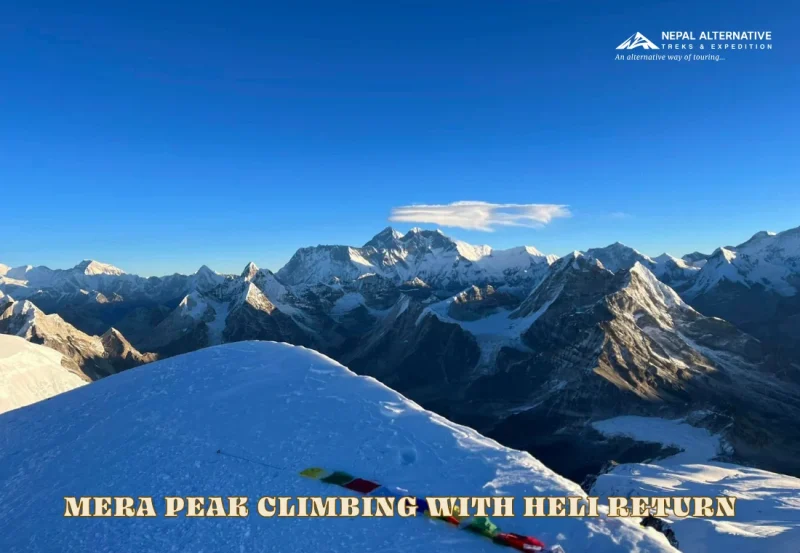
Mera Peak Climbing With Heli Return – 10 Days
View Detail For Tamang Heritage and Langtang Valley Trek – 12 Days
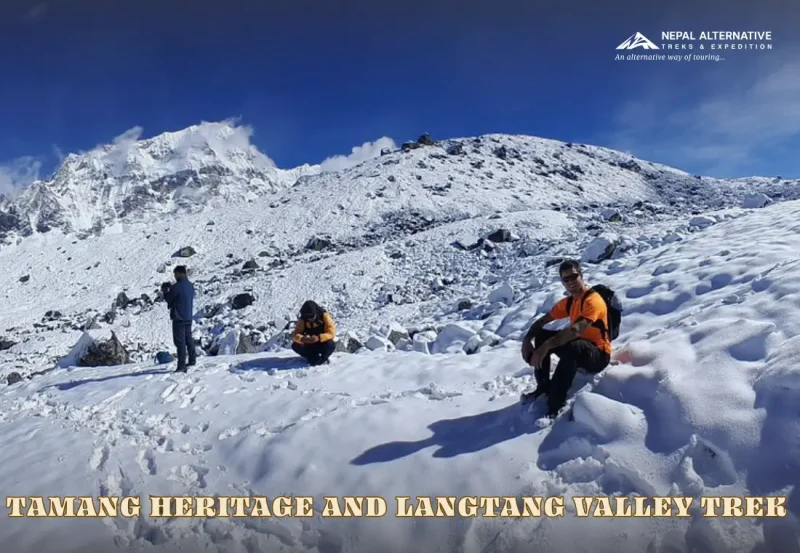
Tamang Heritage and Langtang Valley Trek – 12 Days