Safety update: our trekking groups are safe, and our routes are running as planned. Read full flood notice.

Tsum Valley, Manaslu Circuit & Nar Phu Valley Combined Trek – 26 Days
|
Weather |
Weather | -15°C to 25°C | |
|---|---|---|---|
|
Duration |
Duration | 26 Days | |
|
Difficulty |
Difficulty | Strenuous | View Difficulty Detail |
|
Accommodation |
Accommodation | Lodge | |
|
Meals Included |
Meals Included | Breakfast, Lunch, Dinner | |
|
Best Season |
Best Season | Sept, Oct, Nov, Mar, Apr, May | |
|
Transportation |
Transportation | Overland | |
|
Daily Activity |
Daily Activity | Approx. 5-8 hours | |
|
Religion |
Religion | Buddhism | |
|
Ethnic People |
Ethnic People | Gurung, Magar, Nubripa, Tsumba, Bhotia, Chettri, Lama | |
|
Geographic Terrain |
Geographic Terrain | Mountain, Forest, Glacial valleys, River Gorges | |
|
Region of Nepal |
Region of Nepal | Tsum Valley, Manaslu region, Nar Phu Valley | |
|
Max. Altitude |
Max. Altitude | 5,106 m/16,752 ft (Larkya La Pass) |
Tsum Valley, Manaslu Circuit & Nar Phu Valley Combined Trek Overview
The Manaslu region of Nepal is located in the Gorkha district. It is one of Nepal’s popular trekking regions and is home to the renowned Manaslu Circuit Trek and Tsum Valley. Manaslu region trekking is often considered one of the most popular alternatives to the Annapurna Circuit Trek. The region offers panoramic mountain views and the opportunity to explore the restricted but culturally rich Tsum Valley.
On the other hand, Nar Phu Valley lies in the Manang district of the Annapurna region; it is another well-liked trekking destination providing a similar experience. Although all three destinations are popular, many trekkers visit these places separately rather than as a combined experience. Exploring all three of these regions together is a rare blend.
This way, the Tsum Valley, Manaslu Circuit, and Nar Phu Valley Combined Trek brings three remarkable regions together in one extraordinary adventure. The trek provides an opportunity to see the most captivating areas of Nepal, including an introduction to some of its restricted areas. In remote villages like Tsum and Nar Phu that remain unaffected by modernization, cultural immersion is the most extraordinary experience throughout the trek. Besides that, the long trail takes trekkers through dramatic landscapes, ancient monasteries, Tibetan-influenced rich villages, high-altitude wilderness, remote glacial environments, and the best mountain views.
The trek showcases panoramic views of Mount Manaslu (8,163 m/26,781 ft), Himalchuli (7,893 m/25,896 ft), Ngadi Chuli (7,871 m/25,823 ft), Ganesh Himal (up to 7,422 m/24,350 ft), Annapurna II (7,937 m/26,040 ft), Lamjung Himal (6,983 m/22,910 ft), Pisang Peak (6,091 m/19,984 ft), Chulu East (6,584 m/21,601 ft), Chulu West (6,419 m/21,060 ft), and several snow-capped peaks. These mountain views, combined with middle-green alpine vegetation and lower traditional Tibetan villages, paint the perfect picture.
Also, imagine walking through Manaslu Conservation Area with the excitement of potential wildlife sightings. Trekkers can spot the Himalayan Thar, Musk Deer, Blue Sheep, and Himalayan Monal. It adds an extra layer of thrill, and if you are lucky, you may also get to see some elusive animals like the snow leopard and the red panda.
Starting from the Budhi Gandaki Valley, the route first takes trekkers through the sacred and isolated Tsum Valley, also known as the “Valley of Happiness”. Trekkers get to visit ancient monasteries like Mu Gompa and indulge in rich cultural traditions. From there, the route connects to the classic Manaslu Circuit while passing through remote Gurung and Tibetan settlements. With acclimatization and an optional visit to Manaslu Base Camp, trekkers cross the thrilling Larkya La Pass (5,106 m). The journey then ends in the isolated Nar Phu Valley, while passing the challenging Kang La Pass before descending into the Annapurna region and escaping via Besisahar.
The trek is ideal for experienced trekkers seeking an authentic, adventurous experience. Spanning over 26 days, the Manaslu vs Nar Phu Valley trek is difficult. With some physical demands, the route delivers unmatched cultural immersion and life-changing memories. The reward of this long-distance trek is unmatched by any other trek in Nepal. So get ready to reflect on life and fill up memories with authentic hospitality and adventure.
Tsum Valley Manaslu Nar Phu Valley Trek Highlights
- Join the ultimate Nepal trek adventure while combining three of the most fascinating trails – Manaslu Circuit, the sacred Tsum Valley, and the remote Nar Phu village in a single trek package.
- Explore the beautiful Manaslu Conservation Area, where you can find exotic flora and fauna, including snow leopards, musk deer, and Himalayan tahr, though chances are rare.
- Conquer the astonishing Larkya La Pass on the Manaslu Circuit and Kang La Pass in Nar Phu Valley.
- Enjoy the spectacular Himalayan panoramic view with snow-topped mountains including Mt. Manaslu (8th highest), Annapurna II, Himlung Himal, Kang Guru, and others.
- Trek into the ancient restricted area village of Tsum Valley while visiting notable monasteries like Mu Gompa to experience authentic Tibetan-Buddhist culture.
- Stroll through the traditional villages of Sama Gaon, Samdo, Nar, and Phu to witness Tibetan heritage, filled with mani walls, chortens, and monasteries.
- Participate in the optional acclimatization hike to Manaslu Base Camp and Birendra Lake, offering exciting photography opportunities.
- Discover hidden routes of Nepal while visiting isolated villages of Phu and Nar, one of Nepal’s least explored Himalayan destinations.
- Transit through deep river gorges, rhododendron forests, alpine meadows, suspension bridges, and glacial moraines across the Manaslu and Annapurna regions.
- Stay in some of the locally owned and operated teahouses or lodges to experience authentic mountain hospitality.
- Get the epic combined trekking experience that delivers a raw, authentic, and unique perspective on Nepal, featuring subtle Tibetan culture and life-changing mountain views.
Why Combine Tsum Valley, Manaslu, and Nar Phu in One Trek?
First and foremost, the reason to combine the Tsum Valley, the Manaslu Circuit, and Nar Phu is to create one of Nepal’s most complete trekking experiences. With all three of these treks, trekkers involved get the maximum of what Nepal has to offer. From the three distinct Himalayan landscapes to the culture, all trekkers get the most rewarding and diverse experience ever.
One of the greatest advantages is the opportunity to experience cultural diversity. With the visit to Tsum Valley, trekkers get to explore the sacred Buddhist valley, which is home to century-old monasteries, mani walls, prayer flags, chortens, prayer wheels, and, most importantly, a strong, deep-rooted Tibetan heritage. Also, the Manaslu region introduces traditional Nubri villages, while Nar and Phu villages introduce a century-old Himalayan lifestyle that has remained unchanged for generations. So altogether, these regions offer one of Nepal’s richest cultural trekking experiences.
Furthermore, trekkers get to experience two remote and restricted villages of Nepal in a single trek. Trekkers can visit both the Tsum Valley and Nar Phu Valley, which are labeled as restricted areas by the government of Nepal. Being restricted, there are only a limited number of visitors. Due to limited access to the outside world, people in these valleys have preserved their traditional way of life. Thus, it is a rare chance to explore places that remain largely untouched by mass tourism.
On the other hand, every section of the Tsum Valley Manaslu Nar Phu Valley Trek itinerary features a different transition of scenery. The route changes from green valleys, lush forests, and river gorges to hilly sections, then ultimately to glacial valleys, high mountain passes, dramatic rock canyons, and barren Himalayan plateaus. So, the trek itself offers a greater variety of scenery than any single trek in the region.
Besides the variety of landscapes, the combined trek offers a strong sense of ultimate trekking adventure in Nepal. The adventure involves crossing both Larkya La Pass (5,106 m / 16,752 ft) and Kang La Pass (5,320 m / 17,454 ft). Being able to complete two mountain passes, the trek strongly tests physical and mental strength. Also, as trekkers stand on the top of these mountain passes, they are overwhelmed with a strong sense of achievement after hours of hard work finally pay off.
Finally, trekking is mostly done for the mountain views. With the combined trekking option, trekkers get the maximum possible mountain viewpoints that offer panoramic mountain views. The opportunity to witness the 8th-highest mountain in the world, Mount Manaslu, as well as other high mountains, is available during the trek. Mountains include Himalchuli, Ngadi Chuli, Ganesh Himal, Himlung Himal, Annapurna II, Kang Guru, and multiple other Himalayan ranges.
The Difficulty of the Tsum Valley, Manaslu Circuit, and Nar Phu Valley Combined Trek
During the Tsum Valley, Manaslu Circuit, and Nar Phu Valley Trek, you will trek through some of the most problematic trekking routes of Nepal. Furthermore, with this combination, the trekking days are very long with long walking hours. You must hike for 5-8 hours in challenging terrain and high altitude for 23 days straight. Doing so might be difficult for beginner trekkers with very little to no experience. In addition, when you travel at high altitude, there is a potential chance of Acute Mountain Sickness (AMS).
Further, the most challenging part of the trek is crossing two mountain passes: Larkya La Pass at 5,106 m and Kang La Pass at 5,320 m. So, the trek can be challenging for first-time trekkers because of its terrain and remote location. The best idea would be to first go on some beginner to intermediate treks before undertaking this trip. But if you decide to trek here despite your lack of trekking experience, you will compulsorily need to hire a guide. It is better to immediately get on proper physical training, altitude awareness, the right season, and the right gear than to do it.
Detailed 26 Days Tsum Valley Manaslu Nar Phu Valley Trek Itinerary
Day 1
Drive from Kathmandu to Machha Khola (870 m)
|
Trekking Time Average |
180 km Drive (10 hours) |
|---|---|
|
Accommodation |
Everest View Hotel |
|
Altitude |
(870 m / 2,854 ft) |
|
Included meals |
Lunch, Dinner |
Your exciting journey starts with a bus ride from Kathmandu to Machha Khola along the Prithvi Highway. The drive is smooth on a black-topped road that takes you to Dhading Bensi, where the road turns upwards to Gola Bhanjyang. Then, with a descent to Ankhu Khola, the ride continues towards Arughat. After crossing the Budhi Gandaki River bridge, the drive takes you further towards Soti Khola.
Then, by late afternoon, you will reach Machha Khola. The drive is roughly 10 hours long, providing a clear transition from the bustling city of Kathmandu to the remote village area of Machha Khola. After checking into the teahouse, you can relax and prepare for the following day. Overnight stay at Machha Khola.
Day 2
Trek from Machha Khola to Jagat (1,340 m)
|
Trekking Time Average |
22 km Uphill Hike (8 hours) |
|---|---|
|
Accommodation |
New Mongolian Cottage or Jagat Guest House |
|
Altitude |
(1,340 m / 4422 ft) |
|
Included meals |
Breakfast, Lunch, Dinner |
After breakfast, your first day on the trail follows the Budhi Gandaki River and enters the dense forest, passing numerous Gurung villages. The trekking trail to Jagat allows you to cross numerous suspension bridges and climb gently through the Khorlabesi village. Then, moving farther, you will reach the natural hot spring at Tatopani.
From Tatopani, you will continue to move upwards toward Dobhan and Yaruphant. Then you will gradually ascend towards Jagat, where the landscape narrows. Upon reaching Jagat, you will officially enter the Manaslu Conservation Area, where government officers check the required permit. Afterward, check in at your teahouse. Overnight stay at Jagat.
Day 3
Trek from Jagat to Lokpa (2,240 m)
|
Trekking Time Average |
14 km Uphill Hike (6 hours) |
|---|---|
|
Accommodation |
Lokpa Guest House |
|
Altitude |
(2,240 m / 6,339 ft) |
|
Included meals |
Breakfast, Lunch, Dinner |
Today, you will enter one of Nepal’s most isolated trekking regions. Leaving Jagat, you will move towards Lokpa. Starting, you will climb through beautiful forest areas. You will then pass through numerous traditional villages, such as Salleri, Sirdibas, and Philim. Philim is one of the largest villages located in the lower Manaslu region. Then, past Philim, you will briefly follow the Budhi Gandaki River before branching north towards the hidden Tsum Valley.
Then, you will follow dense pine and rhododendron forests, with occasional viewpoints overlooking deep valleys and cascading rivers below. As you progress, you will arrive at the first village in Tsum Valley, Lokpa. Overnight stay in Lokpa.
Day 4
Trek from Lokpa to Ranjam (2,360 m)
|
Trekking Time Average |
15 km Uphill Hike (6-7 hours) |
|---|---|
|
Accommodation |
Ganesh Himal Guest House |
|
Altitude |
(2,360 m / 7,743 ft) |
|
Included meals |
Breakfast, Lunch, Dinner |
Get up, freshen up, grab your first meal of the day, and prepare for the trek. Your destination for today is the small settlement of Ranjam. Initially, you will descend through thick forests before crossing the Siyar Khola. Moving past the suspension bridge, you will gradually follow the route that climbs towards Chumling, one of the major villages of Tsum Valley.
After Chumling, you will continue towards a higher elevation, where traditional stone houses, prayer wheels, mani walls, and colorful prayer flags are common. So, as you get closer, you can easily see the rich influence of Tibetan Buddhism. With the colorful and cultural atmosphere, you will continue through the forest and open hillside to reach Ranjam. Upon reaching Ranjam, settle into your accommodation and explore the village. Overnight stay in Ranjam.
Day 5
Trek from Ranjam to Chuile /Nile (3,361 m)
|
Trekking Time Average |
16 km Uphill Hike (6-7 hours) |
|---|---|
|
Accommodation |
Norling Guest House |
|
Altitude |
(3,361 m / 11,027 ft) |
|
Included meals |
Breakfast, Lunch, Dinner |
Early in the morning, you will trek through the heart of Upper Tsum Valley while passing the village of Chhokang Paro. From there, you will see the magnificent view of Ganesh Himal and the surrounding snow-capped peaks. Then, you will continue north, where you can see ancient chortens, prayer walls, and century-old monasteries.
Eventually, you will reach the villages of Chuile and Nile. The villages are stone-built, with traditional farming practices and a strong Tibetan cultural tradition. As you reach the village, check in at the teahouse and relax. Overnight stay in Chuile/Nile.
Day 6
Day excursion to Mu Gompa
|
Accommodation |
Norling Guest House |
|---|---|
|
Altitude |
3,361 m / 11,027 ft |
|
Included meals |
Breakfast, Lunch, Dinner |
It’s your second day in Nile village. On this day, you do not need to wake up early; you can wake up before breakfast time is over. Then, during the day, you will explore Mu Gompa, one of the largest and most important monasteries in Tsum Valley. Moving towards Mu Gompa, you will gradually ascend through alpine terrain with views of Ganesh Himal, Himalchuli, and the surrounding peaks.
Mu Gompa is the highest and most sacred monastery in Tsum Valley. It is located north of Nile village and west of Chuile village. It is believed that the great Tibetan yogi Milarepa meditated in the mountain caves just below Mu Gompa. Similarly, there is a life-sized statue of Avalokiteśvara Buddha and ancient murals depicting the life of the Buddha.
Once you reach Mu Gompa, you can explore the monastery, observe daily monastic life, spin prayer wheels, and learn more about the culture and traditions. After exploring, if time permits, you can walk further towards Dhephu; otherwise, you can return to your teahouse in Nile. Overnight stay in Nile village.
Day 7
Trek from Chuile/Nile to Chhokangparo (2,240 m)
|
Trekking Time Average |
16 km Downhill Hike (6 hours) |
|---|---|
|
Accommodation |
New Milarepa Guest House |
|
Altitude |
2,240 m / 6,339 ft |
|
Included meals |
Breakfast, Lunch, Dinner |
As you wake up, a warm breakfast awaits at the teahouse. Then, pack your bags and get ready to leave Nile village. You will begin the return journey from Upper Tsum Valley towards Chhokangparo. The retrace provides a different perspective of the surrounding areas. You will begin with a gradual descent that allows for a better appreciation of the surrounding landscapes. With shifting views of traditional villages, terraced fields, and dramatic cliffs, you will pass through Chuile once again.
From Chuile, follow the trail towards Shiar Khola, ultimately arriving at Chhokangparo. Chhokangparo is another beautiful village that provides magnificent views of Ganesh Himal and Baudha Himal. Once you reach the village, you can spend the rest of the evening at the teahouse. A short stroll around the village helps you better understand the local lifestyle. You can also interact with the locals to learn more about their culture and traditions. Overnight stay in Chhokangparo.
Day 8
Trek from Chhokangparo to Lokpa (2,240 m)
|
Trekking Time Average |
14km Downhill Hike (6 hours) |
|---|---|
|
Accommodation |
Lokpa Guest House |
|
Altitude |
(2,240 m / 6,339 ft) |
|
Included meals |
Breakfast, Lunch, Dinner |
Begin your descent through the sacred Tsum Valley after breakfast in Chhokangparo. Then, you will return along the trail beside the Shiar Khola. With the sense of revisiting the area, the traditional villages, terraced fields, ancient mani walls, and colorful prayer flags offer another opportunity to understand Buddhist culture.
Then, you will descend through Chumling. From there, you will cross the suspension bridge and continue to Lokpa. Lokpa marks the point where the Tsum Valley route reconnects with the main Manaslu Circuit. Surrounded by dense pine and rhododendron forests, the village offers a peaceful place to relax. Overnight stay in Lokpa.
Day 9
Trek from Lokpa to Bihi Village (1,990 m)
|
Trekking Time Average |
14 km Downhill Hike (5-6 hours) |
|---|---|
|
Accommodation |
Sonam Raja Hotel |
|
Altitude |
(1,990 m / 6,529 ft) |
|
Included meals |
Breakfast, Lunch, Dinner |
After leaving Lokpa behind, you will descend to Ekle Bhatti, where you will rejoin the main Manaslu Circuit. From there, you will follow the trail along the Budhi Gandaki River through forests and narrow gorges before gradually climbing toward Deng and continuing to Bihi Village.
Bihi Village is surrounded by forests and towering peaks. It is characterized by Tibetan-style stone houses and prayer wheels. Upon reaching the village, check in at your teahouse and enjoy dinner. Overnight stay in Bihi.
Day 10
Trek from Bihi village to Namrung (2,630 m)
|
Trekking Time Average |
13 km Uphill Hike (6-7 hours) |
|---|---|
|
Accommodation |
Namrung Guest House |
|
Altitude |
2,630 m / 8,629 ft |
|
Included meals |
Breakfast, Lunch, Dinner |
For today’s trekking section, you will follow the Budhi Gandaki River through dense forests. Then, you will cross several suspension bridges and pass small settlements before reaching the village of Ghap. From there, you will continue to gain elevation through dramatic landscapes filled with towering cliffs. Along this section, you will catch your first clear views of the snow-capped peaks.
Further along the trail, you will pass impressive mani walls carved with Buddhist prayers. Upon reaching Namrung, you will enter a beautiful Tibetan-style village with traditional stone houses, prayer flags, and a peaceful atmosphere. Overnight stay in Namrung.
Day 11
Trek from Namrung to Sama Gaun (3,360 m)
|
Trekking Time Average |
17 km Uphill Hike (6-7 hours) |
|---|---|
|
Accommodation |
Mount Manaslu Hotel |
|
Altitude |
3,360 m /11,024 ft |
|
Included meals |
Breakfast, Lunch, Dinner |
On this day, you will continue through one of the most iconic sections of the Manaslu Circuit. Today, you will leave Namrung behind and head towards Sama Gaun. Beginning the walk, you will pass through the traditional villages of Lho and Shyala while witnessing breathtaking views of Manaslu, Himalchuli, Ngadi Chuli, and Manaslu North.
Upon arriving in Lho, you can visit the magnificent Ribung Monastery, one of the region’s most important monasteries. Then, upon reaching Shyala, you will see an open landscape that stretches toward glaciers and alpine Himalayan meadows. Shyala is one of the best photography locations on the trek, so be sure to capture some memorable shots. It is also an acclimatization stop for most trekkers to adjust to the lower oxygen levels and reduce the risk of Acute Mountain Sickness.
Then, with a gentle walk from Shyala across yak pastures, you will reach Sama Gaun, one of the largest settlements in the Upper Manaslu region. Once you arrive, settle into your teahouse. Overnight stay in Sama Gaun.
Day 12
Acclimatization Day – Visit Manaslu Base Camp/ Birendra Lake/ Pungen Gompa
|
Accommodation |
Mount Manaslu Hotel |
|---|---|
|
Altitude |
3,360 m / 11,024 ft |
|
Included meals |
Breakfast, Lunch, Dinner |
You will spend an additional day in Sama Gaun for acclimatization. During this day, you will hike to a nearby higher location to help your body adapt to the lower oxygen levels, reducing the risk of altitude sickness. Start the day by exploring the beautiful village of Sama Gaun. Then, you can take a short hike to Pungen Gompa, a peaceful monastery in the Manaslu region that offers excellent mountain views.
After the visit, if you still have the energy or wish to explore further, you can hike to Manaslu Base Camp or take a short walk to Birendra Lake. The hike to Manaslu Base Camp is more challenging; however, it rewards you with incredible views of the glacier and surrounding peaks. Birendra Lake, on the other hand, is a peaceful glacial lake with blue-green water located below Mount Manaslu. After the hike, you will return to Sama Gaun. Overnight stay in Sama Gaun.
Day 13
Trek from Sama Gaun to Samdo (3,780 m) – Optional day to extend for a day excursion to the Tibet Border/ Rui La Pass or Samdo Ri climbing
|
Trekking Time Average |
10 km Uphill Hike (4 hours) |
|---|---|
|
Accommodation |
Zambala Guest House |
|
Altitude |
3,780 m / 12,402 ft |
|
Included meals |
Breakfast, Lunch, Dinner |
Begin today’s trek by descending to the Budhi Gandaki River, then follow the route to Birendra Lake and Manaslu Base Camp. Then, you will walk through the forested area to reach Kermo Kharka. After Kermo Kharka, you will climb further and cross the wooden bridge over the Budhi Gandaki before you reach Samdo.
As you approach Samdo, you are greeted by the beautiful Samdo peaks that shine on the northern horizon, the glacial basin that lies to the east, and Syacha Glacier, located to the north of Sama Valley. Overnight stay in Samdo.
Optional Day Hike to Samdo Ri and Rui La Pass:
During your stay in Samdo, depending upon your personal interest, you can add an extra day for acclimatization. On this day, you can hike up to Samdo Ri or Rui La Pass. These routes offer some wider views of Manaslu. You will also get to see the old Himalayan trade routes and remote border landscapes near Tibet, which are sure to add more depth to your trek rather than just passing through.
Day 14
Trek from Samdo to Dharmashala (4,200 m)
|
Trekking Time Average |
8 km Hike (4 hours) |
|---|---|
|
Accommodation |
Dharmashal Peace Hotel |
|
Altitude |
4,200 m / 13,780 ft |
|
Included meals |
Breakfast, Lunch, Dinner |
This morning starts with a walk along the green fields in Samdo village, and you will cross the Budhi Gandaki for the last time at Larkya Bazaar. After some walking, we can come into sight of Syacha Glacier. You walk to Dharmashala, enjoying the narrow gorge.
In Dharamshala, you can enjoy charming views of Larke Peak (6,249 m) and Naike Peak (6,211 m). Then you spend the night at Dharamsala.
Day 15
Trek from Dharmashala to Bhimtang (3,720 m) via Larkya La Pass (5,106 m)
|
Trekking Time Average |
15 km Uphill Hike (8 hours) |
|---|---|
|
Accommodation |
Punker Cottage Hotel |
|
Altitude |
3,720 m /12,205 ft |
|
Included meals |
Breakfast, Lunch, Dinner |
Wake up very early and get on the trek with a quick breakfast. Today is one of the most challenging sections of the Tsum Valley Manaslu Nar Phu trek, where you will conquer the Larkya La Pass. After leaving Dharmashala in the early morning, you climb up a ridge leading to the moraine of Larkya Glacier. There, you can see beautiful frozen lakes shining like huge diamonds.
Slow and steadily, you will reach Larkya La Pass (the longest mountain pass in Nepal), walking through Larkya Glacier. The stunning view of Cheo Himal, Himlung, Gyaji Kung, Kangguru, and Annapurna II from the top of the pass makes the long and hard day totally worth it. After enjoying the view, you will descend towards Dangboche Kharka and follow the trail to the attractive Bhimtang Valley via Salpudanda Glacier. Overnight at Bhimtang.
Day 16
Visit Punkar Lake and Trek from Bhimtang to Guha (3,900 m)
|
Trekking Time Average |
15 km Uphill Hike (6-7 hours) |
|---|---|
|
Accommodation |
Larke Guest House |
|
Altitude |
3,900 m / 12,795 ft |
|
Included meals |
Breakfast, Lunch, Dinner |
As you start gaining altitude from Bhimtang, you will follow the quieter side trail through the alpine meadows and make your way towards Punkar Lake. The hike to Punkar Lake takes about 2-3 hours and offers great views of Manaslu and the Annapurna range. The lake sits below the Larkya and Punkar glaciers, where you can see the hanging glaciers, broken rock faces, and wide valleys stretching back towards Bhimtang.
The area is quiet and provides a peaceful atmosphere. If you spend enough time, you can see the lake change colors depending on the light, from blue to darker shades. Then, after quality time at Punkar Lake, you will move towards Guha. You will continue along the rhododendron and pine forests and climb for a few hours to reach Guha. Overnight stay in Guha.
Day 17
Trek from Guha to Tilje (2,300 m)
|
Trekking Time Average |
18 km Downhill hike (8-9 hours) |
|---|---|
|
Accommodation |
North Face Hotel |
|
Altitude |
2,300 m / 7,546 ft |
|
Included meals |
Breakfast, Lunch, Dinner |
With breakfast in Guha, you will leave Guha and head toward Tilje, which is a short and easy descent on the Manaslu Circuit Trek. Starting the trekking journey, you will walk through the peaceful rhododendron, pine, and oak forests. Then, you will pass through some terraced fields and traditional Gurung settlements. As you continue walking, you will cross small streams while enjoying views of the Marsyangdi Valley to reach Tilje. Overnight stay in Tilje.
Day 18
Drive from Tilje to Koto (2,630 m)
|
Trekking Time Average |
54 km Drive (4 hours) |
|---|---|
|
Accommodation |
Mountain View Hotel |
|
Altitude |
2,630 m / 8,679 ft |
|
Included meals |
Breakfast, Lunch, Dinner |
It’s not a walking day today; you will hop on the 4WD jeep and follow the Marshyangdi River upstream towards lower Manang Valley. The road will pass through Dharapani, Bagarchhap, Timang, and Thanchok before reaching Koto. Along with the beautiful green landscape, you can also see distant views of Annapurna II, Lamjung Himal, and Manaslu.
Reaching Koto marks the entrance to the best restricted-area trek in Nepal: the Nar Phu Valley. It also serves as the checkpoint for submitting the permit before entering the restricted area the following day. Overnight stay in Koto.
Day 19
Trek from Koto to Meta (3,550 m)
|
Trekking Time Average |
15 km Uphill hike (6 hours) |
|---|---|
|
Accommodation |
Zambala Hotel |
|
Altitude |
3,550 m / 11,715 ft |
|
Included meals |
Breakfast, Lunch, Dinner |
With a good night’s sleep and a hearty breakfast in Koto, you will start your trekking journey. Today, you will officially enter the third and final stretch of the restricted-area trek in Nepal, the Nar Phu Valley. Nar and Phu are among the most remote valleys in the Himalayas, so get ready for the adventure.
As you leave Koto, you will check in at the police checkpoint to begin your Nar Phu trek. After you register your permits at the checkpost, you will cross a suspension bridge laid over the Marsyangdi River. From there, you will turn north into the Nar Khola Valley.
The trail then begins with a flat, gentle uphill path through the thick pine, cedar, and rhododendron forests. Likewise, you will pass by some prominent locations, such as Chhongche Cave, Hulaki Odar, and the Singenge Dharmashala. Dharmashala will be your lunch place today.
After lunch, the trail continues and becomes steeper. You will climb for a few hours until you reach Meta. The village of Meta sits on a wide, dry plateau, which supposedly feels very different from the green forests below. Meta also offers the first real taste of Tibetan culture on this off-the-beaten-path trek in Nepal. From here, you can see amazing views of mountains, including Annapurna II, Lamjung Himal, and Pisang Peak. Overnight stay at Meta.
Day 20
Trek from Meta to Phu Village (4,080 m)
|
Trekking Time Average |
16 km Uphill hike (6 hours) |
|---|---|
|
Accommodation |
Norling Hotel |
|
Altitude |
4,080 m / 13,464 ft |
|
Included meals |
Breakfast, Lunch, Dinner |
Your journey today leads you to Phu village. You will follow the narrow Phu Khola river valley through beautiful scenery with rocky hills, suspension bridges, and traditional stone villages. On the way, you will also pass through a few herder camps and villages, such as Junam Goth and Chyaku, which can be a suitable option for a short tea break.
Then, as you continue along the trekking trail, you will reach Kyang, a small village where many trekkers stop for lunch. After lunch, you will continue on the path along the narrow trail that sits beside the cliffs. Then, you will cross high suspension bridges and see ancient rock carvings and mani walls. You can also enjoy the views of Himlung Himal, Mount Annapurna II, and Gangapurna in this section.
As you approach Phu village, you can feel the transition in the landscape, which opens into a wide glacial valley surrounded by impressive cliffs. Afterward, you will enter the Phu gate, where the traditional village, influenced by Tibetan culture, sits on the ridge. Stone houses, old monasteries like Tashi Lhakhang, and a calm atmosphere await your exploration in Phu village. Overnight at Phu village.
Day 21
Excursion around Phu village
|
Accommodation |
Norling Hotel |
|---|---|
|
Altitude |
4,080 m / 13,464 ft |
|
Included meals |
Breakfast, Lunch, Dinner |
You will spend an additional day in Phu for acclimatization and a local excursion. On your acclimatization day, you will take a short hike to help your body adjust to the elevation before continuing your trek. You will also explore the beauty and culture of Phu village, known for its majestic mountains, canyons, rich history, pasturelands, and streams.
For a short hike, you can visit the nearby viewpoints that offer stunning views of Himlung Himal, Pokharkan, and other peaks near the Tibetan border. After the hike, you can walk around the village for exploration. One of the interesting landmarks is the Tashi Lhakhang Monastery. It is an important Buddhist monastery in the region. It was built by Karmapa Rinpoche, who came to Nepal with the Dalai Lama in 1959.
Later, you can interact with the local Gurung and Tibetan-influenced community. Know more about their way of life, which has stayed traditional for generations, untouched by modern changes. With that, you can dive deep into the cultural aspect of the Nar Phu Valley and know more about the hidden Himalayan valleys of Nepal. Overnight stay in Phu village.
Day 22
Trek from Phu Village to Dharmashala (3,490 m)
|
Trekking Time Average |
12 km Downhill hike (5 hours) |
|---|---|
|
Accommodation |
Nar Phedi Lodge |
|
Altitude |
3,490 m / 11,450 ft |
|
Included meals |
Breakfast, Lunch, Dinner |
After a good night spent in Phu village, it is time to continue on your route. You will leave the old stone houses and take only photographs and memories. While you trail back south along the Phu Khola Valley, you will pass through the mountain scenery and familiar places like Kyang, Chyaku, and Junam Goth.
Again, you will cross several high suspension bridges situated over the deep canyons and walk along the exciting but safe narrow cliffside. Here, you will get an amazing view of rocky cliffs and mountain peaks, including Himlung Himal and Annapurna II. Later, the pathway passes open meadows where yaks and blue sheep graze. With that, you can also see mani walls, chortens, and prayer flags that create a peaceful, spiritual atmosphere as you walk.
Further, you will descend to Nar Phedi, where the trail goes through dense forests and leads to Mahendra Pul before crossing the gorge above Lapcha Khola. On the other side of the bridge, you will follow the uphill path lined with prayer flags, which will bring you to Nar Phedi. Most trekkers reach Nar Phedi by early to mid-afternoon, which allows time to rest, visit the monastery, and enjoy the peaceful environment. Overnight and dinner at Dharmashala (Nar Phedi).
Day 23
Trek from Dharmashala to Nar Village (4,110 m)
|
Trekking Time Average |
12 km Uphill hike (5 hours) |
|---|---|
|
Accommodation |
Kangla Inn |
|
Altitude |
4,110 m / 13,563 ft |
|
Included meals |
Breakfast, Lunch, Dinner |
On this day, you will visit the village of Nar. In the initial section, you will cross the Nar River via a suspension bridge, followed by a slow and consistent ascent through open hillsides. Then, the trail will pass through mani walls, gompas, and mud-walled cottages as you progress the climb. Along the route, you will see the amazing view of Kang Guru and Pisang Peak. From the moment you begin to leave Nar Phedi, the narrow gorge opens into a wider landscape, offering a different perspective.
Continuing the walk, you will get to Yughat, and further, you will reach the second gate of the Nar Valley. From there, you will continue along the stone walls with a gentle climb that will take you to the official Nar village. The two entrances highlight the separation between the outside world and the local community’s traditional life. Also, you will pass Gho Chorten, a significant Buddhist shrine and colorful structure that sits atop the Nar Valley gate, marking both a spiritual and geographic point on the route. Overnight in Nar village.
Day 24
Trek from Nar Village to Ngawal (3,660 m)
|
Trekking Time Average |
18 km Downhill hike (8 hours) |
|---|---|
|
Accommodation |
Mountain View Hotel |
|
Altitude |
3,660 m / 12,078 ft |
|
Included meals |
Breakfast, Lunch, Dinner |
You will wake up before sunrise and feel the cold temperature of the teahouse and its surroundings. With a quick breakfast, you will leave Nar village at around 5 or 5:30. From Nar, you will follow the trekking trail that will lead to Ngawal. Starting from Nar, you will continue along the route to Kang La Pass. The first step of the trek retraces you to Yughat. From Yughat, you will walk uphill along the borderline of the Nar River. The trail passes small villages with Tibetan-style houses and prayer wheels before entering high-alpine terrain.
Then, as you continue along the route, you will reach Jhomby Kharka, also known as Kang La Phedi. Above Kang La Phedi, the trail now becomes very steep and challenging as you are about to take on the Kang La Pass. With slow but steady steps and navigation from the guide, you will cross the metal bridge and climb sharply through a narrow section. Then, you will continue steadily uphill towards the pass.
The summit will take about 2.5 hours, depending on the pace. As you approach the summit, you are rewarded with the magnificent view of Mt. Annapurna, Gangapurna, Pisang, and other peaks. After appreciating the views from the Kang La top and celebrating your victory on this High Pass Trek Nepal, you’ll descend to Ngawal for an overnight stay.
Day 25
Trek from Ngawal to Pisang – Drive to Besisahar (860 m)
|
Trekking Time Average |
5-8km Hike (3-5 hours) 80-100 km Drive (5-7 hours) |
|---|---|
|
Accommodation |
Gateway Himalayan Resort |
|
Altitude |
860 m / 2,805 ft |
|
Included meals |
Breakfast, Lunch, Dinner |
After the successful crossing of the Kang La Pass, you will prepare for the final day of trekking. Today, your long-distance trek to Nepal comes to an end. So after breakfast in Ngawal, you will begin with a gentle downhill walk through terraced fields and light forest. The trail will now follow a high route above the valley, bringing a mix of ascents and descents. Views of the Annapurna peaks, Pisang, and Gangapurna will be seen from another angle, enhancing the overall trek experience.
Upon reaching Pisang, with a short rest and time for exploration of the village’s historic gompa, have lunch. After lunch, you will be transferred to a 4WD jeep for a scenic but bumpy ride down to Besisahar. The drive from Pisang through the Marsyangdi Valley follows the same rough and winding road as before. But by now, you’ll feel something different and changed, not the route but yourself. After arriving in Besisahar, you will feel the near end of your Three Valley trek in Nepal, which includes Tsum Valley, Manaslu, and Nar Phu villages. Overnight at Besisahar.
Day 26
Drive from Besisahar to Kathmandu (1,400 m)
|
Trekking Time Average |
Approx. 160 km Drive (5-8 hours) |
|---|---|
|
Altitude |
1400 m/4593 ft |
|
Included meals |
Breakfast, Lunch |
Today marks the last day of the best restricted area trek in Nepal. So, after breakfast in Besisahar, you will take a 5-hour drive to Kathmandu. You can see the beautiful hills of Nepal pass by, the body resting, and the mind reflecting on the journey. Immediately, you will head towards the main highway with a possible glimpse of Lamjung Himal before descending into the lower river valleys.
Then, the route follows the same Prithivi Highway, which got you here in the first place. The drive passes through the mountains and valleys of central Nepal, with rivers, waterfalls, and roadside villages offering glimpses of local life and culture along the way.
Once in Kathmandu, you are free to do whatever you want. You can go souvenir shopping in Thamel or visit important places in Kathmandu, such as Nyatapola Temple in Bhaktapur, Swayambhunath Stupa, Boudhanath Stupa, and Bhaktapur Durbar Square. Overnight in Kathmandu.
If Pokhara is your next destination, you can choose to leave the group at Besisahar and continue directly to Pokhara instead. This option is convenient for travelers who do not need to return to Kathmandu immediately or who have onward plans in Pokhara. Please tell us about your preferred drop-off location while booking so the travel arrangements can be made accordingly.
What’s included
- Tribhuvan International Airport pick-up and transfer service
- Lodge accommodation on a double or twin sharing basis during the trip
- Three meals a day (Breakfast, Lunch, Dinner) throughout the trek
- One highly experienced, first aid-trained, fluent English-speaking, friendly, and government-authorized trekking guide
- Required porter service (one porter for two persons)
- Guide and porter’s food, accommodation, salary, insurance, transportation, and equipment
- Overland transportation as mentioned in the itinerary
- Annapurna Conservation Area Project (ACAP), Manaslu Conservation Area Permit (MCAP), Manaslu Restricted Area Permit (MRAP), Local Government Permit, and Nar Phu Valley Restricted Area Permit (NRAP)
- Daily oxygen saturation monitoring during the trek
- Trekking route map
- First aid kit and water purification tablets
- Fresh seasonal fruits during the trek
- Company T-shirt
- Trek completion certificate
- Emergency rescue coordination and assistance if required
- Government taxes and service charges
- Public Liability Insurance
What’s not included
- Hotel accommodation and meals in Kathmandu
- International flight tickets
- Nepal Tourist Visa fees
- Personal travel and medical insurance
- Personal trekking equipment and gear
- Hot and cold beverages such as tea, coffee, soft drinks, energy drinks, and bottled water
- Hot showers, Wi-Fi charges, mobile charging fees, and laundry services
- Personal expenses and shopping
- Tips for guides and porters (highly recommended)
- Any expenses arising from natural disasters, weather conditions, strikes, flight delays, or circumstances beyond our control
Add-ons and Options
Since this Tsum Valley Manaslu Nar Phu Valley Trek covers three areas, optional add-ons help you handle the journey more easily. They give you extra support with porters, gear rental, rest and recovery, Kathmandu stays, and private transport, so your adventure stays exciting but practical.
Here’s how to add them as you book:
Reserve your trek → select your departure date for the combined route → continue to checkout → find the add-ons section → pick the services you want and adjust the number of each → finish your booking with all extras applied.
Here is the list of add-ons available for the Tsum Valley Manaslu Nar Phu Valley Trek:
- Personal porter service (USD 520 per porter): Hire a dedicated porter to carry your main backpack so you can walk more comfortably and enjoy the Tsum Valley Manaslu Nar Phu Valley Trek journey with less physical effort.
- Private Vehicle Transfers Kathmandu to Machhakhola (USD 200 for private jeep, USD 350 for private coaster bus): Travel from Kathmandu to Machhakhola in a private jeep or coaster bus for a more relaxed and flexible journey instead of using shared transport.
- Hotel stay in Kathmandu (USD 50 per night, double/twin with breakfast): Stay in a cozy hotel in Kathmandu with breakfast included before and/or after your trek, so you don’t have to arrange accommodation on your own.
- Gear rental (sleeping bag USD 26, jacket USD 26, crampons/spikes USD 15, poles USD 15): Rent key trekking equipment, such as a warm sleeping bag, an insulated jacket, crampons/spikes, and trekking poles, suitable for Manaslu’s high altitude and changing mountain weather.
- Trishuli River rafting (USD 45 per person): Add a day of rafting on the Trishuli River to enjoy fun rapids and scenic river views on the way to or from the trekking route.
- Kathmandu city tour (USD 30 per person): Join a guided city tour to visit Kathmandu’s main temples, historic squares, and lively markets as a cultural highlight before or after your trek.
- Private transport from Besisahar to Kathmandu or Pokhara (car USD 100, jeep USD 150, van USD 200): Travel from Besisahar to Kathmandu or Pokhara in a private car, jeep, or van for a smoother and more comfortable road journey.
- Everest mountain flight, 1 hour (USD 300 per person): Take a one-hour scenic flight to view Everest, Lhotse, Makalu, and other major peaks from the air, including private airport transfers in Kathmandu. This is a sightseeing flight only, with no landing.
Weather Variation and Best Time for the Tsum Valley Manaslu Nar Phu Valley Trek
January
-15°C to 8°C
-15°C to 8°C
February
-12°C to 10°C
-12°C to 10°C
March
-8°C to 15°C
-8°C to 15°C
April
-3°C to 18°C
-3°C to 18°C
May
2°C to 20°C
2°C to 20°C
June
5°C to 22°C
5°C to 22°C
July
7°C to 22°C
7°C to 22°C
August
7°C to 22°C
7°C to 22°C
September
3°C to 20°C
3°C to 20°C
October
0°C to 18°C
0°C to 18°C
November
-8°C to 15°C
-8°C to 15°C
December
-12°C to 10°C
-12°C to 10°C
Best Time for the Tsum Valley, Manaslu Circuit, and Nar Phu Valley Trek
The best time to do the Tsum Valley, Manaslu Circuit, and Nar Phu Valley Trek is during Spring (March to May) and Autumn (September to October).
Spring (March to May)
The spring season in Nepal is one of the best seasons for remote Himalayan trekking in Nepal, including the Tsum Valley, Manaslu, and Nar Phu Valley Trek. The spring season begins with the end of winter, so at high altitudes, the melting of winter snow marks the approach of spring. As the snow melts, vegetation lights up with greenery, the skies become clear, and the weather is stable.
A typical spring day on the trek marks a calm morning with pleasant, warm daytime temperatures and longer walking hours. The views of mountains such as Manaslu, Himalchuli, Ganesh Himal, Annapurna II, and others are clear, with no obstruction. The morning can be chilly; however, as the day progresses, the weather warms and becomes comfortable.
The temperature during the spring season ranges from 10°C to 22°C in the daytime and 5°C at nighttime in the lower region. However, at higher elevations, it ranges from -3°C to 5°C during the day and from -10°C to -5°C at night.
What makes the spring season different from other seasons is the blooming vegetation that fills the landscape with color, especially rhododendrons. In the forest areas, rhododendron blooms add red, pink, and purple hues, lighting the whole atmosphere. The only downside of trekking in spring is that it is the season of travel for many trekkers, which can overcrowd the trail. Due to heavy trekker flow, teahouses can be packed, and the cost of the trek may also increase with higher demand. So it is better to book in advance.
Autumn (September to November)
Autumn is another of the best seasons for the Nar Phu Manaslu Tsum Valley Trek. The autumn season starts with the end of the monsoon, so the skies become clear, offering unobstructed mountain views. Also, as the monsoon rain evaporates, the trails become dry and easy to walk on.
A typical autumn day on the trek starts with a cool morning and a clear sky that portrays sharp mountain views. During the day, the temperature becomes comparatively warmer, with little to no chance of rainfall. But after sunset, the evening can be cold, but overall, trekking during the period is comfortable.
The temperature in the lower regions ranges from 0°C to 22°C during the day, and from -8°C to 10°C in the higher regions. At night, the temperature drops significantly, especially at higher altitudes, which can range from -12°C to -5°C. Among the autumn months, October is the best time, with beautiful weather and ideal temperatures for trekking.
Also, Autumn is the best trekking season compared to any other trekking season. What makes autumn the best season is the festivals. Autumn is the season for cultural and wilderness treks in Nepal, as it coincides with the grandest Nepalese festivals, Dashain and Tihar. Villages of Tsum, Manaslu, and Nar Phu are lively with celebrations. Visiting during this period allows trekkers to experience the culture and local hospitality, providing a deep cultural meaning to the trek. With a combination of festivals, mountain scenery, and adventure, autumn is the best time for this three-valley trek.
Monsoon and Winter
Monsoon or Summer (June to August) and Winter (December to February) are the off-seasons for trekking in Nepal. Nepal Alternative Treks strongly recommends omitting trekking during these seasons. During summer, heavy rainfall hinders the trekking experience, and during winter, cold temperatures make it difficult to enjoy the experience.
Likewise, during the winter, temperatures drop to -15°C at higher elevations such as Larkya La Pass and Kang La Pass. Likewise, there is a risk of landslides, avalanches, and floods due to heavy rainfall during the monsoon. The trails are slippery and potentially dangerous to walk on due to low visibility.
Route Map
Join our group departures
We do not have any scheduled group trips, but you are welcome to pick a date that suits you best.
Book a private trip on your own date.
Every journey we create is uniquely tailored to you. Share your interests and passions, and our travel experts will design an unforgettable adventure filled with extraordinary, one-of-a-kind experiences crafted just for you.
Additional Information
Why This Trek Offers More Cultural Depth Than Everest or Annapurna
Compared to the standard Everest region and Annapurna Circuit, the Tsum Valley and Manaslu Circuit trek is far more culturally authentic, with practices that have not yet been tampered with by modernization. From the visit to the hidden valleys of Nepal in the Nar Phu Villages to the glorified Tsum Valley Culture, the trek is one of the best options for Cultural Trekking in Nepal.
Everest Trek vs Tsum Valley Manaslu Nar Phu Valley Trek:
Culturally, the Everest region is famous for Sherpa hospitality. You can visit famous monasteries such as Tengboche, Pangboche, and Thame, which are cultural hubs of Everest. A trekker can witness the famous Mani Rimdu festival, monks chanting, and various thankas (paintings) displayed in such monasteries, which reflect their renowned spiritual and religious heritage.
However, trekkers can also easily feel that it has been curated to look traditional rather than being one due to heavy tourism, lodges, and commercialization. Although it enhances the comfort and overall quality of staying there, if you want a more traditional and raw experience, it is a little less than ideal. Also, while Sherpas are known for their hospitality, conversations can sometimes feel transactional due to the high volume of tourists.
Annapurna Trek vs Tsum Valley Manaslu Nar Phu Valley Trek:
The Annapurna region is very diverse, with Hindu lowlands and Tibetan-influenced highlands, where you can see many Nepali village traditions in one place. From the Gurung and Magar villages of the lower Kali Gandaki Valley and the apple orchards of Marpha to the Buddhist monasteries of Upper Manang, the trail showcases distinct language, dress, cuisine, and culture.
But roads and expanding infrastructure make parts of the route feel a lot less remote and authentic. Teahouses in places like Manang and Tatopani, once considered remote, now offer modern, travel-friendly facilities. Also, with high tourism flows, villages have adapted to tourism, and with greater commercialization, authenticity has become purely monetary.
Tsum Valley Manaslu & Nar Phu Trek:
The combined Trek of Tsum Valley, Manaslu & Nar Phu Village delivers unmatched cultural depth. If you want to experience authentic culture, trekking beyond Everest and Annapurna is the best option.
Everest and Annapurna trails today are heavily commercialized, with Wi-Fi, frequent road access, modern amenities, and larger accommodations. These are good for sophisticated trekkers; however, for those who want to see authentic rural Nepal, the idea gets lost somewhere between money and convenience.
But the combined trek is not like that. The trek offers a far more authentic trekking experience and cultural immersion that has largely remained untouched by modern technologies. For example, some monasteries in the Everest and Annapurna regions have been overdeveloped, with souvenir shops, entrance fees, and sometimes commercialized prayer sessions. However, monasteries like Mu Gompa and Rachen Nunnery in Tsum Valley feel untouched by tourism and remain traditional.
Tsum Valley, also known as “Hidden Valley of Happiness,” is a sacred Tibetan Buddhist sanctuary with different ancient Gumbas in one place. The Tsumba people have maintained their traditional practices; even Bon traditions remain strong alongside Buddhism. You can see different meditation caves, mani walls, and chortens that have remained here and been preserved for centuries.
You can also visit villages along the Manaslu Circuit, such as Lho, Sama Gaun, Samdo, etc., which are known for their deep-rooted culture and warm hospitality. There, you will see many Gurung and Nurbi communities that are highly influenced by Tibetan culture. You can see daily monastic life on this trail.
Finally, the Nar Phu Valley contains very remote villages, extremely isolated because of the distance and terrain. These stone villages have minimal outside influence, which has helped preserve some of the purest Tibetan culture in Nepal, including ancient monasteries and yak herding.
Mountain Views Throughout the Trek
The Tsum Valley, Manaslu, and Nar Phu Valley Trek is a very rewarding trek for trekkers who enjoy mountain views, offering panoramas that can rival those on more crowded routes like Everest and Annapurna. Its remoteness and restricted access let you enjoy panoramic views of towering peaks, glaciers, and valleys in peace.
Mountains Seen During the Manaslu Circuit Trek:
| Mountain Name | Altitude | Facts |
| Mount Manaslu | 8,163 m / 26,781 ft | 8th-highest mountain in the world. |
| Himalchuli | 7,893 m / 25,896 ft | Also known as “sharp snow peak,” it is the 18th-highest mountain in the world. |
| Ngadi Chuli | 7,871 m / 25,823 ft | Locals call it “leaf plate for a goddess or peak 29”. |
| Annapurna II | 7,937 m / 26,040 ft | It is the eastern anchor of the Annapurna Massif and was first climbed in 1960. |
| Himlung Himal | 7,126 m / 23,379 ft | Visible from Larkya La and the Nar Phu area. |
| Kang Guru | 6,981 m / 22,904 ft | The name translates to “The Teaching Mountain.” |
| Cheo Himal | 6,820 m / 22,375 ft | Visible from Larkya La. First ascent 1991. |
Mountains Seen During the Tsum Valley Trek:
| Mountain Name | Altitude | Facts |
| Ganesh Himal I | 7,422 m / 24,350 ft | The name comes from the Hindu god, Ganesh, who has an elephant head. |
| Shringi Himal (Chamar) | 7,165 m / 23,507 ft | Sacred mountain to the local Buddhist communities. Climbing is not allowed on many parts of the peak. |
| Himalchuli | 7,893 m / 25,896 ft | Also known as “sharp snow peak,” it is the 18th-highest mountain in the world. |
| Manaslu | 8,163 m / 26,781 ft | 8th-highest mountain in the world. |
| Boudha Himal | Varies | Part of the surrounding panorama. |
Mountains Seen During the Nar Phu Valley Trek:
| Mountain Name | Altitude | Facts |
| Annapurna II | 7,937 m / 26,040 ft | It is the eastern anchor of the Annapurna Massif and was first climbed in 1960. |
| Annapurna III | 7,555 m / 24,786 ft | Annapurna means “Goddess of Harvests.” |
| Annapurna IV | 7,525 m / 24,688 ft | The 4th-highest peak of the Annapurna massif. |
| Gangapurna | 7,455 m / 24,458 ft | The name roughly translates to “Goddess of the Flooded Waters.” |
| Tilicho Peak | 7,134 m / 23,406 ft | The mountain connects two other tall peaks: Khangsar Kang and Nilgiri North. |
| Himlung Himal | 7,126 m / 23,379 ft | Famously used as a training mountain by climbers preparing to summit an 8,000 m mountain. |
| Pisang Peak | 6,091 m / 19,984 ft | Moderate climbing difficulty. |
Trek Difficulty and Physical Requirements
The Tsum Valley Manaslu Nar Phu Valley Trek is a long expedition. It is a 26-day trek with multiple high passes, remote terrain, and restricted areas, making it more demanding than most. It is suitable for experienced trekkers with good fitness and prior high-altitude experience.
It is graded as challenging to strenuous on the overall difficulty rating. It is remote and logistically challenging, with a long overall trek. It is also harder than most of the other treks because of a lack of basic teahouses in the side valleys, long unsupported stretches, the need for restricted permits, and fewer roads. The isolation and rough trails aren’t helping.
Trekking 5-8 hours per day on average is very hard; with such a long trek, it can feel very overwhelming, especially on longer days crossing passes and during valley excursions. You spend multiple nights above 4,000 m with rapid ascent in some places and reach up to 5,106 m on Larkya La Pass. If you don’t have prior high-altitude experience, you have a risk of Acute Mountain Sickness.
The terrain of this trek tests your physical ability with steep ascents/descents, rocky moraines, river crossings, narrow paths, possibly muddy or snowy conditions, etc. It will also test your mental resilience, endurance, and recovery ability with its length and the lack of luxury lodges in remote sections, where simple rooms, shared facilities, and limited hot showers are available at higher altitudes.
Before this trek, you need to train your body for 3-6 months. You train with hikes or run on stairs, hills, or a treadmill. If you are going to train on a treadmill, make sure to keep it elevated. Make sure to carry at least a 5-10 kg backpack on training hikes. You should train your legs, core, and back for strength, and for cardio, do cycling or swimming. You should also practice using a hiking pole for stability, especially on passes.
What are the Restricted Area Permits and Trek Regulations for Tsum Valley, Manaslu, and Nar Phu Valley Trek
For the Tsum Valley, Manaslu Circuit, and Nar Phu Valley Trek, you will need a Manaslu Restricted Area Permit, a Manaslu Conservation Area Project Permit, and other documents and regulations. These areas fall under Nepal’s restricted zones, which require special permits and a mandatory licensed guide. The details are as follows:
Manaslu Restricted Area Permit (MRAP)
The Manaslu Circuit is restricted due to Nepal’s sensitive border with Tibet (China). So, you will need to obtain a restricted area permit to explore these regions of Manaslu. Also, these permits will be checked during your visit from Jagat to Samagaon. The cost of the Manaslu Restricted Area Permit depends on the season of travel:
- For peak season (Sept-Nov): 100 USD for the first 7 days and USD 15 per day for extra days spent within the restricted zone.
- For off-season (Dec-Aug): 75 USD for the first 7 days and USD 10 per day for extra days spent within the restricted zone.
You can obtain the permit from the Department of Immigration while applying through a registered company like Nepal Alternative Treks. The permit is valid only for your approved itinerary date.
Tsum Valley Special Permit (Tsum Valley RAP)
You must obtain the Tsum Valley Special Permit to trek or enter the hidden valley of Tsum, which is situated inside the Manaslu area. It covers visits to villages like Chumling, Chekampar, Nile, Chule, and Mu Gompa. The cost of the special permit also depends on the season of travel.
- For peak season (Sept-Nov): 40 USD for the first 7 days and USD 7 per day for extra days spent within the area.
- For off-season (Dec-Aug): 30 USD for the first 7 days and USD 7 per day for extra days spent within the area.
You can obtain the permit from the Department of Immigration when applying through a registered company such as Nepal Alternative Treks. The permit is valid only for your approved itinerary date.
Nar Phu Valley Restricted Area Permit (Nar Phu RAP)
You must obtain the Nar Phu Restricted Area Permit to trek or enter the remote Nar and Phu villages. The Restricted Area Permit is issued to preserve the ancient Tibetan-style settlements, monasteries, and culture. The cost of the Nar Phu RAP depends on the travel season.
- For peak season (Sept-Nov): 100 USD for the first 7 days and USD 15 per day for extra days spent within the restricted area.
- For off-season (Dec-Aug): 75 USD for the first 7 days and USD 15 per day for extra days spent within the restricted area.
You can obtain the permit from the Department of Immigration when applying through a registered company such as Nepal Alternative Treks. The permit is valid only for your approved itinerary date.
Manaslu Conservation Area Permit (MCAP)
The MCAP is an entry permit for the Manaslu Conservation Area that overlaps with much of the Manaslu and Tsum Valley Trek. The permit is authorized to fund and conserve biodiversity within the area and to support trail maintenance. The cost of the permit depends on nationality.
- For Foreign Nationals: NRs 3000, which is about 23 USD
- For SAARC Nationals: NRs 1000, that is about 8 USD
You can obtain the permit from the Nepal Tourism Board while applying through a registered company like Nepal Alternative Treks. The permit is valid for unlimited days within the conservation area during a single trip.
Annapurna Conservation Area Permit (ACAP)
The ACAP is an entry permit for the Annapurna Conservation Area, which overlaps with the Annapurna region, especially from Sama Gaon towards Dharapani and the entire Nar Phu Valley. The permit is authorized to support the conservation of biodiversity within the area and to support trail maintenance and infrastructure. The cost of the permit depends on nationality.
- For Foreign Nationals: NRs 3000, which is about 23 USD
- For SAARC Nationals: NRs 1000, that is about 8 USD
You can obtain the permit from the Nepal Tourism Board by applying through a registered company such as Nepal Alternative Treks. The permit is valid for unlimited days within the conservation area during a single trip.
Chumnumbri Rural Municipality Permit (Local Permit)
The local permit is an additional fee for specific wards within the Chumnubri Rural Municipality, which includes parts of the Manaslu and Tsum Valley areas. The local permit is authorized to support the community through revenue and to help build infrastructure. The cost of the permit is NRs 1,000, which is about 8 USD, for all nationals. The agency hands the local permit.
Trek Regulations to Follow
- You must take a government-licensed guide and book through a registered Nepalese agency, but there is no longer a minimum group size requirement of two travelers.
- There is no need to pay permit or conservation fees for children under 10.
- You need high-quality scans of your passport, visa, and passport-sized photos.
- Carry a copy of all permits at all times.
- Insurance must cover high-altitude trekking and emergency evacuation.
What Makes This Package Different from Standard Manaslu or Nar Phu Treks?
Unlike the standard Manaslu and Nar Phu treks, the itinerary combines three of the most remote trekking routes of Nepal in one complete adventure. Instead of focusing on a single destination, you will experience the complete Tsum Valley, Manaslu, and Nar Phu. Each of these regions then offers its own distinct landscape, culture, and adventure.
| Feature | Manaslu Circuit | Nar Phu Trek | Tsum, Manaslu & Nar Phu |
| Itinerary Days | 12 to 14 Days | 9 to 12 Days | 26 Days |
| Overall Difficulty | Moderate | Moderate to Challenging | Difficult to Very Challenging |
| Maximum Elevation | Larkya La Pass (5,106 m) | Kang La Pass (5,320 m) | Kang La Pass (5,320 m) and Larkya La Pass (5,106 m) |
| Physical Fitness Needed | Moderate to Good Fitness | Moderate to Good Fitness | Strong Fitness Required |
| Trail Condition | River gorges, forest, rocky path, and mountain pass | Remote rocky trails and steep climbs | River gorges, remote valleys, and multiple high passes |
| Suitable for Beginners | Yes, with proper preparation and guidance | Yes, with proper preparation and guidance | Best for experienced trekkers or very fit beginners |
| Mental Challenge | Moderate due to remote but well-supported teahouses | Moderate due to isolation and limited facilities | Higher mental and physical challenge because of longer duration |
| Risk of Altitude Sickness | Moderate to High | Moderate to High | Higher due to multiple high passes |
| Cost | USD 700-760 | USD 710-770 | USD 1,760-1,820 |
| High Mountain Passes | 1 (Larke La – 5,106 m) | 1 (Kang La – 5,320 m) | 2 (Larke La & Kang La) |
| Cultural Zones Covered | 1 (Nubri Tibetan culture) | 1 (Nar-Phu ancient Bhotia) | 3 (Tsumba, Nubri, & Nar-Phu) |
| Restricted Area Permits | 1 RAP (Manaslu) | 1 RAP (Nar Phu) | 3 RAPs (Tsum + Manaslu + Nar Phu) |
| Highlights | Larkya La Pass, mountain views, traditional villages, hot springs | Nar and Phu villages, Kang La Pass, ancient monasteries, Tibetan culture immersion | All highlights of the three regions, Manaslu, Tsum, and Nar Phu |
| Best For | Trekkers seeking the classic Himalayan circuit with views of Mount Manaslu | Trekkers seeking hidden valleys and remote culture | Trekkers wanting a complete Himalayan adventure |
To summarize, the combined trek offers cultural depth that the Manaslu and Nar Phu treks alone can’t provide. Although Manaslu treks offer good Tibetan Buddhist immersion, the addition of Tsum Valley makes it more culturally inclusive, with ancient monasteries like Mu Gompa and Rachen Nunnery, which have strong Bon traditions. Nar Phu adds an extremely isolated village with some of the purest preserved Tibetan culture in Nepal.
The trek is very good for experiencing the dramatic arc of the Budhi Gandaki gorges, blooming rhododendron forests, high alpine pastures, the dramatic Larkya La Pass with panoramas of the Manaslu and Annapurna ranges, and the beauty of Nar Phu.
FAQs
What are Manaslu, Tsum Valley, and Nar Phu Trek?
Is it possible to recharge batteries and electronics during the trek?
What is the best season for the Manaslu Tsum Valley Nar Phu Trek?
Is travel insurance required for the Tsum Valley, Manaslu, and Nar Phu trek?
What happens in the case of an emergency during the Manaslu, Tsum Valley, and Nar Phu Trek?
Is Nar Phu Valley a restricted area?
Is it safe to drink water on the trekking trail?
Can I customize the trek?
Do you need prior trekking experience to trek the Tsum Valley, Manaslu Circuit, and Nar Phu?
What are the food and accommodation options during the trek?
Can a beginner take this trek?
Can a solo trekker go on this trek?
Related Trips
View Detail For Mera Peak Climbing With Heli Return – 10 Days

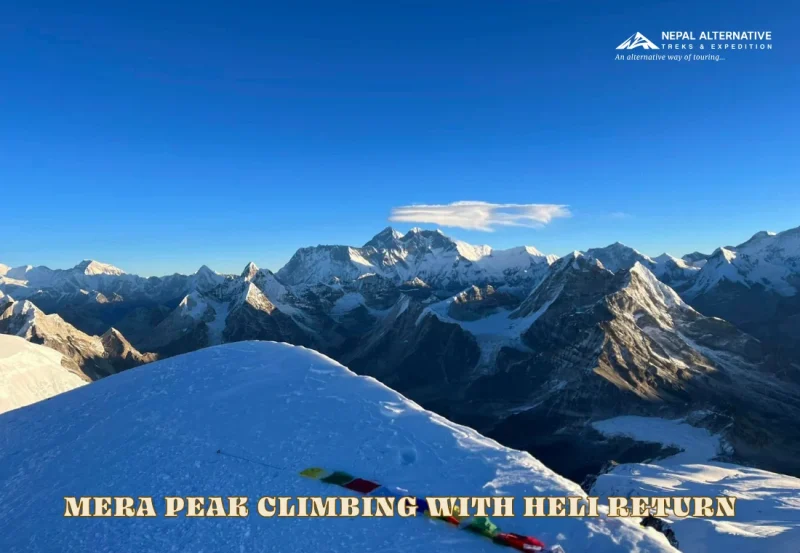
Mera Peak Climbing With Heli Return – 10 Days
View Detail For Tamang Heritage and Langtang Valley Trek – 12 Days
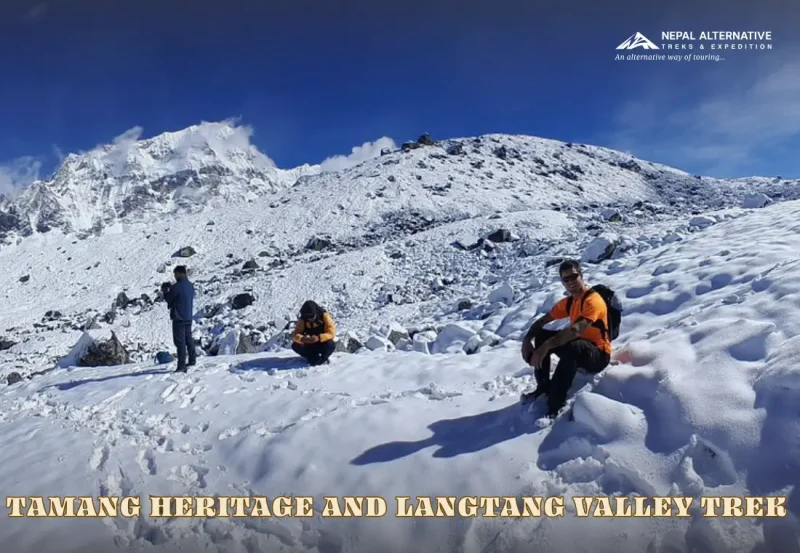
Tamang Heritage and Langtang Valley Trek – 12 Days