Safety update: our trekking groups are safe, and our routes are running as planned. Read full flood notice.

Annapurna Base Camp Trek with Poon Hill and Mardi Himal – 15 Days
|
Weather |
Weather | -10°C to 22°C | |
|---|---|---|---|
|
Duration |
Duration | 15 Days | |
|
Difficulty |
Difficulty | Moderate | View Difficulty Detail |
|
Accommodation |
Accommodation | Lodge | |
|
Meals Included |
Meals Included | Breakfast, Lunch, Dinner | |
|
Best Season |
Best Season | Mar, Apr, May, Sept, Oct, Nov | |
|
Transportation |
Transportation | Jeep | |
|
Daily Activity |
Daily Activity | Approx. 5-8 hours | |
|
Religion |
Religion | Buddhism | |
|
Ethnic People |
Ethnic People | Gurung, Magar, Thakali | |
|
Geographic Terrain |
Geographic Terrain | Mountain, Forest, Village, Glacier, Hot Spring, Waterfall | |
|
Region of Nepal |
Region of Nepal | Annapurna Region, Kaski | |
|
Max. Altitude |
Max. Altitude | 4500 m / 14,763 ft |
Annapurna Base Camp Trek with Poon Hill and Mardi Himal Overview
The Annapurna region of Nepal is home to some of the most popular and classical treks in the world, including the Annapurna Base Camp trek. Other great trekking trails of the Annapurna region include the Ghorepani Poon Hill trek and the Mardi Himal trek, which have gained massive popularity over the years. While these three destinations are each done individually, combining them into a single trip is rare.
The ABC Trek with Poon Hill and Mardi Himal is the ultimate 15-day trekking adventure in the Annapurna region. The trek starts with a visit to the best sunrise and sunset viewpoint in the Annapurna region, Ghorepani Poon Hill. From there, the trek joins the classic Annapurna Base Camp route, where you will dive deep into the Annapurna Sanctuary. Then, you will trek up to the Mardi Himal Base Camp, which will be your highest reached altitude. After visiting these places, the journey continues to the lakeside city of Pokhara, where the trek officially ends.
The Annapurna Base Camp and Mardi Himal Combined Trekking via Poon Hill stands out for its beautiful mountain views and cultural immersion. However, what makes it special is the opportunity to witness the highlights of the Annapurna region in a single journey. From the famous Poon Hill sunrise and 360-degree panoramic mountain views from the Annapurna Base Camp to the peaceful, less-crowded Mardi Himal trek, the trek combines everything at once.
Unlike the standard ABC trek, you will have the chance to immerse yourself in both beginner-level walks and a truly remarkable high-altitude alpine experience. Doing three separate treks requires more logistics, time, and cost. So it is inefficient, but with the combined option, you get more variety, better acclimatization, and, overall, a rewarding experience. Along the Annapurna Base Camp and Mardi Himal Combined Trekking route via Poon Hill, you will walk through traditional villages that the Gurung and Magar people own. The stone-built houses and remote setting give you a clear idea of the Himalayan lifestyle.
Also, the walk through the Annapurna Conservation Area provides a chance to see various wildlife, including Blue sheep, Himalayan thar, Musk deer, and, although rare, the elusive Snow leopard, adding another thrill to the journey. For accommodation, teahouses and lodges are available throughout the region, which can be basic but comfortable. The crowd levels are moderate on the Poon Hill and ABC and much quieter in the Mardi Himal route.
ABC Trek with Poon Hill and Mardi Himal Highlights
- Conquer the rare blend of three Annapurna treks in a single adventure, including the Poon Hill, Annapurna Base Camp, and Mardi Himal Trek.
- Stand on the foot of Mount Annapurna, the 10th-highest mountain in the world, at the Annapurna Base Camp (ABC).
- Witness one of the most mesmerizing sunrise views over the Annapurna and Dhaulagiri Mountain Range from the top of Ghorepani Poon Hill tower.
- See amazing views of Annapurna I-IV, Dhaulagiri, Machhapuchhre, Nilgiri, Mardi Himal, and other peaks throughout the ABC, Poon Hill, and Mardi Himal route.
- Trek through traditional Nepali villages experiencing Gurung and Magar cultures, wandering through rhododendron forest, breathtaking waterfalls, and terraced hillsides.
- Soak, enjoy, relax, and rejuvenate at the hot springs of Jhinu Danda.
- Explore the Annapurna Conservation Area and witness its diverse flora and fauna.
- Enjoy a luxurious time at the lake city of Nepal, Pokhara, at the end of the trip. Enjoy its popular landmarks, nightlife, and natural attractions.
Annapurna Base Camp Trek with Poon Hill and Mardi Himal Difficulty:
Regarding the Annapurna Base Camp Trek with Poon Hill and Mardi Himal difficulty, the trek is considered moderate. It is not extremely hard, but it’s not easy either, making it a moderately challenging trek. You will need to walk about 5-8 hours each day on trails that go up and down, with steep stone steps, especially during the Poon Hill and Mardi Himal treks. The walks from Deurali to Annapurna Base Camp and from Mardi High Camp to Mardi Base Camp are among the toughest parts of the itinerary due to rough terrain and altitude.
If you are physically fit and can handle long walks, you will be able to complete the trek easily. But if you are not used to hiking or regular exercise, it can feel tiring. Many people say their legs feel shaky by the end of the day. The trek gets even harder in winter when it snows. The trails can become slippery, and the cold, thin air makes walking and breathing more difficult. In such a season, crampons and warm gear are a must. Still, with strong willpower, basic fitness, and the right mentality, the trek is possible.
Detailed 15 Days ABC Trek with Poon Hill and Mardi Himal Itinerary
Day 1
Drive from Kathmandu to Pokhara (820 m)
|
Trekking Time Average |
200 km Drive (6-7 hours) |
|---|---|
|
Accommodation |
Hotel Kausi |
|
Altitude |
820 m / 2,690 ft |
|
Included meals |
Not included |
Welcome to Nepal for your ABC trek with Poon Hill and Mardi Himal. You will start your trek with a drive from Kathmandu to Pokhara on a half-day-long drive. The drive takes you through the Prithivi Highway alongside the Trishuli River. The scenic drive transitions from the bustling capital city through the small towns like Malekhu, Manakamana, Abu Khaireni, and Lekhnath to finally take you to Pokhara.
Upon arrival in Pokhara, you will check in at Hotel Kausi, located just a 5-minute walk from Phewa Lake. The biggest tourism city, Pokhara, offers you views of Machapuchhre and other peaks from the Annapurna range. In the evening, you can explore the beauty of the lakeside city. You can enjoy a walk around the lakeside area of Phewa Lake. It is also a perfect time to prepare for the following day. You can do some shopping for trekking equipment and other items, pack your bags, or simply enjoy the nightlife of Pokhara. Overnight in Pokhara.
Day 2
Drive from Pokhara to Banthati – Trek to Ghorepani (2,800 m)
|
Trekking Time Average |
12 km Uphill hike (4 hours) |
|---|---|
|
Accommodation |
Super View Lodge |
|
Altitude |
2,800 m / 9,186 ft |
|
Included meals |
Breakfast, Lunch, Dinner |
With breakfast at your hotel, you will officially begin your trekking journey in the Annapurna region. First, you will drive to Banthati via Nayapul and Tikhedhunga. The drive avoids the lower road section and follows a short trekking route, giving a gentle introduction to the Annapurna trekking trail. The road conditions till Nayapul are good, but onwards, you will need to face some off-road sections, so prepare accordingly.
Then, after reaching Banthati, you will begin your trek. Starting off, you will climb steadily into the dense rhododendron and oak forests. You will follow the stone steps gradually to reach Nangethati. At Nangethati, you can rest for a while and then continue to walk to reach Ghorepani.
As you reach the Ghorepani village, you can see the views of Annapurna, Dhaulagiri, and Nilgiri in the distance. The Magar village of Ghorepani is well known for its hospitality. So once you check in at the cozy teahouse like Super View Lodge, you can enjoy a warm meal with views of Annapurna South, and rest for the exciting sunrise morning hike to Poon Hill on the following day. Overnight stay in Ghorepani
Day 3
Morning hike to Poon Hill (3,210 m) – Trek to Chuile (2,300 m)
|
Trekking Time Average |
15 km Uphill + Downhill hike (6-7 hours) |
|---|---|
|
Accommodation |
Mountain Discovery Lodge or similar category |
|
Altitude |
2,300 m / 7,546 ft |
|
Included meals |
Breakfast, Lunch, Dinner |
Wake up before sunrise, and start your hike to Poon Hill (3,210 m /10,531 ft). Poon Hill is one of the popular viewpoints in the Annapurna region for spectacular sunrise views. You will start with an early climb on the stone steps towards Poon Hill, which will take about 1.5 hours, depending on the pace. Reaching Poon Hill, enjoy the breathtaking sunrise view with the snow-capped mountains in the background.
Mountain views include Dhaulagiri, Annapurna I, Annapurna South, Macchhapuchhre, Nilgiri, and Hiunchuli. Click some photographs, videos, and then begin the return journey to Ghorepani and enjoy your breakfast. After breakfast, continue through the forest area and traditional villages to reach Chuile. The trail to Chuile is a mixture of ups and downs through rhododendron and oak-filled forests, which becomes vibrant especially during spring. Overnight stay in Chuile.
Day 4
Trek from Chuile to Upper Sinuwa (2,340 m)
|
Trekking Time Average |
10 km Uphill + Downhill hike (5-6 hours) |
|---|---|
|
Accommodation |
Hill Top Lodge |
|
Altitude |
2,340 m / 7,677 ft |
|
Included meals |
Breakfast, Lunch, Dinner |
Today, you will gradually descend towards Kimrong Khola before climbing through terraced fields and traditional villages. You will then pass the beautiful village of Chhomrong, which is also known as the “Gateway to Annapurna Base Camp.” Along the route, you will witness the views of Annapurna South and Machhapuchhre.
Then, from Chhomrong, you will continue on the stone staircase that leads you down to the Chhomrong Khola. After that, you will take a steady climb that will take you to Upper Sinuwa. The village is surrounded by dense bamboo and rhododendron forests, where you will check in at Hill Top Lodge. Later, you can explore the village and enjoy a warm meal. Overnight stay in Upper Sinuwa.
Day 5
Trek from Upper Sinuwa to Dovan (2,600 m)
|
Trekking Time Average |
9 km Uphill hike (5-6 hours) |
|---|---|
|
Accommodation |
Annapurna Approach |
|
Altitude |
2,600 m / 8,530 ft |
|
Included meals |
Breakfast, Lunch, Dinner |
After breakfast, you will leave Upper Sinuwa and make your way towards Dovan. Beginning the trek, you will enter a cooler and denser forest area where bamboo, oak, and rhododendron trees dominate the landscape. It is one of the easiest sections that offers gentle trail conditions. In between, you can also see a glimpse of Mount Fishtail and other peaks with the continuous sound of the Modi River on your right.
With a few ups and downs while passing villages like Bamboo, you will reach Dovan. There is a high probability of spotting wildlife like Red Panda, Langur Monkey, and other numerous birds on this section, so keep a sharp eye. After reaching Dovan, you will stay at Annapurna Approach and enjoy a warm dinner. Overnight stay in Dovan.
Day 6
Trek from Dovan to Deurali (3,200 m)
|
Trekking Time Average |
8 km Uphill hike (5-6 hours) |
|---|---|
|
Accommodation |
New Panorama Point Hotel |
|
Altitude |
3,200 m/ 10,500 ft |
|
Included meals |
Breakfast, Lunch, Dinner |
After breakfast, you will leave Dovan and follow the Modi Khola. The trail will gradually leave the dense forest vegetation, and you can see the transition to a much thinner and rugged landscape. You will also be a part of the “weeping wall” climb and move to a local shrine towards the Himalaya. From there, you will climb alongside the massive Modi River and pass Hinku Cave.
Afterward, you will walk along several avalanche-prone sections where the guides will carefully monitor the trail conditions and help you with navigation. Then, with a gradual walk, you will reach Deurali, where the scenery changes. Starting from the forested area, you can feel the shift towards the snow-capped mountain valley, making it one of the most beautiful villages inside the Annapurna Sanctuary. So enjoy the area, click photographs, keep yourself warm, and stay hydrated. Overnight Stay at New Panorama Point Hotel.
Day 7
Trek from Deurali to Annapurna Base Camp (4,130 m)
|
Trekking Time Average |
8 km Uphill hike (7-8 hours) |
|---|---|
|
Accommodation |
Annapurna Sanctuary Lodge |
|
Altitude |
4,130 m/ 13,550 ft |
|
Included meals |
Breakfast, Lunch, Dinner |
Wake up early, have breakfast, and leave Deurali. It is a hard climb today; however, it is also one of the most highlighted days in the entire trek, so prepare accordingly. Your trail begins with a climb alongside the Modi River and goes past alpine forests. You can witness the neatly decorated stack of rocks en route. Then, you will go past an icy cave and march into Machhapuchhre Base Camp (MBC) at 3700 m. Here, you can enjoy lunch while enjoying the grand view of Machhapuchre (6,997 m).
After lunch, begin climbing towards the west to get to Annapurna Base Camp. From MBC, you will need to walk almost 3 km to reach Annapurna Base Camp, which can take anywhere between 1 and 1.5 hours, depending on your personal pace. Upon reaching Annapurna Base Camp, you will stand amid the high mountains. Explore the area for a while. Enjoy the views of Annapurna Massif, Gangapurna, and Machhapuchre peaks. Overnight in Annapurna Sanctuary Lodge, ABC.
Day 8
Trek from Annapurna Base Camp to Bamboo (2,300 m)
|
Trekking Time Average |
13-15 km Downhill hike (6-8 hours) |
|---|---|
|
Accommodation |
Trekking Guest House |
|
Altitude |
2,300 m / 7,590 ft |
|
Included meals |
Breakfast, Lunch, Dinner |
Wake up early for the sunrise and a short exploration of Annapurna Base Camp. With a 360-degree view of snow-capped mountains, you are welcomed with the massive south face of Annapurna I, the world’s tenth-highest mountain. You will also see views of Hiunchuli, Gangapurna, Machhapuchhre, and Tent Peak, bathed in golden sunlight, which offers an unforgettable experience. Take photographs, and pat yourself on the back for this remarkable achievement.
Then, retrace your steps towards Bamboo after breakfast at ABC. Leaving ABC behind, you will follow back through Machhapuchhre Base Camp, Deurali, Himalaya, and Dovan. After that, you will descend back into the lush forest area along the Modi River before arriving at Bamboo. Overnight Stay at Trekking Guest House, Bamboo.
Day 9
Trek from Bamboo to Jhinu Danda (1,600 m)
|
Trekking Time Average |
8.5 – 11 km Downhill hike (5-6 hours) |
|---|---|
|
Accommodation |
Park Himalaya Hotel |
|
Altitude |
1,600 m / 5,280 ft |
|
Included meals |
Breakfast, Lunch, Dinner |
Leaving Bamboo, you will begin the climb through lush Bamboo forests and walk along the narrow ridge towards Sinuwa village. Then, from Sinuwa, you will begin the downhill climb towards the Chhomrong River. The returning trail takes a detour and begins climbing southwest through lush forests and terraced fields towards Chhomrong village. You will have lunch there, then with a steep downhill, you will reach Jhinu Danda, which is known for its natural hot spring.
After arriving at Jhinu Danda, you can check in at Park Himalaya Hotel, then, a short downhill walk from the village, you can enjoy the riverside hot spring. After several days of walking, it will be a perfect location to relax your muscles in the warm mineral waters. Then, return to the hotel and have a warm meal. Overnight stay in Jhinu Danda.
Day 10
Trek from Jhinu Danda to Forest Camp (2,600 m)
|
Trekking Time Average |
9 km Uphill hike (5-6 hours) |
|---|---|
|
Accommodation |
Jungle Embassy Lodge |
|
Altitude |
2,600 m / 8,530 ft |
|
Included meals |
Breakfast, Lunch, Dinner |
With breakfast in Jhinu, today you will leave the Annapurna Base Camp trekking trail and head towards the quieter Mardi Himal route. You will walk uphill through quiet rhododendron forests that provide a peaceful walking experience and escape from the larger crowds. Then, you will cross the suspension bridge and hike up terraced fields.
After that, you will reach the Gurung village of Landruk. From Landruk, you will follow the long, steep uphill ascent while passing some agricultural fields. Then, you will march along the deep forest and woodland filled with rhododendron and oak to reach the Forest camp. After reaching the forest camp, check in at Jungle Embassy Lodge and experience the crisp and calm atmosphere of Mardi Himal. Overnight Stay in Forest Camp.
Day 11
Trek from Forest Camp to Badal Danda (3,300 m)
|
Trekking Time Average |
9 km Uphill hike (3-4 hours) |
|---|---|
|
Accommodation |
Hotel 360 |
|
Altitude |
3,300 m / 10,827 ft |
|
Included meals |
Breakfast, Lunch, Dinner |
On the 11th day of the Annapurna Base Camp trek with Poon Hill and Mardi Himal trek itinerary day, you go from Forest Camp to Badal Danda through a peaceful path amidst rhododendron and oak forests. Going through Rescue Camp, Rest Camp, and Low Camp, the higher you go, the trees start to thin out, and the mountain starts to become more visible until you reach Badal Danda.
In the Nepali language, “Badal” means cloud and “Dadna” means hill, which explains a lot about itself. You’ll feel like you are above the clouds, and the views of mountain peaks like Mardi Himal, Fishtail, Annapurna South, and Hiunchuli make it one of the most amazing sights to see. And the sunset views, golden light from the drowning sun on the snowy peaks, are magical. You’ll spend the night at Badal Danda.
Day 12
Trek from Badal Danda to High Camp (3,700 m)
|
Trekking Time Average |
9 km Uphill hike (3-4 hours) |
|---|---|
|
Accommodation |
Fishtail Lodge |
|
Altitude |
3,700 m / 12,139 ft |
|
Included meals |
Breakfast, Lunch, Dinner |
After the warm breakfast, the day starts with leaving Badal Danda. After Badal Danda, the higher you climb, the better the view becomes. Machhapuchhre looks like we can touch it. You can get a closer look at mountain peaks like Annapurna South, Hiunchuli, and Mardi Himal.
The path becomes an uphill climb without being too hard. You have to stay warm because the weather can become cooler here. Then, after walking for about 3 hours, you will arrive at High Camp, which will be your place of stay for the night. It is a quiet, beautiful, relaxing place where you can enjoy the atmosphere and prepare for the next day’s hike to the viewpoint.
Day 13
Morning Hike to Mardi View Point – Mardi Base Camp- Retrace to Badal Danda (3,300 m)
|
Trekking Time Average |
12-14 km Uphill + Downhill hike (6-8 hours) |
|---|---|
|
Accommodation |
Hotel 360 |
|
Altitude |
3,300 m / 10,827 ft |
|
Included meals |
Breakfast, Lunch, Dinner |
It is said to be the most exciting day on the Mardi Himal Trail. You start the hike from High Camp to Mardi Himal Viewpoint (4,200 m) to watch the sunrise over the Himalayas. After enjoying the stunning view of golden light passing through the golden light illuminating the mountain peaks, you will continue walking uphill to reach the Mardi Himal Base Camp (4,500 m), which is the highest point of the trek.
When you reach Mardi Base Camp, amidst Annapurna I, Machhapuchhre, Hiunchuli, and even Manaslu, you’ll feel a cold mountain breeze pass through your cheek. After taking some photos and spending some time, you will head back to High Camp for lunch. After lunch, you will return to Badal Danda through the Mardi Himal descent trail and spend the night again.
Day 14
Trek from Badal Danda to Sidhing – Drive to Pokhara (820 m)
|
Trekking Time Average |
8 km Downhill hike (4 hours trek) 1.5-2 hours Drive |
|---|---|
|
Accommodation |
Hotel Kausi |
|
Altitude |
820 m / 2,690 ft |
|
Included meals |
Breakfast, Lunch |
After a restful night after a long and adventurous trek, you’ll continue the downhill return from Badal Danda to Sidhing. The following trek is quite steep; it can get hard on your knees, but the beautiful views of the forest, small villages, and distant mountains will make you forget about all that.
Passing through Low Camp on peaceful trails, the air gets warmer as the green hills come into view, and after hours of walking, when you reach Sidhing Village, it can be one of the most satisfying experiences. From Sidhing Village, marking the completion of the trek, you will board a jeep going through a bumpy road, jumping inside the jeep for around 2 hours to finally get to the smooth paved road.
After a 30-minute drive to Pokhara, you can finally spend the rest of the day relaxing, enjoying the famous Lakeside, Devi’s Fall, or World Peace Pagoda. This is the end of your adventurous journey of the ABC Trek with Poon Hill and Mardi Himal. You will spend the night in Pokhara.
Day 15
Drive from Pokhara to Kathmandu (1,400 m)
|
Trekking Time Average |
200 km Drive (6-7 hours) |
|---|---|
|
Altitude |
1,400 m / 4,593 ft |
|
Included meals |
Not included |
After breakfast, you will leave Pokhara and drive to Kathmandu. You will follow along the same Prithivi Highway while passing through rivers, green hills, and villages. Bidding farewell to the mountains and filling up with memories, you will arrive in Kathmandu. Upon reaching Kathmandu, you can explore the nearby town of Thamel and shop for souvenirs. Overnight in Kathmandu
What’s included
- Tribhuvan International Airport pick-up and transfer service
- Hotel accommodation on a double or twin sharing basis in Pokhara
- Lodge accommodation on a double or twin sharing basis during the trip
- Three meals a day (Breakfast, Lunch, Dinner) throughout the trek
- One highly experienced, first aid-trained, fluent English-speaking, friendly, and government-authorized trekking guide
- Required porter service (One porter for two persons)
- Guide and Porter’s food, accommodation, salary, insurance, transportation, and equipment
- Overland transportation as mentioned in the itinerary
- Annapurna Conservation Area Project (ACAP) and all necessary trekking documents
- Daily oxygen saturation monitoring during the trek
- Trekking route map
- First aid kit and water purification tablets
- Fresh seasonal fruits during the trek
- Company T-shirt
- Trek completion certificate
- Emergency rescue coordination and assistance if required
- Government taxes and service charges
- Public Liability Insurance
What’s not included
- Hotel accommodation and meals in Kathmandu.
- Meals in Pokhara except breakfast
- International flight tickets
- Nepal Tourist Visa fees
- Personal travel and medical insurance.
- Personal trekking equipment and gear
- Hot and cold beverages such as tea, coffee, soft drinks, energy drinks, and bottled water
- Hot showers, Wi-Fi charges, mobile charging fees, and laundry services
- Personal expenses and shopping
- Tips for guides and porters (highly recommended).
- Any expenses arising from natural disasters, weather conditions, strikes, flight delays, or circumstances beyond our control
Add-ons and Options
For this extended Annapurna Base Camp and Mardi Himal Combined Trekking via Poon Hill, add-ons make it easier to handle a multi-day trekking itinerary. You can add porters, rental gear, recovery extras, Kathmandu hotels, private vehicles, and even a return flight to Kathmandu to keep the experience adventurous but well-organized.
You can include add-ons during the booking in a few simple steps:
- Select and book the trek.
- Choose your departure date for the combined Annapurna Base Camp and Mardi Himal Combined Trekking via Poon Hill.
- Continue to the checkout page.
- Scroll down to the “Add-ons” section.
- Pick the services you want and set how many of each you need.
- Confirm your booking, with all selected extras added to your trip.
List of Add-ons:
- Personal porter (USD 300 per porter): Hire a personal porter to carry your main bag so you can walk more comfortably and enjoy the scenery instead of worrying about the load.
- Kathmandu–Pokhara private vehicle (car USD 100, jeep USD 150, van USD 200): Travel between Kathmandu and Pokhara in a private car, jeep, or van for a smoother and more flexible journey than shared transport.
- Gear rental (sleeping bag USD 15, jacket USD 15, crampons/spikes USD 15, poles USD 15): Rent key trekking items such as sleeping bags, warm jackets, crampons/spikes, and walking poles suitable for this longer route.
- Pokhara sightseeing (USD 30 per person): Join a guided tour of Pokhara to visit lakeside areas, viewpoints, and the city’s main sights.
- Trishuli River rafting (USD 45 per person): Add a day of rafting on the Trishuli River for extra adventure after your trek.
- Guided Kathmandu city tour (USD 30 per person): Explore important temples, Durbar Squares, and local markets in Kathmandu with a knowledgeable guide.
- Kathmandu–Pokhara flight (USD 120 one way / USD 240 round trip): Fly between Kathmandu and Pokhara to cut down travel time and avoid long road journeys.
- Paragliding in Pokhara (USD 90 per person for 45 minutes): Experience tandem paragliding over Pokhara with wide views of the mountains and the lake.
- Zipline in Pokhara (USD 80 per person): Try a high-speed zipline ride near Pokhara for a short but thrilling adventure.
- Pokhara–Kathmandu private transport (car USD 100, jeep USD 150, van USD 200, private bus USD 450): Return from Pokhara to Kathmandu in a private car, jeep, van, or private bus for a more relaxed road trip.
- Pokhara 5-star hotel upgrade (USD 150 per night, double/twin with breakfast): Upgrade your stay in Pokhara to a 5-star hotel with breakfast for extra comfort and better amenities.
- Hotel stay in Kathmandu (USD 50 per night, double/twin with breakfast): Add hotel nights in Kathmandu with breakfast at the start or end of your trip so your city stay is already arranged.
- Everest mountain flight, 1 hour (USD 300 per person): Take a one-hour scenic flight over the Everest region, with private airport transfers from your Kathmandu hotel; this is an in-air sightseeing experience with no landing.
Weather Variation and Best Time for Annapurna Base Camp with Poon Hill and Mardi Himal Trek
January
-8°C to 12°C
-8°C to 12°C
February
-5°C to 14°C
-5°C to 14°C
March
0°C to 15°C
0°C to 15°C
April
2°C to 15°C
2°C to 15°C
May
4°C to 18°C
4°C to 18°C
June
5°C to 20°C
5°C to 20°C
July
6°C to 22°C
6°C to 22°C
August
5°C to 18°C
5°C to 18°C
September
0°C to 14°C
0°C to 14°C
October
-5°C to 15°C
-5°C to 15°C
November
-8°C to 16°C
-8°C to 16°C
December
-10°C to 5°C
-10°C to 5°C
Best Time for Poon Hill, Annapurna Base Camp, and Mardi Himal
The ABC Trek with Poon Hill and Mardi Himal can be completed throughout most of the year, with significantly different experiences depending on the season. We can experience different weather conditions at different altitudes, from the forest to the high-altitude alpine terrain. That said, the best time to do the ABC Trek with Poon Hill and Mardi Himal is Spring (March to May) and Autumn (September to November).
Spring (March to May)
Springtime in Nepal falls from March to May, and it is one of the best times to do the Annapurna Base Camp, Poon Hill, and Mardi Himal Trek. The spring season begins with the end of winter, when snow at high altitudes begins to melt, and green vegetation starts to grow. Also, the skies are clear, and the weather stabilizes.
A typical spring day on the trek begins with a chilly morning and a cozy, warm afternoon. In the Ghorepani region, the vegetation is lit up with pink, red, and white as the rhododendron forests are in full bloom. Likewise, the views of Annapurna, Dhaulagiri, Hiunchuli, and other mountains are clearly visible. Along the ABC route, the greenery makes it one of the trail’s most beautiful sections. There are also higher chances of seeing birds and animals during spring. Also, on the Mardi Himal trail, spring brings clear skies and panoramic mountain views. The walk is easier with fewer crowds compared to other peak trekking seasons.
The temperature during the spring season ranges from 0°C to 20°C, so expect chilly mornings and afternoons. Spring is the best time for the trek; however, the only downside is that it is the season of travel for many travelers. So there is a chance of overcrowding on the trail; accommodations can be packed due to heavy demand, and costs can rise significantly. To overcome this challenge, it is best to book in advance.
Autumn (September to November)
Autumn is the best season for the ABC, Ghorepani Poon Hill, and Mardi Himal Trek. Autumn in Nepal runs from September to November and starts with the end of the monsoon. The autumn season offers crystal-clear skies and unobstructed mountain views. The temperatures are stable, and the trekking trails are dry, making for a comfortable walk.
A typical autumn day on the trek starts with a cool morning and a clear sky that portrays majestic mountain views. During the day, the temperature slowly rises, just enough to keep the body warm, with little or no chance of rainfall. After sunset, the evening can be cold, but overall, trekking during this period is comfortable.
The temperature in the lower regions ranges from 8°C to 25°C, and in the higher regions from -8°C to 12 °C. At night, the temperature drops significantly, especially at higher altitudes, which can range from -10°C to -15°C at Mardi Himal Base Camp or ABC. Similarly, among all the months in Autumn, October is the best time for trekking, as it coincides with Nepal’s festive season. Nepal’s grandest festivals, Dashain and Tihar, fall during this time, allowing trekkers to experience the culture and local hospitality and to imbue the trek with deeper cultural meaning. With a combination of festivals, mountain scenery, and adventure, autumn is the best time for these three treks.
Monsoon and Winter
Monsoon or Summer (June to August) and Winter (December to February) are the off-seasons for trekking in Nepal. Nepal Alternative Treks strongly recommends omitting trekking during these seasons. During summer, heavy rainfall hinders the trekking experience, and during winter, cold temperatures make it difficult to enjoy the experience. Summer day temperatures can range from 6°C to 22°C, which is extremely hot. High temperatures followed by rainfall can irritate trekkers.
On the other hand, if rainfall is excessive, there is a risk of landslides, avalanches, floods, slippery trails, or other natural disasters. So trekking in such a time can be extremely dangerous. Also, the temperature during winter can drop to -10°C, which can cause problems such as frostbite and hypothermia. The wintertime is filled with snow and ice, so visibility is extremely low. In such weather conditions, navigation can be a problem; thus, trekking is not recommended.
Route Map
Join our group departures
We do not have any scheduled group trips, but you are welcome to pick a date that suits you best.
Book a private trip on your own date.
Every journey we create is uniquely tailored to you. Share your interests and passions, and our travel experts will design an unforgettable adventure filled with extraordinary, one-of-a-kind experiences crafted just for you.
Additional Trip Information
Who Is This Trek Suited For?
The ABC Trek with Poon Hill and Mardi Himal is ideal for travelers who want to experience the best of the Annapurna region in a single journey. By combining the Annapurna Base Camp Trek, Ghorepani Poon Hill Trek, and Mardi Himal Trek, this itinerary allows you to explore three of Nepal’s most popular trekking routes without planning separate trips.
This trek is best suited for people who have around two weeks to spend in Nepal and are looking for a longer and more immersive adventure. With approximately 15 days on the trail, it offers a complete experience of the Annapurna region, including mountain views, diverse landscapes, and local culture.
The trek is suitable for anyone with an average to good level of fitness. You should be comfortable walking for 5-8 hours a day on a mix of stone steps, forest trails, and mountain paths. While some sections can be demanding, the gradual ascent and support from experienced guides make the trek achievable for well-prepared beginners.
It is also a great choice for travelers who enjoy both nature and cultural experiences. Along the route, you will pass through traditional Magar and Gurung villages, where you can experience local hospitality and learn about life in the Himalayas. The scenery changes throughout the trek, from rhododendron and bamboo forests to alpine landscapes and high mountain viewpoints.
Understanding the Physical Challenge of Combining Three Popular Treks
Combining the ABC, Ghorepani Poon Hill, and Mardi Himal Trek into a single itinerary requires a considerable amount of physical fitness, whereas completing them one by one does not. The challenge comes from different factors.
One factor is the long walking hours. The combined trek requires trekkers to walk for about 5-8 hours over the trekking days. Some days, such as the summit to Mardi Himal Base Camp and return, may require longer trekking times. Also, spending consecutive days walking for several hours can be difficult, especially for beginner-level trekkers. But as you progress each day, the walk can become a habit that eases the experience. However, good endurance is required. Taking regular short breaks, maintaining a steady pace, and eating properly can help to cope with long waking hours.
Another factor is the varied terrain that changes throughout the trek. First off, on the Ghorepani Poon Hill trek, you will walk through the rhododendron forest areas and cross uneven terrain. On the ABC trek, you will wander through the alpine areas filled with ice and snow. On the Mardi Himal trek, you will hike along a narrow ridgeline, so the terrain is diverse, but no technical climbing is required. However, the trek demands good footing, proper trekking boots, and balance, coordination, and endurance.
Also, the route includes several ascents and descents. You will spend hours climbing a hill, and on the following day, you will descend on the other section of the same hill to reach the valley below. The process repeats every single day. On other days, including walks on Poon Hill or on acclimatization days, you will have steep climbs that put stress on your knees and ankles. So carrying a pair of trekking poles is necessary for balance and to reduce the impact on your joints.
Finally, the challenge of combining three treks lies in their altitude. The trek gradually reaches altitudes above 4,000 m, increasing the risk of altitude sickness. The Annapurna Base Camp sits at 4,130 m, while the Mardi Himal Base Camp sits at 4,500 m, so at these heights, breathing becomes more difficult and physical activities require more effort. Some trekkers might experience mild symptoms such as headache, nausea, fatigue, or difficulty sleeping, which is important to note.
To reduce the challenges, trekkers need to build their physical fitness. You should focus on cardio exercises, such as hiking, stair climbing, jogging, cycling, or swimming. Other than that, you should not hurry during the trek. You should always follow your natural pace, stay hydrated, and eat proper, nutritious food. Also, to mitigate the symptoms of Acute Mountain Sickness (AMS), you should follow proper acclimatization practices and ascent slowly. So, with proper preparation, sensible pacing, moderate physical fitness, and the right mindset, most trekkers can complete the trek.
ABC Trek with Poon Hill and Mardi Himal vs Annapurna Base Camp Trek
The Annapurna Base Camp Trek is a standard trek that focuses on reaching Annapurna Base Camp (4,130 m) via river valleys, villages, and the Annapurna Sanctuary. It is classic Himalayan immersion with good infrastructure.
In contrast, the ABC Trek with Poon Hill and Mardi Himal is an extended journey in the Annapurna Region that adds Ghorepani/Poon Hill and the peaceful Mardi Himal Trek to Annapurna Base Camp. It is ideal for those seeking variety, more adventure, and fewer crowds along parts of the route.
| Features | Annapurna Base Camp Trek | ABC Trek with Poon Hill and Mardi Himal |
| Duration | 7-10 | 15 days |
| Highest Point | 4,130 m (ABC) | 4,500 m (Mardi Himal BC) |
| Difficulty | Moderate | Moderate to Challenging (longer, more varied) |
| Total Distance | Approx. 46-60 km | Approx. 80-100+ km (combined) |
| Crowd Level | Moderate to High | Moderate (quieter on Mardi section) |
| Best Views | Close-up Annapurna I, Machhapuchhre | Panoramic (Poon Hill) + Ridge views + Multiple Base Camps |
| Acclimatization | Good | Excellent (extra days & varied routes) |
Do We Need Permits for this ABC trek with Poon Hill and Mardi Himal Trek?
Yes, you do need permits for the ABC Trek with Poon Hill and Mardi Himal. Entering the Annapurna Conservation Area requires a permit, which allows us to travel to all the destinations in this journey. You can get the permit through a registered trekking agency or at the Nepal Tourism Board offices.
Required Permits for the ABC with Poon Hill and Mardi Himal Trek
Annapurna Conservation Area Permit (ACAP)
The ACAP permit is mandatory for all trekkers. It is the official entry permit required to enter the Annapurna Conservation Area. The ACAP permit is a legal requirement for trekkers to enter and travel within this conservation area, which is included in the ABC Trek with Poon Hill and Mardi Himal itinerary.
The ACAP is introduced to protect the area, maintain trails, manage tourism in the region, and, most importantly, support local communities. If you fail to obtain a trek permit, you are not allowed to trek within the Annapurna Conservation Area without an ACAP permit.
The cost of the ACAP permit depends on your nationality, which is as follows:
| Trekker Category | ACAP Permit Cost |
| Foreign nationals | NPR 3,000 |
| SAARC nationals | NPR 1,000 |
| Children under 10 years | Free |
Trekkers’ Information Management System (TIMS) Card
The TIMS card is required for safety tracking on popular Annapurna routes. It is officially issued by the NTB (via a registered trekking agency). Now, TIMS is no longer mandatory and is neither consistently enforced nor checked. It costs around NPR 1,000-2,000, depending on nationality.
Where to Get the Annapurna Conservation Area Permit?
You can get the ACAP permit in Kathmandu or Pokhara. The registered trekking agency can provide you with the permit if you book directly with them.
Getting the permit through a Trekking Agency:
The registered agency can arrange your ACAP permit for you. This is the easiest way you can get the permit because you do not need to visit the permit office yourself. You just need to provide the documents, and the agency handles the process.
Getting the permit in Kathmandu:
Before heading to the trail, Kathmandu is a very convenient place to arrange the permit. Many trekkers collect their ACAP permit in Kathmandu before heading to Pokhara. You have to make sure to carry all the required documents and Cash in NRs. To get the permit, you have to visit the Nepal Tourism Board (NTB) Office at Bhrikutimandap (Pradarshani Marg) from Sunday to Thursday (10:00 AM – 5:00 PM) and on Friday (10:00 AM – 3:00 PM).
Getting the permit in Pokhara:
Pokhara is also a popular place to get Annapurna Region Permits. Many trekkers stay in Pokhara before or after trekking in the Annapurna region. Visit the NTB or TAAN Office at Damside from Sunday-Thursday (10:00 AM – 5:00 PM) and Friday (10:00 AM – 3:00 PM).
ABC Trek with Poon Hill and Mardi Himal Cost
The cost of the ABC trek with Poon Hill and Mardi Himal depends on how much personal expenses you incur on the trek, the number of people in your group, the quality of service (Standard or more personal), and your preference for transport type, which is generally public or private.
In general, the cost of the ABC Trek with Poon Hill and Mardi Himal ranges from USD 800 to 1,000 per person, depending on group size. For a small private group of 1-4 people, the cost is slightly higher than for larger groups because of fixed costs such as guides, permits, porters, and transport. As such facilities are shared among fewer people, the individual costs tend to be higher. But if the group size is large, the per-person cost decreases, making the 15-day ABC trek with Poon Hill and Mardi Himal suitable for groups including friends, families, or corporate groups.
Here at Nepal Alternative Treks, the cost of the ABC Trek with Poon Hill and Mardi Himal is:
| Group Size | Price per person |
| 1-4 | USD 890 |
| 5-8 | USD 870 |
| 9-12 | USD 850 |
| 13-18 | USD 830 |
Your ABC, Poon Hill, and Mardi Himal package price covers the guide and porter services, all your meals, and lodging during the trek. Besides that, the price also includes the cost of required permits, ground transportation per the itinerary, and other government taxes.
However, you should carry some extra cash for hotel and food in Kathmandu, your personal equipment, travel insurance, drinks and snacks, and tips for the trekking crew. Still, the cost of the combined ABC, Poon Hill, and Mardi Trek is cheaper than classic treks like the Everest Base Camp and Annapurna Circuit treks, which are of similar duration.
Can beginners do the ABC Trek with Poon Hill and Mardi Himal?
Yes, even the beginners can do the ABC Trek with Poon Hill and Mardi Himal. Although mountaineering experience is not required, it is still not a casual walk in the park. Complete beginners should train with cardio and leg-strengthening exercises for 8-12 days before departure. The trek involves consecutive days of climbing stone stairs and reaching altitudes over 4,000 m, where the air is extra thin.
It is feasible for beginners, given its overall moderate difficulty. There are steady walks on stone-step trails through the forest, and some steep sections of ridge with no technical climbing. As a beginner, you may face challenges such as cumulative fatigue, steep stone stair sections, altitude, weather, uneven trails, teahouse lodging, and steeper & narrower ridges.
A 15-day trek is physically demanding, and descending can be hard on the knees. At altitudes over 4,000 m, altitude sickness is possible but still manageable with a slow pace. The steep, narrow ridge from High Camp to Mardi Himal Base Camp feels more demanding than ABC for some. We will cover less daily distance, so it is manageable.
Required Fitness
For the ABC Trek with Poon Hill and Mardi Himal, you need to have basic to good cardiovascular endurance and leg strength. You should be able to hike comfortably for 5-8 hours a day while carrying a daypack. To get the fitness required for the trek, you should train 4-8 weeks ahead, like Brisk walking with elevation if possible. You should focus on cardiovascular exercises like cycling, swimming, or gym work for legs/core. Avoid heavy weightlifting and go on general hikes over varied terrain to simulate the trekking experience.
Some practical tips:
- If you are a true beginner, you should not try to keep up with faster trekkers. To conserve energy and reduce the risk of altitude sickness, you need to maintain a slow, steady pace.
- You should drink at least 3-4 liters of water every day. Maintaining proper hydration helps reduce fatigue and altitude-related symptoms.
- Keep your duffel bag around 10-12 kg, which is the weight limit when hiring a porter. And in your daypack, carry only your daily essentials.
- The Himalayas have very unpredictable weather, so wear moisture-wicking base layers, an insulating mid-layer, and waterproof outer jackets; it helps you adjust easily.
- If you have symptoms like headaches, nausea, dizziness, or unusual fatigue, you should report them to your guide immediately. Don’t continue the climb if symptoms are severe.
- You should use trekking poles to help reduce strain on your knees, especially during descents on stone staircases.
- You should start early in the morning, as it provides clearer mountain views and cooler temperatures.
- As we reach higher altitudes, UV exposure increases. You should wear sunglasses, apply sunscreen (SPF 30+), and use a hat even on cool or cloudy days.
FAQs
Is ABC with Poon Hill and Mardi Himal worth it?
What is the best month for the Ghorepani Poon Hill, ABC, and Mardi Himal combined trek?
Is it better than standard ABC Trek?
How many days are required for the ABC, Poon Hill and Mardi Himal Trek?
What is the maximum altitude on the Annapurna Base Camp and Mardi Himal Combined Trekking via Poon Hill?
Do I need a guide on Annapurna Base Camp and Mardi Himal Combined Trekking via Poon Hill trek?
Is altitude sickness a major concern during the trek?
What happens in case of severe altitude sickness or other emergencies?
What is the difference between doing ABC, Poon Hill, and Mardi Himal separately vs combined?
Can I do the trek solo?
Do I need prior experience for the combined Annapurna trek?
What are the required permits for the trek?
What mountains can I see during the Annapurna Base Camp, Mardi Himal and Poon Hill Trek?
Are charging facilities available?
Is Wi-Fi and mobile network available?
Why choose the Annapurna Base Camp, Poon Hill, and Mardi Himal Combined Trek?
Related Trips
View Detail For Mera Peak Climbing With Heli Return – 10 Days


Mera Peak Climbing With Heli Return – 10 Days

View Detail For Tamang Heritage and Langtang Valley Trek – 12 Days
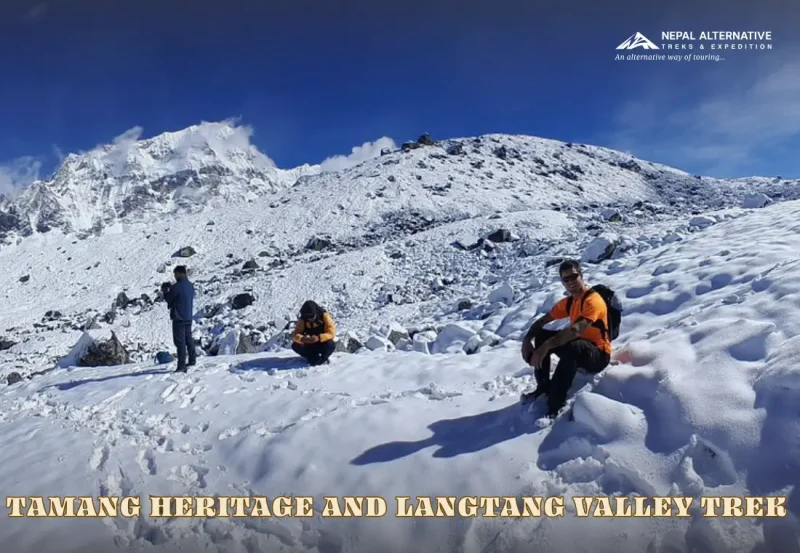
Tamang Heritage and Langtang Valley Trek – 12 Days