Safety update: our trekking groups are safe, and our routes are running as planned. Read full flood notice.

Short Helambu Trek – 4 Days
|
Weather |
Weather | -5°C to 20°C | |
|---|---|---|---|
|
Duration |
Duration | 4 Days | |
|
Difficulty |
Difficulty | Easy | View Difficulty Detail |
|
Accommodation |
Accommodation | Lodges | |
|
Meals Included |
Meals Included | Breakfast, Lunch, Dinner | |
|
Best Season |
Best Season | March, April, May, Sep, Oct, Nov, Dec | |
|
Transportation |
Transportation | Jeep | |
|
Daily Activity |
Daily Activity | Approx. 5-6 hours | |
|
Religion |
Religion | Buddhism, Hinduism | |
|
Ethnic People |
Ethnic People | Sherpa, Hyolmo, Tamang | |
|
Geographic Terrain |
Geographic Terrain | Mountain, Forest, Village | |
|
Region of Nepal |
Region of Nepal | Helambu, Sindhupalchok | |
|
Max. Altitude |
Max. Altitude | 3,490 m / 11,517 ft |
Helambu Short Trek Overview
The Helambu Short Trek is one of the easiest and most accessible Himalayan treks from Kathmandu. Located north of the Kathmandu Valley, the Helambu region lies in Shivapuri Nagarjun National Park, adjacent to Langtang National Park. This trek is a good choice if you want to experience mountain trails, traditional villages, forests, and local culture without taking a long holiday or dealing with domestic flights.
The 4-day Helambu Short Trek begins with a scenic jeep drive from Kathmandu to Chisapani. From there, the trail passes through rhododendron and oak forests before reaching Kutumsang. The route then climbs gradually toward Thadepati, the highest point of the trek, before descending through the traditional village of Melamchigyang. From Melamchigyang, a scenic drive takes you back to Kathmandu, completing the four-day journey.
Similarly, you will also have a cultural encounter in this Helambu trek. The trail passes through Sherpa, Tamang, and Hyolmo villages, where you will hear their own language, wear their own clothes, and practice their own Buddhist rituals, and where mass tourism has had little effect. Compared to other treks in the Langtang region, Helambu still feels relatively peaceful and less affected by mass tourism.
The landscape is equally varied. You will walk through forests, terraced hillsides, stone-built villages, and open mountain trails. The forests are home to Himalayan birdlife, and you may also spot wildlife such as langur monkeys. Along the route, simple teahouses provide a place to rest, with basic rooms, beds, and warm meals.
The beauty of this trek is that the trek stays at relatively moderate elevations and does not require long acclimatization schedules. Thus, it is suitable for first-time trekkers, families, and travelers with limited time.
Highlights of the Helambu short trek
- Trek through Shivapuri Nagarjun National Park and into the fringes of Langtang National Park in a single short itinerary.
- Reach Thadepati (3,490 m), the trek’s highest point, for panoramic views of the Langtang, Jugal, and Gaurishankar ranges.
- Walk through traditional Sherpa, Hyolmo, and Tamang villages, including Kutumsang and Melamchigyang.
- Explore centuries of Tibetan culture in the Helambu valley at the Buddhist monasteries and gompas.
- Pass through blooming rhododendron and oak forest, particularly striking in the spring.
- Enjoy a low-altitude route with a lower risk of altitude sickness than treks in the Everest or Manaslu regions.
- Experience genuine teahouse hospitality away from the crowded trails of Everest and Annapurna.
- Complete an authentic Himalayan trek in just 4 days, ideal for travelers with limited holiday time.
- Spot Himalayan birdlife; if you are lucky, you can also spot langur monkeys along the forested sections.
- Start and end close to Kathmandu, with only short jeep drives on either end of the trek.
Helambu Trek Difficulty:
The short Helambu trek is a direct and efficient route that can be completed in 4 days, making it suitable for beginners, seasoned trekkers, and families. This hike is open to all levels of hiking experience and technical skills. But you need to have a good level of fitness, stamina, and overall health.
You will find some less-steep routes with a moderate number of inclines and declines along the way. The terrain is a bit out of the way and off the grid, but much less challenging than other major routes in the area. The hike will average 4 to 6 hours per day over the four days, and the main physical challenge will be reaching heights above 3,400 m.
Although the route is simple, being in good condition will make it more enjoyable. It is easy to prepare by beginning a light stretching and endurance exercise program before departure. This will allow you to enjoy the entire experience without worrying about daily trail hours.
4 Days Helambu short trek Itinerary
Day 1
Drive to Chisapani by Jeep – Trek to Kutumsang (2,446 m)
|
Trekking Time Average |
69 km Drive (Avg 4-5 hours)) 16 km Uphill hike (Avg. 06 hours) |
|---|---|
|
Accommodation |
Namaste Hotel |
|
Altitude |
2,446 m / 8071 ft |
|
Included meals |
Lunch, Dinner |
The 4-day Helambu trek starts with an early-morning jeep ride from Kathmandu to Chisapani, a small ridge settlement within Shivapuri Nagarjun National Park. This will save you a full day of walking from Sundarijal and get you on the trail by mid-morning.
Then, from Chisapani, you start the real hiking. The trail from Chisapani rises slightly along the edge of the park through pine and oak forest, with a few clearings providing early glimpses of the Langtang and Jugal ranges. The route to Kutumsang is not too steep, and it is a pleasant first day to get used to the pace of trekking. Kutumsang is a small village of both Tamang and Sherpa people, where you will stay overnight at a local lodge.
Day 2
Trek to Thadepati (3,490 m)
|
Trekking Time Average |
14 km Hill hike (Avg. 06 hours) |
|---|---|
|
Accommodation |
Tashidelek Lodge |
|
Altitude |
3,490 m / 11,517 ft |
|
Included meals |
Breakfast, Lunch, Dinner |
The second day of your Helambu trek itinerary is the most challenging of the trek, as it starts from Kutumsang and rises steadily through rhododendron and fir forests to the highest point on the route, Thadepati, at 3,490m. The forest thins out slowly as you rise, eventually giving way to ridges with long vistas back to Kathmandu and forward to the Langtang massif.
Thadepati is located at the edge of Shivapuri Nagarjun National Park and Langtang National Park, and the village itself is nothing more than a few lodges catering to trekkers on their way to Helambu and Gosaikunda. This is a good day to take it easy, drink plenty of water, and let the guide know if you notice any early signs of altitude discomfort.
Day 3
Trek to Melamchigyang (2,530 m)
|
Trekking Time Average |
15 km Hill hike (Avg. 06 hours) |
|---|---|
|
Accommodation |
Helambu Hotel |
|
Altitude |
2,530 m / 8,300 ft |
|
Included meals |
Breakfast, Lunch, Dinner |
From Thadepati, the trail descends into the Melamchi valley, leaving the high ridgeline behind and dropping through forest and terraced farmland into Hyolmo territory. The change of landscape is evident within a few hours as you enter the lower villages, and you begin to see stone farmhouses, prayer flags, and mani walls.
One of the cultural highlights of the trek is Melamchigyang, where a robust community of Hyolmo people resides, and several small monasteries are located. The monastery and village life here are very different from the quieter, higher-elevation days of the last two days, and are best appreciated by spending a night here.
Day 4
Drive to Kathmandu by jeep
|
Trekking Time Average |
150 km Drive (Avg. 06 hours) |
|---|---|
|
Altitude |
1,400 m / 4,600 ft |
|
Included meals |
Breakfast, Lunch |
The last day on your Helambu valley trek route is a beautiful jeep tour from Melamchigyang to Kathmandu, passing through smaller villages and farmland before returning to the main road. The drive takes a few hours, depending on road conditions, and typically arrives back in Kathmandu by early to mid-afternoon. This allows you to enjoy the rest of the day in Kathmandu, either to unwind after the hike, visit the city, or book an onward flight if necessary.
What’s included
- Pick-up at Tribhuvan International Airport and transfer to the hotel in Kathmandu.
- Lodge (twin-share basis) accommodation during the trek.
- All meals (breakfast, lunch, and dinner) during the trek.
- One experienced, well-trained, fluent English-speaking, friendly, specialized in the Helambu region, and government-authorized trekking guide.
- 1 porter per 2 trekkers, with luggage weight kept under 10 kg per person.
- Guide/porter’s food, accommodation, salary, insurance, transportation, and equipment.
- Overland transportation as mentioned in the itinerary.
- Langtang National Park fee and Shivapuri National Park fee.
- A trekking map, a duffle bag, water purification, daily oxygen saturation check-up, a company T-shirt, first aid medical supplies, and a trekking completion certificate, etc.
- Assistance for emergency rescue evacuation.
- Government tax and service charge.
- Public liability insurance.
What’s not included
- Hotel accommodation and meals in Kathmandu.
- All kinds of hard and soft drinks, including tea/coffee, mineral water, Coke, Fanta, alcoholic drinks, hot showers, laundry, phone bills, bar bills, hot water, etc.
- Personal travel insurance.
- International flight tickets.
- Nepal tourist visa.
- Tips for guides and porters (highly suggested).
Add-ons and Options for the Helambu Trek
The Short Helambu Trek comes with a simple base plan. Add-ons let you customize comfort, pace, and extra activities without changing the main route. You pick only what you need, from lighter packs to post-trek relaxation and city tours.
How to Add These Services:
- Click “Book the Trip” on the Helambu Trek page.
- Choose your preferred departure date.
- On the checkout page, scroll down to the “Add-ons” section.
- Tick the services you want (porter, gear rental, hotel, etc.).
- Complete your payment; the selected add-ons will be attached to your booking.
Available Add-ons:
- Personal Porter Service (USD 80 per porter): A porter carries your main bag while you walk with a small daypack, making the trek easier on your shoulders and back.
- Trek Gear Rental (Sleeping bag USD 4, Down jacket USD 4, Walking poles USD 4, Crampons/spikes USD 4): Rent what you need to stay warm and stable on changing terrain without buying or carrying extra gear from home.
- Spa Massage in Kathmandu (USD 50 per person for 90 minutes): Book a 90-minute massage after the trek to relax tired legs, back, and shoulders before you fly home.
- Private Transport from Melamchigyang to Kathmandu (7-seater jeep USD 150, 28-seater bus USD 300): Travel back to Kathmandu in a private vehicle on your own schedule, ideal for groups or families.
- Helicopter Return from Melamchigyang to Kathmandu (USD 2,000 per flight, up to 5 people): Fly back to Kathmandu by helicopter to save time and end the trip with a scenic mountain flight, leaving more time for sightseeing or shopping.
- Kathmandu City Tour (USD 30 per person): Visit key cultural and historical sites in Kathmandu (such as Swayambhu, Pashupatinath, Boudhanath, and Durbar Square) in a guided full-day tour, easy to fit before or after your trek.
- Hotel in Kathmandu (USD 50 per night, double/twin, with breakfast): Add one or more nights in a comfortable Kathmandu hotel with breakfast, either before the trek starts or after you return, so you don’t waste time searching for a place to stay.
- Everest Scenic Flight (USD 300 per person for 1 hour): Take a one-hour sightseeing flight from Kathmandu over Everest, Makalu, and nearby peaks, with private airport pick-up and drop-off. The plane does not land; it is a mountain-view flight only.
- Bhote Koshi River Bungee (USD 100 per person): Jump from a high suspension bridge into a deep river gorge for an adrenaline rush, combined with dramatic views of the Bhote Koshi valley.
Best Season for Helambu Short Trekking
January
-2°C to 8°C
-2°C to 8°C
February
-1°C to 9°C
-1°C to 9°C
March
1°C to 12°C
1°C to 12°C
April
4°C to 15°C
4°C to 15°C
May
7°C to 18°C
7°C to 18°C
June
9°C to 19°C
9°C to 19°C
July
10°C to 20°C
10°C to 20°C
August
10°C to 20°C
10°C to 20°C
September
8°C to 19°C
8°C to 19°C
October
5°C to 16°C
5°C to 16°C
November
0°C to 11°C
0°C to 11°C
December
-2°C to 9°C
-2°C to 9°C
The Helambu Trek is open for most of the year, but the trail experience changes significantly with the four seasons. If you prefer to see the mountains and walk around, it’s worth planning your dates accordingly.
Spring (March-May)
Spring, from March to May, is one of the best times to trek in Helambu, with bright, sunny spring days, pleasant weather, and mild temperatures. During the day, the temperature is between 4°C and 18°C, while nights are cooler, lower down the valley. The rhododendron forests and other vegetation burst into color along the lower trekking trails, making the trails even more colorful and the trip even more picturesque. Birdlife is also active during this season, and you might even see wildlife along the forested parts. Spring is also one of the best times for mountain views, as it is dry and generally clear.
Summer / Monsoon (June to August)
Nepal’s monsoon season starts with the beginning of summer, and heavy rain falls throughout the country. Trails get wet and slippery, especially the forested descents near Thadepati and Melamchigyang, making the hike more challenging. The daytime temperatures are around 9°C to 20°C, warm and humid in the lower part of the valley. This is a quieter time on the trails, but cloudy days can also mean no mountain views, and this is not the best time to visit if you are not flexible with your travel plans.
Autumn (September to November)
September marks the transition from monsoon to autumn, when it is less rainy and sunnier. Autumn is one of the most popular trekking seasons in Nepal, including Helambu trekking, with crisp, sunny, and comfortable weather. The daytime temperature ranges from 0°C to 19°C and gradually decreases towards winter. This is the time when you can see the best, and the landscapes are especially fresh and vibrant after the monsoon rains. Fall is the peak season for trails and lodges, so it is advisable to make reservations.
Winter (December to February)
The mornings and evenings are colder than usual in winter, with temperatures between -2°C and 9°C, so warmer layers are needed. Even in the cold, the daytime visibility is often good, and there are good views of the surrounding peaks. The trails are much quieter in the fall, which is good for those who prefer a more tranquil, less crowded trek. Snowfall is usually light at these elevations, and the route is often walkable in winter.
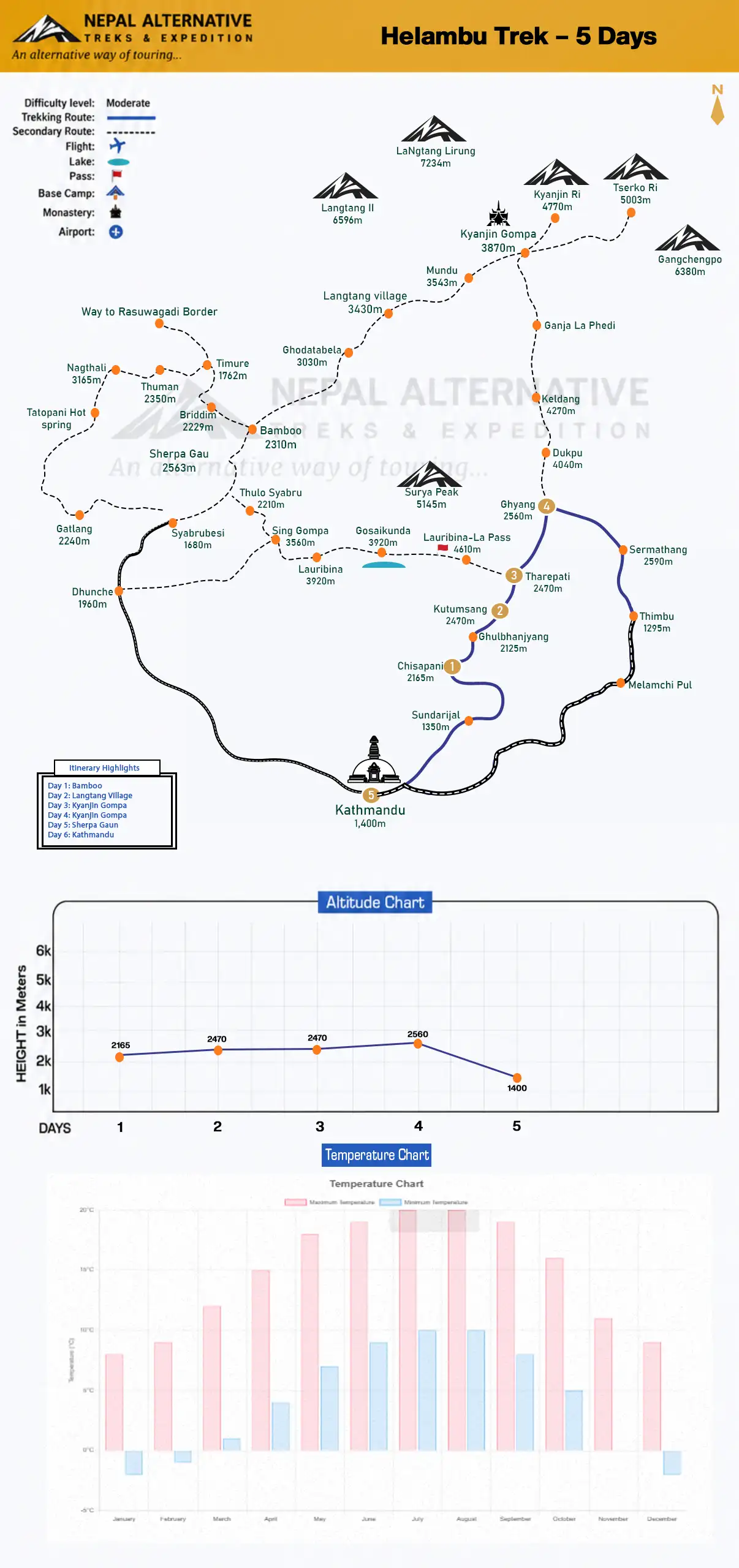
Route Map
Join our group departures
We do not have any scheduled group trips, but you are welcome to pick a date that suits you best.
Book a private trip on your own date.
Every journey we create is uniquely tailored to you. Share your interests and passions, and our travel experts will design an unforgettable adventure filled with extraordinary, one-of-a-kind experiences crafted just for you.
Additional Information
Cultural and Religious Influence in the Helambu Region
Buddhism is an important part of daily life in Helambu, and you can see its influence throughout the trek. As you walk through villages such as Kutumsang and Melamchigyang, you’ll see prayer flags along the trails, mani walls near homes and monasteries, and prayer wheels used by local people. Monasteries are important gathering places for the Hyolmo and Sherpa communities, where people come to pray and take part in religious ceremonies.
Furthermore, the Hyolmo and Sherpa communities have their own language, traditions, clothing, and customs, while their Buddhist practices share many similarities with those of the Tibetan communities. Walking clockwise around mani walls and spinning prayer wheels are common traditions that have been followed for generations.
If your trek coincides with a local festival, you may also get to see a more vibrant side of Helambu. During Losar, the Tibetan New Year, villages come alive with music, dancing, traditional clothing, prayers, and communal meals. Even outside festival periods, you can notice Buddhist traditions in everyday life, from butter lamps in home shrines to prayer flags around villages and monasteries. So, take time to visit a monastery or speak with local villagers to make your trek to Helambu more meaningful beyond its mountain scenery.
Is there any Altitude Safety and Risk Level during the Helambu Short Trek?
Helambu is a low-altitude, easy trek, with its highest point at Thadepati at 3,490 m. This is much lower than passes and base camps on treks such as Everest Base Camp or Annapurna Circuit, so most trekkers will not be at risk of Acute Mountain Sickness. Despite this, it is important to walk at a steady pace, drink plenty of water, and let your guide know if you get a headache, feel sick, or are tired, as these are the first signs of altitude sickness.
The trek’s gradual daily ascent works in the trekkers’ favor. Helambu’s highest point is on Day 2, and the descent into the Melamchi valley is not long enough for any symptoms of altitude sickness to show. This makes it a good choice for trekkers who haven’t climbed above 2,500 m before, or for those who want to find out how their bodies respond to altitude without risking a more challenging trek later.
However, altitude sickness can affect anyone, even those who are fit and have experience trekking at high altitudes. So, it’s better not to assume that it will not happen to you just because the altitude isn’t high. Basic first aid and knowledge of early symptoms are available from guides along this route, and lodges at Thadepati are equipped to accommodate trekkers who need a night to acclimatize if necessary.
Comparison With Other Short Treks in Nepal
The Langtang area has no shortage of short trekking options. Still, they don’t offer the same balance of experience, quality, and value. The comparison of Helambu Short Trek against three popular short treks near the capital is presented below, so you can see where it stands out in terms of culture, difficulty, and scenery.
| Feature | Helambu Trek | Nagarkot Hike | Shivapuri Hike | Langtang Valley Trek |
| Duration | 4 Days | 1 Day | 1 Day | 8 Days |
| Culture | Sherpa, Hyolmo villages | Limited | Minimal | Tamang villages |
| Difficulty | Easy | Easy | Easy | Moderate |
| Scenery | Forest, village, mountain views | Sunrise viewpoint only | Forest, park views | High mountain, glacier |
| Max. Altitude | 3,490 m | 2,175 m | 2,732 m | 3,870 m |
| Overall Experience | Balanced culture + mountains, short duration | Quick day trip, minimal immersion | Nature walk, low cultural exposure | Longer, deeper mountain trek |
The Helambu Short trek is best suited for trekkers who seek a blend of cultural and Himalayan experience in a short period. With only one week available, the trek is perfect for beginners, families, couples, corporate workers, and friends who have time-constrained vacations. However, the Nagarkot or Shivapuri trek is suitable for those who are looking for a brief natural experience with a sunrise view.
On the other hand, the Langtang Valley trek is longer. It provides a high-altitude trekking experience that requires proper preparation, acclimatization days, and physical fitness. Therefore, Helambu is the perfect balance trekking option, standing out for its cultural experience, scenic views, and easy walking conditions. It provides an authentic exploration of Sherpa or Hyolmo villages rather than tourist-oriented ones.
What Kind of Accommodation is Available Along the Helambu Trek?
Throughout the Helambu Trek, accommodation is in local teahouses and lodges, on a sharing basis. Rooms are basic, typically twin beds with communal bathrooms down the hall, but comfortable enough for this short trip. The majority of lodges are family-owned, making the overnight stays along the way more personal. Every lodge also serves as your dining room, and breakfast, lunch, and dinner are served fresh at each stop.
The facilities are slightly different from village to village. Hot showers and device charging are typically provided. There may be a small additional cost, and Wi-Fi is available in some lodges, especially around Kutumsang. Still, it becomes less reliable the higher up the mountain you go, near Thadepati. Blankets are available, but a lightweight sleeping bag liner is recommended for colder nights.
These extras are best brought along with a bit of extra cash, as there are no ATMs along the way. At the height of autumn, rooms can be booked up, so if you are traveling during this time, it is advisable to book in advance. Overall, the accommodation is basic but reliable and more than adequate for a trek of this length.
Why Helambu Is One of the Best Short Treks Near Kathmandu
The main advantage of the Helambu Trek is the location. The trip begins with a short jeep ride from Kathmandu. It is one of the very few treks in the Himalayas that don’t require a domestic flight or several days of bus travel just to reach the trailhead.
Beyond accessibility, the trek offers a great cultural experience. Communities of Sherpas, Hyolmos, and Tamangs, whose Buddhist culture, architecture, and lifestyle are relatively unaffected by mass tourism, reside in villages like Kutumsang and Melamchigyang. The landscape matches this culture: forest ridges, rhododendron woods, terraced fields, and clear views of the Langtang range, all at a comfortable altitude. This way, the Helambu trek is one of the best short treks near Kathmandu.
Why This Trek Works for Short Holidays From Abroad
For international travelers, vacation time is often the biggest constraint on trekking in Nepal. This is exactly where Helambu stands out. The entire trek can be completed in 4–7 days, including arrival and departure days in Kathmandu, with only 4 days of trekking and no domestic flight required to reach the starting point.
For those who wish to experience the Himalayas but are unable to commit to the two to three weeks required for treks such as Everest Base Camp or Annapurna Circuit, Helambu is a good option. No extra buffer days are needed for delays to mountain airstrips or extra acclimatization stops, as the route remains at a comfortable altitude.
The schedule is also flexible with international schedules. Trekkers who have a couple of extra days can add an extra day or two to the route towards Tarke Ghyang or Sermathang, or explore the Kathmandu Valley before or after the trek without changing the basic 4-day structure.
What You Actually Need to Pack for Trekking to Helambu
Head Wear
- Sun hat or scarf
- Winter hat or insulating hat, or a wide-brimmed hat
- Headlight with extra batteries
- Beanie
- Neck gaiter
Face
- Sunscreen
- Sunglasses with UV protection
- Face/body wipes
- Biodegradable bar soap
- Biodegradable washing liquid
- Throat lozenges, lip balm
- Hand sanitizer
Handwear
- Lightweight gloves
- Inner gloves
Bodywear
- Breathable underwear
- Long-sleeved shirt
- Hooded rain jacket and waterproof pants (June–August)
- Fleece jacket
- Lightweight cotton pants
- Trekking T-shirts and trousers
- Down jacket
- Sweater/thermal layer
Footwear
- Hiking boots
- Thick woolen socks (October–February)
- Sports shoes/sandals
- Fingers and toes warmer (October–February)
Toiletries
- Medium-sized drying towel
- Toothbrush
- Toothpaste
- Deodorant floss
- Biodegradable bar soap
- Nail clippers
- Small mirror
Backpack
- Duffel bag/Backpack (70–90 liter)
- Day pack/Rucksack (45–50 liter)
- Rain cover (June–August)
Sleeping
- Sleeping bag with liner (-15°C bag will suffice on most treks)
Personal Accessories
- Money
- Watch
- Cell phone
- Camera
- Water purification (pump, tablets, or drops)
- Water bottle
- Hiking poles
- Journal and pens
- Camera with extra batteries
- Small alarm clock
- Credit card and cash
- Camp towel
- Garbage bags
- Insect repellent
- Pocket knife
- Eye shade
- Ear plugs
- Book
- Cell phone in a waterproof case
- Cell phone charging cable
- Local SIM card (Namaste–NTC recommended)
Extra Items
- First aid kit
- Extra passport-size photos and photocopies of the passport
- Notebook and pen
- Binoculars
- Energy/protein bar
FAQs for Short Helambu Trekking
How many days is the Helambu Trek?
Is the Helambu Trek difficult?
Do I need a guide for the Helambu Trek?
What is the best time for the Helambu Trek?
Is the Helambu Trek suitable for beginners?
Can I do the Helambu Trek in 5 days?
Is the Helambu Trek better than the Ghorepani Poon Hill Trek?
Is the Helambu Trek suitable for families and children?
Is a porter necessary on the Helambu Trek?
Is a mobile network or Wi-Fi available on the Helambu Trek?
Can the Helambu Trek be combined with other treks?
What kind of food is available on the Helambu Trek?
Is travel insurance required for the Helambu Trek?
What is the starting point of the Helambu Trek?
Related Trips
View Detail For Mera Peak Climbing With Heli Return – 10 Days

Mera Peak Climbing With Heli Return – 10 Days
View Detail For Tamang Heritage and Langtang Valley Trek – 12 Days
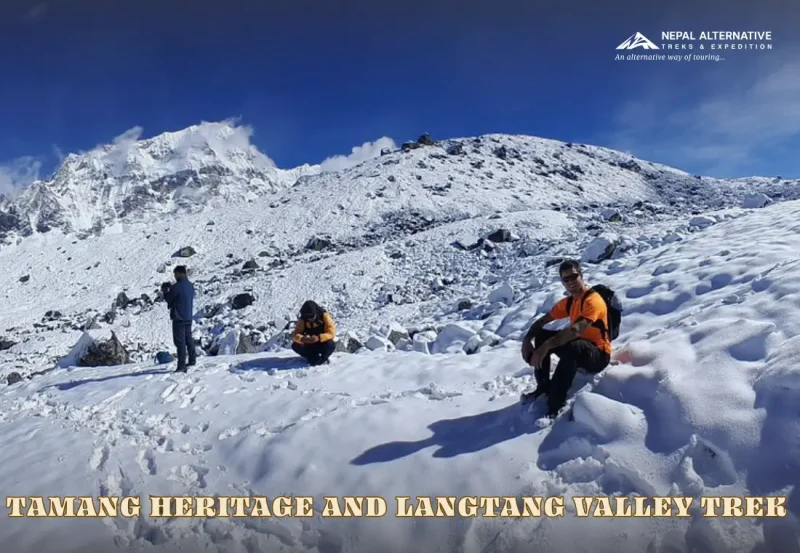
Tamang Heritage and Langtang Valley Trek – 12 Days