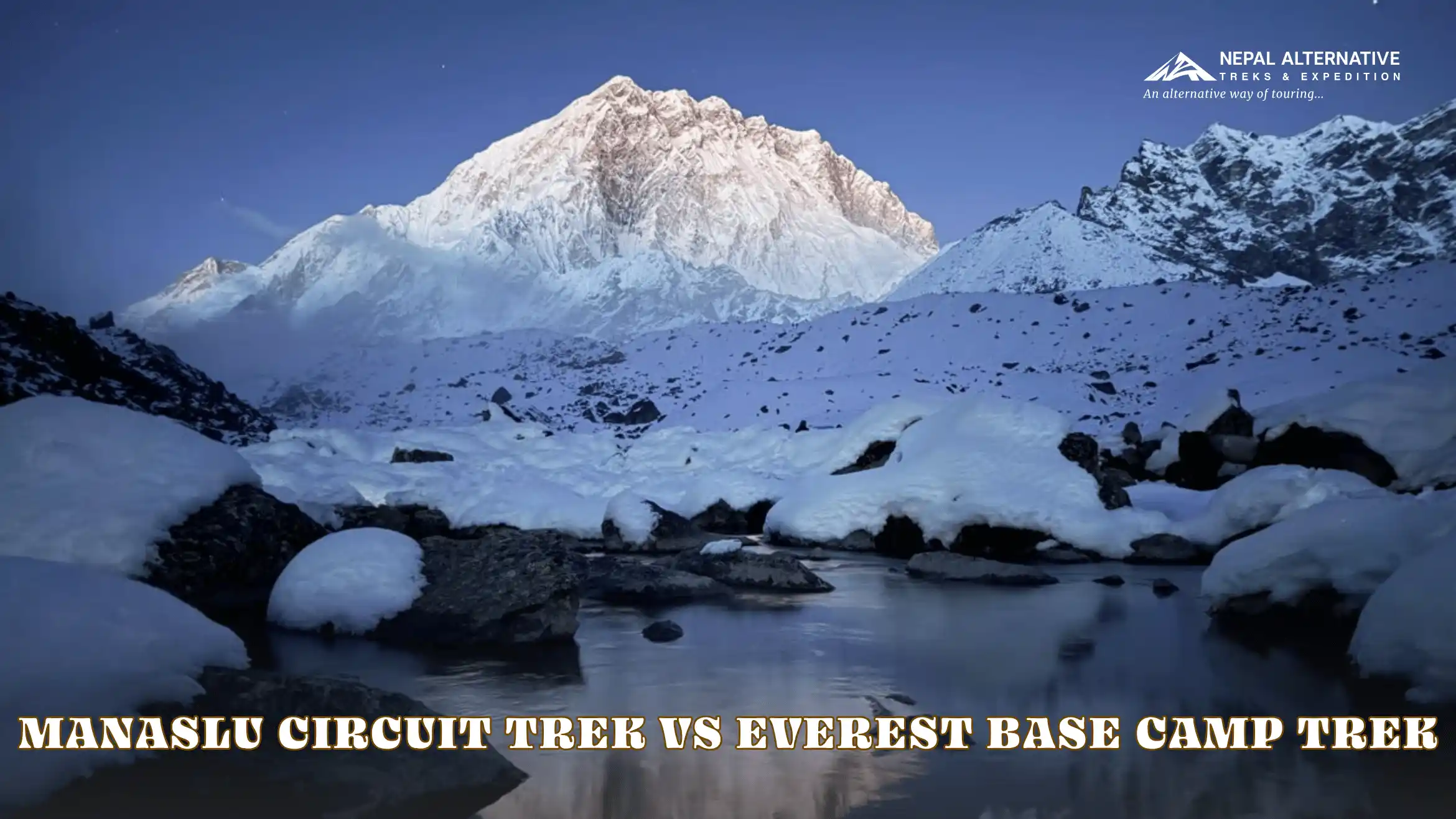
Choose the Manaslu Circuit Trek if you want a quieter restricted area trail, changing landscapes, traditional mountain villages, and a long pass crossing over Larkya La.
Choose the Everest Base Camp Trek if you want to walk through the Khumbu region, visit Everest Base Camp, see Everest from Kala Patthar, and have more tea houses and services along the trail.
Neither trek is better for everyone. The right choice depends on your time, budget, preferred scenery, comfort with remote trails, and how you handle high altitude.
This Manaslu Circuit Trek vs Everest Base Camp Trek comparison is for international travelers weighing two of Nepal’s best-known high routes. Package lengths, prices, and permit wording vary by agency and season. High-altitude trekking needs preparation. Follow your guide and a doctor’s advice. This page is not medical advice.
Manaslu Circuit vs Everest Base Camp: Quick Comparison
| Factor | Manaslu Circuit | Everest Base Camp |
|---|---|---|
| Trek type | Circuit (loop around Manaslu) | Out-and-back through the Khumbu, with a Kala Patthar side hike |
| Typical duration | Often 14 to 18 walking days. Shorter 12-day packages exist when the road head is used and rest days are tight. | Often 12 to 14 walking days. Longer trips add Gokyo, extra rest, or a slower Lukla buffer. |
| Approximate distance | Itinerary-specific. Longer circuits are often described around 175 km. Shorter packages cover less trail. | Itinerary-specific. Many standard trips are described around 130 km round trip. Side valleys change this. |
| Highest trekking point | Larkya La Pass, about 5,106 m (16,752 ft) | Kala Patthar, about 5,555 m (18,225 ft). Everest Base Camp itself is about 5,364 m (17,598 ft). |
| Highest overnight (typical) | A lodge below the pass, often around 4,400 to 4,500 m | Gorak Shep, about 5,100 m, before the Base Camp and Kala Patthar days |
| Overall difficulty | A long, remote pass day plus simpler high lodges. Grades vary by operator. | Higher sleeping and a famous, busier trail. Grades vary by operator. |
| Crowds | Usually quieter. Peak months still fill key lodges. | Busier in spring and autumn, especially Namche, Tengboche, and Base Camp |
| Scenery | River forest, Tibetan-influenced villages, Manaslu (8,163 m), pass day into a new valley | Khumbu peaks, glaciers, Namche and Tengboche, Everest views mainly from Kala Patthar |
| Culture | Restricted-area villages, gompas, mani walls, border-facing settlements | Sherpa villages, monasteries, a larger trekking economy |
| Accommodation | Tea houses. Simpler rooms and fewer beds at high stops | Tea houses with a denser lodge network at mid heights |
| Access | Usually a road start. No Lukla flight on the standard circuit | Flight to Lukla, or Ramechhap in peak congestion periods |
| Guide | Licensed guide required. Restricted-area trek. | Licensed guide required for foreign trekkers in the Khumbu on current practice. |
| Permits | Restricted-area permit plus conservation-area permits on the circuit and exit. | National park and local rural-municipality entry fees. |
| Cost pattern | Often lower than EBC because there is no Lukla flight. Restricted-area permits and a full camping or tea-house crew still add up. | Often higher because of Lukla logistics, busier trail services, and Khumbu pricing. |
| Best suited to | Trekkers who want a remote circuit and can handle a long pass day | Trekkers who want Everest, more services, and a famous trail |
Package prices are a starting floor, not the trip total. Flights, insurance, extra nights, tips, gear, and evacuation cover sit on top. Group size and season change the number.
Manaslu Circuit Overview
The Manaslu Circuit Trek is a loop around Mount Manaslu, the eighth-highest mountain on Earth at 8,163 m. You walk through the Manaslu Conservation Area, a mix of forest, river, farmland, and alpine ground in the Manaslu region. The trail is a restricted-area route. You trek with a licensed Nepali guide and a registered agency. That rule is not a marketing line. It is how the region is managed.
Days usually build from lower river villages such as Machha Khola and Jagat into Tibetan-influenced settlements toward Samagaon and Samdo. Monasteries, mani walls, and gompas sit along the way. Pungyen Gompa near Samagaon is a common side visit when weather and legs allow. The trail feels more remote than the Khumbu. Lodge rooms get simpler as you gain height. Peak-season beds can be tight at the last stop before the pass.
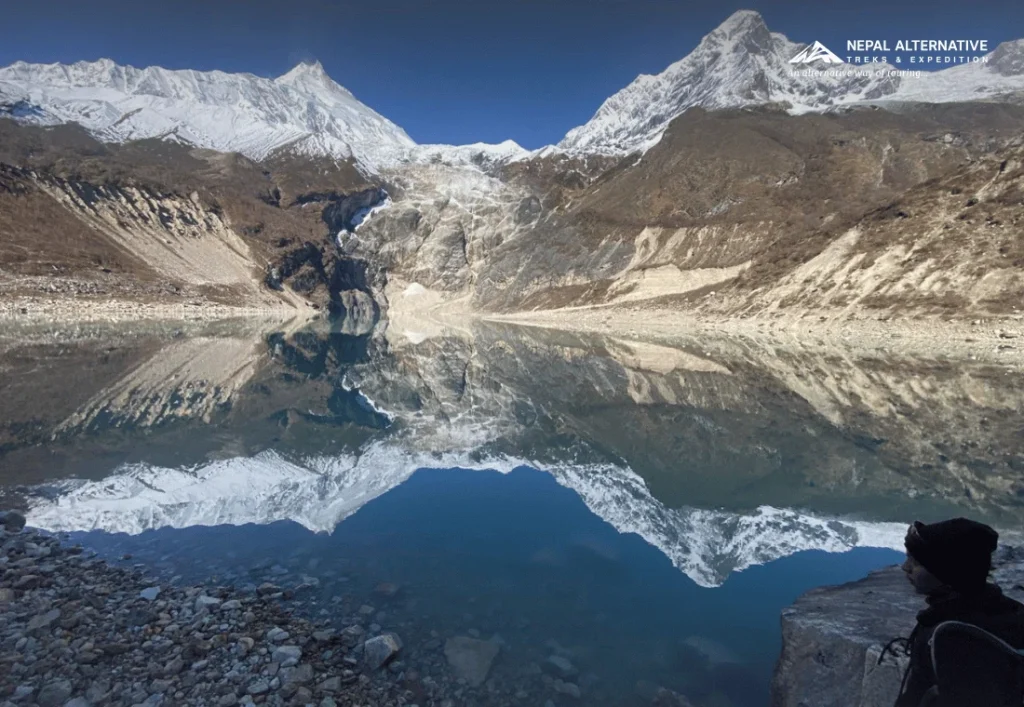
The pass day is the physical crux. Most itineraries sleep at a lodge below Larkya La, then cross the pass at about 5,106 m and descend a long way into a different valley, often to Bimthang. Walking hours on that day commonly run toward 8 to 10 hours, sometimes more in snow or slow groups. Weather, snow, and group pace change the clock. Fitness and a slow previous week matter more here than a single highest number on a brochure.
Operators label the trek anywhere from moderate to strenuous. Remoteness, the pass, and simpler high lodges make the week feel harder than a well-serviced trail with a similar sleeping height. People who like changing landscapes, fewer people, and a true circuit tend to enjoy it.
Everest Base Camp overview
The Everest Base Camp trek is an out-and-back through the Khumbu or Everest region. Most itineraries fly to Lukla, or to Ramechhap when Kathmandu to Lukla traffic is heavy, then walk via Phakding, Namche Bazaar, Tengboche, Dingboche or similar stops, Lobuche, and Gorak Shep. You visit Everest Base Camp at about 5,364 m. The highest point on a standard trip is usually Kala Patthar at about 5,555 m, which is the viewpoint for Everest, Nuptse, and neighboring peaks. Do not treat Base Camp and Kala Patthar as the same place.
Sherpa villages, prayer walls, and Tengboche Monastery sit on the well-known trail. Tea houses, charging, and shop supplies are denser than on Manaslu, especially below Namche. The route still has steep days, suspension bridges, and cold, windy hours on the upper valley. Many operators call it moderately challenging.
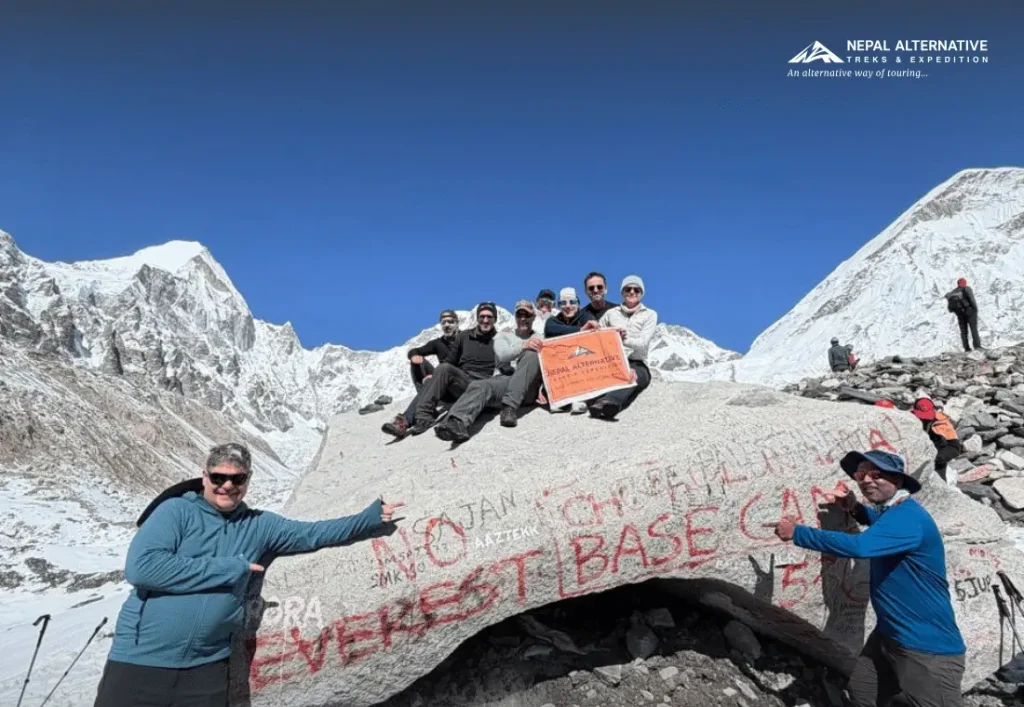
Trail traffic is high in spring and autumn. You share lodges, viewpoints, and the Base Camp path with other groups. That infrastructure is also why many first-time high-altitude trekkers pick EBC. People who want Everest, a known trail, and more services along the way tend to enjoy this trek.
Manaslu Circuit Trek vs Everest Base Camp: Detailed comparison
Difficulty and physical demands
Both treks are physically demanding, but the challenges are different.
Manaslu’s hard day is the pass. Everest Base Camp’s hard days are sleeping high and walking tired at 5,000 m. Difficulty is not only the highest point. Daily walking hours, steep ground, pass crossings, sleeping height, weather, and how fast you gain elevation all count.
On Manaslu, several days often run 6 to 7 hours or more. Lower-valley days can be long on river trails and stone steps before you ever see the pass. The Larkya La day is the longest. If you arrive tired, you have fewer fallback lodges than in the Khumbu.
On Everest Base Camp, days are still long. The Gorak Shep to Base Camp outing is often 8 to 10 hours round trip. The Kala Patthar morning is an early start from Gorak Shep, then a descent. The trail is busier and more built up, which can make logistics easier. It does not make the altitude easier.
Operator grades disagree because they count different things. A long pass day on Manaslu is demanding. Sleeping at Gorak Shep at about 5,100 m is also demanding. Judge the itinerary in front of you, not a single adjective.
Maximum altitude and altitude acclimatization
Both treks reach more than 5,000 m.
Larkya La on Manaslu is about 5,106 m. You do not sleep on the pass. You usually sleep at a lodge below it the night before, then drop hundreds of meters after the crossing.
Everest Base Camp is about 5,364 m. You visit it and return. Kala Patthar is higher, about 5,555 m. You sleep at Gorak Shep at about 5,100 m, which is higher than the usual Manaslu pre-pass lodge.
So EBC can mean a higher overnight and a higher viewpoint, while Manaslu means a high pass you cross in one push. People who only compare “max altitude” miss that difference. Rapid gain, poor sleep, and skipping rest days raise the risk on both routes. Descend if symptoms worsen. Use insurance that covers helicopter evacuation at these heights.
Trek duration and distance
There is no single official length for either trek. Side trips, extra acclimatization, road instead of flight, delayed Lukla weather, and private pacing all stretch or shrink the calendar.
Manaslu Circuit itineraries you will see on the open web commonly run 14 to 18 days when they start from a lower road head and keep rest days around Samagaon. Compressed 12-day versions exist. They usually mean a higher road start, fewer buffer days, and a faster pass. That is a product choice, not a mountain rule.
Everest Base Camp itineraries commonly run 12 to 14 days Kathmandu to Kathmandu. Some agencies sell 11-day dashes. Others add Gokyo or extra Namche rest and reach 16 days or more. Lukla weather alone can add a night at either end.
Distance is itinerary-specific. Many EBC pages quote about 130 km round trip and say the figure changes with the chosen route. Many longer Manaslu pages quote around 175 to 177 km. Treat those as their itineraries. A shorter Manaslu package covers less trail because it joins the circuit later or skips side visits.
As an example of one compressed pair, our live 9 days Short Manaslu Trek and 9 days EBC trek with helicopter return.
Scenery and mountain views
Manaslu gives you a changing valley: lower forest and river, then alpine pasture, then a pass, then a different valley toward Bimthang. You walk around Manaslu itself. Himalchuli and other peaks appear depending on the weather and viewpoint. The pass day is the big visual reset.
Everest Base Camp is the Khumbu: Ama Dablam, Nuptse, Lhotse, the Khumbu Glacier, and Everest from Kala Patthar. Base Camp itself is a glacier camp, not the best Everest viewpoint. If the photograph in your head is “Everest filling the sky,” that is usually Kala Patthar, not the Base Camp memorials.
Pick Manaslu if you want a circuit that keeps changing. Pick EBC if the Khumbu skyline is the point of the trip.
Culture and villages
Both Manaslu Circuit and Everest Base Camp routes offer strong cultural experiences, but they are different.
Manaslu passes through villages with strong Tibetan influence. Buddhist traditions, monasteries and local mountain communities are an important part of the route. Also, it passes border-facing settlements such as Samdo. The restricted-area rules exist because this is a controlled cultural and ecological zone.
In contrast, EBC passes through Sherpa villages and Buddhist monasteries in the Khumbu. Places such as Namche Bazaar and Tengboche are important stops along the trail. EBC also has a long history of tourism, so the local economy is closely connected to trekking.
If cultural experience is important to you, look at the villages and overnight stops included in the itinerary rather than choosing based only on the name of the trek.
Crowds and remoteness
Manaslu is generally quieter because of restricted-area rules and a thinner lodge line. Peak months still fill the last lodge before the pass and popular villages. Remoteness means fewer backup lodges and slower help if you need a spare room or a rest day mid-route.
Everest Base Camp is busier in spring (March to May) and autumn (September to November). That crowd also means more tea houses, more porters on the trail, and more options if one lodge is full. Shoulder weeks and careful start dates change how busy it feels. Do not assume Manaslu is empty, and do not assume EBC is unbearable.
Accommodation, food, internet, and comfort
Both treks use tea houses. Rooms are usually twin beds, shared bathrooms at higher stops, and a dining hall stove. On Manaslu, high lodges are simpler, with limited rooms and shared sleeping spaces in peak season. EBC has a larger and more developed network of tea houses. Also, the lodge network at EBC is thicker below the upper valley. But still does not guarantee hot showers, stable Wi-Fi, or charging at every stop.
Electricity, hot showers and internet may cost extra on both routes, particularly at higher elevations. Internet and mobile data can also be unreliable. Do not plan work calls from the last lodge before Larkya La or from Gorak Shep. Eat what the lodge can cook that day. Carry the snacks you actually use and eat.
Permits, guides, and regulations
For the Manaslu Circuit, trekkers normally need a Manaslu restricted area permit (often called a Manaslu RAP), a Manaslu Conservation Area permit (MCAP), and an Annapurna Conservation Area permit (ACAP) because the usual circuit exits toward that side. A licensed guide is mandatory on this restricted-area trail. Recent notices have allowed a single person to obtain a Manaslu RAP, replacing an older two-person minimum.
For Everest Base Camp, trekkers normally need a Sagarmatha National Park fee and a Khumbu Pasang Lhamu Rural Municipality entry fee. TIMS is not named on every operator’s EBC page. Do not add a TIMS line until operations confirms it for the product you are selling.
Most full-board packages include these permit and guide costs in the published price, including ours. On our Manaslu Circuit Trek package, restricted-area and conservation permits plus a licensed guide are listed in the inclusions. On our Everest Base Camp Trek package, park and local entry fees plus a licensed guide are listed in the inclusions. Always read the inclusion list for the exact departure you book, because a cheap quote may leave permits or guide days out.
Cost comparison
Cost is not one number. It is permits, transport, lodges and meals, guide and porter, flights, kit, insurance, tips, and a delay buffer. Season, group size, and how many rest days you buy all move the total.
Manaslu is often cheaper on paper because the standard circuit starts by road and does not need a Lukla flight. You still pay restricted-area permit fees, conservation permits, and a full guide (and usually porter) team for every day on the trail. Remote lodges can be simple. They are not free.
Everest Base Camp can cost more because of flights, higher costs in the Khumbu and the logistics of a popular trekking route.
Neither figure is the trip total unless the quote also covers international flights, travel insurance with helicopter rescue at these altitudes, Kathmandu hotels outside listed nights, tips, personal gear or rental, extra tea-house charges (showers, charging, bottled drinks), and optional helicopter exits.
As one live example on 21 September 2026, our 12-day Manaslu Circuit page lists USD 760 per person for 1-4 pax (standard amount shown as USD 860). Our 12-day Everest Base Camp page lists USD 1,250 per person for 1-4 pax (standard amount shown as USD 1,350). Larger groups have lower per-person rates on the same pages. Those are package floors for those two products, not a market-wide price law. Ask for a written inclusion list rather than a single “Everest is X, Manaslu is Y” slogan.
Best trekking seasons
Spring (March to May) and autumn (late September to November) are the best seasons for both treks. Autumn often means clearer mountain views. Spring means rhododendron at lower elevations and more traffic.
Monsoon (June to August) brings rain, leeches on lower trails, cloud on the passes, and landslide risk on Manaslu road heads. Winter means cold lodges, snow on Larkya La and the upper Khumbu, and a higher chance the pass or Kala Patthar day does not go. Lukla flights cancel in bad weather in every season. There is no perfect month for every traveler.
Safety and acclimatization
Altitude is one of the main safety concerns on both treks. Thus, walk at a steady pace, stay hydrated and follow the acclimatization schedule in your itinerary. Learn the early signs of altitude illness (headache, nausea, unusual fatigue, poor sleep, confusion). If symptoms become worse, do not continue climbing just to stay on schedule. Descending may be necessary.
Before your trek, check that your travel insurance covers high-altitude trekking and helicopter evacuation. Tell your guide about heart, lung, or previous altitude problems before you book. Weather and trail conditions still cancel pass or viewpoint days. This section does not replace a doctor or a guide’s call on the mountain.
Which trek should you choose?
| Choose Manaslu Circuit if you | Choose Everest Base Camp if you |
|---|---|
| Prefer quieter trails and a full circuit | Want Mount Everest and the Khumbu peaks |
| Are fine with simpler high lodges | Want a denser tea-house network |
| Want Tibetan-influenced villages on a restricted-area trail | Want Namche, Tengboche, and the classic Everest walk |
| Can handle a long Larkya La day | Can handle Gorak Shep sleeping height and an early Kala Patthar start |
| Prefer a road start over a mountain flight | Accept Lukla (or Ramechhap) flight risk |
Can you do both Manaslu Circuit and Everest Base Camp treks?
Yes, but you can walk both in one Nepal visit only if the calendar, budget, and recovery are honest. Each trek is already a full high-altitude week plus travel days. Stacking them without a rest block in Kathmandu piles altitude exposure on tired legs, blisters, and a weaker immune system.
Time is the first filter. A compressed Manaslu package plus a compressed EBC package plus two international flights is not “two extra weeks.” Count Kathmandu arrival, permit office days, the road or flight to each trailhead, a buffer for Lukla weather, and at least several rest nights between the two. Many people who try to force both into three weeks cut rest days on the second trek. That is where altitude problems show up.
Order matters. Doing Manaslu first, recovering in Kathmandu, then flying to Lukla gives you one road-access trek before you gamble on mountain weather. Doing EBC first can feel familiar, then Manaslu’s simpler lodges and pass day hit harder on tired knees. There is no official medical sequence. There is only load plus recovery.
Budget doubles more than people expect. You pay two sets of permits, two guide teams, two trailhead transfers, and two rounds of tips. Insurance must cover both regions and helicopter rescue at the higher of the two sleeping heights. A delayed Lukla flight can eat the gap you needed before Manaslu’s restricted-area permit window.
Most travelers are better doing one trek well, then coming back. If you still want both in one trip, plan it as two separate bookings with a named rest block, not as one endless itinerary. Talk through gap days, insurance, which trek comes first, and what you will cancel if the first trek runs long. Do not treat it as two easy walks in a row.
Conclusion
Choose Manaslu if you want a quieter restricted-area trek, a full mountain circuit, changing valleys and the Larkya La pass. Choose EBC if your main goal is Everest, Kala Patthar and the classic Khumbu trekking experience.
Before booking, compare the actual itineraries, walking hours, rest days, accommodation, permits and inclusions. The cheaper package is not always the cheaper trip once flights, insurance and other costs are added. The best choice is the trek that fits your time, budget, fitness and preferred type of experience.
FAQs
Is Manaslu harder than Everest Base Camp?
Both are demanding high-altitude treks. Manaslu has a long Larkya La pass day, while EBC involves several days of walking and sleeping at high altitude. The harder trek for you will depend on your fitness, experience, acclimatization and how you respond to altitude.
Is Manaslu cheaper than Everest Base Camp?
Manaslu Circuit trek is often cheaper because there is no Lukla flight. However, the final price depends on the package, group size, season, permits and what the company includes. Always compare the full package rather than the headline price.
Is Everest Base Camp suitable for beginners?
People without previous high-altitude trekking experience do complete EBC, but it should not be treated as an easy hike. A suitable itinerary with acclimatization days is important. You should also be prepared for long walking days and high altitude.
Which trek has better mountain views?
EBC is the best choice if your main goal is to see Everest and the Khumbu mountain range. Manaslu offers a wider change of scenery as you move around the circuit and gives you views of the Manaslu massif.
Which Manaslu Circuit trek or Everest Base Camp is less crowded?
Manaslu Circuit is quieter than EBC trek. EBC is more popular and has more trekkers, especially during spring and autumn.
Do I need a guide for Manaslu?
Yes. Manaslu is a restricted trekking area, and a licensed guide and registered trekking agency are required.
Which trek has more altitude risk?
Both involve high altitude. EBC reaches a higher maximum point at Kala Patthar, while Manaslu involves crossing Larkya La at about 5,106 m. The risk of altitude sickness depends on more than the highest point. The rate of ascent, sleeping altitude and acclimatization schedule are also important.
Can I trek Manaslu or EBC solo?
Manaslu has specific guide and agency requirements because it is a restricted area. For EBC, current guide requirements should be confirmed before the trek. Even where independent trekking is permitted, high-altitude trekking carries risks, so your route, insurance and emergency plan should be clear before you leave.
How many days do I need for EBC and Manaslu Circuit Trek?
A typical Manaslu Circuit Trek takes around 14 to 18 days. A typical EBC trek takes around 12 to 14 days. The exact duration depends on your starting point, acclimatization days, side trips and travel arrangements.