Nar Phu Valley with Annapurna Circuit Trek Overview
15 Days Nar Phu Valley with Annapurna Circuit Trek is a very underrated trekking destination in Nepal. This trek takes you to the off-beaten and remote areas of the Annapurna region. The Nar Phu Valley trek is less commercialized than other trekking spots like Annapurna Base Camp or Annapurna Circuit Trek. Nar Phu Valley Trek is a lifetime opportunity to indulge in exciting adventures across the region. You will pass through several terrains, from lush jungles, peaks and valleys, barren grasslands, and rhododendron forests to alpine snow-capped mountains.
You will touch some of Nepal’s remote places during your Nar Phu Valley Trek. However, you will not only be trekking towards Nar Phu Valley but also return to the Annapurna Circuit. After exploring Nar Phu Valley, you return to join the trail of the Annapurna Circuit Trek through Manang.
There are several major attractions that you can explore during your Nar Phu Valley Trek. They are Besi Sahar, Phu Gaon, Kang La Pass, Manang, Yak Kharka, Muktinath, Thorong La Pass.
So, if you are still unsure about the Nar Phu Valley Trek and need some convincing, this guide will provide all the information.
Routes of Nar Phu Valley with Annapurna Circuit Trek
The trek begins from Besisahar. From Besisahar, we enter the Manang region and explore the Koto, Meta, Phu, Nar, and Ngawal villages. Along the trek, you can get a majestic view of the Annapurna and Dhaulagiri ranges, including the Tilicho peak (7134m), Himlung Himal (7126m), and Gangapurna (7455m). Observe the Buddhist Chortens (temples), prayer flags, and famous monasteries such as Tashi Lakhang Gompa in the stunning Phu Valley.
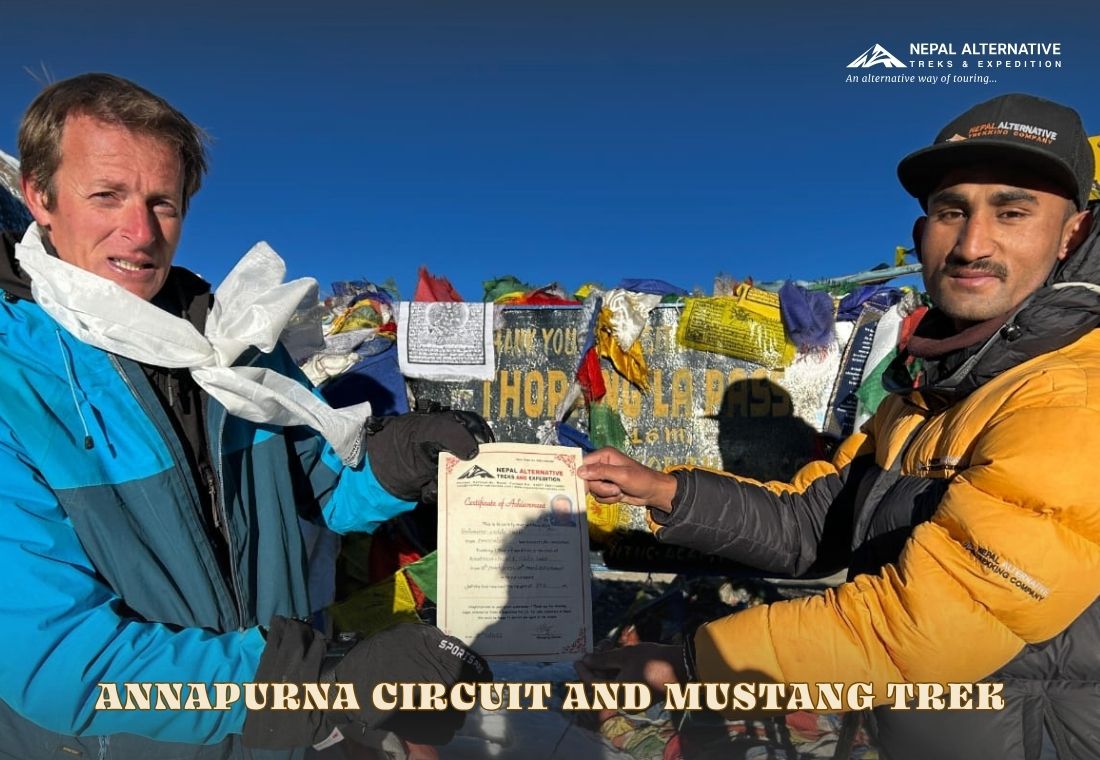
After exploring the Manang region, you enter the Annapurna region via the famous Thorang La Pass (5416m). You will visit the historical temple of Muktinath, which is sacred to both Hindus and Buddhists across the globe. You can explore the flora and fauna of the Annapurna Conservation Area as you pass through the thick forests of rhododendrons and wild oaks.
At the end of this trek, you will also explore the beautiful city of Pokhara. You can indulge in activities such as boating in the Phewa Lake, cycling to Pame, paragliding, and visiting famous heritage sites such as World Peace Stupa, Begnas Lake, and Sarangkot.
The best season for this trek is during autumn (September-November) and spring (March-May). This is because temperatures during these seasons are mild, with fewer chances of unpredictable weather.
Where is Nar Phu Valley located?
Nar Phu Valley is located in the Annapurna region. It joins the villages Nar and Phu near Chame from the north of Mount Annapurna in the Manang district. These remote settlements offer stunning views of the valley and mountains.
Nar-ten village only has 300 permanent residents, whereas Phu-ten only has 200. Nar-Phu villages are extraordinary because they are very far from the tea line, so during the winter season, you can’t access the villages due to heavy snow.
The people of these villages are very far from Western culture. They still work as a yak herder and sell meats, hides, and wool. Nar Phu Valley lies at the touchable distance from the Annapurna Circuit trek so that trekkers can add few more days on their trek to experience the beauty of Nar-Phu Valley.
So, trekking Nar Phu Valley can be challenging, but if you have a chance, do not miss it.
Can Beginner Trek to Nar Phu Valley?
Yes, beginners can trek Nar Phu Valley and don’t need mountain climbing and trekking training. However, due to some unique circumstances, this trek is more difficult than others. Since Annapurna Circuit Trek is quite challenging for beginners adding Nar Phu Valley in the mix is certainly even more daunting.
Nar Phu Valley is one of Nepal’s most remote and isolated destinations, making it one of the most challenging trek for beginners. Although trek difficulty varies from person to person, some major factors increase or decrease any trek’s difficulty.
Fitness
One of the major factors that influences the difficulty of your trek is your fitness level. Nar Phu Valley trek is a long-distance trek that takes several days to complete. The roads are not always straight as you pass through various complicated terrains and rugged trails. So, you must be physically fit to enjoy your trek and not always be tired. Before booking your trek, practice cardiovascular, breathing, and strength exercises.
Weather and Climate
Even if you are an expert in trekking and peak climbing, the trek becomes more difficult if you choose a time with bad weather and climate. It becomes even more challenging if you are a beginner. Trekking in the monsoon and winter seasons creates more difficulty for beginner trekkers.
Altitude
Altitude is another major factor in trek difficulty. You might not know the importance of gradually climbing height and acclimatization as a beginner. Failure to do so will result in altitude sickness. Since Nar Phu Trek is at an altitude of 5320m, the chances of altitude sickness increase even more. Furthermore, the weather changes constantly at high altitudes.
Trek to the restricted area of Nar Phu Valley in the Manang region.
Visit the famous monastery, Tashi Lakhang Gompa, in Phu Valley.
Interact with the local Gurung and Tibetan people and learn about their culture, tradition, and cuisine.
Hike to Nepal’s highest mountain pass, Thorong La Pass, and enjoy the majestic views of the mountains like Annapurna II, Hiunchuli, Dhaulagiri, Fishtail, etc.
Explore the beautiful city of Pokhara.
Visit Muktinath temple, one of the most sacred temples in Nepal.
15 Days Nar Phu Valley with Annapurna Circuit Trek Itinerary
Day 1
Drive to Besisahar
Day 1 Facts
Trekking Time Average
160km Drive
(Avg. 6hrs)
Accommodation
Hotel yumpo or similar category
Altitude
(860m./2838ft.)
Included meals
Lunch, Dinner
On the first day of our 15 Days Nar Phu Valley Trek, we will leave Kathmandu early in the morning by bus and travel to Besisahar. You can view beautiful landscapes, eye-catching terrains, and rivers like the Trishuli and Marsayangdi. You can also catch a glimpse of mountains such as Lamjung Himal (7983m), Peak 29 (7871m), and Manaslu (8156m). Overnight in Besisahar.
Day 2
Drive to Koto
Day 2 Facts
Trekking Time Average
54km Drive
(Avg 4hrs)
Accommodation
Mountain View or similar category
Altitude
(2630m./8679ft.)
Included meals
Breakfast, Lunch, Dinner
On the second day of Nar Phu Valley Trek, a bus will drop you off at Besisahar, where you will change vehicles and drive to Koto. The roads in these regions are not well-developed so that the ride might get bumpy. However, the scenery makes up for it. Along the way, you can see a beautiful waterfall and come across villages such as Kotro and Dharapani before finally reaching Koto. Overnight in Koto.
Day 3
Trek to Meta
Day 3 Facts
Trekking Time Average
16km Hike
(Avg 6hrs)
Accommodation
Zambala Hotel or similar category
Altitude
(3550m./11715ft.)
Included meals
Breakfast, Lunch, Dinner
Today is the third day of the Nar Phu Valley Trek. After breakfast, we begin our trek to the restricted area of Meta. You will require a Restricted Area Permit to trek further into the region. You will come across the Naar Khola, dense forests of oaks and pine, and cross a suspension bridge before reaching the village of Dharmasala. A couple of hours of walking from here, you reach Meta. The total trek lasts around 6 hours today. Overnight in Meta.
Day 4
Trek to Phu Village
Day 4 Facts
Trekking Time Average
16km Hike
(Avg 6hrs)
Accommodation
Norling Hotel or similar category
Altitude
(4080m./13464ft.)
Included meals
Breakfast, Lunch, Dinner
On the fourth day of our trek to Nar Phu Valley, we woke up early. After breakfast, we make our way into the famous village of Phu. We will encounter many suspension bridges across small streams and rivers and pass through small villages such as Kyang, Jhunam, and Chyakhu. You will also notice the colorful prayer flags and small Buddhist Chortens along the way. After hiking over the small canyons, ridges, and rocky trails along the Phu Khola, we finally reach Phu Village. Overnight in Phu.
Day 5
Excursion around Phu valley.
Day 5 Facts
Trekking Time Average
Excursion around
Accommodation
Norling Hotel or Similar category
Altitude
(4080m./13464ft.)
Included meals
Breakfast, Lunch, Dinner
Today, we will take a one-day break at Phu Valley, allowing us to acclimate to the environment and explore the region. You will first want to visit the Tashi Lakhang Gompa, a famous monastery built by Karma Sonam Rinpoche, who came to Nepal with the Dalai Lama in 1959. You can spend the rest of the day with the local Gurung and Tibetan people. It is a great chance to learn about their culture and traditions. Overnight in Phu.
Day 6
Trek to Nar Village
Day 6 Facts
Trekking Time Average
16km Hike
(Avg 6hrs)
Accommodation
Khangla inn /Nar Guest House
Altitude
(4110m./13563ft.)
Included meals
Breakfast, Lunch, Dinner
After breakfast, we will make our way to Nar Village. We will retrace our steps to Meta and go to Nar Phedi. You will stop here for lunch and rest for a while. After walking further away from Nar Phedi, you will encounter suspension bridges over the Labse River. Across the hill lies the village of Nar. Overnight at Nar.
Day 7
Trek to Ngawal via Kang la Pass (5306m.)
Day 7 Facts
Trekking Time Average
18km Hike
(Avg 8hrs)
Accommodation
Hotel Mountain View or similar category
Altitude
(3660m./12078ft.)
Included meals
Breakfast, Lunch, Dinner
Today’s trail is a bit longer, so starting our trek before sunrise is best. We will go to Ngawal via the famous Kang La Pass (5306m), from which we can get a fantastic view of the Annapurna and Dhaulagiri massifs.
This trail may seem difficult due to the sudden rise in altitude, but it gets relatively more comfortable as we make our way downhill from the Kang La pass. Once you reach Ngawal, you will notice that it is more developed than the previous villages in the region. You will find Wi-Fi facilities in the lodges. Overnight in Ngawal.
Day 8
Trek to Manang
Day 8 Facts
Trekking Time Average
16km Hike
(Avg 7hrs)
Accommodation
Tilicho Hotel/Hotel Gangapurna
Altitude
(3540m./11682ft.)
Included meals
Breakfast, Lunch, Dinner
After breakfast, we will head towards the beautiful Manang Valley. As we hike downhill across the steep rocky trail, we reach Braga, where you can explore some small Buddhist monasteries. You will descend to Manang after an hour of trekking from Braga. Manang is a town located near the Nepal-China border. You will meet the ethnic Gurung and Tibetan people here. Overnight in Manang.
Day 9
Acclimatization day at Manang – Exploration around.
Day 9 Facts
Trekking Time Average
Excursion around
Accommodation
Tilicho Hotel/ Gangapurna Hotel
Altitude
(3540m./11682ft.)
Included meals
Breakfast, Lunch, Dinner
Today, we will rest at Manang to acclimatize ourselves to the surroundings and explore this beautiful valley. You can hike to Chhunker viewpoint, from where you get a spectacular view of Gangapurna Lake (3550m) along with the Annapurna massif, Tilicho Peak (7134m), Pisang Peak (6091m), and Chulu Peak (6429m). While coming downhill from the viewpoint, you can also visit the Cave Gompa, a monastery inside a cave. Overnight in Manang.
Day 10
Trek to Ledar
Day 10 Facts
Trekking Time Average
8km Hike
(Avg 4hrs)
Accommodation
Dhading Laxmi Hotel or similar category
Altitude
(4110m./12563ft.)
Included meals
Breakfast, Lunch, Dinner
After breakfast, we begin our trek to Yak Kharka today. This is an uphill climb through steep terrain and rocky ridges before reaching a small stop named Batase Danda. After having lunch, we make our way through the forests of rhododendrons, juniper, pines, and oaks before reaching Yak Kharka. Yak Kharka is a place where farmers take their yaks for grazing. After lunch, you ascend and continue for 45 minutes to reach Ledar. Overnight in Ledar.
Day 11
Trek to Thorong Phedi
Day 11 Facts
Trekking Time Average
8km Hike
(Avg 4hrs)
Accommodation
Thorong Phedi Base Camp Lodge or similar category
Altitude
(4400m./14520ft.)
Included meals
Breakfast, Lunch, Dinner
After breakfast at Yak Kharka, we begin our hike to Thorong Phedi. Since there will be a sudden rise in altitude, we will hike slowly and gradually. After hiking past a couple of ridges, we reach Ledar. We then cross a wooden bridge across the Marsayangdi River to reach Thorong Phedi. You can spend the rest of the day acclimatizing or hiking to the Thorong High Camp to witness the stunning view. Overnight in Thorong Phedi.
Day 12
Trek to Muktinath via Thorong La pass (5416m.)
Day 12 Facts
Trekking Time Average
18km Hike
(Avg 9hrs)
Accommodation
Town House or similar category
Altitude
(3800m./12540ft.)
Included meals
Breakfast, Lunch, Dinner
Today will be the toughest part of the trail as we will cross the Thorong La Pass (5416m), the highest mountain pass in Nepal. From Thorong La pass, you get a majestic view of the Manang Valley, Kali Gandaki Valley, and Mustang region. You can spend some time here marveling at the beautiful view. As you descend to Chabarbu, it is only a couple of hours of walking before you reach Muktinath. Overnight in Muktinath.
Day 13
Trek to Jomsom
Day 13 Facts
Trekking Time Average
18km Hike
(Avg 6hrs)
Accommodation
Hotel Himalaya or similar category
Altitude
(2670m./8811ft.)
Included meals
Breakfast, Lunch, Dinner
Muktinath temple is an ancient temple sacred to both Hindus and Buddhists. We will explore the temple of Muktinath in the early morning and make our way to Jomsom. This trail is easier as it is mostly downhill as we go through alternative trail Lubra village, where we get a fantastic view of Nilgiri Himal (7061m) and the Dhaulagiri region as well as ancient buddhism bon relegion practice. We will stop there for lunch as we make our way along the Kali Gandaki River to the windy city of Jomsom. Overnight in Jomsom.
Day 14
Fly to Pokhara – City tour
Day 14 Facts
Trekking Time Average
22mins flight – City tour
Accommodation
Hotel Kausi
Altitude
(820m./2706ft.)
Included meals
Breakfast
After breakfast, we will catch our flight back to Pokhara. If you’re lucky enough to get a window seat, you can catch the last glimpse of the beautiful landscapes and terrains of the Mustang region. It is a 22-minute flight. After you reach the hotel and refresh, you can explore the majestic city of Pokhara. Pokhara is one of the famous tourist destinations in Nepal, offering opportunities to enjoy adventure sports like paragliding and zip-lining. You can also visit some of the famous sites in Pokhara, like Sarangkot, World Peace Stupa, Begnas Lake, Fewa Lake, and so on
Day 15
Drive to Kathmandu
Day 15 Facts
Trekking Time Average
200km Drive to Kathmandu
(Avg 6hrs)
Altitude
1295m./4273ft
Included meals
Breakfast
You will leave Pokhara by luxurious tourist bus at 7:00 a.m. We will stop for lunch in Malekhu, famous for the fish from the Trishuli River. You will reach Kathmandu in the late afternoon. In the evening, you can stroll around the streets of Thamel and buy some souvenirs as a memento.
What’s Included
Pick Up at Tribhuwan International Airport and Transfer to Hotel in Kathmandu.
One night hotel accommodation ( Hotel Kausi) in Pokhara.
Lodge ( Twin share basis) accommodation during the trekking.
All meals ( Breakfast, Lunch, Dinner) along the trek.
One highly experienced, first aid trained, fluent English speaking, friendly and government authorized trekking guide
1 Porter per 2 Trekkers and keep luggage weight under 10kg per person.
Guide/ Porter’s food, accommodation, salary, insurance, transportation and equipments.
Overland transportation as per mentioned in the itinerary.
Jomsom- Pokhara by flight.
Nar Phu valley Permit and Annapurna conservation area project ( ACAP) and necessary permits .
A trekking map, duffle bag, Oxygen saturation check up everyday, water purification, Trekking completion certificate and company T-shirt etc.
Government tax and service charge etc.
Assistance for emergency rescue evacuation.
Public Liability Insurance.
What’s Not included
Hotel accommodation and meals in Kathmandu.
Hard and soft table drinks such as tea/coffee, coke, fanta, mineral water, beer, desert, battery charge, hot shower, laundry, phone bill and bar bill.
Personal Travel insurance.
International Flight Tickets.
Nepal Tourist Visa
Tips for guide and porters. ( Highly suggested).
Add-ons and Options
These add-ons give you more control over travel, gear, and comfort on the Nar Phu Valley with Annapurna Circuit Trek, plus city tours, rafting, flights, and hotel or lodge upgrades.
Process to include add-ons during booking:
Book the Trip → choose your Nar Phu + Annapurna Circuit departure → open the add-ons list → pick desired add-ons and specify quantity → complete booking.
Add-ons and options:
Pokhara to Kathmandu by VIP Sofa Tourist Bus (USD 15 per person): Travel from Pokhara to Kathmandu by tourist bus with more comfortable seating.
Private Vehicle Transfers Pokhara to Kathmandu: Use a private car (USD 100), jeep (USD 150), or van (USD 200) to travel between Pokhara and Kathmandu for a more flexible journey.
Gear Rental: Rent essential trekking gear like a sleeping bag (USD 15), a jacket (USD 15), a pair of crampons/spikes (USD 15), and a pair of poles (USD 15) suited to Nar Phu and Annapurna conditions.
Pokhara Sightseeing (USD 30 per person): Explore Pokhara’s lakeside, viewpoints, and main attractions with a guided tour after your trek.
Rafting at Trishuli River (USD 45 per person): Add a Trishuli rafting trip for a fun day on the river before or after your trek.
Kathmandu City Tour (USD 30 per person): Visit major temples, heritage squares, and markets in Kathmandu with a guide as an extra cultural add-on.
Pokhara to Kathmandu by Flight (USD 120 per person): Fly from Pokhara back to Kathmandu to save time.
Paragliding in Pokhara (USD 90 per person for 45 minutes): Enjoy a tandem paragliding flight above Pokhara with mountain and lake views.
Zipline in Pokhara (USD 80 per person): Experience a fast zipline ride near Pokhara as a short adventure.
Upgrade Accommodation in Pokhara (USD 150 per night for a double/twin share room with breakfast): Upgrade to a higher-standard hotel in Pokhara with breakfast included.
Upgrade Lodge Accommodation during Trek – Mountain Lodges of Nepal (MLN) (USD 450 per person, double/twin share on AP plan): Upgrade selected nights (1 night in Chame, 2 nights in Manang, and 1 night at Lo Mustang Resort in Muktinath) to Mountain Lodges of Nepal with room, breakfast, lunch, and dinner included.
Everest Skyline Flight 1 hour (USD 300 per person): Enjoy a 1-hour Everest skyline flight with private airport pick-up and drop-off in Kathmandu. The plane remains in the air for mountain views and does not land.
Nar Phu Valley with Annapurna Circuit Trek – 15 Days Temperature chart
January
-10°C to 5°C
February
-8°C to 6°C
March
-5°C to 9°C
April
-2°C to 12°C
May
2°C to 15°C
June
5°C to 18°C
July
7°C to 20°C
August
7°C to 19°C
September
4°C to 16°C
October
-1°C to 12°C
November
-6°C to 8°C
December
-9°C to 5°C
Nar Phu Valley with Annapurna Circuit Trek Route Map
Our scheduled group tours offer fixed departure dates, providing an excellent opportunity for travelers to join our small group trips.
Note : Our fixed group departure dates, services and price is guaranteed even if the group numbers are 1 person to maximum 18 persons. We will provide a guide cum porter if there is only 1 person to operate the trek and one more assistant guide if group size is above 10 persons. And of course, guide cum porter will carry 10 kg luggage
Book a private trip on your own date.
Every journey we create is uniquely tailored to you. Share your interests and passions, and our travel experts will design an unforgettable adventure filled with extraordinary, one-of-a-kind experiences crafted just for you.
We did may a treks in Nepal Himalayas with Nepal Alternative Treks & Expeditions Pvt. Ltd., specially the routes of lesser crowd, namely Namuun La (2014), Naar-Phoo-Kang La Pass (2014 and 2015), Manaslu Circuit (2016). All were unique and exclusive of their own kind, and was superbly organized and executed…
Perfect Trekking Annapurna Circuit with Side Valleys Tour: oct. 23 – nov. 12: Annapurna circuit, Nar Phu, Kang La, Tilicho Lake, Thorong La, private Tour with 4 friends. Excellent organization, excellent service (guide, porters), good hotels and lodges, very good meals, perfect communication. Thanks a lot to Tej (agency manager),…
Great experience NarPhu Valley and Annapurna Circuit Trekking My girlfriend and I recently completed a 13-day trek through the NarPhu Valley and Annapurna Circuit, organized by Nepal Alternative Trekking, and it was an unforgettable experience! Preparation and Organization: From the beginning, we were excellently supported by Nepal Alternative Trekking. The…
Highlight Annapurna Circuit with side valleys Naar Phu and Tilicho Lake Excellent organization, excellent guide, super porters, good hotels and lodges, very good meals, super weather. Nothing could be better. I recommend this agency. See also my homepage "Werner Fuchsberger". Swiss friends, leader has a lot of trekking experience in…
Best Time To Visit Nar Phu Valley with Annapurna Circuit Trek
Autumn Season
Autumn is the best season to trek in Nepal. It falls from September to November. As the monsoon season ends in August, the autumn season starts, but in the beginning days of September, the rainfall is still persistent. As the days pass, the rainfall stops, and the atmosphere is clean and vibrant for trekking. The best part of trekking in Autumn is the clear views of the skies and mountains, which makes the Nar Phu Valley look stunning. So, if you think of the Nar Phu Valley Trek in autumn, please book early. In Autumn, the trails and hotels, lodges, and tea houses are overcrowded.
Spring
Unlike autumn, spring is another amazing season for trekking Nar Phu Valley Trek. The spring season starts after the end of winter, so the days are still chilly in the early days, and nights are colder. The Spring season begins in May and lasts until May, making April the season’s peak month. Spring season mostly attracts trekkers who like to trek on the blooming trails. As you pass through trekking trails, you will be welcomed by rhododendron and pine forests. Like the Autumn season, the trails, hotels, and tea houses are mostly packed, so book early.
Winter and Monsoon Season
It’s not advisable to trek in Narphu during winter due to heavy snowfall, making the trails dangerous and the risk factor higher. Guesthouses are closed, making it difficult to find accommodation and food. The cloudy skies and freezing temperatures can also make the trek challenging, but it’s an excellent opportunity to see snow leopards.
The Nar Phu Valley is located in a region that receives less rainfall during the monsoon season, making it a desert and a rain shadow area. This makes it an ideal place to visit for trekkers during the monsoon season. The monsoon season usually lasts from June to August. However, it’s important to note that the roads connecting Beshisahar to Nar Phu can be dangerous due to mud and landslides.
Is Travel Insurance Important for Nar Phu Valley with Annapurna Circuit Trek?
When you go trekking, especially on a challenging route like the Nar Phu Valley with Annapurna Circuit Trek in Nepal, it’s really important to have travel insurance. Your policy should be up-to-date and cover things like rescue missions, medical expenses, and loss of personal equipment. By taking these steps, you can ensure a safe and enjoyable trekking experience with us.
Meals and Accommodation for Nar Phu and ACT Trek
Food and accommodation, such as the Nar Phu Valley with Annapurna Circuit Trek, are vital for trekking. You must know what you’ll eat and where you will stay during your trek.
Foods
During the initial stage of treks, you will have plenty of menu options however, as you climb altitude and reach remote villages, the options in your food menu decrease. You’ll have three daily meals during your trek: breakfast, lunch, and dinner.
For breakfast, common food items are Tibetan bread, toast, chapatis, eggs, and soups served with chocolate, jam, or peanut butter. The menus for lunch and dinner might be similar. The most common food items are Dal, Bhat, and Curry, which means Rice, Lentils, and Curry. In some tea houses, you will find Western menus like Pizzas, Burgers, Momos, Dumplings, Sherpa Stew, Pasta, Spaghetti, Pizza Spring rolls, and others.
During your trek, hydrate yourself by drinking plenty of water and beverages. You can choose drinks from lemon tea, milk tea, hot lemon, hot chocolates, and plenty of energy drinks. Make sure to mix your drink with lemon, honey, and ginger. Do not drink alcohol or more caffeinated products, which might cause dehydration.
Accommodation
During your trek, accommodation facilities are mostly in tea houses and small homestays. Tea houses or homestays are small homes with a few rooms that have twin beds. In peak season, you might have to share your beds and bathroom with other trekkers. The tea houses provide pillows, hot blankets, bed sheets, and mattresses to feel warm when you sleep.
Hot water showers are scarce. You can ask for hot shower services in some tea houses, for which you must pay extra. Only a few of these tea houses have showerheads; in others, you must use a bucket, mug, and hot water.
In the case of Toilets, only a few lodges and tea houses have Western-style toilets. Hence, you will mostly get squat toilets. The toilets are clean and hygienic and have soap and water. But you might have to bring your own hand sanitizers and toilet paper.
Required Permits for Nar Phu Valley Trek with Annapurna Circuit
Nar-Phu Valley Trek falls under the restricted region of Nepal. You are not allowed to trek alone while trekking Nar Phu Valley and have to issue some permits. So, let’s get into it
Annapurna Conservation Area Permit: Since you will be trekking on the Annapurna Circuit Trek route, you must pass through the Annapurna Conservation Area to reach Nar and Phu villages; you must issue a permit for the Conservation Area.
Cost of ACAP: NPR. 3000 for foreigners and NPR 1000 for SAARC.
Restriction Area Permit: Since Nar Phu Valley is restricted, you must issue a special permit to trek there. However, you can’t issue this trekking permit as an individual; your travel agency will issue it on your behalf.
The Restriction Area Permit costs: USD 100 for one week from September to November and USD 15 per day for extra days.
USD 75 Dec-Aug for 1 week and USD 15 per day for extra days
Note: Children below 10 years are free.
Nar Phu Valley With Annapurna Circuit Trek Fitness & experience requirements
Nar Phu Valley with Annapurna Circuit Trek is a very long trek, so you should be physically fit and mentally tough. Although you don’t need any trekking experience, physical fitness is advantageous.
You can spend time improving your cardiovascular and strength exercises to climb the ridges easily. You will enjoy it more if you don’t tire quickly during your trek. Before choosing this difficult trek knowing about Nar Phu Valley Trek difficulty is important
Apart from physical health, mental health also matters during your trek. You should have confidence in yourself.
Furthermore, if you have any heart or lung diseases, you must not go for trekking. At higher altitudes, the chances of altitude sickness are higher, and for those suffering from heart diseases, another variant of acute mountain sickness, HAPE, can be a major risk.
Nar Phu Valley Climate and Weather
Nar Phu Valley with Annapurna Circuit is at a high altitude. So, the temperature of Nepal is mostly cold at high altitudes. So make sure you have warm clothes with you. But, the best time to travel is during the spring and monsoon seasons. These seasons provide you with the best scenery of the surroundings. Similarly, the temperature is also moderate. In addition, the temperature is also moderate. These seasons are perfect to experience the perfect weather and climate. Similarly, if you travel here during this time, then this can multiply your fun and trekking experience during the trek.
Nar Phu Valley’s Safety and security Concern
We are a very reputed trekking and travel company that takes consumers’ safety and security seriously. It is the most important component of our company. Likewise, we take full care of our consumer and their property. Similarly, our trip constantly and carefully checks every area of our travel. So, you can feel free and enjoy your time trekking with us.
What People Ask About
Nar Phu Valley with Annapurna Circuit Trek
Is this trekking route safe for tourists ?
Yes,Nar phu valley and Annapurna circuit trekking is safe for tourists. This area has not been affected from the earthquake in 2015. Also, there is no burst of epidemics or viral diseases, or covid -19 in this region. The government and other respective bodies are continuously are trying to facilitate accessible communication, comfortable and safe internal travel, proper healthcare facility, and services of accommodation in different trekking trails for tourists.
What are the physical fitness and other criteria required ?
Most of the trails pass through the steep country lanes with climbs and ascents including high passes Kanga La(5306m) and Thorong La (5416m.) that can be demanding and tiresome, so it is beneficial for all travelers to exercise daily from a month before their trip. This helps the body get accustomed to the physical work required during the journey. Participants with pre-existing medical conditions such as heart, lung, and blood disease should inform us before booking the trek and are advised to seek medical advice or consent from their doctors before the trek.
When is the best season ?
The best season to trek this route is during autumn (September to November) as the weather is stable, dry, and clear. Also, the atmosphere is merry during these seasons, as autumn is the major festive season of the country. Another favorable season for trekking is during spring (March to May) as the trails become more vibrant and pleasing with the blooming of different wildflowers and Rhododendrons. The days are clear and perfect for trekking.
Exceptionally, Nar Phu Valley and Manang – Jomsom is beyond himalaya, so this is rain shadow area. Even during Monsoon ( June-August) can be good weather here with local livelihood.
Is Travel Insurance compulsorily required ? Does your company pay for the Travel Insurance of guides and porters?
While booking a trek with us, we do require you to have travel insurance that must cover medical and emergency helicopter rescue with evacuation expenses at high altitudes ( 5500m.) for trekking members. You should provide the insurance documents before you depart for the trek.
If you do not or cannot find an appropriate insurance policy, we will assist you with one. It will help you in potential altitude sickness and unforeseen events due to sudden weather change.
Yes, we do pay for the insurance policy of our team members. Nepal Alternative Treks fund the expenses for insurance of all of its members along with their meals, salary, lodging, transportation, and other necessary equipment.
What is the role of your guides ?
Our licensed guides speak fluent English, and most of them even speak additional local languages like Thakali, Tamang or Gurung, it can help to reveal local culture, costume, tradition, and beliefs. They are extensively trained in handling any crisis and accidents along with managing accommodation and have good experience in the safe operation of treks.
Our guides have ample knowledge about the Himalayas, altitude sickness, geography, local culture, and customs, as well as the biodiversity of the area. Their primary concern is your safety and satisfaction throughout the trek. Therefore, they will make your journey easier, exciting, and enriching.
What is Acute Mountain Sickness? What happens if we fall sick?
As you ascend, the atmospheric pressure decreases. Hence, the amount of oxygen available also decreases. When your body is unable to acclimatize adequately to a rapid decrease in oxygen volume, altitude sickness occurs. Its symptoms are nausea, vomiting, headache, lack of appetite, exhaustion, muscle aches, rapid pulse even at rest (+/- 120 beats per minute), and insomnia.
To avoid AMS, our itineraries include acclimatization days in between. You should walk at a slow and steady pace, eat enough carbohydrates, and drink plenty of water. You could eat chocolates and toffee while walking and avoid alcohol and smoking.
Our guides are well-trained to handle emergencies like AMS and other sicknesses. They know how to use an oxygen meter to monitor blood oxygen saturation levels at high altitudes. They can facilitate you with other medical kits (First Aid) and health check-up as per necessity.
If you happen to have symptoms of AMS or the feeling of being sick, you have to report it to your guide immediately. You must not ascend any further, take rest, and take medicines like acetazolamide or Diamox. If symptoms persist, you must descend to a lower altitude and visit a doctor immediately. If the condition seems to worsen, we shal
Can we change money along the trek ? Can we pay by credit card or foreign currency ?
You can change money in Manang and Jomsom but you may not get a good rate as Kathmandu. We recommend to change money at Thamel. Credit card and foreign currency is not accepted along the route. You will find cash machines (ATM) in Jomsom and Manang but you are better to take enough cash from Kathmandu.
What is the weight limit for porters and Jomsom -Pokhara flight ?
Usually, we arrange one porter for two trekkers, and one porter carries weights up to 20 kilograms. Hence, each trekker’s luggage should weigh only up to 10 kilograms. However, if your essentials weigh more than that, we can provide you a personal porter with some additional costs.
You can carry maximum 10Kg of luggage (two pieces) and maximum 5kg of hand-carry. You will have to pay $ 1 around for excess baggage.
What kind of food will be provided during the trek?
Our package includes three meals per day, breakfast, lunch, and dinner. Dinner and lunch include the authentic Nepali Daal-Bhat (rice and lentils) along with seasonal vegetables, spinach, and pickle. If you do not like it, you can choose any item from the wide range of menu offered by the lodges.
Tea houses and lodges serve Nepalese, Asian, and Continental food, and even pizzas. The food is prepared hygienically, but the taste of western food might not meet your expectations as there are minimal resources available. We usually suggest eating vegetarian food to avoid falling ill. We ensure hygienic food and clean kitchen to avoid food poison and enough nutrition and immunity needed for the mountain walk.
How can drinking water be managed in the mountain ?
Bottled plastic water is readily available along route at USD 1 per liter. However, we recommend you carry your own water bottles. You can fill them up with filtered water wherever possible and purify it using chlorine or iodine. We shall provide water, purification drops, and tablets. You can fill up safe drinking water stationed in Annapurna Conservation Area.
How long will we have to hike each day ?
The hiking duration per day varies for each day depending on the nature of the trek, difficulty of terrain, and elevation of waypoints. There is no fixed distance specified for each day to cover, and each day can often be different from the previous one. More rugged terrain might require more hiking hours to reach the desired stopover location, whereas, at times, the elevation gain might limit the traveling duration and distance for acclimatization.
The easier treks require less walking hours than challenging ones. An average day of trekking involves around 4 to 6 hours of hiking, including breaks for meals as needed. The average distance covered depends on the terrain and altitude, but ranges from 10 to 15 kilometers on average.
What are the documents that we need to bring for this trek ?
You need to submit the following documents via email:
A copy of passport,
Passport-sized photos,
Flight details,
Copy of travel insurance (it has to cover Heli rescue and medical evacuation) and other documents required to claim it.
Upon Arrival :
We need an original passport with Nepal visa to obtain Nar phu valley special permit .
What are the accommodation arrangements during the trek ?
In this trekking, the accommodation options are hotels and lodges . Nepal Alternative Treks generally manages your accommodation in the best available hotels/lodges that provide single or double rooms with bathrooms inside. The bed has a mattress, pillow, and blanket. Most lodges offer a room with a blanket provided by the teahouse alone will not be enough to withstand the cold. So, we provide a warm sleeping bag.
What kind of toilet facilities are there? Will we be able to take a shower in Mountain ?
Lodges and teahouses on the Annapurna Circuit has excellent infrastructure and are likely to have western-style toilets, and sometimes even attached toilets. As you start hike from Nar Phu Valley, you are most likely to find an Indian squat-styled toilet. Finding toilet paper is almost impossible in these areas, so we advise you to carry plenty of your own.
Usually, Nepal Alternative Treks arranges accommodation with proper shower facilities. Please understand that it becomes difficult to arrange running shower and hot water facilities as the altitude increases. So, in remote mountainous regions, showers cost some extra money.
Can we hire trekking gears in Kathmandu ?
Yes, You can. There are plenty of shops around Thamel, that sell as well as rent all the necessary gears for trekking. These shops have great varieties of goods ranging based on their brand as well as price. We will help you with buying or hiring all the necessary equipment.
Do we need to tip my porter and guide ?
It is not mandatory to tip the porters and guides. It ultimately depends on your choice. As your porter and guide play a big role in the success of your trip, from guiding and carrying your necessities to being mindful of your safety, your tips reflect gratitude towards them. Hence, tipping is a recommended culture for porters and guides in Nepal as a gesture of thankfulness.
Is it possible to recharge batteries and electronics during the trek ?
Nowadays, all kinds of facilities, including recharging batteries and electronics, are available in Annapurna Circuit and Nar Phu valley also have electricity and recharging facilities available for a minimal service charge.
However, to be on a safer side, we do recommend you carry solar chargers. Also, note that the Nepalese plugs are of Type D, and the voltage is about 220-240 V. So, make sure that your devices are chargeable. Otherwise, you shall require adapters and voltage stabilizers.
Is it possible to communicate with friends and family back home while on trek ?
There are mobile networks, internet data, and Wi-Fi available in Annapurna Circuit, and you can connect to your friends and family back home. But Nar Phu valley has a poor network for mobile but still can communicate through landlines.
For mobile network and internet data, you will require a Nepalese SIM-Card. If you wish to buy a Nepalese SIM-Card, we will assist you in getting it. You can buy a SIM-Card from local distributors easily with some fees. We recommend NAMASTE sim for better network coverage and 4G data uses.
What if the guide/porter leaves alone on the trail?
Guides and porters will always walk together with you, but, sometimes in case if there is no communication available to reserve lodge in advance, your porter may have to go ahead to book a room in an excellent lodge for the night. Our guides /porters will not leave you behind otherwise.
If by any chance such a circumstance occurs, you have to contact us immediately. We will then connect to our guides/porters and get back to you. We assure you.
What is the weather and temperature like we can expect during the trek?
The temperature could range around and above 10 degrees Celsius in summers and decrease below -20 degrees Celsius in winters. During autumn and spring, temperature ranges around 10 to 20 degrees Celsius, making it suitable for trekking purposes.
Need assistance? Our travel expert Tej Bahadur Gurung is here to help! Please fill out the form below to initiate a chat and get your queries resolved quickly.

 India5.0 /5
 Switzerland5.0 /5