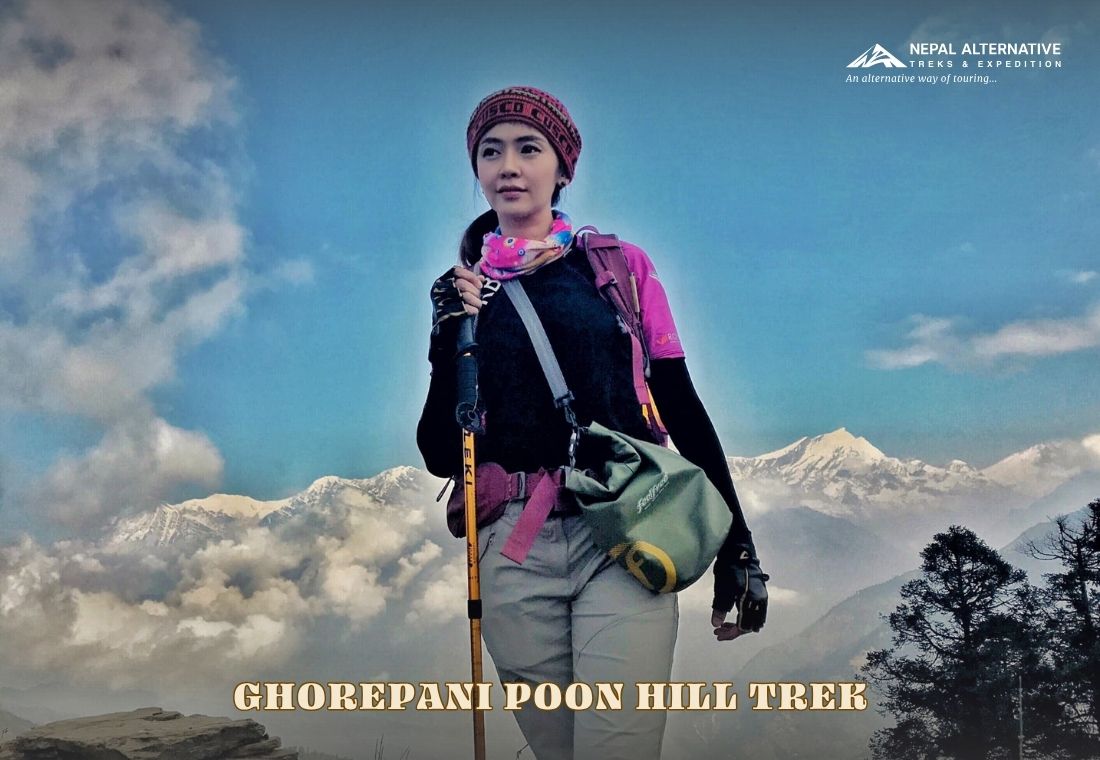
The Annapurna Foot Hill Trek is a short hike in Nepal’s north-central Annapurna mountain range. This walk is in the Nepalese foothills of the Annapurna region, which is gentler but no less energizing. Nothing is missed, and the views are simply breathtaking. This is an excellent trek for those who don’t want to walk for more than a week, have limited time, and also want to avoid the main high-altitude areas of the Annapurna range because the highest point of this trek only reaches 3210m (at Poon Hill) and has some of the best mountain views (especially between Tadapani and Ghorepani).
The greatest trek for non-athletic hikers in their 60s and 70s and those who enjoy leisurely walking vacations is the Annapurna Foothills Trek. Relaxing practically every day with easy access through the beautiful villages, terraced farmlands, lush green and rhododendron forests, and breathtaking Mountain Views.
The breathtaking sunrise over Mount Dhaulagiri, Annapurna, Nilgiri, and other snow-capped summits may be seen during an early morning journey to Poon Hill. You can only exclaim “wow” when the sun first hits the Himalayan giants in the morning. The Annapurna Foothills Tour route passes through Dhampus, Pothana, Deurali, Landruk, a well-known Gurung settlement, Ghandruk, and Ghorepani before descending through Ulleri, Tikhedhunga, and finally Nayapul to mark the conclusion of the journey.
Highlights of Annapurna Foot Hill Trekking
Learn about the unique Tibetan culture and tradition
Get breathtaking views of different mountains including Mount Dhaulagiri, Annapurna, and Nilgiri.
Enjoy lush green and rhododendron forests, and breathtaking Mountain Views.
Get upto the height of 3210m (at Poon Hill)
Enjoy some of the local delicious foods of the region
Annapurna Foot Hill Trekking Difficulty
Trekking in the Annapurna Foothills is exciting and challenging, offering fantastic views of the Himalayan mountains. The trek’s difficulty varies based on the route and your physical fitness. Some parts have steep climbs and descents, while others are easier. Adjusting to the altitudes can also affect how challenging the trek feels, especially at higher points.
The 6 days Annapurna Foot Hill Trekking trail includes rugged paths, rocky areas, and sometimes narrow passages. The weather can change suddenly, so you must prepare for different terrains and challenges. Before starting the trek, you should be physically ready by exercising, such as hiking or walking. Acclimatizing to the altitude is also important to prevent altitude sickness. You should hire a guide or join a trekking group to make your trek safe and more enjoyable, as they know the area well and can handle challenging parts of the trail.
6 Days Annapurna Foot Hill Trek Itinerary
Day 1
Drive to Fedi from Pokhara – Trek to Pothana
Day 1 Facts
Trekking Time Average
30 minutes drive to Phedi – 10km walk to Pothana ( Avg. 04 hrs.)
Accommodation
See you Lodge or Similar category
Altitude
(1890m./6237ft.)
Included meals
Lunch, Dinner
After an early breakfast, on the first day of your trip to the Annapurna Foothill Trek begind with a short drive to Fedi. Annapurna Foot Hill hike begins a steep hike to Dhampus for 1:30 hour . You will continue hiking for two hours through the verdant trees as you go to Pothana. Enjoy the serene surroundings and sunset in the heart of the forest. Stay the night in Pothana.
Day 2
Trek to Landrunk
Day 2 Facts
Trekking Time Average
13km./05 hours walk
Accommodation
Himalaya Guest House or Similar category
Altitude
(1565m./5133ft.)
Included meals
Breakfast, Lunch, Dinner
On the second trek day, we leave early in the morning. Today, we trekked to Landrunk, a beautiful village in the Annapurna region of Nepal. This community’s residents are pleasant and generous hosts, and the village is green. On the east side of the Modi Khola river valley, it is situated south of the Annapurna range. Overnight in a hotel.
Day 3
Trek To Ghandruk
Day 3 Facts
Trekking Time Average
10km./04 hrs walk
Accommodation
Annapurna Guest House or similar category
Altitude
(1940m, 6363ft.)
Included meals
Breakfast, Lunch, Dinner
After a far too brief stroll along the riverside route, the trail drops down the Modi Khola valley until a gradual 700-meter ascent brings you to Ghandruk. This delightful trek mostly contours along the edge of the Modi Khola valley near Landrunk. Even though you will most likely get to Ghandruk in time for lunch, it is highly recommended that you spend the afternoon wandering around the lovely village. Spend the night in Ghandruk.
Day 4
Trek to Banthanti
Day 4 Facts
Trekking Time Average
10km./04 hrs walk
Accommodation
Sun Rise hotel or similar category
Altitude
(2650m./8745ft.)
Included meals
Breakfast, Lunch, Dinner
You may reach Tadapani in time for lunch by mostly leisurely uphill hiking through lovely rhododendron trees. From there, you must descend steeply and ascend quickly to get to the Travelers Sanctuary resort (look out for Langur monkeys on the cliff above the lodge). You reach Banthanti after a pleasant flat route of 30 minutes. The three lodges there are run by charming Nepalese despite being rather rudimentary (especially compared to the faux-western hotels in Ghandruk and Ghorepani). Stay the night in Banthanti.
Day 5
Trek to Ghorepani
Day 5 Facts
Trekking Time Average
11km./04 hrs walking
Accommodation
Hotel Super View or Similar category
Altitude
(2850m, 9348ft.)
Included meals
Breakfast, Lunch, Dinner
You reach Deorali (another one – the Nepali word for a pass or col) after a gentle climb uphill through more lovely woodland that may occasionally resemble a park and with the company of a stream. If you have the time and the weather is clear, you could hike to the observation tower atop the hill, but you may also continue for 30 minutes on the trail to Ghorepani to get to the ridge that offers breathtaking views of the Annapurnas and Dhaulagiri.
There are numerous opportunities to take pictures of rhododendrons and snow-covered mountains; take your time and enjoy the scenery. From there, the road to Ghorepani is inclined. Spend the night at Ghorepani.
Day 6
Visit Poon Hill for Sun Rise – Hike to Banthanti – Drive to Pokhara
Day 6 Facts
Trekking Time Average
10km./04 hours walk
– 65km. drive to Pokhara ( Avg. 3:30 hrs.)
Altitude
(850m./2805ft.)
Included meals
Breakfast, Lunch
Visit Poon Hill (3210m, 10528ft) early in the morning if you want to see the sunrise if that’s your thing. The view from the ridge above Deorali isn’t any greater than yesterday’s, but sharing the hill with a thousand other people is okay. Breakfast next time at Ghorepani (along with the more leisurely trekkers who chose not to have risen at 5 a.m.) From here, it is all downhill to Banthanti, where you can eat lunch, and from there, jump on jeep for road journey back to Pokhara, the trip ends.
What’s Included
Pick Up and Drop Off at Hotel in Pokhara before/after Trekking .
All meals ( Breakfast, Lunch, Dinner ) during the trekking.
Lodge accommodation ( twin share basis) during the trekking.
One experienced, well trained, fluent English speaking, friendly, specialized in Ghorepani trekking route and government authorized trekking guide
1 Porter per 2 Trekkers and keep luggage weight under 10kg per person.
Guide and porters food, accommodation, salary, insurance and transportation .
Overland transportation as per mentioned in the itinerary.
ACAP( Annapurna conservation area project) and necessary permits .
A Trekking map, duffle bag, Oxygen saturation check up everyday, water purification, company t-shirt, first aid medical and trekking completion certificate etc.
Assistance for emergency rescue evacuation.
Government tax and service charge.
Public Liability Insurance.
What’s Not included
Hotel accommodation and meals in Kathmandu and Pokhara .
Hard and soft table drinks such as tea/coffee, coke, fanta, mineral water, alcoholic drinks, laundry, phone bill etc.
Personal Travel insurance.
International Flight Tickets.
Nepal Tourist Visa Fee
Tips for guide and porters.( Highly suggested ).
Add-ons and Options
These add-ons support your Annapurna Foothill Trek with easy travel, basic gear, city tours, rafting, and short adventures in Pokhara and Kathmandu.
To add available add-ons for your trip, follow this process:
Book the Trip → select your Annapurna Foothill Trek date → scroll to the add-ons list → choose desired add-ons with quantity → finish your booking.
Add-ons available:
Kathmandu to Pokhara by VIP Sofa Tourist Bus (USD 15 per person one way / USD 30 round trip): Ride a tourist bus with sofa-style seats between Kathmandu and Pokhara.
Private Vehicle Transfers Kathmandu to Pokhara: Travel by private car (USD 100), jeep (USD 150), or van (USD 200) between Kathmandu and Pokhara for more comfort and flexibility.
Gear Rental: Rent essential trekking gear such as a sleeping bag (USD 10), a warm jacket (USD 10), and a pair of walking pole (USD 10), if you prefer not to bring your own.
Pokhara Sightseeing (USD 30 per person): Explore Pokhara’s lakeside, viewpoints, and key sights with a guided tour.
Rafting at Trishuli River (USD 45 per person): Add a rafting day on the Trishuli River for extra adventure before or after your foothill trek.
Kathmandu City Tour (USD 30 per person for guided city tour): Visit major temples, Durbar Squares, and markets in Kathmandu with a guide.
Kathmandu to Pokhara by Flight (USD 120 one way / USD 240 round trip): Fly between Kathmandu and Pokhara to save time and avoid long drives.
Paragliding in Pokhara (USD 90 per person for 45 minutes): Enjoy paragliding above Pokhara with mountain and lake views.
Zipline in Pokhara (USD 80 per person): Experience a fast zipline ride near Pokhara as a short adventure.
Pokhara to Kathmandu by Private Transport: Return from Pokhara to Kathmandu by private vehicle, like a private car (USD 100), jeep (USD 150), or van (USD 200) for a smoother journey.
Hotel Accommodation in Pokhara (USD 50 per night for a double/twin share room with breakfast): Stay in a Pokhara hotel with breakfast included before or after your trek.
Everest Scenic Mountain Flight 1 hour (USD 300 per person): See Everest and the high Himalayas on a 1-hour scenic flight, with private airport pick-up and drop-off included in Kathmandu. The plane stays in the air for views only and does not land.
Best Time for Annapurna Foot Hill Trekking
January
5°C to 14°C
February
6°C to 16°C
March
8°C to 18°C
April
10°C to 20°C
May
12°C to 22°C
June
15°C to 25°C
July
16°C to 25°C
August
16°C to 26°C
September
15°C to 23°C
October
12°C to 22°C
November
8°C to 18°C
December
6°C to 16°C
The Annapurna Foot Hill Trek is a fantastic adventure in Nepal, offering incredible views of the Himalayan mountains. Choosing the right time to go on this trek is essential to enjoy the beauty and stay safe.
Spring (March-May)
Spring is one of the best times to trek in the Annapurna Foothills. The weather is pleasant, with clear days and moderate temperatures. The trails are filled with colorful rhododendron flowers, making the landscape even more beautiful. You can enjoy warm days and cool nights, perfect for trekking without being cold or hot.
Autumn (September-November)
Autumn is another ideal time to trek in the Annapurna region. After the rainy season, the skies clear up, and the air feels fresh and cool. The views of the mountains are stunning, and the weather is stable, making it a popular time for trekkers. The temperatures are comfortable, and you can experience lively festivals like Dashain and Tihar in the local villages.
Winter (December-Feburary)
Annapurna Foot Hill trekking in winter is possible, but it is also a challenge. Temperatures drop a lot, especially at higher altitudes, and the trails may be covered in snow. However, if you’re well-prepared for the cold, you can enjoy quiet trails and beautiful snowy landscapes.
Monsoon (June-August)
The monsoon season brings heavy rains to the Annapurna region. In the monsoon season, you’ll face many challenges as the trails become muddy and skipper, with a higher risk of landslides. Sponges are also more common during this time. While some might like the lush greenery and fewer crowds, most trekkers avoid this season because of the difficult conditions.
Our scheduled group tours offer fixed departure dates, providing an excellent opportunity for travelers to join our small group trips.
Note : Our fixed group departure dates, services and price is guaranteed even if the group numbers are 1 person to maximum 18 persons. We will provide a guide cum porter if there is only 1 person to operate the trek and one more assistant guide if group size is above 10 persons. And of course, guide cum porter will carry 10 kg luggage
Every journey we create is uniquely tailored to you. Share your interests and passions, and our travel experts will design an unforgettable adventure filled with extraordinary, one-of-a-kind experiences crafted just for you.
Best experience ever We did a private 10-day Annapurna Foot Hill Trek which was organised by Tej the owner and an old friend of my partner. It was the first time I had done a trek, my partner completed one about 23 years ago and it was truly amazing. As…
When you decide to trek in the Annapurna Foothills, you must get essential permits before you go. You can get these permits from the Nepal Tourism Board or from authorized trekking agencies.
TIMS card (Trekkers’ Information Managemnet System Card): Every trekkers in the Annapurna region needs this card. TIMS helps keep track of the trekkers and ensure everyone’s safety.
Annapurna Conservation Area Permit (ACAP): This permit is crucial. It lets you enter and trek through the Annapurna Conservation Area. ACAP also helps protect the natural environment and supports local communities.
Accommodation and Food During the Trek
You’ll find different places to stay along the Annapurna Foot Hill trekking paths, such as teahouses and lodges. Teahousese are simple guesthouses with cozy rooms with basic beds and shared bathrooms. Lodges offer more, sometimes private rooms with bathrooms. These accommodations are often located in villages along the trail, so you can rest and prepare for the next day.
During the Annapurna Foot Hill trek, you’ll find hearty and nutritious food to keep you going. Most teahouses and lodges have menus with many dishes, including Nepali food like dal bhat and international choices like pasta and pancakes. Meals are prepared fresh and provide a warm and comfortable break from trekking.
What People Ask About
Annapurna Foot Hill Trek
Can a beginner climb Annapurna?
The Annapurna Circuit Hike is appropriate for novice hikers as well. In 1977 AD, the Annapurna Circuit Trek route became open to visitors from other countries. This track ascends to a height of 5,416 m from a starting point of fewer than 1000 meters.
How high are the Annapurna foothills?
The maximum height of the Annapurna Foothills is 4,200 meters, which is Mardi Himal Viewpoint. This trek is the best choice for first-time trekkers looking for a relaxing and scenic experience.
How long does it take to trek Annapurna?
Depending on the route you follow, it could take 12 to 22 days and cover 160 to 230 km. Long-distance trekking circuits the Annapurna Mountains on the Annapurna Circuit.
Which is harder EBC or Annapurna?
Compared to trekking to Everest Base Camp, the Annapurna journey is more simpler. The walk to Annapurna base camp is better kept, and there are more stairs on the trails. The Annapurna Base Camp path is less crowded.
How expensive is climbing Annapurna?
Prices range from 700 and 1000 dollars, or 600 and 900 euros to climb Annapurna. Due to its usual length and level of difficulty, the Annapurna Base Camp Trek is not the most expensive trip in Nepal.
Why is Annapurna difficult climb?
Annapurna is difficult for climbers to reach since it is always chilly and covered with snow, and it is also susceptible to high-velocity winds and snowfall at any time of year. This climatic environment causes many climbers to lose their lives occasionally.
What food should I bring for trekking?
Dry fruits, almonds, chocolates like Snickers, and energy bars are a few of these quick snacks. Also, if one is carrying a stove, be sure to take foods that are ready to cook, such as instant noodles, oats, and soup. Snacks are unquestionably regarded as the top hiking necessity.
How much does the Poon Hill trek cost?
The price range for the Poon Hill Trek is 350–500 USD. The cost of the trek varies depending on factors such as the number of days, the season, whether or not porters are used, and more. The cost can go down a little if you’re traveling alone or without a guide, but your level of responsibility goes up.
Can you see Annapurna from Poon Hill?
Yes, you can see Annapurna from Poon Hill. From here, one can see numerous high peaks, including the Annapurna at 8,091m, Dhaulagiri at 8,127, Annapurna South at 7,219 Meters, Machapuchare at 6,993 Meters, Hinchuli, Annapurna III, Dhampus Peak, and Dhaulagiri II.
Can you see Mt Everest from Poon Hill?
Please be aware, though, that from the top, you will not be able to see Mount Everest. North of Poon Hill, at the Khopra Danda (ridge) Viewpoint, you may enjoy breathtaking views of the Annapurna, Nilgiri, and Dhampus Peaks, as well as lush green hills, terraced farms, charming traditional villages, and high mountain peaks.
Can you see Annapurna from Pokhara?
Each viewpoint, which is located in a distinct location, seems to tell a different story about Pokhara’s incredible scenery. Most of them offer views of the Annapurna Range and the calm, relaxed city shrouded in mist is a visual delight.
How long does Annapurna Base Camp take?
The trekking route to Annapurna Base Camp is accessible from several trailheads and depending on your route the duration is between 6 and 12 days But it depends on the travel agency you choose.
Do you need oxygen to climb Annapurna?
Altitude sickness danger, severe weather, and a chilly climate are all associated with being at a high altitude. The Annapurna trek is challenging to demand due to the combination of all these variables. That is an accomplishment in and of itself to be able to perform this without oxygen. Mount Annapurna was scaled by a French expedition commanded by Louis Lachenal and Maurice Herzog.
Can I exchange money during the Annapurna Foot Hill Trekking?
In Nepal, Money exchange can be done even after you arrive from the airport. Similarly, after you arrive in Nepal their would be some places where you can exchange money. Even ng the some of the trekking routes there are some places that money exchanging services so, some of the banks provide money exchanging services such as Himalayan Bank, Everest Bank, Standard Chartered Bank Nepal, Nepal SBI Bank, and numerous others. The majority of banks are open from Sunday through Thursday from 10:00 AM to 5:00 PM, 10:00 AM to 2:00 PM on Fridays, and closed on Saturdays.
Need assistance? Our travel expert Tej Bahadur Gurung is here to help! Please fill out the form below to initiate a chat and get your queries resolved quickly.

 Perth, Australia5.0 /5