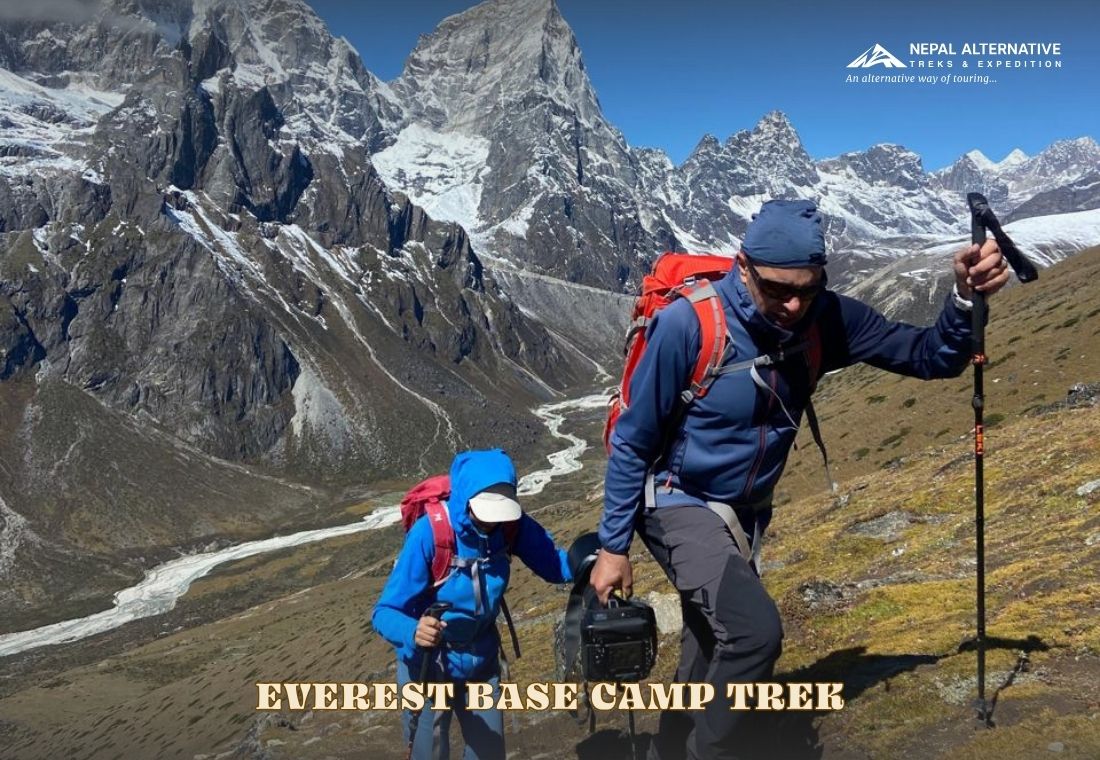
Everest Three Passes Trek – 16 Days

Everest Three Passes Trek – 16 Days

5.0 /5 Out of 21 reviews

Trip Facts

Weather

Weather -15°C to 18°C

Duration

Duration 16 Days

Difficulty

Difficulty Very Strenuous View Difficulty Detail

Accommodation

Accommodation Lodge

Meals Included

Meals Included Breakfast, Lunch, Dinner

Best Season

Best Season Sept, Oct, Nov, Mar, Apr, May

Transportation

Transportation Flight

Daily Activity

Daily Activity Approx. 5-6 hours

Religion

Religion Buddhism

Ethnic People

Ethnic People Sherpa, Rai

Geographic Terrain

Geographic Terrain Mountain, Forest, Village, Glacier

Region of Nepal

Region of Nepal Everest Region, Khumbu

Max. Altitude

Max. Altitude 5,555 m / 18,331 ft

Everest Three Passes Trek Overview

The Everest Three High Passes Trek in Nepal is a perfect adventure for trekkers who want to explore more than just Everest Base Camp. On this trek in the Himalayas, you will cross the three highest mountain passes in the Everest region:

  • Kongma La Pass (5,535 meters)
  • Cho La Pass (5,420 meters)
  • Renjo La Pass (5,340 meters)

This is a 16-day clockwise Everest High Passes Trek, suitable for experienced trekkers who want to see everything the Everest region has to offer. You’ll walk through beautiful valleys, climb high mountain passes, and see many famous places.

Your journey starts with a short flight to Lukla, then a walk to Phakding, and then to Namche Bazaar, where you’ll stop to rest and get used to the height. From Namche, you’ll head to Thame and Lungden, and then cross your first high pass, Renjo La, to reach the beautiful Gokyo Lake. You’ll also climb Gokyo Ri, a nearby peak, to see amazing views of mountains, including Mt Everest, Lhotse, Makalu, and Cho Oyu.

Next, you’ll cross the Cho La Pass, a tricky and icy trail to reach Everest Base Camp (EBC). From EBC, you can also climb Kala Patthar to watch a beautiful sunrise over Mount Everest. The last big challenge is Kongma La Pass.

After crossing it, you’ll go down to Chhukhung and then to Tangboche, where you’ll visit a famous monastery. Then you’ll walk back to Namche Bazaar and return to Lukla. From Lukla, you’ll fly back to Kathmandu, ending your 16-day Everest Three Passes Trek adventure. With enough rest days planned, this trek helps your body adjust to the height and gives you time to enjoy every moment in the Himalayas.

Not to mention, the Everest Three Passes Trek gives you the chance to see amazing lakes, glaciers, and some of the tallest mountains in the world, like Makalu, Cho Oyu, Everest, and Lhotse. Along the way, you’ll also visit the quiet and untouched Nangpa La Valley, the peaceful Sherpa village of Marlung, and the beautiful monastery village of Thame. These places give you a chance to experience local culture and the simple mountain lifestyle.

Want to be part of this amazing adventure? Send us an inquiry, and we will reply with available departure dates for 2026/27, group size options, and the booking form.

Everest Three Passes Trek Highlights

  • Walk through the UNESCO World Heritage site, Sagarmatha National Park, and see its diverse flora and fauna.
  • Witness views of Mt. Everest (8,848.86 m), Lhotse (8,516 m), Makalu (8,485 m), Cho Oyu (8,188 m), Ama Dablam (6,812 m), and other nearby Himalayan ranges throughout the trek.
  • Cross the three high passes of the Everest region: Renjo La (5,360 m), Cho La (5,420 m), and Kongma La (5,535 m) in a single adventure.
  • Visit the turquoise Gokyo Lakes, among the highest freshwater lakes in the world.
  • Hike to the iconic viewpoints of Kala Patthar (5,555 m) and Gokyo Ri (5,357 m) for spectacular views of the Khumbu Glacier.
  • Stand at the iconic Everest Base Camp (5,364 m) and experience a true sense of accomplishment.
  • Explore Sherpa settlements like Namche Bazaar, Dingboche, Gokyo Valley, Thame, and other traditional mountain villages.
  • Visit ancient monasteries, including the well-known Tengboche Monastery.
  • Walk alongside magnificent glaciers, including Ngozumpa (the longest glacier in the Himalayas) and Khumbu (the world’s highest and Nepal’s largest glacier).
What Makes Three Passes Trek Difficult?

The Everest Three Passes Trek is one of the hardest treks in the Everest region. All three passes—Kongma La, Cho La, and Renjo La—are above 5,000 m, where the air is very thin and breathing becomes more difficult. Walking at such high altitudes can make you feel dizzy, tired, or sick, especially if your body does not get enough time to acclimatize. Cho La Pass is especially technically challenging because it involves crossing a glacier, where the trail can be icy and slippery. Additionally, you will spend about 8 days trekking at altitudes above 4,000 m, which further increases the difficulty level.

The trail itself is also challenging. You’ll cross glaciers, loose rocks, and narrow paths where one wrong step can be dangerous. Some sections, such as the steep climb after the Hillary Bridge and the icy descent from Kongma La Pass, are particularly demanding and can feel intimidating. There are also stretches with steep ascents and descents that can put significant strain on your knees and legs. The rugged terrain makes the trek physically demanding and requires good balance, endurance, and concentration.

The Khumbu region is known for its unpredictable weather. Sudden snowfall, whiteout conditions, and freezing temperatures can make the trek even more challenging. Overall, this trek tests your physical fitness, mental resilience, and preparation.

Everest 3 Pass Trekking Itinerary

Day 1

Fly to Lukla – Trek to Phakding (2,640 m)

Day 1 Facts

Trekking Time Average

35 minutes/Flight
8 km Uphill hike
(3 hours)

Accommodation

Hotel Sherpa/Sherpa Guide

Altitude

(2,640m / 8,745ft)

Included meals

Lunch, Dinner

Your Everest Three Passes Trek begins in Kathmandu. From Kathmandu, you will take an early morning flight to Lukla, the gateway to the Everest region. The 35-minute flight takes you over the lush forested valleys of eastern Nepal before landing in the heart of the Himalayas.

After arriving in Lukla, you will begin your trek toward Phakding. The trail follows the Dudh Koshi River and passes through the village of Thado Koshi. Along the way, you will cross several suspension bridges while enjoying scenic views of the river and surrounding landscapes.

Besides Thado Koshi, you will also pass through the small villages of Chheplung and Ghat, where you’ll get your first glimpse of local mountain life. After about three hours of trekking, you’ll reach the peaceful village of Phakding, where you’ll spend the night.

Day 2

Trek to Namche (3,440 m)

Day 2 Facts

Trekking Time Average

7.4-11 km Uphill hike
(5-7 hours)

Accommodation

Khumbu Lodge/ Hotel Kamal

Altitude

(3,440m / 11,352ft)

Included meals

Breakfast, Lunch, Dinner

The second day of the Everest High Passes Trek takes you from Phakding to Namche Bazaar. The trail features both uphill and downhill sections, with several crossings over the Dudh Koshi River via hanging suspension bridges. From Phakding, you will first reach Champute, then continue through Toktok and Bengkar. From Bengkar, you can enjoy beautiful views of Mt. Thamserku.

After Bengkar, the trail leads to Monjo, the gateway to Sagarmatha National Park, where your trekking permits will be checked. From Monjo, you will continue through Jorsale, cross the famous Hillary Bridge (Larja Dobhan), and begin a steep climb through pine forests.

After the challenging final ascent, you’ll arrive at Namche Bazaar, the main trading and cultural hub of the Khumbu region. From here, you’ll enjoy your first clear views of Mount Everest, Lhotse, Tawache, and other nearby peaks. You’ll spend the night in Namche Bazaar.

Day 3

Acclimatize /Exploration day

Day 3 Facts

Trekking Time Average

3 hours excursion around/Acclimatization

Accommodation

Khumbu Lodge/Hotel Kamal

Altitude

(3,440m / 11,352ft)

Included meals

Breakfast, Lunch, Dinner

Day 3 of the Everest Three Passes Trek is a rest and acclimatization day in Namche Bazaar. This important rest day allows your body to adjust to the increasing altitude. Instead of staying idle, you’ll explore the surrounding areas, which helps improve acclimatization while enjoying the stunning Himalayan scenery.

During the day, you’ll take a short hike to the Everest View Hotel, one of the highest-altitude hotels in the world. From here, you can enjoy spectacular views of Mt. Everest, Ama Dablam, Lhotse, and other towering peaks. On the way back, you can visit Khumjung Village, home to the Khumjung Monastery, which is famous for displaying what is believed to be a yeti scalp. You may also visit the Hillary School, founded by Sir Edmund Hillary.

Another option is to hike to Syangboche Airport and explore the nearby Khunde Village. After sightseeing and acclimatization, you’ll return to Namche Bazaar, where you’ll spend the night.

Day 4

Trek to Thame (3,800 m)

Day 4 Facts

Trekking Time Average

6 km Uphill hike
(3 hours)

Accommodation

Thame View Lodge or a similar category

Altitude

(3,800m / 12,467ft)

Included meals

Breakfast, Lunch, Dinner

Today, you’ll leave the busy trails of Namche and head toward the peaceful Thame village. The section follows the Dudh Koshi River and takes you through quiet pine and rhododendron forests. Along the way, you’ll pass by Phurte, known for its small, whitewashed stupa, and Thamo, home to the Thamo Gompa (monastery).

As you move ahead, the path leads to the Khumbu Hydroelectric Plant and then climbs toward Thame. It is located at the far end of the Khumbu Valley. It is a traditional Sherpa village, rich in culture and home to Thame Monastery, also known as Thame Dechen Chokhorling Monastery, one of the oldest monasteries in the Everest region. Thame is also home to legendary mountaineers such as Apa Sherpa, Kami Rita Sherpa, and Tenzing Norgay Sherpa. Once you are at Thame, you can spend the rest of the day exploring the village. Overnight in Thame.

Day 5

Trek to Lumde (4,137 m)

Day 5 Facts

Trekking Time Average

12 km Uphill hike
(5 hours)

Accommodation

3 Pass Lodge or Similar category

Altitude

(4,137m / 13,573ft)

Included meals

Breakfast, Lunch, Dinner

After breakfast in Thame, you’ll start trekking west toward Lumde village. The trek today is moderately challenging as you leave the Dudh Koshi Valley and enter the quieter Bhote Koshi Valley. The route passes through small Sherpa villages like Taranga and Marulung, where you can see prayer flags, stone houses, and grazing yaks.

The trail offers beautiful views of snow-covered peaks, dry rocky hills, and scattered alpine shrubs. If the weather is clear in the morning, the golden light on the rocks and mountains looks magical. After reaching Lumde, you’ll have time to rest and explore the peaceful surroundings. You’ll spend the night in Lumde, preparing for the Renjo La Pass crossing the next day.

Day 6

Trek to Gokyo Valley (4,750 m)

Day 6 Facts

Trekking Time Average

15 km Uphill hike
(8 hours)

Accommodation

Cho Yo Lodge or a similar category

Altitude

(4,750m / 15,584ft)

Included meals

Breakfast, Lunch, Dinner

This day is one of the exciting days of your Everest Three Mountain Passes trek as you will cross Renjo La Pass (5,360 m). The first of the three high passes lies in the westernmost part of the Everest region. After an early breakfast in Lumde, you’ll start climbing a steep and rocky trail towards the top of Renjo La Pass. The hike up is challenging but rewarding.

From the top of Renjo La Pass, you can catch the mesmerizing sight of Gokyo lakes and Ngozumpa Glacier. A few of the peaks, such as Everest (8,848.86 m), Lhotse (8,516 m), Cholatse (6,335 m), and Taboche (6,367 m), will also be visible. You’ll cross the pass and begin trekking downhill towards Gokyo village. The descent to Gokyo is steep and can be icy, so take your time. As you hike down, you’ll enter the beautiful Gokyo Valley, located right beside the third Gokyo Lake. You’ll spend the night in Gokyo.

Day 7

Trek to Thaknak (4,750 m)

Day 7 Facts

Trekking Time Average

6km Uphill hike
(Av. 3hrs)

Accommodation

Hotel Khumbila or Similar category

Altitude

(4750m./15580ft.)

Included meals

Breakfast, Lunch, Dinner

On day 7, after breakfast, you’ll take a short walk around Gokyo Lakes, especially the beautiful Dudh Pokhari and Thonak Cho, enjoying their crystal-clear glacial waters. From there, you’ll begin climbing east across the vast Ngozumpa Glacier. The trail is rocky and uneven, with several gentle ups and downs. You’ll walk along the eastern edge of the glacier, where you’ll see views of peaks like Cho Oyu, Makalu, and Gokyo Ri behind you.

If the weather is clear and you’re feeling energetic, you can also climb Gokyo Ri (5,357 m) early in the morning for views of Everest, Lhotse, Ama Dablam, Pumo Ri, and more. After crossing the glacier, you’ll reach Thaknak (also spelled Thangnak). This is the perfect resting point before tomorrow’s challenging Cho La Pass crossing. Overnight in Thaknak.

Day 8

Trek to Dzongla (4,840 m)

Day 8 Facts

Trekking Time Average

13 km Uphill hike
(7 hours)

Accommodation

Green Valley Lodge or Similar category

Altitude

(4,840 m / 15,879 ft)

Included meals

Breakfast, Lunch, Dinner

Today is another challenging day as the Everest Three Pass trek path takes you to another of the highest and toughest passes in the Everest region, the Cho La Pass. You’ll trek from Thangnak early and begin climbing up toward Cho La Pass. The trail climbs along the snow and rock moraines. It is the most challenging pass to climb in the entire region, where you may need to use crampons for better grip.

As you reach the top of the pass, you’ll see colorful Buddhist prayer flags fluttering in the wind and catch sight of high mountains, including Everest, Ama Dablam, Cholatse, and the views of the Everest region. After spending some time there, you will descend across a small glacier and ice basin. Eventually, you’ll reach the peaceful Dzongla village, located just between the peak of Cholatse. You’ll spend the night here, resting and enjoying the mountain scenery.

Day 9

Trek to Gorakshep (5,100 m)

Day 9 Facts

Trekking Time Average

10 km Uphill hike
(5 hours)

Accommodation

Himalayan Lodge/ Everest Inn

Altitude

(5,100 m / 16,830 ft)

Included meals

Breakfast, Lunch, Dinner

After a good night’s rest in Dzongla, today you’ll start your day trekking toward Lobuche. The trail follows rocky paths and glacial moraines, passing Chola Lake and memorials to climbers who lost their lives on Everest. Continuing your trek, you’ll see amazing views of Lobuche Peak and the surrounding mountains.

The trail continues to rise along the Lobuche Glacier overlooking the beautiful Lobuche Peak towards Lobuche village. After about 3 hours, you’ll reach Lobuche village, where you can stop for lunch. From here, the journey continues towards Gorakshep. Once in Gorakshep, you’ll settle into your lodge for the night and prepare for your exciting hike to Everest Base Camp the next day.

Day 10

Excursion to Everest Base Camp (5,364 m)

Day 10 Facts

Trekking Time Average

8km Uphill hike
(Av. 5hrs)

Accommodation

Himalayan Lodge/ Everest Inn

Altitude

(5364m./17575ft.)

Included meals

Breakfast, Lunch, Dinner

After an early breakfast in Gorakshep, you’ll begin your exciting hike to Everest Base Camp (5,364 m). The base camp is the closest you can get to the world’s highest peak, Mt Everest, without climbing it. The scenic trail begins to climb along the Khumbu Glacier and turns east at the junction. A few hours of the hike will bring you to Everest Base Camp. It is a rocky area filled with colorful tents of climbers attempting to climb the mighty Everest during the climbing season.

You can explore around the base camp, enjoying the raw view of Khumbu Icefall and mountains like Pumo Ri (7,165 m), Lingtren (6,749 m), Khumbutse (6,608 m), and Nuptse (7,861 m). Take photos, enjoy the moment, and feel proud to stand on your own. After some time at the base camp, you’ll hike back to Gorakshep for an overnight stay.

Day 11

Hike to Kala Patthar – Retrace to Lobuche (4,900 m)

Day 11 Facts

Trekking Time Average

10 km 
(6-8 hours)

Accommodation

New EBC Lodge/ National Park Hotel

Altitude

(4,900 m / 16,170 ft)

Included meals

Breakfast, Lunch, Dinner

The day begins early as you leave Gorakshep and begin climbing towards Kala Patthar. To trek to Kala Patthar, you will wake up as early as possible to enjoy the sunrise view. From Kala Patthar, you’ll finally get those clear, close-up views of Mount Everest that you couldn’t see from Base Camp. You’ll also see Nuptse, Lhotse, Pumo Ri, Ama Dablam, and more, all glowing in the morning light.

After spending some quiet moments at the top, you’ll head back down to Gorakshep for breakfast. Once you’re refueled, the trek continues downhill along the Khumbu Glacier, leading you to Lobuche village, where you’ll spend the night.

Day 12

Trek to Chhukung (4,750 m)

Day 12 Facts

Trekking Time Average

15 km Downhill hike
(8 hours)

Accommodation

Kangri Resort or Similar category

Altitude

(4,750 m / 15,584 ft)

Included meals

Breakfast, Lunch, Dinner

On day 12, you will cross the third and final high pass of the Everest 3 passes trek, Kongma La Pass (5,535 m). Leaving Lobuche village, you’ll begin climbing southeast along the Lobuche Glacier. The climb begins with a steep ascent and continues gradually to the top. From the top of the pass, you can enjoy the mesmerizing view of the surrounding peaks of Ama Dablam (6,856 m), Thamserku (6,608 m), Island Peak (6,189 m), and Lhotse (8,516 m).

After a short break to enjoy the views, you’ll begin a long and careful descent to Chhukung. It is a quiet village and gateway to Island Peak Base Camp to those heading Island Peak. You’ll spend the night here, resting after a big day of adventure.

Day 13

Trek to Tengboche (3,867 m)

Day 13 Facts

Trekking Time Average

15 km Downhill hike
(6 hours)

Accommodation

Tashidelek Lodge/ Himalayan Lodge

Altitude

(3,867 m / 12,687 ft)

Included meals

Breakfast, Lunch, Dinner

Today you’ll leave Chhukung and head downhill to Tengboche on the 13th day. The trek starts with a gentle walk past the Chhukung Glacier, which offers beautiful views of Island Peak, Makalu, Baruntse, and Chhukung Ri. After about an hour of walking through wide yak pastures, you’ll reach Dingboche village. From here, the trail continues through pretty landscapes to Pangboche, where you’ll stop for lunch.

Then it’s a short walk along the Imja Tse River and through Debuche village before reaching Tengboche. This peaceful village is home to the famous Tengboche Monastery, surrounded by mountain peaks. Overnight in Tengboche.

Day 14

Trek to Namche Bazaar (3,440 m)

Day 14 Facts

Trekking Time Average

13 km 
(6 hours)

Accommodation

Khumbu Lodge/ Hotel Kamal

Altitude

(3,440 m / 11,352 ft)

Included meals

Breakfast, Lunch, Dinner

The day begins with a tour to Tengboche Monastery. The 100-year-old monastery is the highest and oldest Buddhist monastery in the region. You might see monks performing rituals or hear them chanting in this monastery. Explore the legacy of Tibetan Buddhism and meet the local monks. The monastery hosts the annual Mani Rimdu festival every year in October.

After exploration, you will return to your hotel for breakfast. After breakfast, you’ll start trekking downhill along the Dudh Koshi River. The descent trail is full of beautiful forests, prayer flags, and mountain views. You’ll pass through Kyangjuma village before finally reaching Namche Bazaar. Overnight in Namche Bazaar.

Day 15

Retrace to Lukla (2,800 m)

Day 15 Facts

Trekking Time Average

19km Downhill hike
(Av. 6hrs)

Accommodation

The North Face Resort or Similar category

Altitude

(2,800m./9184ft.)

Included meals

Breakfast, Lunch, Dinner

The day marks the successful completion of the Everest High Passes Clockwise Trek. Leaving Namche Bazaar, you’ll begin retracing your path along the Dudh Koshi River towards Lukla. The scenic trek goes past a few suspension bridges and forested ridges towards Monjo. After exiting Sagarmatha National Park, you’ll begin climbing down the stone steps towards Phakding. You can enjoy lunch in Phakding before descending to Lukla. After many days of hard walking, you’ll stay in Lukla without worry of another day’s hike.

Day 16

Fly to Kathmandu (1,295 m)

Day 16 Facts

Trekking Time Average

35-minute flight to Kathmandu

Altitude

(1,295 m / 4,273 ft)

Included meals

Breakfast

If everything goes as planned, you’ll be heading back to Kathmandu from Lukla today. You will take an early morning flight and fly back to Kathmandu. Enjoy a scenic aerial tour of the Himalayas up close. After days of adventure, today will be more relaxed. In the evening, we’ll gather for a farewell dinner to celebrate your successful trek in the Everest region.

What’s Included

  • Pick up at Tribhuvan International Airport and Transfer to the hotel in Kathmandu
  • Lodge accommodation ( Twin share basis) during the trekking
  • All meals (Breakfast, Lunch, Dinner) during the trek.
  • One experienced, well-trained, fluent English-speaking, friendly, government-authorized and specialized Everest region trekking guide.
  • 1 Porter per 2 Trekkers and keep luggage weight under 10kg per person.
  • Guide and porter’s food, accommodation, salary, insurance, and transportation, etc.
  • Sagarmatha National Park fee and Pashang Lhamu rural municipality Entry fee.
  • Both-way flight tickets Kathmandu/Lukla/Kathmandu.
  • A Trekking map, Oxygen saturation check up every day, water purification, first aid medical, duffle bag, Company T-shirt and Trekking completion certificate.
  • Assistance for emergency rescue evacuation.
  • Government tax and service charge.
  • Public Liability Insurance.

What’s Not included

  • Hotel accommodation and meals in Kathmandu.
  • Hard and soft table drinks such as tea/coffee, coke, fanta, mineral water, beer, battery charge, hot water, phone bill, laundry, and hot shower, etc.
  • Personal Travel Insurance.
  • Tips for guides and porters. (Highly suggested)

Add-ons and Options

On this challenging Three Passes route, these add-ons help you trek with more comfort and safety, from better lodges and porters to helicopter transfers and gear rental.

Here’s how to add them: Book the Trip → select your route/date → review the add-on options → choose the services you want before completing the booking.

  • Accommodation in Kathmandu (USD 40 per night for twin share or double bedroom): Arrange comfortable hotel stays in Kathmandu before and after your Everest Three Passes trek, customized to your preferences for a hassle-free experience.
  • Helicopter Transfer (Kathmandu–Lukla and Return) (USD 1000 per person): Fast, reliable helicopter flights both ways, helping you avoid delays and travel comfortably to and from the Everest region.
  • Private Porter (USD 340 per porter): A porter carries up to 20 kg of your gear, allowing you to trek lighter and more comfortably across the challenging Three Passes route.
  • Accommodation Upgrade (Where Available) (USD 250 per person): Stay in better lodges with improved rooms and facilities at select stops like Lukla, Phakding, Namche, Debuche, Dingboche, and Gokyo for added comfort (private room with attached bathroom).
  • Full Day Kathmandu City Tour (USD 30 per person): Explore Kathmandu through visits to UNESCO World Heritage Sites, exploring the city’s culture, history, and architecture before or after your trek.
  • Gear Rental: Access professionally maintained, trek-ready equipment, including insulated layers and technical gear. Sleeping bag (USD 17), down jacket (USD 17), walking poles (USD 17), Crampons or Spikes (USD 17).
  • 1-hour Everest Scenic Flight (USD 300 per person): Enjoy a 1-hour mountain flight to see Everest and the Himalayan range from the air, with private airport pick-up and drop-off in Kathmandu included. This is a scenic flight only with no landing.

How is the Weather during the Everest Three Passes Trail

January
-20°C to -5°C
February
-21°C to -5°C
March
-15°C to 0°C
April
-10°C to 4°C
May
-5°C to 10°C
June
0°C to 15°C
July
5°C to 18°C
August
5°C to 18°C
September
0°C to 15°C
October
-5°C to 10°C
November
-10°C to 5°C
December
-15°C to 0°C

The weather on the Everest Three Passes Trek is cold and changes with the seasons. Spring (March to May) and autumn (September to November) are the best times to go. The skies are usually clear, the views are beautiful, and the trails are dry. During these months, daytime temperatures can range from -5°C to 10°C, but nights can still get below freezing. At high altitudes, even spring days can feel icy, and you’ll need warm clothes all the time.

Winter (December to February) is the coldest time. Temperatures can drop as low as -21°C, especially in January and February. Snow often blocks the high passes like Kongma La, Cho La, and Renjo La, making the trek very risky. Summer (June to August) is warmer, with temperatures between 5°C and 18°C, but heavy rain and clouds make the trails slippery and the views foggy.

Everest Three Passes Trek Route Map

Trail
Return Trail

The Everest Three Passes Trek Map is an essential navigation tool for trekkers planning to take the Everest High Passes Trek in Nepal. The map showcases the complete trekking route in the Everest Region, through the Khumbu valley, including three high mountain passes of Kongma La (5,535 m), Cho La (5,420 m), and Renjo La (5,360 m). It also highlights major villages, trekking routes, glaciers, rivers, viewpoints, and important landmarks of the journey.

The Everest Three Passes Trek is a detailed map that features trekking trails, return route, and alternative route. Likewise, it provides an elevation profile, a daily trekking itinerary, and all the symbols of the items that you witness on the trail including suspension bridges, monasteries, glaciers, checkpoints, and viewpoints.

To make you easy to understand which symbols represent which landmarks, the map also features “Legend” that includes symbols and their meaning. Additionally, the map is also downloadable which lets you use it even offline on your trail of Everest Base Camp and three passes.

Join our group departures

Our scheduled group tours offer fixed departure dates, providing an excellent opportunity for travelers to join our small group trips.

Note : Our fixed group departure dates, services and price is guaranteed even if the group numbers are 1 person to maximum 18 persons. We will provide a guide cum porter if there is only 1 person to operate the trek and one more assistant guide if group size is above 10 persons. And of course, guide cum porter will carry 10 kg luggage

Book a private trip on your own date.

Every journey we create is uniquely tailored to you. Share your interests and passions, and our travel experts will design an unforgettable adventure filled with extraordinary, one-of-a-kind experiences crafted just for you.

Private Booking

Traveler Reviews

My Simple Breakdown of Everest Three Passes Trek

Everest Base Camp 3 Passes I decided to go with Nepal Alternative Treks. The company's team communicates well in english. So communication It is an important factor that makes my trekking us successful.

Read more
Photo of Damnern
5.0 /5

Damnern

Bangkok, Thailand

Amazing Everest Three Passes trek

Had an amazing time hiking the Everest Three Passes trek (clockwise) in march/april 2026. Everything was well organized by Tej and his company. From the initial contact in the months leading up to the trip, to the airport pickup and the contact and support during the trek. The guide was…

Read more
Photo of Sam v
5.0 /5

Sam v

Nederland

Best trekking experience in Nepal

I recently completed the Everest Base Camp trek along with two of the high passes (Cho La and Renjo La) under the guidance of our excellent guide, Laxman, and with the support of our two dedicated porters, Kerman Rai and Chandar Rai. While my teammates successfully finished all three passes,…

Read more
Photo of ginny f
5.0 /5

ginny f

China

EBC Cho La Pass Gokyo Ri Renjo La Pass Trek That I Would Do A Second Time

EBC Cho La Pass Gokyo Ri Renjo La Pass Had an awesome time with our guide Saroj, spent 15 days trekking up to Everest Base Camp, Cho La Pass, and Renjo La Pass. We were taken care of from the moment we landed in Kathmandu all the way to our…

Read more
Photo of Arlia Rebekah Zhuo- Lin Schurr
5.0 /5

Arlia Rebekah Zhuo- Lin Schurr

New Zealand

Major Attractions of the Everest Three Passes Trek

Cho La Pass

Cho La is the middle or second Pass among the Everest Three Passes. Located at 5,420 m (17,782 ft), the Pass lies in the northeast part of Nepal and connects the village of Dzongla to the east with the town of Thagnak to the west. Also, the Pass connects Everest Base Camp to Gokyo. From the Pass, trekkers can appeal to their eyes with views of Ama Dablam, Cholatse, and Makalu. However, the cross to Cho La involves walking through icy, rocky, and glacier sections, adding to the thrill of the journey.

Kongma La Pass

Kongma La is the most challenging Pass of the Everest Three Passes. At an elevation of 5,535 m (18,159 ft), the Pass is the highest among the three passes. It connects Chukhung village with Lobuche. The Pass lies between Imja Valley and Khumbu Glacier and is difficult to navigate. Even though crossing Kongma La is challenging, it is equally rewarding as it offers a 360-degree view of glacial lakes, rugged terrain, and mountain peaks. The vista of Mount Everest, Lhotse, Nuptse, and Ama Dablam is impressive from the top of the Pass.

Renjo La Pass

Located at an elevation of 5,360 m (17,585 ft), Renjo La Pass is one of the easiest passes on the Everest Three Pass trek. The Pass connects the Gokyo Valley with Thame village and provides views of turquoise Gokyo lakes, Mount Everest, Lhotse, Cho Oyu, and Makalu. Crossing Renjo La Pass involves steep ascents and descents, as well as rocky paths, and requires a good fitness level.

Sagarmatha National Park

Sagarmatha National Park, established in 1976, is a protected area in Nepal’s Everest region. It is a UNESCO World Heritage site with an impressive landscape and diverse ecosystem. The journey of the Everest Three Pass takes place within the national park and offers a glimpse of diverse flora and fauna.

Scenic Landscapes

The Journey to Everest Three Passes offers a diverse landscape of the Sagarmatha area. From lush valleys to rugged terrain and towering peaks, the trek takes trekkers through some of the world’s most visually appealing scenery. The view of some of the highest peaks in the world, turquoise lakes, glaciers, and moraines, and lush valleys will create long-lasting memories among trekkers on the high pass trek.

Accommodation Facilities on Everest Three Passes Trek

Tea houses are the common accommodation facilities on the Everest Three Passes trek. The local Sherpas of the Everest region run tea houses, which offer a comfortable lodging option. The accommodation point is budget-friendly, with basic amenities like single rooms with twin-sharing beds and shared bathrooms. The bed in the room has a basic mattress, blanket, and pillows.

The luxurious option is minimal on the route to the Everest Three Passes. Yet, Lower areas, including Lukla, Phakding, and Namche Bazaar, offer luxury hotels with private rooms with attached bathrooms, hot showers, and electricity.

As you move higher, the tea houses are the only option offering simple rooms and amenities. It provides mobile charging and hot water facilities, but at an extra cost. Moreover, at lower elevations, the price per night ranges from USD 10 to 15 for a basic one, whereas a luxury one costs USD 50 or more. Similarly, it costs USD 15-20 at higher elevations per night. The Everest Three Passes Cost Guide will help you break down the budgets required for this adventure.

Food and Water during Three Pass trek

Teahouses provide food along with accommodation on the Everest Three Pass trek route. It offers a mix of local Nepali dishes and Western-style meals to suit different tastes. However, the availability and variety of food depend on altitudes and locations. Dal Bhat, Tibetan bread, and Thukpa are common local Nepalese foods that the tea houses of Everest region serve. Likewise, pasta, porridge, and pancakes are some Western-style foods. Oatmeal, eggs, toast, Muesli, cornflakes, Porridge, and tea/coffee are options for Breakfast. Similarly, common options for lunch and dinner on the trail to the Everest Three Pass trek include Dal Bhat, noodles, pizza, pasta, sandwiches, dumplings, and soup.

The food is freshly cooked with simpler yet healthy ingredients. Choices for food at lower elevations are vast, whereas options at higher elevations are limited due to no access to roads and transportation; thus, consider bringing some light snacks or energy bars. For drinking water, consider carrying a refillable water bottle, as numerous streams and taps are available throughout the trail. However, don’t consume the Water directly; instead, have it only after purifying it with a water purification tablet. Yet, mineral water is also available, but it becomes more expensive as you ascend higher, costing USD 1 to 4 per bottle.

Distance from Everest Base Camp to Three Passes Trek

The journey to Everest Three Pass is circular, clockwise, followed by Renjo La, Cho La, and Kongma La. The distance from Everest Base Camp to Three Passes is approximately 49.5 km, which takes trekkers from the highest passes of the region to the most iconic destination, the base of the world’s highest peak, Everest Base Camp. The journey spans a range of elevations, from 2,860 m to 5,644 m, featuring well-marked sections and more challenging, rocky, and steep terrain.

Here is the table that showcases the distance from Everest Base Camp to Three Passes, along with elevation, distance, and highlights between the points:

S.No Section Elevation Distance (km) Highlights
1 Gokyo to Renjo La Pass 4,750 m to 5,360 m 10 km Gokyo lakes, Mt.Everest, Lhotse, Makalu, and Cho Oyu
2 Dzongla via Cho La 4,830 m to 5,420 m 12.5 km Cho La glacier, Mt.Ama Dablam, and Cholatse
3 Dzongla to EBC via Gorakshep 4,830 m to 5,364 m 15 km Khumbu glacier, Mt.Everest, Nuptse, and Pumori
4 EBC to Lobuche via Kongma La 5,364 m to 5,535 m 12 km Kongma La Pass, Imja glacier, and the Everest range

Required Permits and Documents for 3 Pass Trek

The required permits for Everest Three Passes Trek are:

  • Sagarmatha National Park permit
  • Pasang Lhamu Rural Municipality Entry permit

The permit for Sagarmatha National Park is crucial as the trek takes place within the protected area. The Sagarmatha National Park permit costs NPR 3,000 for foreigners and NPR 1,500 for SAARC nationals. You can get the Sagarmatha National Park permit at the Nepal Tourism Board, Kathmandu. Additionally, it requires documents, including a copy of a valid passport and passport-sized photos.

Similarly, a Pasang Lhamu Rural Municipality permit is required to access the municipality’s local area, ensuring funds are used for the area’s development. The permit costs NPR 3,000 per person. You can obtain the permit at the Lukla municipality checkpoint, which requires a copy of a valid passport.

Communication and Internet facilities

As Everest Three Pass is in a remote location, communication and internet facilities are limited. Choose Ncell and NTC for reliable communication, which provide 4G and 3G mobile network coverage in the lower to mid-altitude sections. NTC generally has wider coverage and remains the preferred choice among trekkers heading higher into the Everest Three Pass route.

Additionally, internet connectivity along the route varies by location and altitude. At lower elevations like Lukla and Namche Bazaar, mobile networks and Wi-Fi are fast and stable. At mid-to-high altitudes, internet speeds drop significantly and are suitable only for text messages and light browsing. However, in the high passes, including Kongma La, Cho La, and Renjo La, mobile internet does not exist, and communication relies heavily on satellite phones. Most tea houses along the trek offer Wi-Fi (often via prepaid networks like Everest Link), but the cost increases with the altitude.

Is Travel Insurance Required For Everest Three Passes Trek

Travel insurance is most important when trekking on challenging routes like the Everest Three Passes. It is necessary for emergency evacuation and medical coverage in case of injury or fall. The trek is demanding, taking you through a remote location with various risks. Thus, investing in a small amount for insurance is better than facing huge costs if something goes wrong.

One thing to keep in mind is that you must purchase insurance in your home country, as no company in Nepal offers travel insurance to foreigners. Also, before purchasing, ensure that the insurance covers trekking at altitudes up to 6,000 m, includes helicopter rescue, and covers delays, medical expenses, and trip cancellation.

Fitness and Experience Requirements

Ever wondered about the Everest Three Passes Trek difficulty? The trek to the three high passes of Everest is physically challenging and requires proper preparation for several months to complete it safely and successfully.

Physical preparation

Trekking in Everest High Passes requires a high level of physical preparation due to long walking days and steep climbs. Focusing on exercises that strengthen the core and leg muscles is crucial. While preparing yourself physically, focus on:

  1. Cardiovascular exercise: Involve running, cycling, swimming, jumping, and stair climbing to build stamina.
  2. Leg Strength Training: Practice hiking while carrying a backpack to strengthen your legs. Also, practice exercises like squats, lunges, and step-ups.

Mental Preparation

Besides physical demands, the trek to Everest Three Pass is mentally challenging. Remind yourself that you’re trekking in one of the most challenging adventures, and while it will definitely bring toughness, it is worth it. Be ready to face unpredictable weather, altitude discomfort, and prolonged walking days. Make yourself prepared by practicing meditation and breathing exercises to stay calm and focused during challenging moments.

Proper acclimatization

Due to the rapid elevation gain, acclimatization is crucial during the trek to the Everest Three Pass. As rapid altitude gain can lead to altitude sickness, it should be managed properly. One effective way to manage altitude-related risk is through acclimatization. That’s why the Everest Three High Pass Trek itinerary includes a separate day for acclimatization so that your body can adjust to the changed temperature and environment.

The trek involves crossing three high-altitude passes, including Kongma La (5,535 m/18,159 ft), Cho La (5,420 m/17,782 ft), and Renjo La (5,360 m/17,585 ft). Along with the passes, the trek takes you to Everest Base Camp (5,364 m/17,598 ft) and Kala Patthar (5,555 m/18,225 ft). Starting above 2,500 m and back-to-back high passes make the trek to the Everest Three Passes tough. Therefore, don’t skip the acclimatization day as it is the only hope that makes your adventure successful.

Namche Bazaar is the first acclimatization stop on every Everest adventure, including the Everest Three Pass trek. Trekkers spend two nights in the village, with a day hike to higher elevations like the Everest View Hotel or Khumjung village, followed by a return to Namche for a night’s stay. Additionally, on this adventure, you’ll spend an extra day exploring at Everest Base Camp and staying two nights in Ghorakshep, which also serves as acclimatization. On the day, you’ll hike to EBC, stroll around the base camp area, and return to Gorakshep in the evening.

Choose professional guides

Choosing a professional guide for the Everest Three Passes Trek is essential for your safety and overall experience. Trek is more difficult than the standard Everest Base Camp route due to three high passes, so hire a guide for a safe and successful journey. Although some experienced trekkers attempt a solo high pass trek, the high-altitude and crevasse risk makes hiring a guide the best option.

A professional guide for the trek to Three Passes should have special skills for the journey. Your chosen guide should know about high-altitude sickness. They should be trained to recognize early signs and know when to stop, retreat, and call for help. Similarly, they should know the trekking routes without a map or GPS. Similarly, choose a guide who knows how to handle emergencies. Since the trek is challenging, your guide must be trained in first aid and have a plan for injuries, sickness, or bad weather.

Everest Three Pass Trek Cost for 2026/27

The Everest Three Pass Trek costs USD 1,500 per person in 2026/27. However, the cost of the trip depends on the trekking company, the services included, whether you choose a budget, standard, or premium package, and, especially, your group size. Nepal Alternative Trek provides an exclusive group discount. However, group discounts apply exclusively to your own group, as we generally don’t merge groups with others.

Everest Three Passes trek cost for different groups and discount rates:

No. of People Regular Price (Per Person) Discounted Price (Per Person)
1-4 USD 1,600 USD 1,500
5-8 USD 1,580 USD 1,480
9-12 USD 1,560 USD 1,460
13-18 USD 1,540 USD 1,440

Furthermore, the trek package covers most of your trekking expenses for the Everest Three Passes adventure. The package covers accommodation and meals during the trek, the guide and porter, their personal expenses, permit fees, and domestic flight tickets.

Everest Three Passes Trek Vs Everest Base Camp Trek Vs Everest Three Passes Anticlockwise Route

The Everest region offers several trekking options, but the Everest Base Camp Trek, Everest Three Passes Clockwise and Anti-Clockwise Route are among the most popular choices for adventure enthusiasts. Each trip takes you through the beauty of the Khumbu region, but they differ in terms of difficulty, duration, route, and overall trekking experience. So, trekkers must choose the destination that suits their fitness level, previous high-altitude trekking experience, and the type of adventure they seek.

Feature Everest Base Camp Trek Everest Three Passes Trek (Clockwise) Everest Three Passes Trek (Anticlockwise)
Overview Classic trek to Everest Base Camp and Kala Patthar Full circuit of Khumbu region crossing 3 high passes Same 3 passes trek but route done in reverse direction
Duration 12-14 days 15-16 days 15-17 days
Difficulty Moderate to Challenging Very strenuous Extremely strenuous
Route Direction Lukla → Everest Base Camp and back Lukla → Renjo La → Gokyo → Cho La → EBC → Kongma La → Lukla Lukla → Kongma La → EBC → Cho La → Gokyo → Renjo La → Lukla
Physical Demand Moderate High Very High
Technical Sections Minimal Some steep and rocky sections More demanding due to steeper ascents
Scenery Highlights Everest Base Camp, Khumbu Icefall, and Kala Patthar view. All EBC highlights plus the peaceful Thame Valley and turquoise Gokyo Lakes. All EBC highlights, plus looking backward at Ama Dablam and climbing up from the Gokyo Lakes side.
First-time Everest trekkers First-time trekkers with a good fitness level Experienced trekkers seeking adventure Trekkers wanting the same challenge but a different flow
Overall Experience Iconic Everest milestone Ultimate Everest region adventure Same adventure with different trekking rhythm

Everest Three High Passes Trek Packing Gear List

The Everest Three High Passes trek requires a careful packing list that suits each weather. Here is a detailed packing checklist required for the trek:

Upper Body Clothing

  • Moisture-wicking short-sleeved t-shirts
  • Thermal base layer
  • Lightweight puffy jacket
  • Fleece and down jacket
  • Waterproof and windproof jacket
  • Raincoat

Headwear

  • Fleece or wool hat
  • Sun hat or cap
  • Neck gaiter or Buff
  • Headlamp
  • UV protection sunglasses

Hand

  • Waterproof gloves
  • Inner gloves

Footwear

  • Trekking boots
  • Trekking socks
  • Gaiters (optional)

Lower Body

  • Pants
  • Thermal leggings
  • Trousers

Gear and Equipment

  • Backpack (duffle and day backpack)
  • Trekking Poles
  • Sleeping bag
  • Water bottle

Toiletries and First Aid

  • Medium size Towel
  • Biodegradable soap
  • Toothbrush and toothpaste
  • Lip balm
  • First aid kit
  • Wet wipes and tissues

Extra Items

  • Trekking maps
  • Camera
  • Binocular
  • Two-pin charging plug
  • Power bank
  • Personal medications

Have questions regarding Everest Three Pass adventure? Contact us directly at info@nepalalternativetreks.com! We are here for your 24/7 service to guide you through epic Everest adventure.

What People Ask About
Everest Three Passes Trek

Related Trips

View Detail For Everest Base Camp with Gokyo Lake Trek – 15 Days
Everest Base Camp with Gokyo Lake Trek
Everest Base Camp with Gokyo Lake Trek – 15 Days
From $1,400.00
Difficulty: strenuous to challenging
View Trip Details

5.0/5

View Detail For Everest Base Camp Trek – 12 Days
Everest Base Camp Trek
Everest Base Camp Trek – 12 Days
From $1,250.00
Difficulty: Moderately Challenging
View Trip Details

5.0/5

View Detail For Everest Base Camp Trekking with Helicopter Return – 9 Days
Everest Base Camp Trekking with Helicopter Return
Everest Base Camp Trekking with Helicopter Return – 9 Days
From $2,500.00
Difficulty: Moderate
View Trip Details
Recommended by 100% of travelers
Sign up to our newsletter

Stay up to date with the latest news,
announcements, and articles.

Subscribe
We respect your privacy. Unsubscribe at any time.
Sign up to our newsletter

Stay up to date with the latest news,
announcements, and articles.

This field is for validation purposes and should be left unchanged.
Write us a Review
This field is for validation purposes and should be left unchanged.
Click To Chat
Chat with Our Expert Tej on WhatsApp

Need assistance? Our travel expert Tej Bahadur Gurung is here to help! Please fill out the form below to initiate a chat and get your queries resolved quickly.