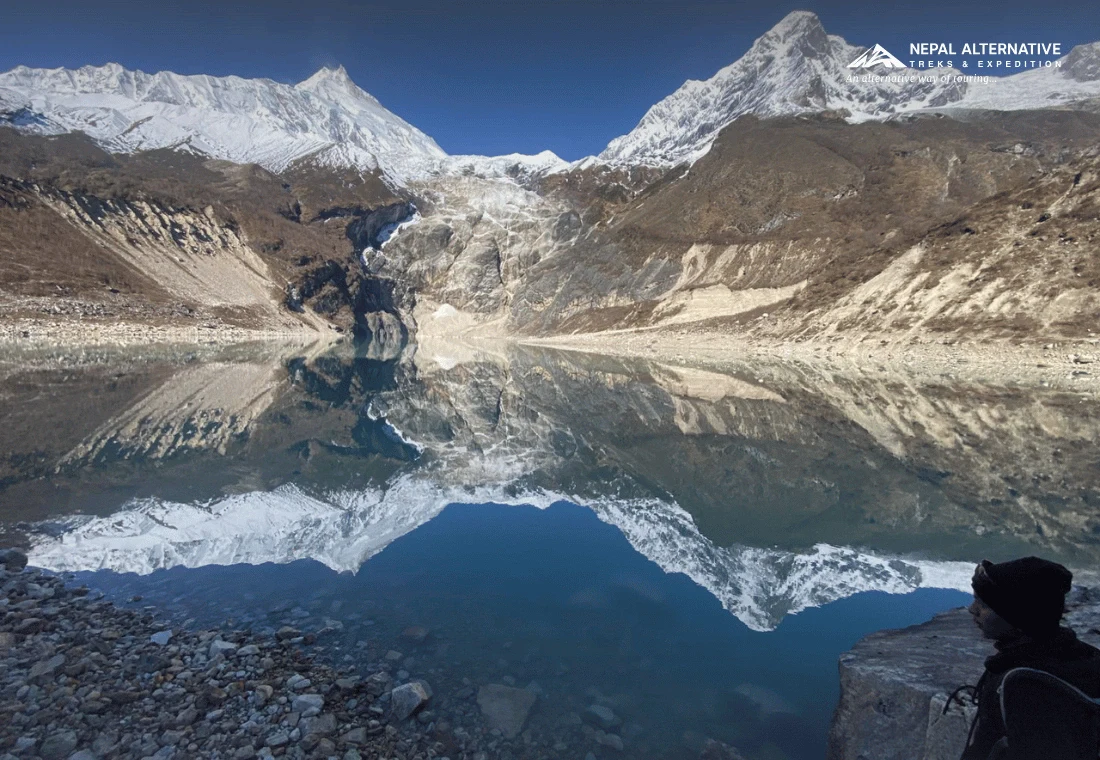
The Manaslu Conservation Area is a protected region in Gorkha District of Nepal, close to the Tibetan border. It covers around 1,663 square kilometers and includes remote Himalayan villages, forests, high-altitude landscapes, and important Buddhist sites. It is managed by the National Trust for Nature Conservation (NTNC) through the Manaslu Conservation Area Project (MCAP).
The area is best known among trekkers for the Manaslu Circuit, but it also includes routes into Tsum Valley and the trail toward Manaslu Base Camp. If you plan to trek here, it helps to understand the area’s wildlife, local culture, conservation work, and permit requirements before you set off.
Where Is the Manaslu Conservation Area?
The Manaslu Conservation Area is in northern Gorkha District, in Gandaki Province, Nepal. The area was declared on 28 December 1998. It was the second conservation area handed to the National Trust for Nature Conservation (NTNC), after the Annapurna Conservation Area. It covers seven wards of Tsum Nubri Rural Municipality, which include Sirdibas, Chumchet, Chhokangparo, Bihi, Prok, Lho, and Samagaun.
The area is commonly divided into three regions:
- Nubri Valley includes Samagaun, Lho, and Prok.
- Kutang includes Bihi.
- Tsum Valley includes Chumchet and Chhokangparo.
Jagat is an important entry point for many trekking routes. Trekkers pass through the local check post and have their permits checked there. Other check posts operate in the region, including one at Samagaun.
Who Manages the Manaslu Conservation Area?
The National Trust for Nature Conservation (NTNC) manages the Manaslu Conservation Area through the Manaslu Conservation Area Project (MCAP). Work began in 1997 under the Manaslu Ecotourism Development Project, before the area received its formal conservation status in 1998. The early project focused on basic trekking services and greater community involvement in looking after local natural and cultural resources.
MCAP works with local Conservation Area Management Committees on biodiversity, community livelihoods, and sustainable tourism. In this model, conservation and community development are linked. Local villages remain part of the protected area rather than being excluded from it.
Local Conservation Area Management Committees help carry out conservation work in villages. The project also supports training and monitors changes in the local environment and communities. The aim is to protect forests, wildlife, and cultural sites while allowing local people to benefit from responsible tourism. Lodges, guides, porters, and other services provide income for communities along the trekking routes.
One thing to note here is that the Manaslu Conservation Area is not a national park. It is a conservation area managed by NTNC, so its management structure differs from areas administered by Nepal’s national park department.
Trekking Routes Through the Manaslu Conservation Area
The Manaslu Circuit, Tsum Valley, and Manaslu Base Camp routes share parts of the trail, but they are different itineraries with different permit needs.
- Manaslu Circuit Trek: Follows the Budhi Gandaki valley, crosses Larkya La Pass, then descends toward Dharapani on the Annapurna side.
- Tsum Valley Trek: Follows a northeast branch toward Chumchet and Chhokangparo, then returns to the main route.
- Manaslu Base Camp side trip: Usually starts from Sama Gaun and follows a high-altitude trail toward the mountain. It is a side trip from the main circuit, not a separate lower-altitude walk.
Wildlife in the Manaslu Conservation Area
NTNC reports more than 2,000 plant species, 39 mammals, 201 bird species, 3 reptiles, and 11 butterfly species across 11 forest types in the Manaslu Conservation Area. The conservation area provides habitat for wildlife such as snow leopards, musk deer, and Himalayan tahr. Other reported mammals include lynx, red fox, jackal, brown bear, blue sheep, Himalayan serow, woolly hare, and Himalayan marmot.
The area also supports a wide range of plants and birds. Birds reported in the area include snow partridge, Tibetan snowcock, chukar partridge, Himalayan griffon, and golden eagle. Wildlife sightings depend on the season, location, and luck. You may notice birds and smaller animals, especially in forested areas, but seeing a snow leopard is rare. Keep your distance from wildlife and never feed or approach animals for a photograph.
Local Culture and Village Life on the Trail
Many communities in the Manaslu region have Tibetan cultural roots and follow Tibetan Buddhism. Along the trail, you may see mani walls, chortens, prayer flags, and monasteries that remain part of daily village life. Shringi Gompa, Mu Gompa, and Rachen Gompa are among the religious sites associated with the region. When visiting these sites, show respect, ask before taking photographs, especially during prayers or ceremonies, and follow any instructions from local residents.
Farming is limited by the terrain, lack of irrigation, and short growing season. Households rely on crops, livestock, trade, and tourism-related work. Tourism has also changed parts of the region. Lodges, trekking trails, and checkpoints now support the local economy.
Permits for the Manaslu Conservation Area
Permit requirements depend on your route. The main permits trekkers may need are the Manaslu Conservation Area entry permit, the Manaslu Restricted Area Permit, and, for some itineraries, the Annapurna Conservation Area permit.
Manaslu Conservation Area Permit
This permit covers entry to the protected area. It costs NPR 3,000 for foreign nationals and NPR 1,000 for SAARC nationals. Keep your permit available at checkpoints, including Jagat and other locations where officials may check your documents.
Manaslu Restricted Area Permit
The Manaslu region is a restricted trekking area, so trekkers also need the relevant restricted area permit. This is separate from the conservation area entry permit. The fee depends on the trek season and duration. From September to November, the permit costs USD 100 for the first 7 days, with an extra USD 15 for each additional day. From December to August, the fee is USD 75 for the first 7 days, plus USD 10 per extra day.
You can obtain the permit through your trekking agency from the Department of Immigration in Kathmandu. The permit must cover your intended route and dates. If you plan to add Tsum Valley, make sure the extra route and days are included.
Annapurna Conservation Area Permit
Some Manaslu Circuit itineraries cross into the Annapurna Conservation Area after Larkya La Pass. If your route enters that protected area, you may also need its entry permit.
A Tsum Valley itinerary that returns by the same route may not enter the Annapurna Conservation Area. Check the permits against your actual itinerary rather than relying on a generic list.
Do You Need a Guide?
The Manaslu region has restricted-area rules, and independent trekking is generally not permitted under the standard permit system. Trekkers should arrange the required licensed guide and permits through an authorized trekking agency. The permit rules remain the same. The office will ask for the conservation area entry and the restricted area permit, and the names on those papers need to match the passport.
Best Time to Visit
Spring, from March to May, and autumn, from September to November, are commonly recommended for trekking in the Manaslu region. These periods often offer more suitable trail conditions and clearer mountain views, although weather can still change.
Winter is colder, and snow may affect the high pass. Some lodges may close during the quieter months. The monsoon season brings more rain, muddy trails, leeches at lower elevations, and cloud that can obscure the mountains. Check current weather forecasts and local trail conditions before setting out.
How to Protect the Area While Trekking
Small choices can help reduce the impact of your trek in the Manaslu area. You can consider following tips to protect the area while trekking:
- Carry out your rubbish and dispose of it at appropriate facilities.
- Avoid wasting firewood and hot water, especially at high-altitude lodges where resources are limited.
- Stay on established trails and avoid disturbing grazing areas or wildlife.
- Keep noise low near villages, monasteries, and wildlife habitats.
- Ask permission before photographing people, homes, religious sites, or ceremonies.
- Follow local rules for drones and other equipment.
- Use local lodges and services where possible so tourism income reaches communities along the route.
- Respect religious spaces and never interrupt a ceremony for a photograph.
Plan Your Manaslu Trek With Us
The Manaslu Conservation Area in Nepal offers mountain scenery, remote villages, wildlife habitat, and a rich living culture. You can choose the classic Manaslu Circuit Trek, extend your journey into Tsum Valley, or plan a trip toward Manaslu Base Camp Trek based on your interests, available time, and fitness level.
Each option requires the correct permits, a suitable itinerary, accommodation arrangements, and enough time to adjust to the increasing altitude. Some areas also have special entry requirements, so it is important to prepare everything before your journey begins.
With Nepal Alternative Treks, you can plan your trip with support from an experienced local team. We help arrange the required permits, transport, accommodation, meals, and trekking guides according to your package. We can also recommend a route that matches your fitness, travel dates, and trekking goals. If you prefer to travel with your own group, we can arrange a private departure. With good preparation and respect for local communities, you can enjoy the region while helping protect the place that makes the trek special.
Questions about the Manaslu Conservation Area
Is the Manaslu Conservation Area a national park?
No. Manaslu Conservation Area is a protected conservation area managed by the National Trust for Nature Conservation through the Manaslu Conservation Area Project. It is not managed as a national park by Nepal’s Department of National Parks and Wildlife Conservation.
Can I trek in the Manaslu region without a guide?
The Manaslu region is subject to restricted-area rules, and trekkers generally need to arrange a licensed guide and the required permits through an authorized trekking agency.
Does a Manaslu permit also cover Tsum Valley?
Manaslu permit doesn’t cover Tsum Valley. The Tsum Valley route has separate restricted-area permit conditions.
When is the best time to trek in the Manaslu Conservation Area?
Spring, from March to May, and autumn, from September to November, are the best times to trek in the Manaslu Conservation Area. Conditions vary each year, so check the weather, lodge availability, and high-pass conditions before departure.
What wildlife can I see in the Manaslu Conservation Area?
The area is home to species such as Himalayan tahr, musk deer, blue sheep, and snow leopard. You may also see birds and smaller mammals. Snow leopard sightings are rare, so treat any wildlife encounter as a bonus rather than an expectation.