Safety update: our trekking groups are safe, and our routes are running as planned. Read full flood notice.

Safety update: our trekking groups are safe, and our routes are running as planned. Read full flood notice.
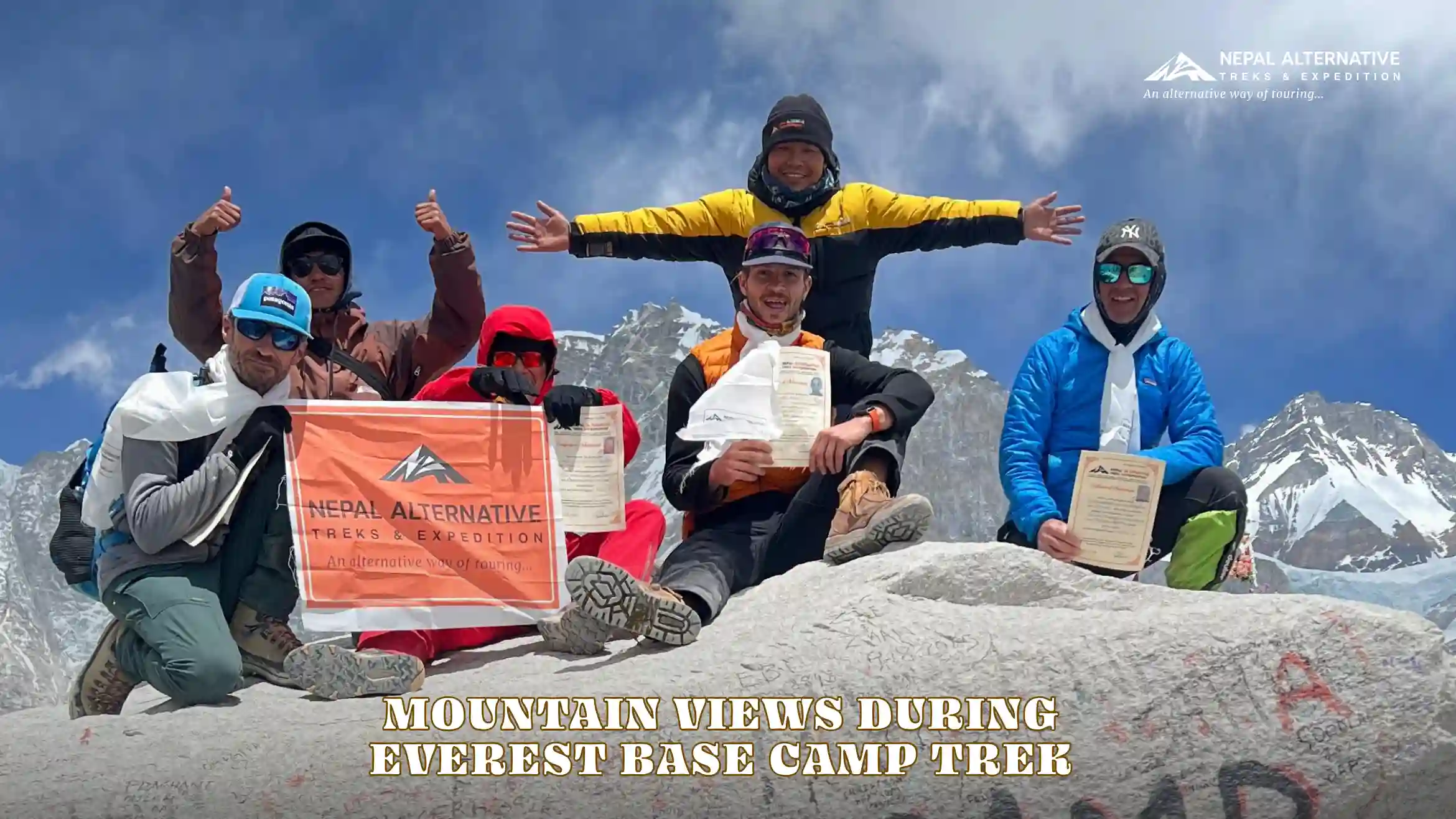
The Everest Base Camp Trek is one of the greatest mountain journeys in the world. The adventure takes you through the Khumbu Valley, where mountain peaks surround you on every side. More than a walk to a legendary base camp, this is a journey through some of the most stunning mountain scenery on Earth. The ever-changing beauty of the Himalayas is what makes this trek so special and draws adventurers from every corner of the world.
Every day of the trek brings a new and different Himalayan landscape, with mountain peaks, deep valleys, glaciers, and peaceful villages. As you gain altitude, the mountains slowly change their appearance, with their new shapes, colors, and fresh view at every turn. One morning, you may witness mountain peaks glowing in the sunrise, and by afternoon, those same peaks can look completely different, sharp, bright, and blue against the clear Himalayan sky.
Furthermore, the Everest Base Camp (EBC) trail takes you face-to-face with legendary Himalayan peaks like Mount Everest, Lhotse, Nuptse, Ama Dablam, and Pumori. These mountains are not just something you admire from a distance; instead, they surround you constantly and will be your companions throughout the adventure.
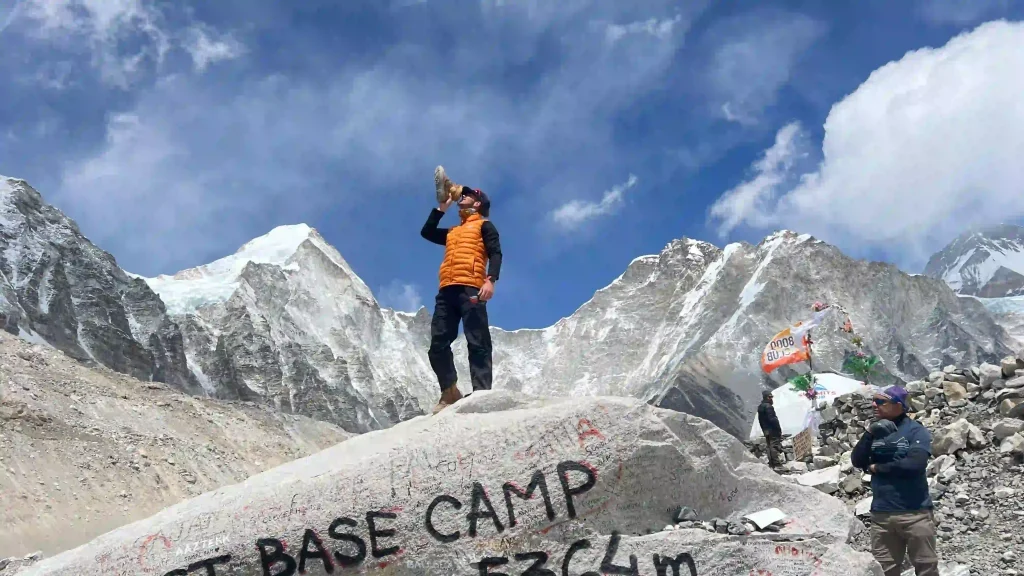
Ask every trekker heading to Everest Base Camp why they chose the destination, and their answer will be simple: “to see the tallest mountain on Earth”. It’s a fair reason, as well, because Mount Everest has a magnetic pull that no other peak can match. But if you ask the same question to those trekkers after trekking to EBC and returning, they’ll tell you something surprising: Everest is only a small part of the experience. The view of Mount Everest itself is not visible from Everest Base Camp; instead, other mountain peaks, glaciers, and rocky landscapes that many trekkers end up loving just as much, or even more, than Everest itself.
The Everest region is home to over 20 peaks exceeding 7,000 m, including three of the world’s 14 highest “eight-thousander” mountains. You’ll hike alongside famous peaks like Ama Dablam, Nuptse, Lhotse, Cho Oyu, Thamserku, Kangtega, Cholatse, Taboche, and Pumori.
Ama Dablam is a favorite for many people. With its steep ridges and hanging glacier, it’s one of the most photographed mountains on the Everest Base Camp trek because it looks stunning from almost every viewpoint.
Everest, on the other hand, tends to hide. Because of its position behind Nuptse and Lhotse, it is not always visible as many people expect. You’ll get a great view from places like Kala Patthar, the Everest View Hotel, and the hills above Namche Bazaar.
The Everest Base Camp trek isn’t only about the mountains but also about the glaciers that have shaped the entire region over thousands of years. Along the way, you’ll see several glaciers, including the famous Khumbu glacier. Its massive ice, rocky ridges, and small meltwater lakes create some of the most unique scenery on the trek.
Near Gorak Shep, the trail crosses the glacier’s rocky surface, known as a moraine. The mix of loose rocks and hidden ice gives the landscape an almost moon-like appearance. You’ll also witness smaller glaciers higher up in the valleys.
The Everest Base Camp trek doesn’t follow just one valley. Instead, it takes you through different valleys, each with its own scenery and atmosphere. The lower Dudh Kosi Valley is green as you’ll walk through forests of rhododendron and pine, and cross rivers on suspension bridges.
As you trek higher, the Imja Khola Valley becomes more open and rugged. Around Pangboche and Dingboche, the landscape feels more alpine, with fewer trees and incredible views of Ama Dablam and the route toward Island Peak. Near the end of the trek, you experience the Khumbu Valley. Around Lobuche and Gorak Shep, trees disappear with the landscape of rock, ice, and mountain peaks.
Some of the best views on the Everest Base Camp trek aren’t at Everest itself but from nearby hills and ridges. The hike to Nangkartshang Peak above Dingboche provides stunning views of Mount Makalu, the fifth-highest mountain in the world. Likewise, the viewpoint offers exceptional sights of Ama Dablam and Lhotse. The ridge above Namche Bazaar offers views of mountains such as Thamserku and Kongde Ri. Additionally, Kala Patthar is the most famous viewpoint of the region for offering a close look at Mount Everest, along with a 360-degree view of other peaks.
One of the unique aspects of the Everest Base Camp trek is that the journey isn’t all about Everest. Some of the world’s most amazing mountain peaks fill the Khumbu region, and the trail takes you right through the middle of them. From the iconic Ama Dablam to peaks like Lhotse, Nuptse, Pumori, and Thamserku, you’ll spend most of the trek surrounded by Himalayan summits.
During the Everest Base Camp Trek, you’ll get mountain views of Mount Everest, Lhotse, Nuptse, Ama Dablam, Pumori, Thamserku, Kangtega, Cholatse, Taboche, Lobuche Peak, and Island Peak.
Although the trek is named after Mount Everest, it’s surprisingly one of the hardest peaks to spot clearly throughout the trek. The mountain lies behind Nuptse and Lhotse, so it is hidden from view. The first sight of the peak is visible from the ridge above Namche Bazaar, and then from the Everest View Hotel near Khumjung. The best and closest view of the peak is from Kala Patthar.
Lhotse, the world’s fourth-highest mountain, is located right next to Everest. It is visible from many points along the Everest Base Camp trek. Likewise, as Mount Everest and Lhotse are connected, you’ll often see Lhotse whenever Everest comes into view. One of the impressive features of the peak is its big south face. As you trek higher, especially around Dingboche and the upper Khumbu Valley, Lhotse appears larger and more incredible.
Although Nuptse is less famous than Everest or Lhotse, it’s one of the mountains you’ll notice the most on the Everest Base Camp trek. In fact, it’s the reason Everest stays hidden on the lower trail. You’ll enjoy some of the best views of Nuptse from Lobuche, Gorak Shep, and along the Khumbu Glacier. As you get closer to Everest Base Camp, it becomes one of the most noticeable mountains around. Many trekkers are surprised that Nuptse looks more impressive than Everest.
Often called one of the most scenic mountains in the world, Ama Dablam is one of the highlights of the Everest Base Camp trek. Its sharp, elegant ridges and hanging glacier give it a unique shape that’s easy to recognize. In the Sherpa language, Ama Dablam means “Mother’s Necklace,” because the hanging glacier looks like the traditional pendant worn by Sherpa mothers. You’ll see Ama Dablam for several days of your trek from Namche Bazaar to Dingboche continuously.
Pumori is another impressive mountain you’ll see near Everest Base Camp. Its name means “Everest’s daughter” in the Sherpa language because of its close relationship to Everest. You’ll get your first clear views of Pumori as you walk toward Lobuche and Gorak Shep.
Thamserku is one of the peaks visible from the very beginning of the trek. It lies above the Dudh Kosi Valley near Phakding and Namche Bazaar, with steep slopes covered in snow and ice. For many people, seeing Thamserku is the moment they realize just how stunning the scenery will become as they continue higher into the Himalayas.
Kangtega, which means “Snow Saddle,” is a beautiful peak, seen together with Thamserku. You will catch your first clear view of Namche Bazaar and Khumjung. As you continue the trek, the peak seems exceptional from Tengboche and Debuche. As you hike toward Lobuche, you can spot Kangtega in the background behind the main trail of EBC.
Cholatse is a pyramid-shaped mountain with steep rock and ice cliffs. It lies above Dzongla and is seen on the western side of the trail as you move through the higher parts of the trek. The name Cholatse comes from the Tibetan words “Cho,” meaning lake, “La,” meaning pass, and “Tse,” meaning peak. Together, it means “Lake Pass Peak.” The mountain is connected to nearby Taboche (Tawoche) by a long ridge that creates an impressive chain of peaks in the upper Khumbu region.
Located beside Cholatse, Taboche has a similarly sharp, steep profile. Together, the two mountains create one of the most appealing views in the upper Khumbu region. You can see this impressive pair from places like Pheriche and Dzongla.
Lobuche Peak is one of the most recognizable mountains in Nepal’s Khumbu region and a well-known landmark on the Everest Base Camp trek. Rising above the village of Lobuche, the peak comes into view as trekkers get near Dughla (Thukla) and stays visible as they continue toward Gorak Shep and Everest Base Camp.
Island Peak, also known as Imja Tse, is one of Nepal’s most popular trekking peaks and a famous sight along the Everest Base Camp route. The mountain got its nickname “Island Peak” in 1952 because, from Dingboche, it looked like an island surrounded by a sea of ice. Its official name, Imja Tse, comes from its location above the Imja Valley. Trekkers can enjoy beautiful views of the mountain from Dingboche and the Chhukung Valley.
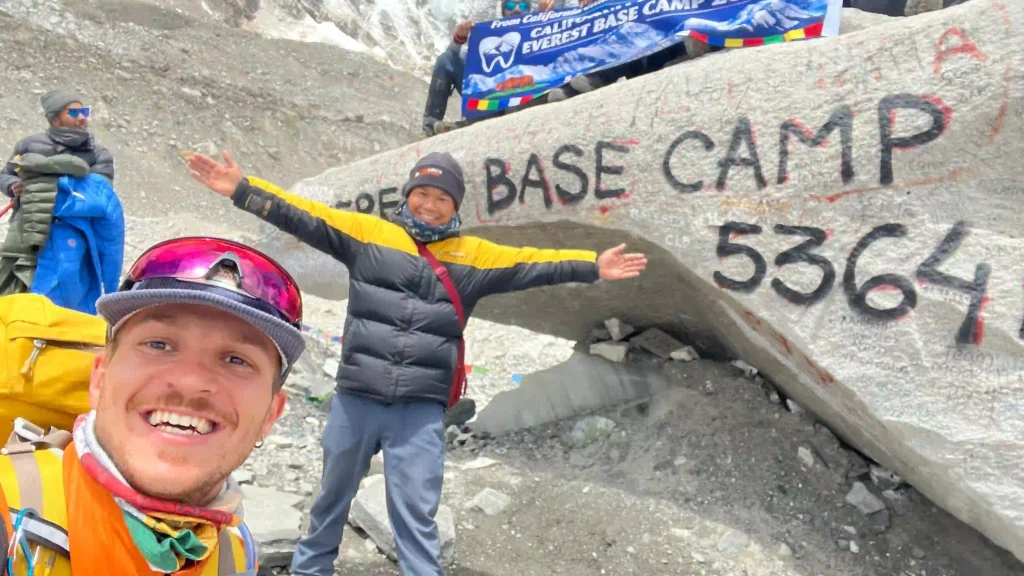
The Everest Base Camp trek is famous for its incredible mountain views, with each stop serving as a unique viewpoint. In each step, the scenery keeps changing with new peaks, different landscapes, and extraordinary moments.
Your Everest Base Camp trek begins after landing at the small mountain airport in Lukla. The ridge above the village provides the first view of the Himalayas. Right after the exciting flight into the mountains and the first steps on the trail, you’ll get a sight of Kusum Kangaru and Thamserku.
Visible Peaks from Lukla Ridge: Kongde Ri, the triple-peaked Kusum Kangaru, Nupla, Thamserku, Karyolung, and Mt. Khatang.
Namche Bazaar is the largest Sherpa town on the Everest Base Camp trail, built into the side of a mountain like a natural amphitheater. From the viewpoint above the town, trekkers get their first clear views of Everest and nearby peaks like Lhotse and Thamserku.
Visible Peaks from Namche Bazaar: Mount Everest, Lhotse, Nuptse, Ama Dablam, Kongde Ri, and Thamserku.
As the name suggests, the Everest View Hotel offers one of the most comfortable places to see Mount Everest. Located on a hill above Namche Bazaar, it provides open views of Everest, Lhotse, and Ama Dablam. Also, it is one of the highest-placed hotels in the world, located at an elevation of 3,880 m / 12,730 ft.
Visible Peaks from Hotel Everest View: Mount Everest, Lhotse, Nuptse, Thamserku, and Ama Dablam.
Khumjung is a peaceful, traditional Sherpa village away from the busier EBC trail. Surrounded by mountains, it offers a more relaxed view of the Khumbu region. Along with mountain views, it gives trekkers a chance to experience everyday Sherpa life, with stone houses, fields, and local traditions.
Visible Peaks from Khumjung: Mount Khumbila, Ama Dablam, Mount Everest, and Lhotse.
Tengboche is a special village in the Khumbu region because it is home to the area’s most famous monastery. The monastery is located on top of a hill and offers the most incredible viewpoints along the entire trek. Many trekkers consider the sunrise and sunset views from Tengboche to be among the most extraordinary experiences of the journey.
Visible Peaks from Tengboche Monastery: Mount Everest, Lhotse, Nuptse, Thamserku, Tawache, and Kangtega
Pangboche is one of the oldest and most beautiful villages in the Everest region. Located near the stunning Ama Dablam mountain, it offers trekkers a close view of this famous peak. The village is a perfect place to take a break, enjoy the peaceful surroundings, and admire the mountain’s unique shape and beauty.
Visible Peaks from Pangboche: Ama Dablam (up close), along with Lhotse and Thamserku
Dingboche is a charming traditional farming village located in an open valley of the Everest region. The village is surrounded by stone walls and fields that showcase the simple and peaceful lifestyle of the local Sherpa people. From the nearby ridge, trekkers can enjoy views of some of the Himalayas’ most famous peaks, including Ama Dablam and Lhotse, along with the beautiful Imja valley below.
Visible Peaks from Dingboche: Ama Dablam, Lhotse, Tabuche, Island Peak, and Nuptse.
It is a side trip above Dingboche on the acclimatization day. The viewpoint climb is quite challenging but well worth the extra effort, offering views of some of the world’s tallest mountains, including Makalu, Ama Dablam, and Lhotse, as well as the stunning Imja Valley.
Visible Peaks from Nangkartshang Peak: Ama Dablam, Makalu, Lhotse, Everest, Cho Oyu, Island Peak, Taboche, Cholatse, Kangtega, and Thamserku.
Lobuche is a small and simple village you’ll pass through at the end of the trek and after returning from the trek. One of the village’s specialties is its proximity to the Khumbu Glacier. Peaks like Lobuche Peak and Nuptse rise above the village, adding the thrill of the trek before reaching the ultimate destination. The stunning mountain views and peaceful atmosphere make Lobuche a memorable stop before the final walk to EBC.
Visible Peaks from Lobuche: Nuptse, Pumori, Ama Dablam, Lobuche East and West, and Mount Everest.
Gorak Shep is the last village before Everest Base Camp, lying on a flat sandy area next to the Khumbu Glacier. From here, mountains like Pumori and Nuptse look amazing. Gorak Shep also serves as the base for the final hikes to Everest Base Camp and the famous Kala Patthar viewpoint.
Visible Peaks from Gorak Shep: Pumori, Lhotse, Lingtren, and Nuptse.
Kala Patthar is the highlight of the Everest Base Camp trek and one of the most famous viewpoints in the Himalayas. The viewpoint offers the best and clearest view of Mount Everest, as the summit cannot be fully seen from Everest Base Camp itself. From the top, 360-degree views of Everest, Nuptse, Pumori, Lhotse, and the vast Khumbu Glacier are iconic.
Visible Peaks from Kala Patthar: Mount Everest, Lhotse, Nuptse, Pumori, Changtse, Ama Dablam, Thamserku, Lobuche Peak, Chhumbu, Taboche, and Kangtega.
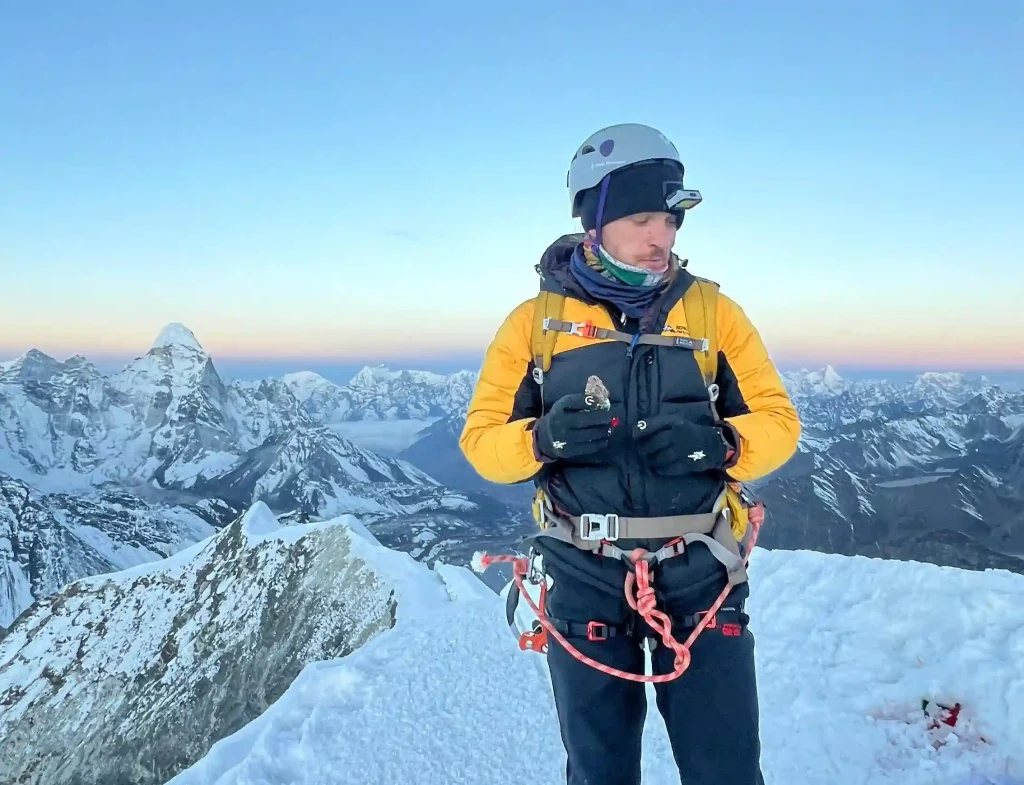
Do you think mountains are the only attractions along the Everest Trek? But if you think so, you’re probably wrong because the trek has lots to offer.
The Khumbu Glacier is the world’s highest and largest glacier that follows much of the upper Everest Base Camp trek. It flows from the Western Cwm between Everest, Lhotse, and Nuptse, passes Everest Base Camp, and continues toward Lobuche. The lower part of the glacier is covered with rocks, gravel, and boulders, so it looks like a rocky landscape rather than ice. Closer up, you’ll notice impressive ice formations, deep crevasses, and pools of meltwater hidden between the rocky surface.
This is the glacier’s most iconic and dangerous section, where it drops slowly from the Western Cwm toward Everest Base Camp. As the glacier slowly moves, the ice breaks into huge ice towers called seracs and deep cracks known as crevasses. Some of these cracks are hidden under thin layers of snow. Trekkers on the Everest Base Camp trail don’t cross the Icefall, as it is used only by climbers heading for the Everest summit. However, you can enjoy the views of the Icefall from Base Camp and Kala Patthar.
Moraines are long ridges of rocks, gravel, and dirt left behind as a glacier slowly moves. On the Everest Base Camp trek, much of the trail after Lobuche and near Gorak Shep follows these rocky ridges instead of the glacier itself. This makes the path more stable while offering great views of the ice below.
Above Dingboche, and especially after Lobuche, the landscape becomes rocky and treeless. The small shrubs and moss disappear, leaving only bare rock, windswept ridges, patches of permanent snow, and the Khumbu Glacier through the valley. The high mountain landscapes are not only beautiful by view perspective but also ecologically unique. Even in the harsh conditions, hardy alpine plants survive, along with animals such as the Himalayan tahr, musk deer, and snow pigeons, although sightings are very rare.
One of the special moments trekkers can never forget on the EBC journey is when the first rays of the rising sun hit the Himalayan peaks. And those special moments are hard to catch on your camera. So take full opportunity to witness the moments through your eyes via three different iconic viewpoints along the route:
Kala Patthar is the most popular viewpoint on the Everest Base Camp trek for both sunrise and mountain views. It’s also the highest point most trekkers reach and the best place to see Mount Everest clearly. Most trekkers stay overnight at Gorak Shep and begin the hike to Kala Patthar around 4:00-4:30 AM. The hike to the top gains about 400 m in elevation and usually takes 1-2 hours. It’s steep, cold, and challenging, with temperatures below freezing, but the incredible sunrise makes the effort worthwhile.
At sunrise, the first light slowly brightens Everest, Nuptse, and Pumori that changes the peaks from golden to bright white. The beautiful sunrise light makes Kala Patthar the favorite location for photographers and nature lovers. Moreover, the wide mountain views, a close-up look at Mount Everest, and the feeling of reaching such a high point create a memorable experience.
Hotel Everest View is the least challenging viewpoint for sunrise along the EBC Trail. The Hotel holds the Guinness World Record as the highest-altitude hotel in the world. It is a 2-3 hour round-trip hike from Namche Bazaar and is visited on an acclimatization day. From the hotel, you can enjoy wide views of Everest, Lhotse, and Ama Dablam while relaxing with a hot drink in a warm dining room with large windows.
Since it’s at a lower elevation than Kala Patthar, the mountains look a bit farther away. Even so, the easy access and comfortable setting make it a favorite among older trekkers, families, and anyone who wants to watch the sunrise without having to start a walk in freezing temperatures.
Nangkartshang Peak is a peaceful, less-crowded viewpoint in the Everest region. Located above Dingboche, it’s becoming increasingly popular for its sunrise views over mountain peaks. With its incredible Himalayan views, peaceful surroundings, and thrilling sunrise, Nangkartshang Peak is one of the best viewpoints on the Everest Base Camp trek. The hike takes about 3-4 hours round-trip from Dingboche and is done on an acclimatization day.
Autumn (September to November) offers the best mountain views in the Everest region, with spring (March to May) and winter (December to February) close behind.
At a glance:
| Season | Notes |
| Autumn | Most reliable, with clear views and the perfect balance of comfort and visibility. |
| Spring | Almost autumn-like visibility with colorful rhododendrons and warmer weather than winter. |
| Winter | The clearest air and best visibility, but with very cold conditions and snow challenges. |
| Monsoon | Limited visibility due to frequent cloud cover. |
For the closest and most memorable views of Mount Everest, Kala Patthar is the best vantage point. Besides, Hotel Everest View, Nangkartshang Peak, and Namche Bazaar offer a distant yet beautiful view of the peak.
Kala Patthar is known as the best viewpoint of the Everest region because it provides the closest and most unobstructed view of Mount Everest, along with surrounding peaks like Lhotse, Nuptse, and Pumori.
No, Mount Everest is not directly visible from Everest Base Camp because surrounding peaks block the view. The best views of Everest are from Kala Patthar and other viewpoints, including Nangkartshang Peak and Hotel Everest View.
You will see over 10 major, named Himalayan peaks on the Everest Base Camp (EBC) trek. Each day, you’ll see different mountain views, including Thamserku, Kusum Kangaru, Ama Dablam, Lhotse, Nuptse, Kangtega, Taboche, Cholatse, Pumori, and Khumbutse.
You will get your first clear view of Mount Everest on the second day of trekking, specifically from the viewpoint just above Namche Bazaar or from the nearby Everest View Hotel.
Yes, beginners can enjoy the mountain views without reaching Base Camp. The 5-Day Everest View trek takes you through the lower regions of the Everest region, yet offers views of Mount Everest and other peaks.
Mount Everest is known as Sagarmatha in Nepali, meaning “Forehead of the Sky,” and Chomolungma or Qomolangma in Tibetan, meaning “Goddess Mother of the World.” Historically, it was known as Peak XV before receiving its current name, Mount Everest.
Need assistance? Our travel expert Tej Bahadur Gurung is here to help! Please fill out the form below to initiate a chat and get your queries resolved quickly.