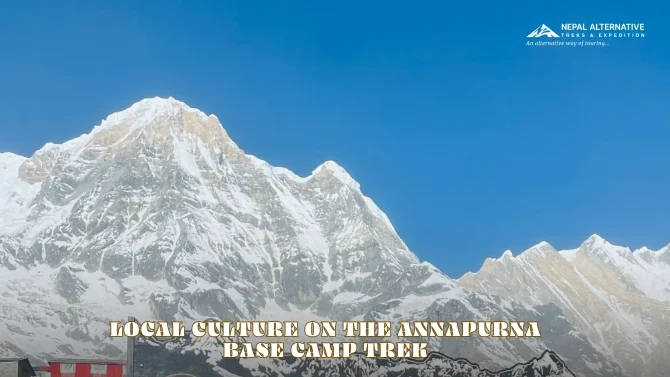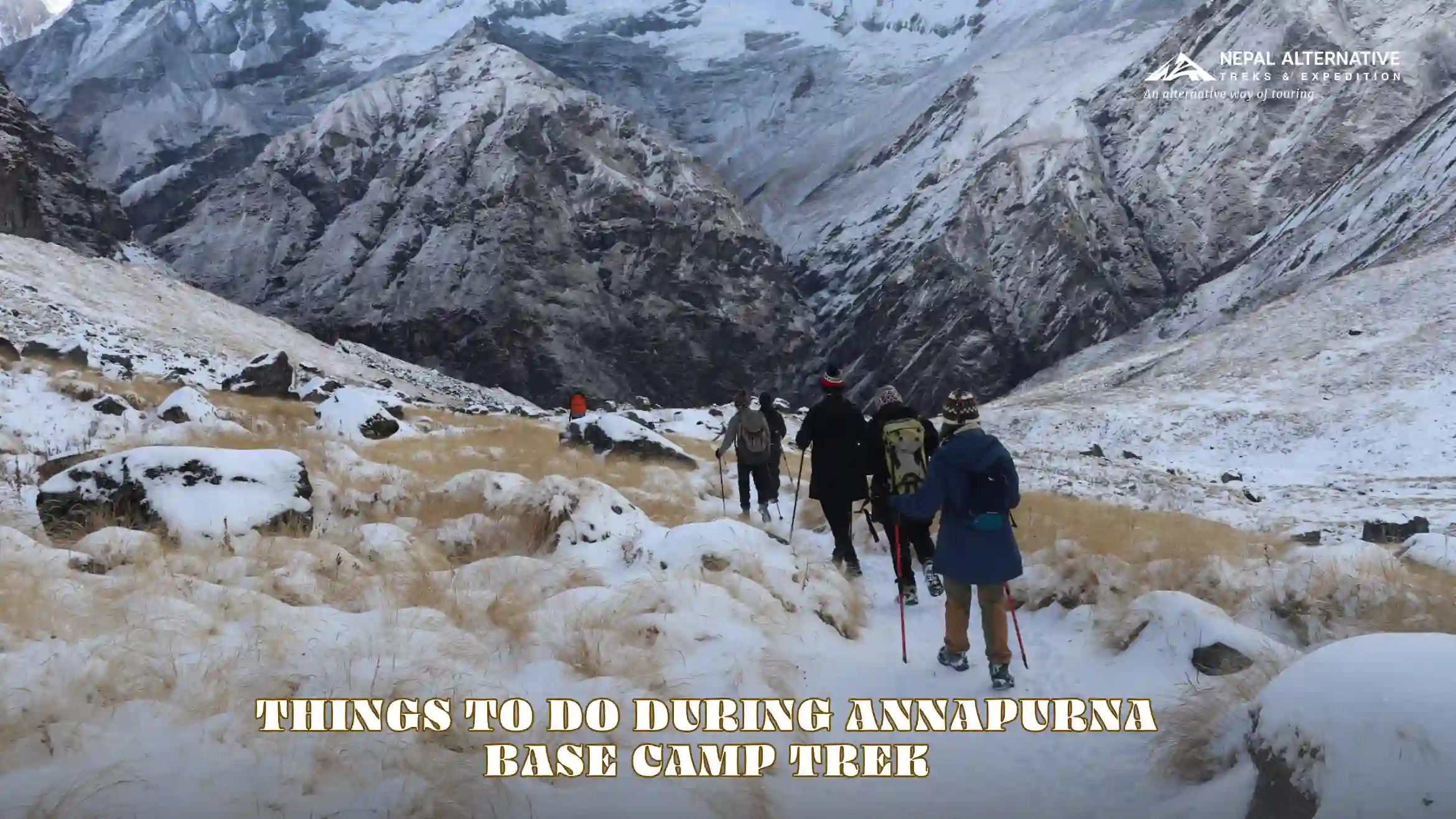
Watching the light reach the mountains at Annapurna Base Camp is one reason to make the walk. Not only during the ABC day, the days before and after it also offer a different kind of interest. For example, a meal in Chhomrong, a shaded forest trail, a conversation at a lodge, or a visit to Ghandruk’s museum.
The most rewarding things to do during the Annapurna Base Camp trek in Nepal fit the route and the time you have. Some happen along the main trail. Others, including Poon Hill, need a longer itinerary. Choosing those experiences before you travel leaves more room to enjoy them once you arrive.
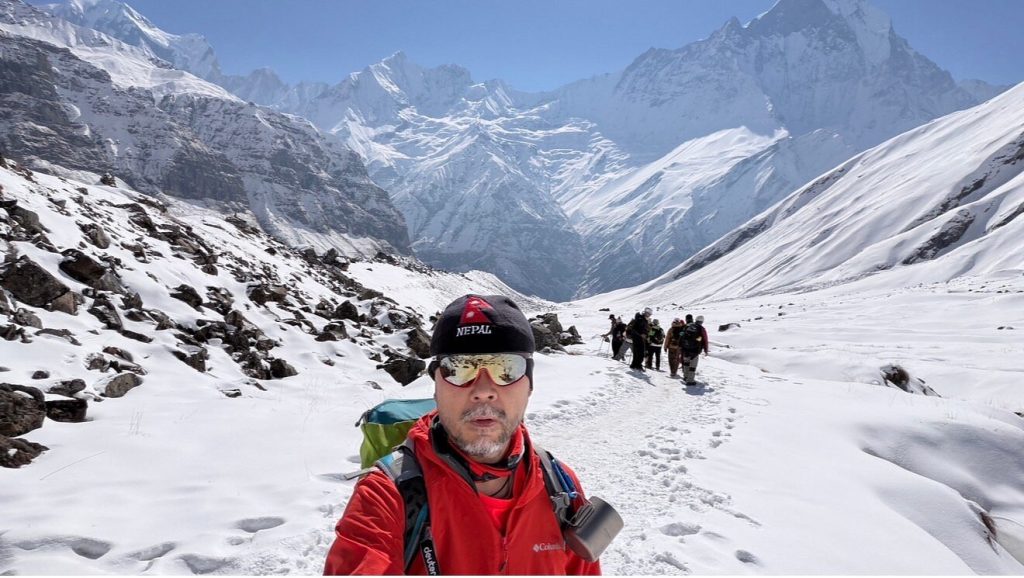
Choose your highlights before choosing your route
A trek labeled Annapurna Base Camp can follow different approaches and schedules. Check the overnight stops and walking days before assuming that a photograph or activity from another itinerary will be part of yours.
| Experience | Where it fits | What to check |
|---|---|---|
| Mountain light at ABC | The high point of the Sanctuary route | Whether you stay overnight and when you descend |
| A pause at Machhapuchhre Base Camp | On the approach to ABC | The day’s pace and conditions |
| Village walks and teahouse meals | Lower settlements along your route | Time between arrival and the next walking day |
| Ghandruk’s cultural museum | A Ghandruk approach or planned village visit | Whether your schedule allows a visit |
| Jhinu Danda hot springs | A suitable return route | Current access, opening conditions and the walk back |
| Poon Hill sunrise | An extended route through Ghorepani | Additional walking days |
| Pokhara Lakeside | Before or after the trek | A separate allowance of time |
Nepal Alternative Treks offers a direct 7-day Annapurna Base Camp Trek itinerary and a separate 10-day ABC trek that includes Poon Hill. The difference is not simply more attractions. It is more time, more walking, and a different rhythm.
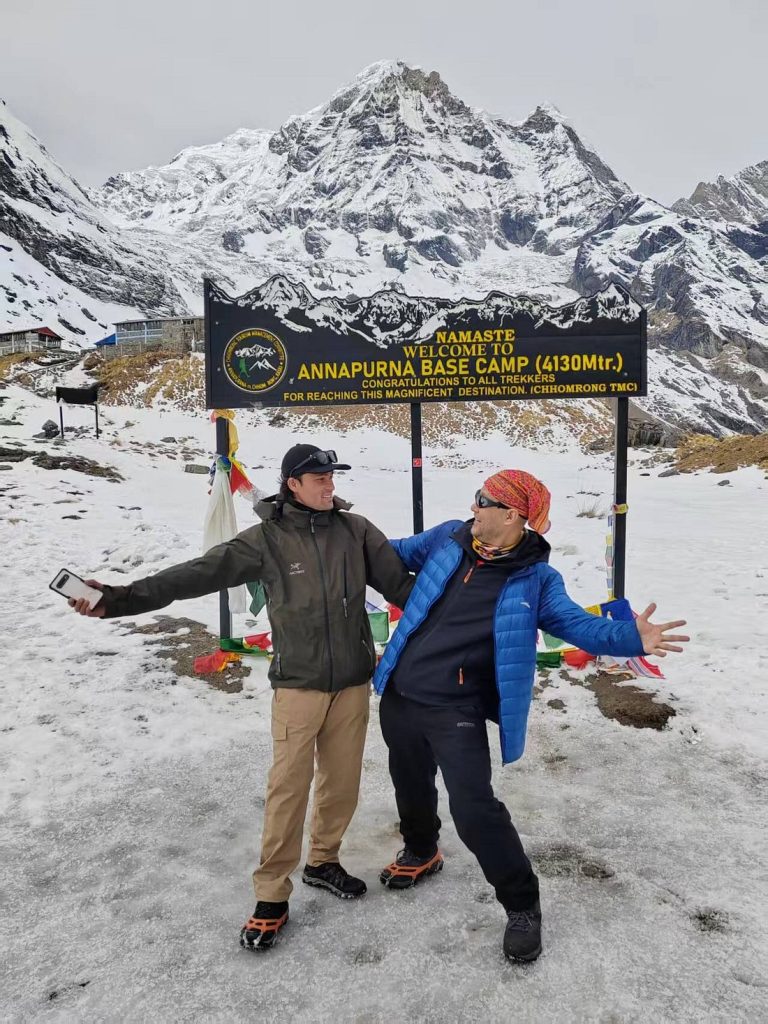
Watch the changing light at Annapurna Base Camp
Annapurna Base Camp (ABC) stands at 4,130 m in the mountain basin known as the Annapurna Sanctuary in the Annapurna region. If your itinerary includes a night at ABC, do not treat it as a place to arrive, eat, sleep, and leave. Stay outside for the evening light, then wake early for the morning. As the sun moves, it reveals ridges and faces that seemed flat or merged together the day before.
Clouds can hide the peaks, and sunrise times change through the year. So plan around the morning you actually have and let the conditions guide how long you stay outside. Also, prepare your warm layers before going outside and use the established viewing area. The mountains are close enough to enjoy without approaching unstable ground.
Pause at Machhapuchhre Base Camp and learn the mountain names
Take a pause at Machhapuchhre Base Camp, shortened to MBC, on the approach to ABC. Even when you are continuing higher that day, it is a place to notice how the valley opens into the Sanctuary.
Ask your guide to identify two or three peaks and explain which direction you will walk next. Machhapuchhre, or Fishtail, is the easiest mountain to recognize. Its outline becomes a useful reference point as you climb higher towards ABC. Looking back at a peak you have just walked beneath helps you see the route as one connected landscape rather than a series of daily distances.
Notice the forests as carefully as the peaks
The lower and middle sections of the trek give ABC much of its character. Forest, cultivated slopes, and the more open ground higher up create different walking days. Rhododendron forests and waterfalls are among the features identified along the approach. In the forest, slow down for a minute. Listen for birds, look at the bark, leaves, and plants beside the trail. Also, notice which trees continue farther up the valley and where the vegetation becomes more open.
Rhododendron flowers are a reason some trekkers choose spring, but blooming varies with elevation and that year’s weather. Tell your operator early if flowers are a priority when planning your dates. Even without flowers, the forest is still worth attention.
Explore Chhomrong and plan a visit to Ghandruk
Chhomrong is often treated as an overnight stop, but it deserves a walk. Its houses, stone steps, fields, and lodge terraces show how people live on a steep hillside. Look at the supplies being carried up the same paths you are using, the kitchens preparing meals, and the fields above the village. Then give people space to continue their day.
Likewise, Ghandruk deserves a planned visit if culture is a priority. The Annapurna Rural Municipality identifies it as a Gurung village and lists its Old Gurung Museum, which presents aspects of Gurung life in a traditional house. A museum visit gives context to the houses and objects you see around the village. Allow time to look at the displays and learn what they mean, beyond recognizing the village as a stop on a trekking map.
If your ABC itinerary does not allow enough time there, consider the separate 3-day Ghandruk trek. It includes the Gurung Museum and views of Annapurna South, Gangapurna, Hiunchuli, and Fishtail.
Make a teahouse meal part of the experience
Dal bhat is more than fuel for the next day’s climb. It combines rice, lentils, vegetables, and side dishes, though exactly what reaches the table depends on the kitchen and what is available. Also, ask what the lodge recommends and what is being prepared that evening. You might choose a familiar meal after a tiring day, then try something different when you have more appetite and time.
There is no need to turn each dinner into a tasting challenge. Explain dietary requirements before ordering and confirm ingredients with the kitchen, especially if you have an allergy. At busy lodges, order when your host or guide suggests it. If the host is willing to talk, ask about a dish or how supplies reach the kitchen. Let the conversation follow their availability. A shared dining room is also a place to rest quietly after walking.
Enjoy the rivers, bridges and waterfalls
On cloudy days, the rivers, bridges, and waterfalls become the main event. From a suitable stopping place, look along the river to see how the path follows the valley. A bridge shows the depth of the gorge and the climb on the opposite slope. A waterfall shows how much water the hillsides carry. Photograph before or after crossing, and keep the bridge clear for other trekkers.
Water levels and the condition of nearby paths change. Ask about access before walking closer to a waterfall, and accept a distant view when that is the sensible choice.

Look for birds and small details in the conservation area
Wildlife watching on a walking ABC trek starts with patience. A bird call, movement in a tree, or an insect beside the path can be reason enough to stop. Observe size, color, and behavior before reaching for the camera. If you cannot identify something, note what you saw and ask your guide later.
Do not expect every animal listed for the wider Annapurna Conservation Area to appear on the ABC trail. Habitats differ across the region, and sightings depend on timing, weather, and luck. Watch from a distance and allow animals to move away. Avoid feeding them, playing calls to draw them closer, or stepping into vegetation for a photograph. These simple choices make observation part of the walk without disturbing what you came to see.
Consider a visit to Jhinu Danda’s hot springs on the return
Jhinu Danda’s natural hot springs can turn the return journey into a recovery day. The Annapurna Rural Municipality lists the springs among its local attractions. Allow time for the walk to and from the bathing area, as well as time to dry off and change afterward.
Put the camera away once you arrive. A long soak, a slow meal, and an early night can be exactly what your legs need after several days of climbing. If you prefer to stay at the lodge, an unhurried meal and a rest are also reasonable choices after several days of walking.
Add Poon Hill if you want a different mountain viewpoint
Poon Hill is not automatically part of every Annapurna Base Camp trek itinerary. It requires an approach through Ghorepani and adds walking days to the itinerary. Our 10-day ABC trek with Poon Hill includes that extension. It suits travelers who want a second sunrise viewpoint and more time in the foothills.
For the early walk, bring a working headlamp, warm layers, and enough time to enjoy the changing light rather than rushing back down. Choose this addition only if the experience interests you. If your available time is limited, keeping a less hurried direct ABC itinerary may be more satisfying than trying to include both viewpoints.
Leave a little time for Pokhara after the trek
Pokhara is best treated as part of the trip, not an airport stop. Keep a free afternoon around Lakeside after the trek to eat well, sort your gear, and look through photographs while the mountains still feel close. The Nepal Tourism Board describes Pokhara as a base for Annapurna trekking and highlights Phewa Lake among its attractions.
A lakeside walk may be enough. Add a boat trip or other outing only if you have the energy and time. That said, keep the first plans after the trek flexible. The drive back, your energy and the weather will help determine what feels enjoyable. An unplanned hour beside the lake can be more welcome than a tightly scheduled set of attractions.
Make room for the experiences that matter to you
Tell your operator what interests you before the walking days are fixed. A photographer may want an overnight at ABC and an early start. A culture-focused traveler may prefer more time in Ghandruk. A spring visitor may want to time the trek around rhododendrons. A tired traveler may value a hot spring and a slower final day.
Keep a short list of priorities and a longer list of possibilities. Then let the weather, altitude, and your pace decide what is realistic on the day. Avoid adding an extra outing simply because it appears on another trekker’s list.
The few habits listed below make every version of the trek better:
- Ask before photographing people, homes, or religious places.
- Respect privacy at hot springs and follow local bathing arrangements.
- Stay on established paths and use safe stopping places.
- Leave flowers and plants where they grow.
- Carry your litter to an appropriate collection point and reduce packaging where you can.
- Follow current local instructions on access and photography.
- Tell your guide if you feel unwell or too tired for an optional activity.
Choose the ABC you want to walk
Read our variant of ABC Trek plan and tell us which experiences matter to you. We can help you compare the direct route with a longer approach, keeping time for the places you want to understand more closely.