Safety update: our trekking groups are safe, and our routes are running as planned. Read full flood notice.

Safety update: our trekking groups are safe, and our routes are running as planned. Read full flood notice.
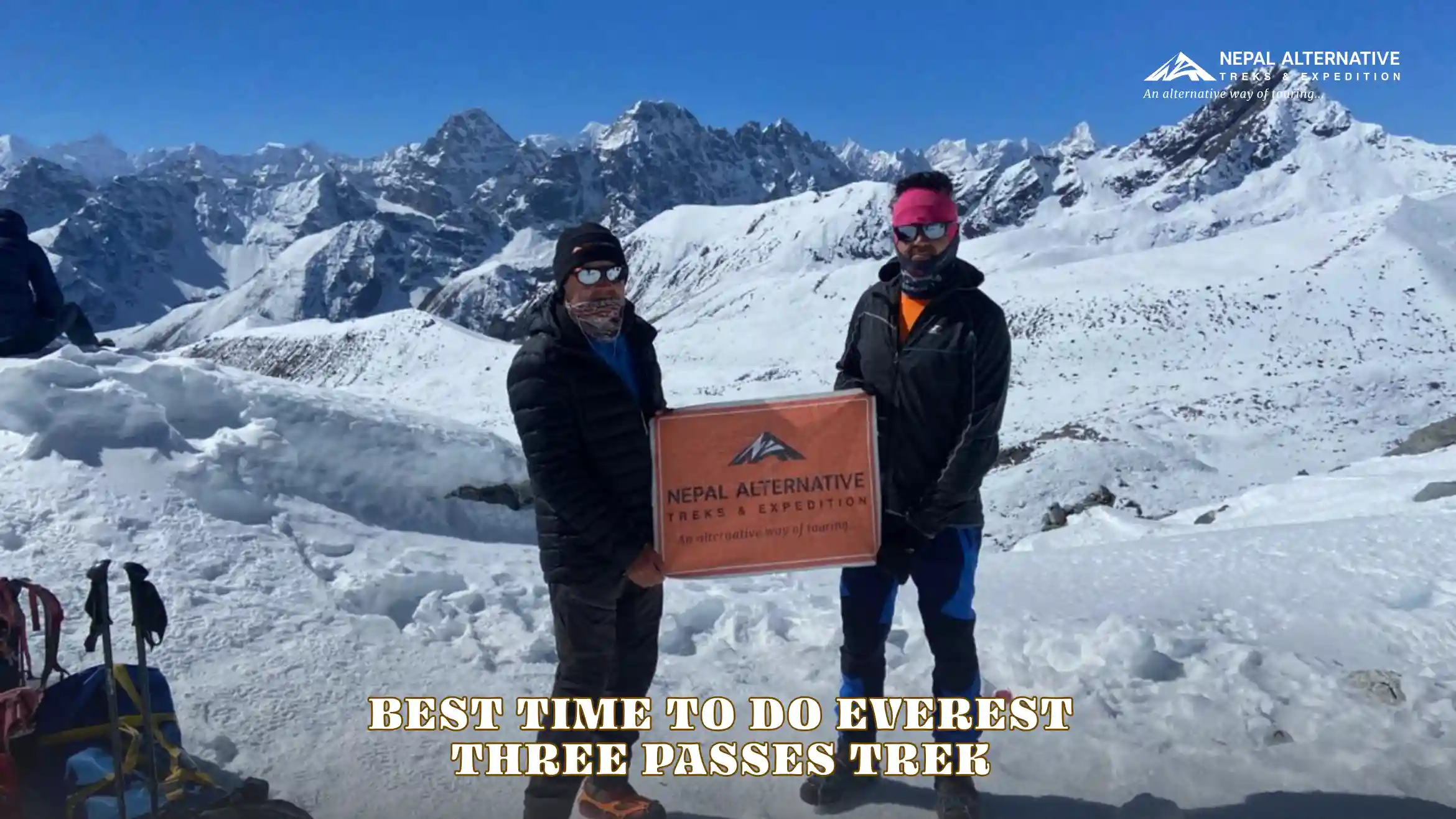
What matters most when going on an adventurous trek like the Everest Three Passes is the timing. Go at the right time, and you’ll cross the passes while enjoying beautiful mountain views and safe conditions. Go at the wrong time, and you could face snowstorms, poor visibility, difficult trekking conditions, and even return without crossing the passes due to blockage.
The Everest Three Passes Trek is one of the most challenging yet rewarding treks in the Everest region. It takes you over Kongma La, Cho La, and Renjo La, with amazing views of Mount Everest, Lhotse, Makalu, and Cho Oyu. As the trek crosses high passes above 5,300 m, choosing the best time to do the adventure is important for the safety and overall experience.
The best time to do the Everest Three Passes Trek is in autumn, specifically October to early November, and in spring (April to May).
Autumn (September-November) is widely regarded as the ideal time because it comes after the monsoon season with clear skies and the best mountain views of the year. During the time, temperatures at high altitude are cold but stable, and the three high passes (Kongma La, Cho La, and Renjo La) are free of fresh snow. Thus, crossing the three passes is safest and easiest in autumn, which makes it one of the best times for the adventure. Besides, trails are dry and easy to follow after the monsoon.
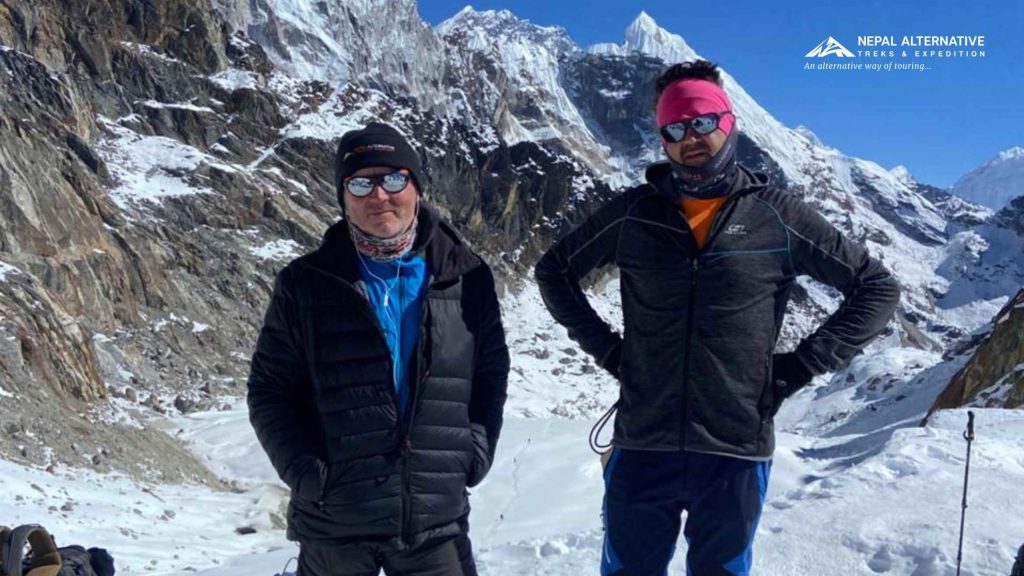
Spring (March-May) is the second-best time and an alternative to autumn. The specialty of the spring season is stable weather with warmer days and blooming rhododendrons at lower elevations. However, afternoon clouds are more common than in autumn, and early March means dealing with leftover snow on the high passes. The Three Passes route is more weather-sensitive than EBC or Gokyo, as crossing three passes requires good weather to succeed.
Timing matters more on the Everest Three Passes Trek because the trek’s success and safety depend on good weather and ideal pass conditions.
The Everest Three Passes Trek involves much more time at high altitude than the Everest Base Camp (EBC) or Gokyo treks. Instead of reaching one high point and descending, you cross three passes: Kongma La (5,535 m), Cho La (5,420 m), and Renjo La (5,360 m) one by one. This means choosing a season that’s suitable for only one of the three high passes is not enough, as a single bad-weather day can leave you stuck between passes.
Unlike the EBC route, which follows a well-established trail to a fixed destination, the Everest 3 Passes trek route relies on high-altitude crossings that can be completely blocked by snow. Especially, Cho La can close after storms because fresh snow makes the glacier unsafe or too hard to cross. On other Everest routes, the snow just makes walking harder and colder. But on the Three High Passes Trek, snow can completely block the route, forcing people to turn back.
The path between the Everest Three High passes is rougher, less maintained, and much quieter than the main Everest Base Camp trail. So, if something goes wrong, there is less chance of receiving immediate assistance. Furthermore, crossing high passes in snow or poor visibility means you’re likely to get lost or make dangerous mistakes. So, if you choose bad timing, it doesn’t just affect the views, but it can mean waiting for days in teahouses for the weather to improve, or skipping a pass.
| Month | Temperature in the Everest Three Passes (Day/Night) | Conditions |
| January | -5°C to 0°C / -15°C to -25°C | Very cold, dry, windy; passes are snow-blocked |
| February | -5°C to 0°C / -20°C to -25°C | Still a harsh winter, clear skies |
| March | -5°C to 0°C / -15°C | Warming, occasional snow on passes |
| April | 0°C to 5°C / -5°C to -10°C | Stable weather, excellent visibility |
| May | 0°C to 5°C / -5°C | Warm days, mild nights |
| June | 0°C to 5°C / -5°C to 0°C | More clouds and the trails are getting worse. |
| July | 0°C to 5°C / -5°C or lower | Peak monsoon, daily rain |
| August | 0°C to 5°C / -5°C or lower | Heavy rain, landslide risk |
| September | -2°C to 3°C / -8°C to -12°C | Clear weather |
| October | -5°C to 0°C / -10°C | Clearest skies, best visibility |
| November | -5°C to 0°C / -15°C or lower | Clear but temperatures continue to drop throughout the month. |
| December | -5°C to 0°C / -15°C to -25°C | Trekkable early, harsh by mid-month |
No, the monsoon season is not suitable for the Everest Three Passes Trek due to the unavoidable challenges it brings. June to August is the monsoon season, with rain almost every day. While it’s not always heavy, everything stays wet for days. On a high-pass trek, that wetness is a real risk.
Likewise, during the monsoon, the lower forested areas near Lukla, Phakding, and Monjo become leech-prone due to rain. They’ll stick to your skin, suck your blood, and be annoying. Another major challenge of the monsoon trek is that the clouds cover the mountain views. Even though temperatures can be milder in the monsoon, visibility is generally poor.
Additionally, slippery trails and flight disruptions are other difficulties that make the monsoon season not suitable for the Everest Three Passes trek. Rain makes the rocky, uneven trails and steep climbs harder to walk. On the passes, where scree and exposed rock are already challenging, wet conditions increase the risk of slipping.
Kongma La is the highest and rocky pass near a glacier between Chhukung and Lobuche. It is also known for its remote location, as there are no teahouses along the route. Because of that, weather conditions matter a lot here. In winter, heavy snow and very cold temperatures make Kongma La dangerous, with ice and snow, and it’s generally not passable. Also, monsoon (June to August) makes the pass slippery, making the pass crossing challenging.
In spring, conditions improve but are not ideal, as winter snow will still be around. So, if you plan the Everest Three High Passes Trek in spring, you might need microspikes to cross safely. Autumn (September to November) is when Kongma La and other high mountain passes have the best conditions. But conditions can still change quickly, even day-by-day. This is why it’s important to check the real-time weather before crossing, even in good seasons.
Cho La Pass lies between Dzongla and Thagnak, and is known for icy glacier crossing. Snow and ice make the glacier dangerous in winter. During the monsoon, heavy rain can make the route slippery or even block the section. Crossing Cho La involves a narrow rocky section that can become icy and risky in bad weather, and crampons are required.
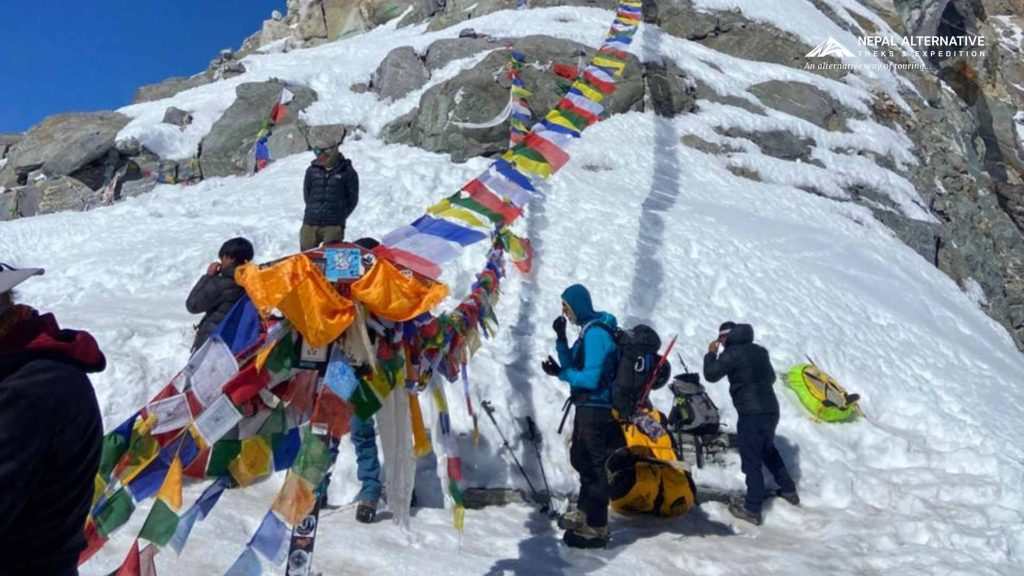
Moreover, spring and autumn are safer for Cho La Pass, with stable weather. However, the glacier is still icy, so careful walking is always needed.
Among the three high mountain passes, Renjo La is the easiest and safest for most of the year. Trekkers can attempt it year-round, though fog or clouds may block views. So, spring and autumn are better for clear scenery, and winter and monsoon trekking are not recommended.
Seasonal Conditions at a Glance:
| Pass | Winter | Monsoon | Spring | Autumn |
| Kongma La | Unsafe due to deep snow, ice, and no shelter | Unsafe due to rainfall | Good, but possible leftover snow | Best with driest conditions and clearest weather |
| Cho La | Unsafe due to icy glacier, high risk | Unsafe due to slippery glacier sections | Good | Best with stable and drier conditions |
| Renjo La | Fair but cold weather and cloudy views | Poor as fog blocks views | Good | Best with clear views |
Winter (December to February) is the toughest time for the Everest Three Passes Trek, but also rewarding for the right kind of trekker.
During the months between December and February, Passes of Kongma La, Cho La, and Renjo La are full of snow. This makes trekking harder because it covers trail markers, makes rocks slippery, and complicates passing unless you’re very familiar with the route or with a guide. Sometimes, snow can temporarily block a pass until it’s cleared.
Winter trekking is especially tough because of the cold temperature. Passes can drop to -20°C to -25°C or even colder, and places like Lukla can also freeze at night.
At higher elevations, especially around high passes, teahouses may be closed or offer limited services due to low demand. That leaves fewer places to stay and eat, and less support in case of problems.
Winter brings the fewest trekkers. You may walk for long hours alone and even find teahouses empty. There are no crowds at viewpoints, no busy dining rooms, and no waiting to pass groups on narrow paths.
Because the air is cold and dry, visibility is clearest during winter. Himalayan peaks under a deep blue sky create stunning views, without the haze or any obstructions.
The temperature and weather of the Everest region change with elevation; the higher you go, the lower the temperatures can be and the more unpredictable the weather becomes. In general, the temperature drops by about 6–7°C for every 1,000 m of elevation. That’s why Lukla feels pleasant with comfortable weather and temperature, while Kongma La and other passes feel cold, even on the same afternoon.
Here’s how the weather and temperature change with altitude:
What to expect by season at Everest’s elevations:
| Traveler Type | Best Months | Why |
| Beginners | Late Sept-Nov (Autumn) | Stable weather, clear trails, and numerous trekkers make the route safer. It’s best to avoid winter and the monsoon, as crossing the passes is much more difficult during those seasons. |
| Experienced Trekkers | Dec-Feb (Winter) or Mar-Apr (early Spring) | Winter brings fewer people, beautiful snowy scenery, and a real adventure. However, the passes are more difficult and require proper equipment and experience. Early spring is also a good choice, with fewer trekkers and easier conditions. |
| Photographers | Oct-Nov (peak Autumn) | Best time for clear skies and stunning mountain views. April is another great option, with colorful rhododendron flowers blooming at lower elevations. |
| Couples | Oct-Nov, or Mar-Apr | Expect stable weather, comfortable teahouses, and stunning scenery. Autumn offers the best views, while spring is known for its blooming rhododendrons and fresh greenery. |
| Solo Travelers | Sept-Nov (Autumn) | The trails are busiest at this time, so it’s easy to meet other trekkers and feel safer if you need help. Spring is a great alternative with similar benefits. |
| Budget-Conscious | Late Nov, or May (Between the peak and off-seasons) | Costs drop when the crowd decreases just before or after the peak season, when the weather is still relatively good. |
All treks within the Everest region follow the same seasonal pattern. Spring and autumn are the best times, while monsoon and winter are less reliable. Even so, each trek differs in altitude, difficulty, and how it is affected by poor weather. Here’s a comparison between four iconic destinations of the region by trek season.
| Feature | Everest View Trek | Everest Base Camp Trek | Gokyo Lakes Trek | Everest Three Passes Trek |
| Best Season | Spring (Mar-May) & Autumn (Sep-Nov) | Spring (Mar-May) & Autumn (Sep-Nov), especially October | Spring & Autumn (same as EBC) | Spring (Apr-May best) & Autumn (Oct-early Nov best) |
| Spring Notes | Rhododendrons blooming, clear mornings | Warm days, afternoon haze/clouds by 2 PM, and busy climbing season | Same as EBC, but quieter trails | Stable, long days; March can still have snow on passes |
| Autumn Notes | Crisp, stable, best visibility | Clearest skies, most stable, busiest month | Same as EBC, far fewer people | October is peak; late Nov gets very cold on passes |
| Winter (Dec-Feb) | Cold but achievable as low altitude limits risk | Achievable with proper gear; very cold nights (-15°C+) | Lakes may freeze; some teahouses close | Not recommended as passes are snow-blocked, -25°C |
| Monsoon (Jun-Aug) | Not recommended due to rain and poor visibility | Not recommended because of mud, poor views, and flight delays | Avoid as poor visibility over lakes | Strongly avoid as passes are dangerous or impassable |
| Maximum Altitude | 3,880 m (Hotel Everest View) | 5,555 m (Kala Patthar) | 5,357 m-5,483 m (Gokyo Ri) | 5,300 m-5,535 m (×3 passes) |
| Duration | 5-7 days | 12-14 days | 12-15 days | 18-21 days |
| Difficulty | Easy to moderate | Moderate to challenging | Moderate to challenging | Challenging to strenuous |
| Weather Sensitivity | Low | Moderate | Moderate | High passes can close entirely |
| Best For | Beginners, families, short trips | First Everest trekkers, an iconic bucket-list goal | Scenery-seekers wanting peace | Experienced trekkers wanting the ultimate challenge |
With the most favorable trekking conditions, autumn and spring are the best times to do the Everest Three Passes Trek. However, the best season depends on your priorities, as there’s no single best time for everyone. Choose the season that best matches your comfort with crowds, cold weather, and changing conditions, and you’ll experience some of the most stunning scenery in the Everest region of Nepal.
Need assistance? Our travel expert Tej Bahadur Gurung is here to help! Please fill out the form below to initiate a chat and get your queries resolved quickly.