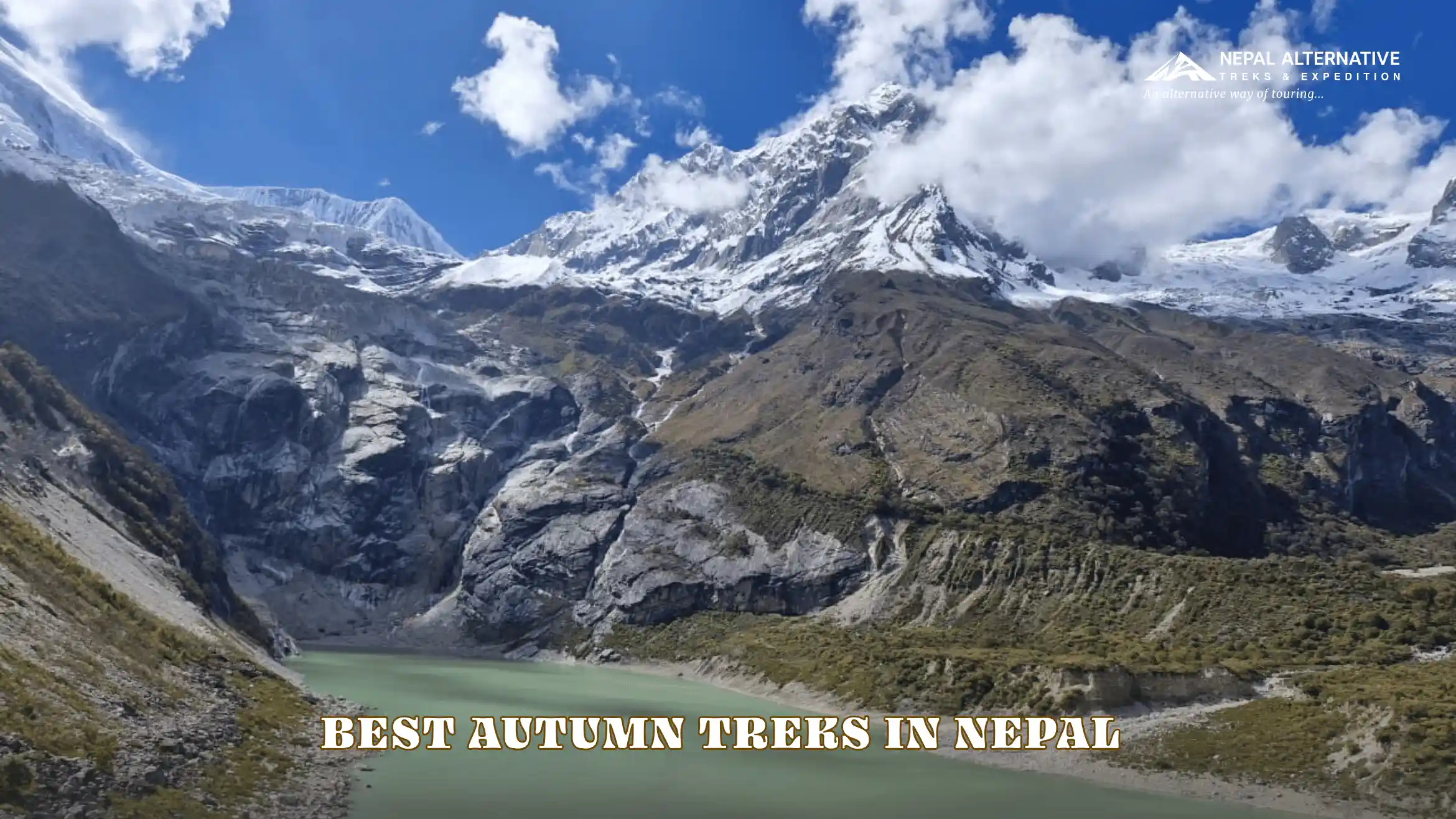
Autumn is one of the busiest trekking seasons in Nepal. The monsoon has mostly cleared, mountain views improve, and trails are generally drier than they are during the summer months. September, October, and November are all good months to trek, but they do not feel the same on the trail.
September is still a transition month, especially in the first half. October usually brings the most stable conditions, but it is also the busiest month. November has clear skies and fewer trekkers, but temperatures drop as winter gets closer.
But not all autumn treks are the same. A 6-day walk in the Annapurna foothills is very different from a 23-day trip to Upper Dolpo. This guide lists the 10 best autumn treks in Nepal by duration, difficulty, region, and who each trek suits. You can pick the right one before you book your flight.
Why Autumn is the Best Trekking Season in Nepal
Autumn, from September to November, is the best trekking season in Nepal because it falls between the wet months and the coldest part of winter. The monsoon has dropped most of its rain, trails that were slick start to dry, and the high peaks are more often clear than they are in July. That is the general pattern across Nepal. It is not a promise that every morning on every trail will be clear.
However, rain can still arrive in September, especially in the first half of the month and on the south-facing ridges. October is the month most of the trek pages treat as the heart of the season. Dashain and Tihar also fall in October. You get to see local culture, but transport and teahouses may be busy.
November is colder, particularly above 4,000 m and on passes, and the days are shorter. Temperatures change with height: a village at 2,000 m can be mild in the afternoon while a camp near 5,000 m is below freezing at night.
None of that makes a trail safe by itself. High altitude, a late storm, or a washed section of path can still stop a day. Build a rest day into the longer routes, and treat a clear forecast as a plan, not a guarantee.
1. Manaslu Circuit Trek
The Manaslu Circuit is a good option if you want a longer Himalayan circuit without following the busiest Everest or Annapurna routes. The trail circles Mount Manaslu, the world’s eighth-highest mountain, and follows the Budhi Gandaki Valley through forests, villages, and increasingly high mountain terrain. The route eventually crosses the Larkya La (5,106 m), the highest point of the trek, before descending towards the Marsyangdi Valley.
Manaslu is a restricted area trek. You need a restricted area permit and must trek with a guide. The restricted area status keeps crowd numbers lower than Annapurna or Everest. Autumn (September to November) gives stable weather for the pass crossing and clear views of Manaslu (8,163m), the eighth-highest mountain in the world.
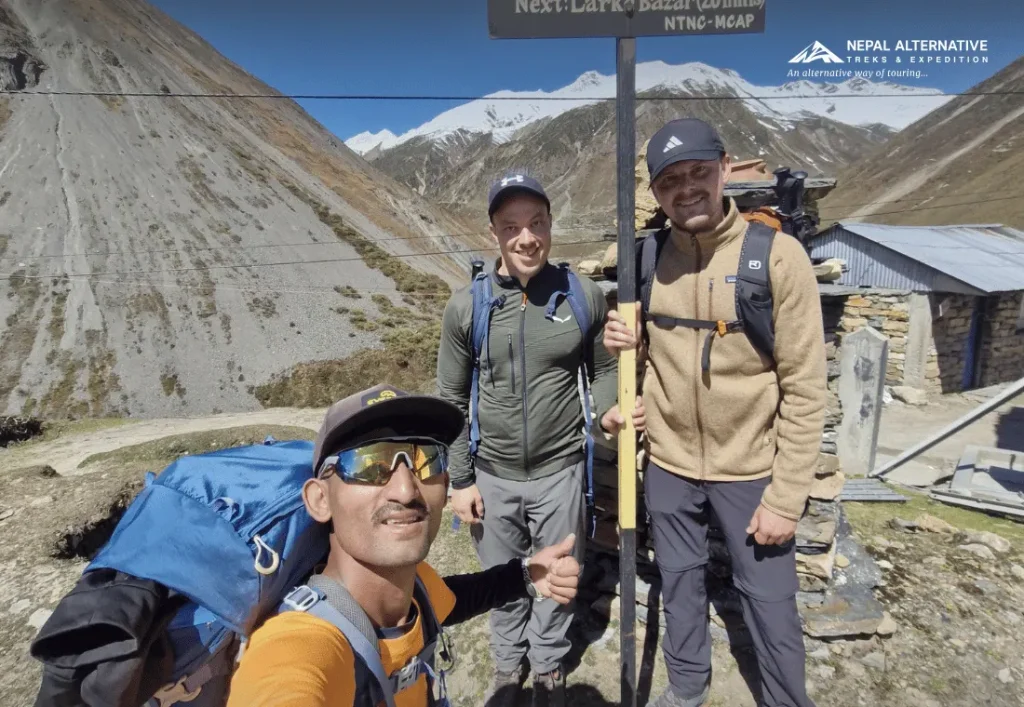
It suits a trekker who has already done a moderate route, or who is comfortable with a 12-day circuit and the paperwork that a restricted area implies. It is a poor first trek if you want the six-day foothill walk.
Read the full itinerary: Manaslu Circuit Trek – 12 Days
2. Annapurna Foot Hill Trek
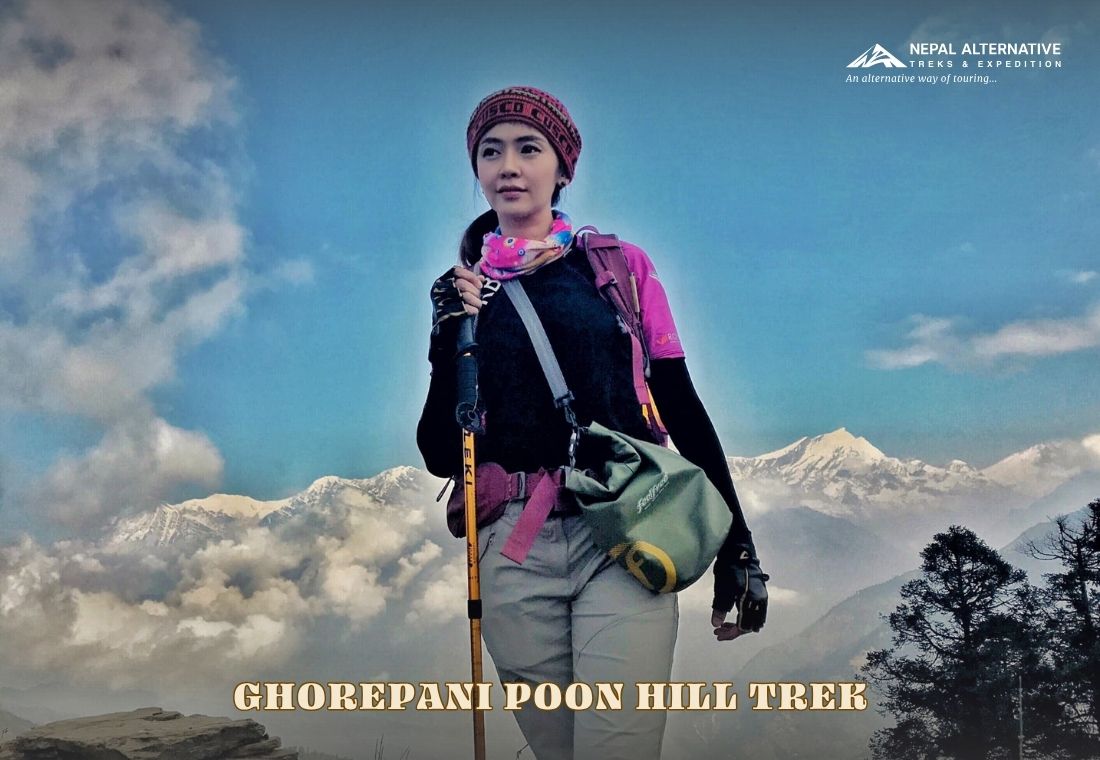
The Annapurna Foot Hill Trek is perfect if you want to try trekking in Nepal without spending two weeks or sleeping above 5,000 m. This 6-day route stays in the lower hills. The route reaches Poon Hill at 3,210 m and gives you views of the Annapurna and Dhaulagiri ranges from below, not from high passes.
You walk through farmland, villages, and forests. Daily walking distances are manageable. This is ideal for beginners or travelers with only a week in Nepal. You can do this trek year-round. But autumn (September to November) gives you the clearest skies and most comfortable weather.
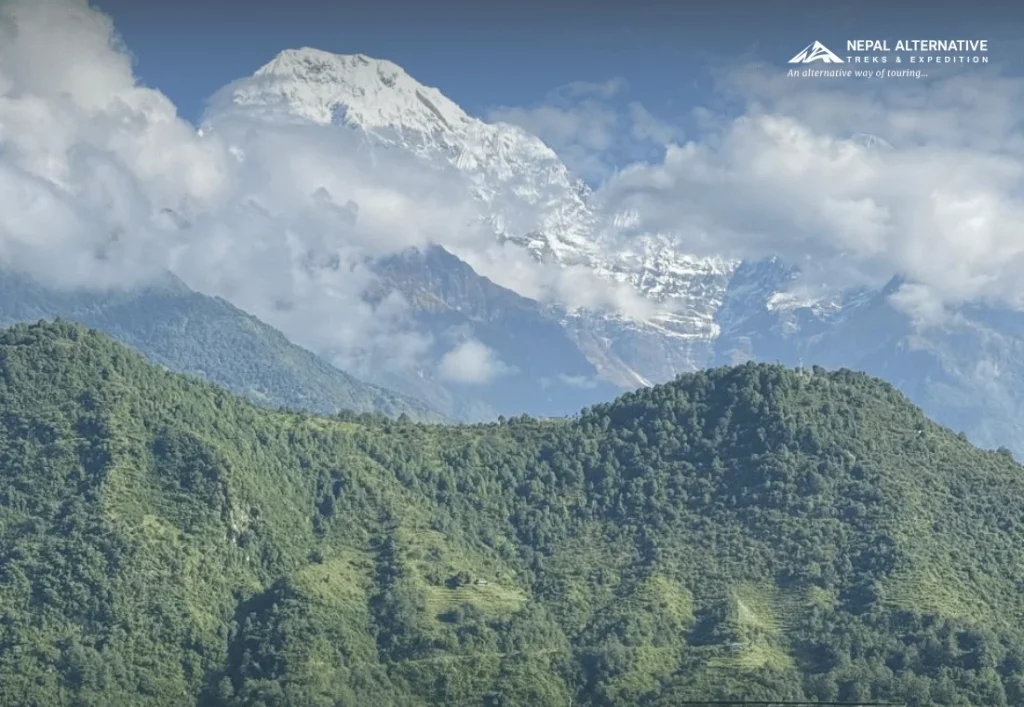
What makes this trek different is that, unlike high-altitude treks on this list, the Foot Hill Trek focuses on culture and easy walking. You will not reach Everest Base Camp or cross Thorong La. But you will experience rural Nepali life, sleep in teahouses, and wake up to views of Annapurna without altitude risk.
Read the full itinerary: Annapurna Foot Hill Trek – 6 days
3. Annapurna Base Camp Trek
The Annapurna Base Camp Trek (ABC Trek) takes you into the Annapurna Sanctuary, a mountain basin surrounded by some of Nepal’s best-known peaks, including Annapurna I (8,091 m), Machhapuchhre (6,993 m), and other big peaks. Compared with the Annapurna Foot Hill Trek, this route takes you much higher. The trail climbs through forests and mountain villages and reaches Annapurna Base Camp at 4,130 m.
ABC gives you a high-altitude experience without technical difficulty or pass crossings. You walk in and out of the same valley. The route also includes long sections of stone steps, so the short duration does not mean it is an easy walk. At 4,130 m, ABC is high enough to feel the altitude. But it is low enough that most fit trekkers acclimatize well with a sensible itinerary. The “moderate” rating means expect 5 to 7 hours of walking per day with steady climbs. No technical climbing or glacier crossings.
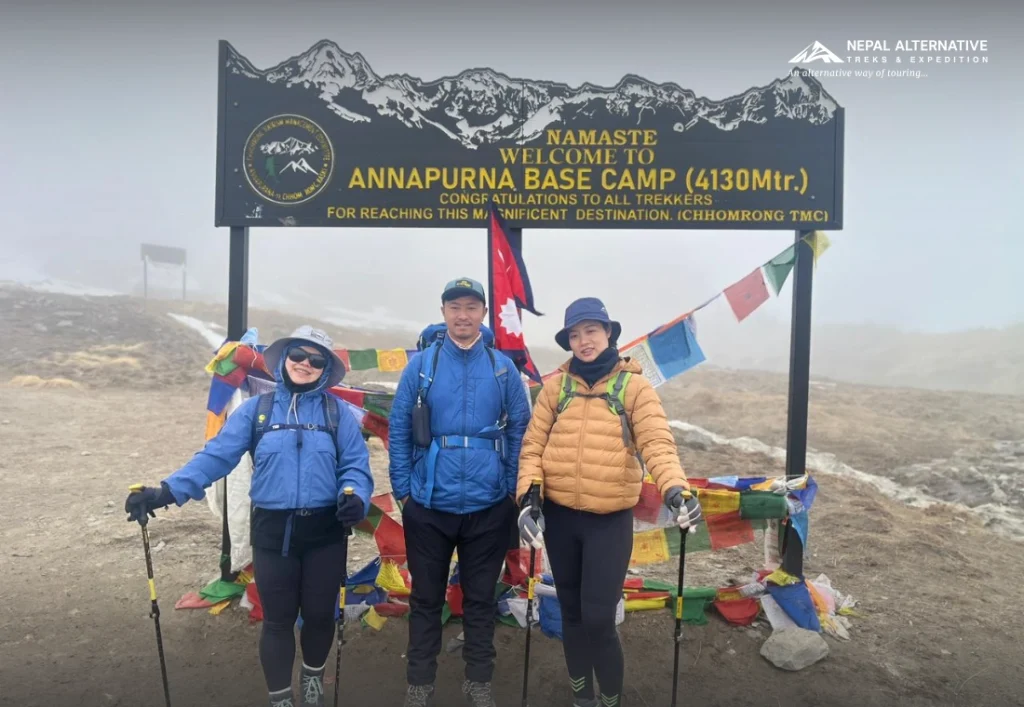
It suits a fit beginner who has trained for hill days and can sleep at 4,130 m. It is a poor choice if you want a quiet trail in the busiest October weeks, or if you want a pass crossing.
Read the full itinerary: Annapurna Base Camp Trek – 7 days
4. Langtang Valley Trek
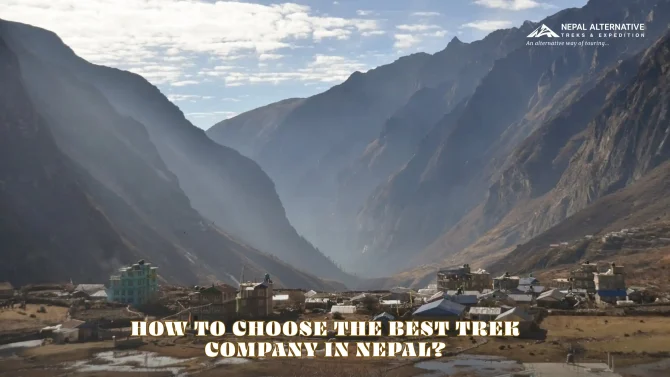
The Langtang Valley Trek is the closest high-mountain trek to Kathmandu in the Langtang region. It is perfect if you are short on time or want to avoid the Lukla flight. In 8 days, you drive from Kathmandu to Syabrubesi, then walk up the Langtang Khola Valley. You pass through dense forests, traditional Tamang villages, and alpine meadows with views of Langtang Lirung (7,227m).
Langtang is culturally different from Annapurna and Khumbu. You pass through villages rebuilt after the 2015 earthquake. You stay in family-run teahouses and visit ancient gompas like Kyanjin. The valley is also less commercialized. It feels more authentic even in peak season.
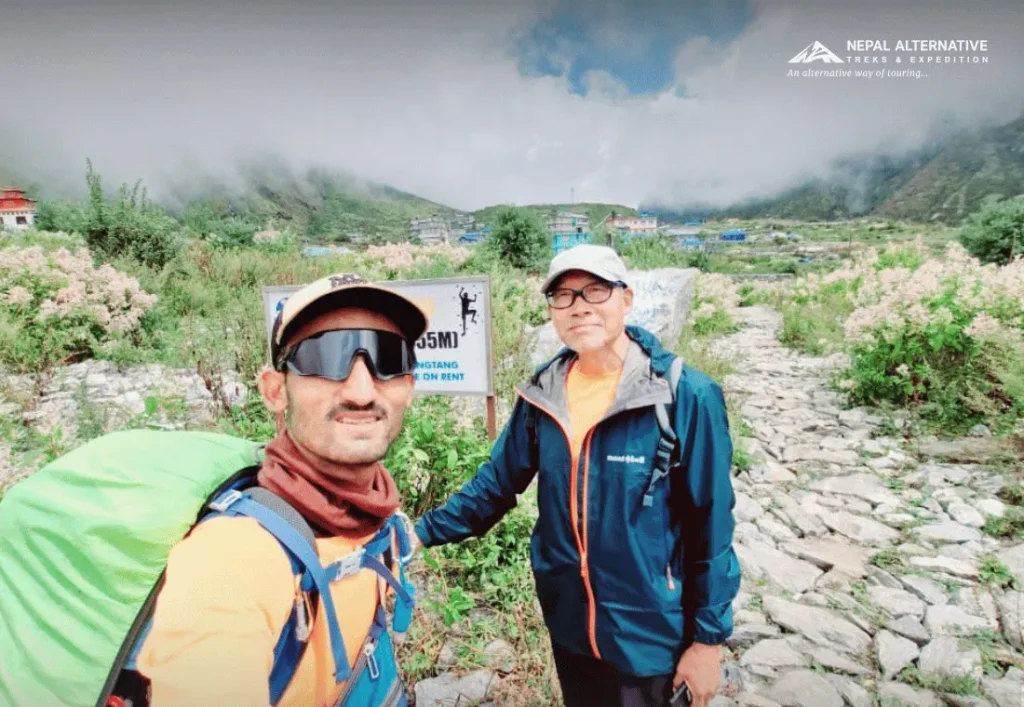
The standard route reaches Kyanjin Gompa at 3,870m. You can optionally hike Kyanjin Ri (4,360m) for panoramic views. This is lower than ABC or EBC. It suits trekkers concerned about altitude sickness. The “moderate” rating reflects steady daily climbs but manageable distances.
It suits someone who has about eight days and wants a moderate valley close to the capital. It is the wrong pick if the only mountain you came to see is Everest.
Read the full itinerary: Langtang Valley Trek – 8 days
5. Everest Base Camp Trek
Everest Base Camp is the most recognizable trek on this list. The route takes you into the Khumbu region, where the trail passes through Sherpa villages, Namche Bazaar, Tengboche, and Dingboche. You reach EBC at 5,364 m and hike Kala Patthar (5,545 m) for sunrise views of Everest, Lhotse, and Ama Dablam. October offers the clearest skies and most reliable weather. But it also has the biggest crowds. If you prefer quieter trails, try late September or November. But expect colder nights.
At 5,364 m (EBC) and 5,545 m (Kala Patthar), this is a high-altitude trek. You need proper acclimatization. The “moderate to challenging” rating reflects long days (5 to 8 hours), steep climbs and descents, and the physical demands of sleeping above 4,000 m. Rest days in Namche and Dingboche are essential.
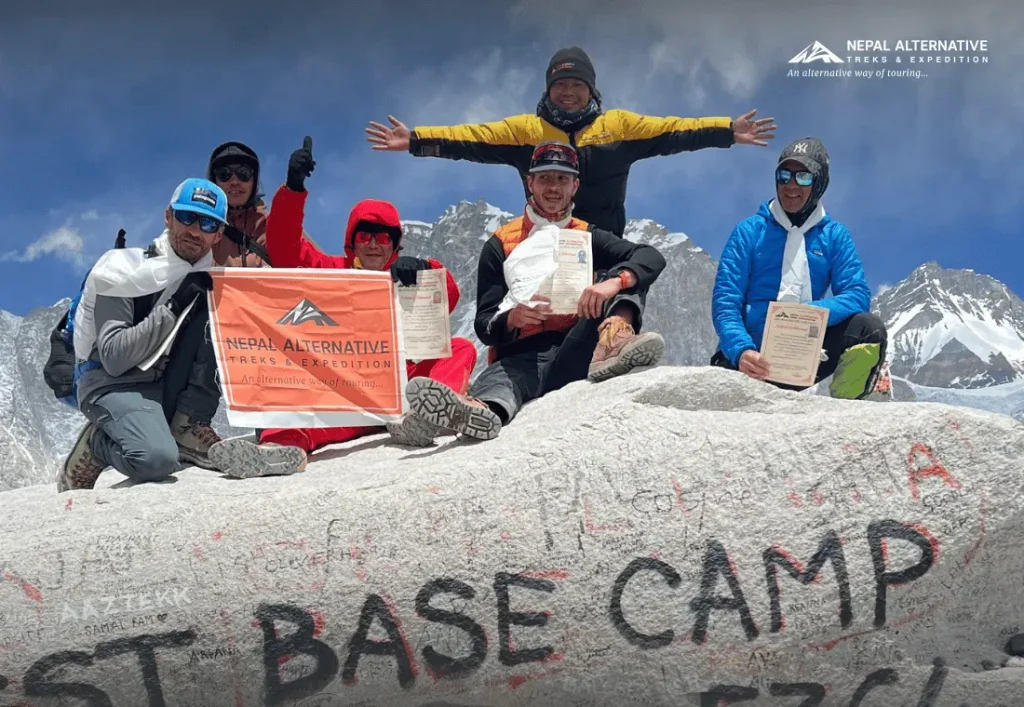
It suits a trekker who can give twelve days and who is prepared to sleep high. It does not suit a five-day holiday, and it is not the hardest route in Khumbu.
Read the full itinerary: Everest Base Camp Trek – 12 Days
6. Annapurna Circuit Trek
The Annapurna Circuit is one of the world’s classic treks. It offers unmatched landscape diversity in 11 days. You start in the subtropical Marsyangdi Valley, cross Thorong La Pass (5,416 m), and descend into the dry Mustang region. Then you loop back to Pokhara.
Autumn (especially October and November) provides stable weather for the pass crossing and clear views of Annapurna, Dhaulagiri, and Manaslu. The circuit’s variety (forests, high desert, Tibetan-style villages and Hindu temples) makes it feel like multiple treks in one.
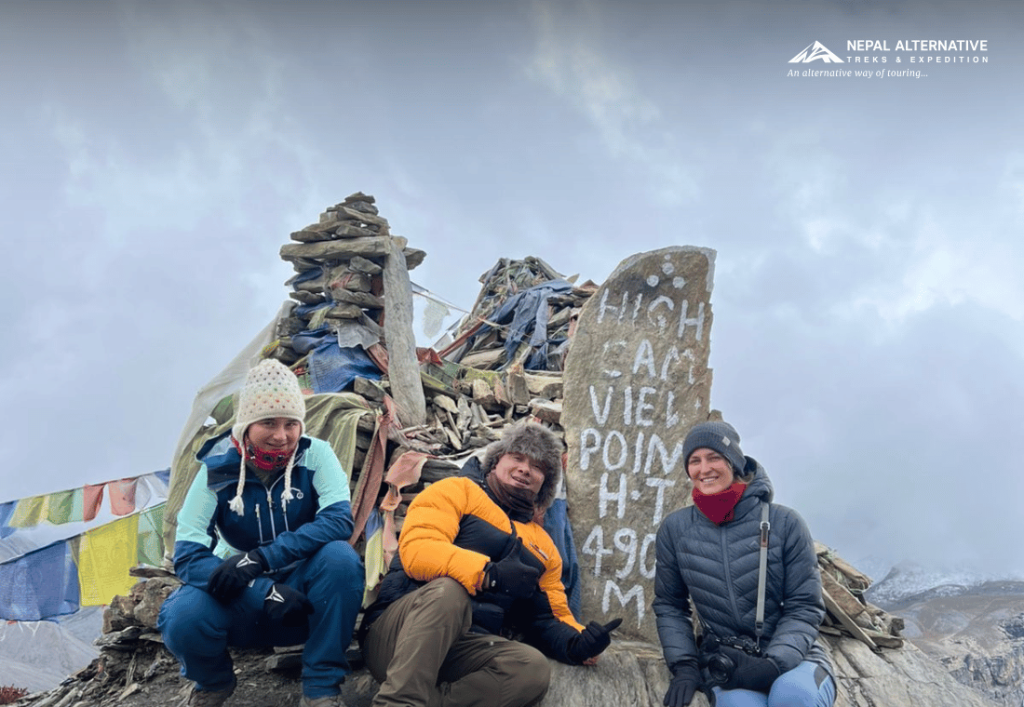
Unlike ABC (which goes in and out of the same valley), the Circuit is a true loop with constantly changing scenery. You experience the cultural shift from Hindu lowlands to Buddhist high country. You walk through the world’s deepest gorge (Kali Gandaki) and cross one of Nepal’s highest trekking passes, Thorong La Pass.
It suits a walker who wants one route with more than one landscape and who can handle a high pass within 11 days.
Read the full itinerary: Annapurna Circuit Trek – 11 Days
7. Upper Mustang Trek
Upper Mustang is for trekkers who want a dry, desert-like landscape instead of green valleys. You drive from Pokhara to Kagbeni and walk into the walled kingdom of Lo Manthang. The region sits in the rain shadow of the Annapurna range. Thus, rain is rare in Mustang even during monsoon months.
The Upper Mustang region looks more like Tibet than Nepal. The landscape is brown, wind-cut, high desert with deep canyons, not forests and rhododendrons. Villages have strong Tibetan cultural influences, with monasteries, prayer walls, and traditional buildings adding another dimension to the trek. Furthermore, Mustang is a restricted area and requires a restricted area permit and a guide. The region was closed to foreigners until 1992.
The trek stays between 3,800 m and 4,200 m in most sections. This is lower than EBC or Annapurna Circuit. The “moderate” rating reflects long walking days in dry, windy conditions rather than extreme altitude. Acclimatization is still important but less critical than 5,000 m+ treks.
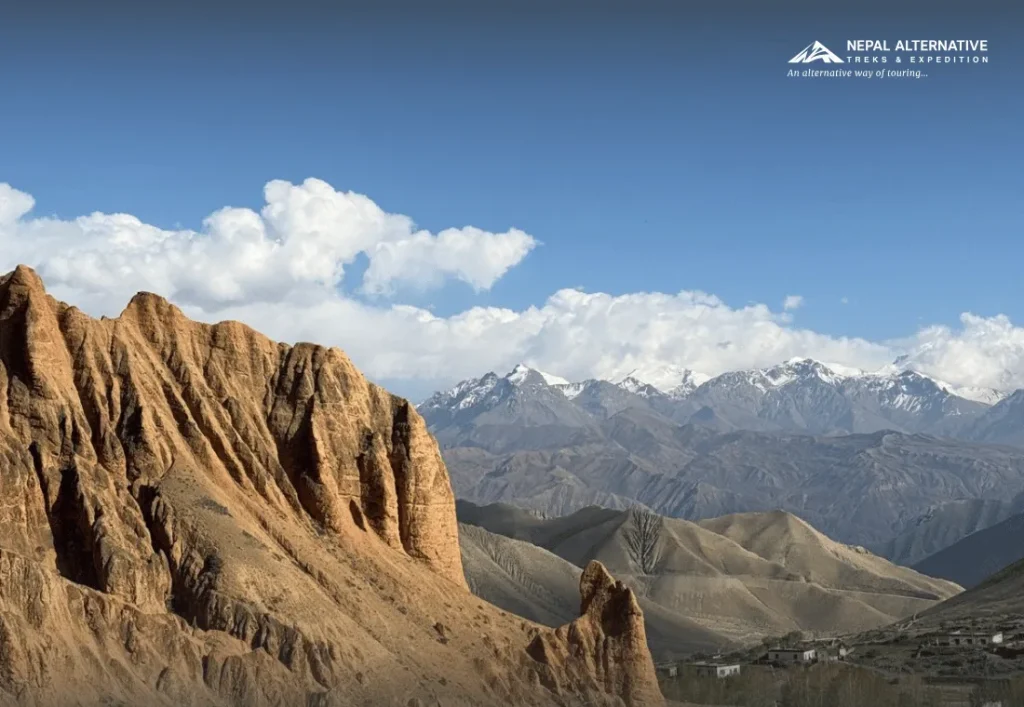
It suits a traveler who wants 12 days in a dry, cultural landscape and who is not trying to stand at Everest Base Camp. It is the wrong trip if you want rhododendron forest and a short week.
Read the full itinerary: Upper Mustang Trek – 11 Days
8. Everest Three Passes Trek
The Everest Three Passes Trek is the most demanding Everest route on this list. The Everest Three Passes Trek is for trekkers who want more than just Everest Base Camp. In this trek, you cross three high passes (Kongma La, Cho La, and Renjo La). You also visit Gokyo Lakes and climb Gokyo Ri for panoramic views. This is the most complete Khumbu experience.
Autumn (September to November) gives stable weather for the pass crossings and clear views of Everest, Lhotse, Ama Dablam and other peaks. The anticlockwise route (17 days) is the standard option featured on most itineraries. This is a challenging high-altitude trek. You spend many days above 4,000 m and cross three passes over 5,000 m. Thus, previous trekking experience is essential.
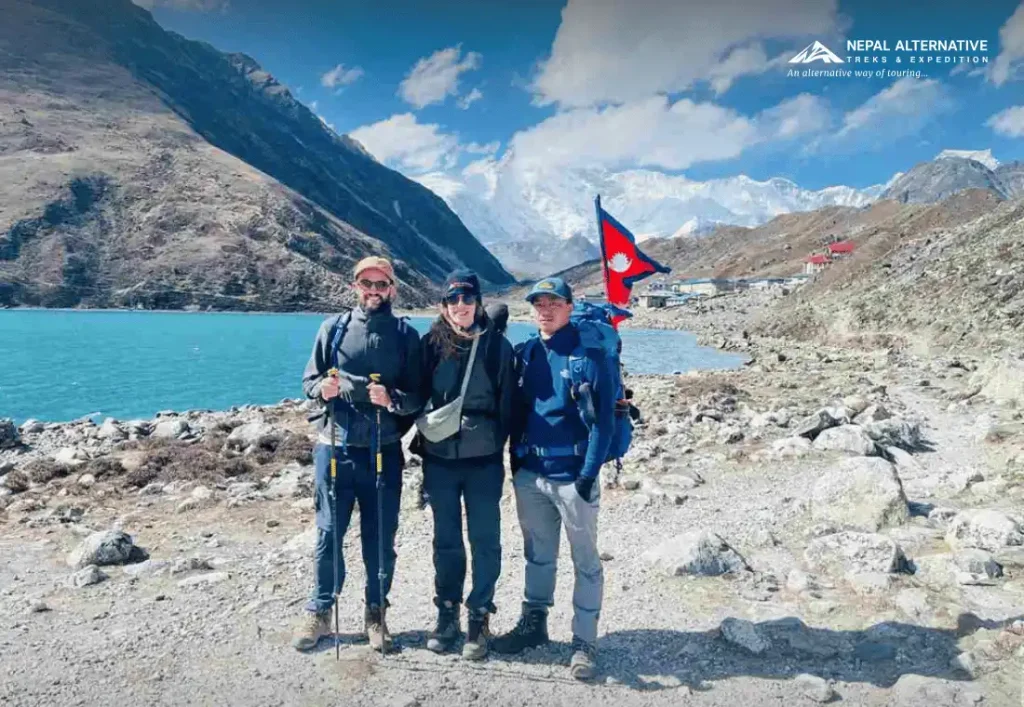
It suits an experienced walker who has time and who already knows how they sleep above 4,000 m. It does not suit a first trek. If 17 days is too long, the 12-day base camp trip is the smaller version of the same region, and it is already on this list.
Read the full itinerary: Everest Three Passes Trek – 17 Days (Anticlockwise)
9. Upper Dolpo Trek
Upper Dolpo is for trekkers who want remote wilderness and a true expedition feel. The trek takes you into western Nepal, through Shey Phoksundo National Park and the high valleys of Dolpo. To begin, you fly to Juphal and walk into one of Nepal’s most isolated regions. The landscape is high desert with turquoise lakes (like Phoksundo), ancient Bon Buddhist villages, and wildlife (blue sheep, snow leopards).
Autumn (September to November) is the only realistic season for this trek. This is because winter snow blocks the passes. Monsoon makes trails dangerous. September and October give the best chance of clear weather and passable routes. This is a strenuous high-altitude trek. You cross multiple passes over 5,000 m and spend weeks above 4,000 m.
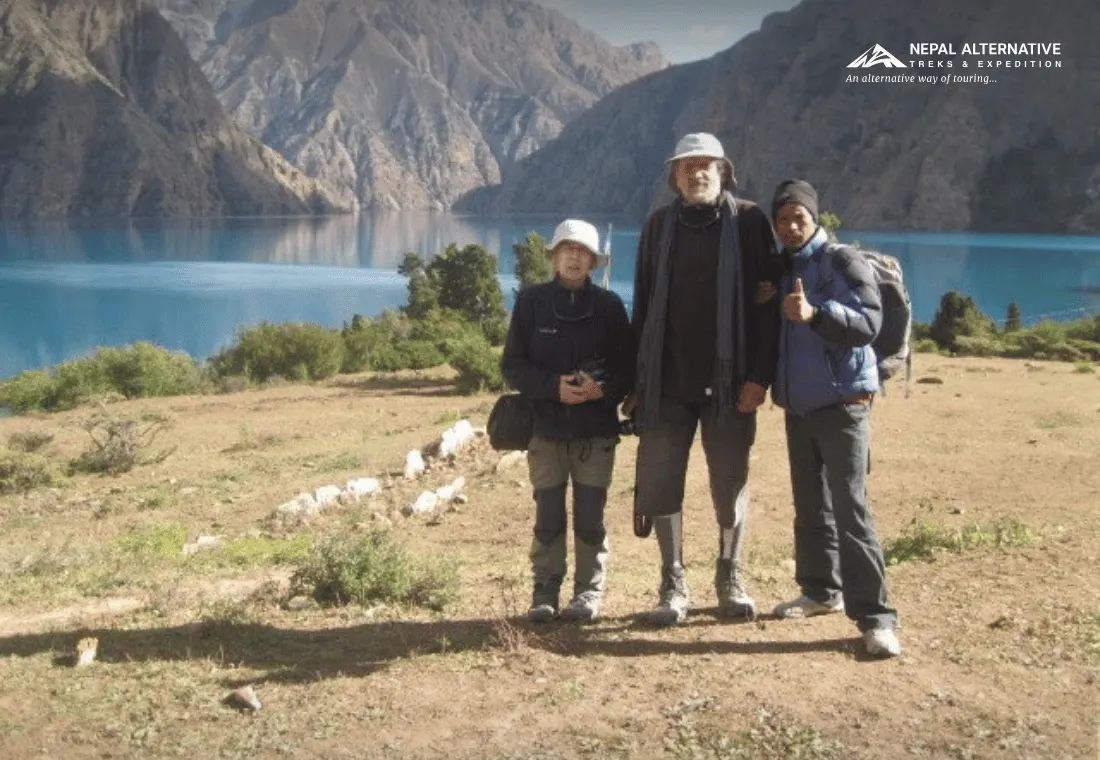
Also, it’s not a teahouse trek like EBC or ABC. You camp most nights and carry more gear. The region is restricted and requires special permits. Few trekkers visit Dolpo compared to Annapurna or Khumbu. It suits a trekker who wants the challenging end of the autumn list and who can be away for more than three weeks.
Read the full itinerary: Upper Dolpo Trek – 23 Days
10. Kanchenjunga Base Camp Trek
Kanchenjunga is one of Nepal’s longest major trekking routes and takes you to the base camps of Mount Kanchenjunga, the world’s third-highest mountain. You visit both the base camps of Kanchenjunga: North Base Camp at 5,143 m and the South Base Camp at 4,730 m.
Kanchenjunga is the geographical opposite of Dolpo. The trek is in eastern Nepal, close to the borders with India and Tibet. Because it is far from Kathmandu and the main trekking centers, the journey itself is part of the experience. You fly to Bhadrapur or drive to Taplejung and walk into the Kanchenjunga Conservation Area. You see fewer groups than at Namche in October. Likewise, it is a challenging high-altitude trek requiring proper acclimatization.

It suits a trekker who wants 22 days in a quieter range and who does not need Everest in the photo. It is a bad fit for a first visit or for anyone who needs to be back in Kathmandu within two weeks.
Read the full itinerary: Kanchenjunga Base Camp Trek – 22 Days
Which Trek Fits Your Schedule?
If you have less than a week, the Annapurna Foot Hill Trek is your only real option. This 6-day route is easy and stays in the lower hills. It is perfect if you want to try trekking in Nepal without committing to two weeks.
If you have about a week and want a famous high valley, choose Annapurna Base Camp. This 7 days trek is moderate and reaches 4,130 m. If you want a valley north of Kathmandu instead of Pokhara, pick Langtang Valley for 8 days. Both are good choices for first-time trekkers with limited time.
If you have about two weeks, you have four options. Everest Base Camp takes 12 days and is moderately challenging. You reach 5,545 m at Kala Patthar with views of Everest. The Annapurna Circuit takes 11 days and includes Thorong La Pass at 5,416 m. This is the route if you want diverse landscapes and a high-pass experience. Manaslu Circuit also takes 12 days and is a restricted-area trek. Pick this if you want a quieter alternative to Annapurna with similar scenery. Upper Mustang Trek, at 11 days, is a good option if you want a Tibetan-like landscape. This is moderate and best for cultural trekkers.
If you have closer to 3 weeks, consider the Everest Three Passes. The anticlockwise Three Passes trek takes 17 days in the Khumbu. This is challenging and crosses three high passes. It is best for experienced trekkers who want more than the standard EBC.
If you have 22 days or more, you can tackle Kanchenjunga or Upper Dolpo. Kanchenjunga Base Camp takes 22 days and is challenging. This remote trek goes to the world’s third-highest mountain in eastern Nepal. Choose this if you want a quieter base camp experience than EBC. Upper Dolpo takes 23 days and is challenging to strenuous. This is an expedition-style trek in western Nepal with camping. It is best for experienced trekkers seeking remote wilderness.

Planning an Autumn Trek
Book the October departures earlier than the September ones. October is the crowded heart of the season on the classic trails, and the teahouses and the Lukla flights fill up. September gives you more choice of beds and a higher chance of a wet day. November is quieter and colder. Pack for both: a warm sleeping layer for nights above 4,000 m, sun protection for the clear days, and a shell for a shower that the forecast missed.
Permits depend on the region. A national-park or conservation-area ticket is normal on the Annapurna and Langtang routes. Manaslu, Upper Mustang, Upper Dolpo, and Kanchenjunga sit in restricted areas, which means a specific permit and, on several of them, a guide. Altitude is the other rule that does not change with the season: go up slowly on the 12-day and longer routes, and do not treat a moderate grade as a reason to skip a rest day.
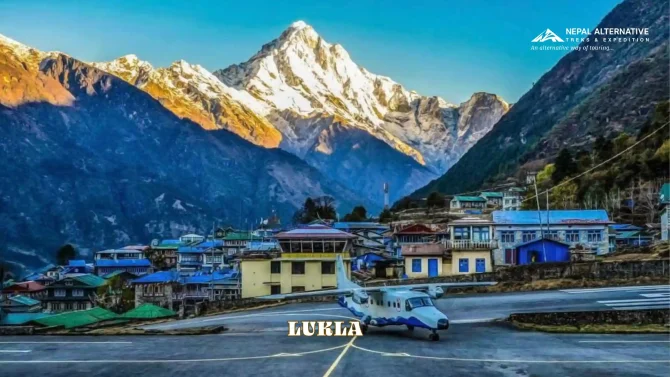
Insurance should cover trekking at the altitude of the route you picked, and helicopter evacuation if you are going to Khumbu, Manaslu, Dolpo, or Kanchenjunga. Keep one spare day in Kathmandu at the end. Autumn flights to Lukla and the mountain roads both slip when the weather turns, and a tight same-day international connection is how a good trek becomes a missed flight.
Conclusion
Autumn trekking in Nepal is a season, not a single trail. The 10 routes above cover everything from a 6-day foothill walk to a 23-day remote expedition. Pick based on the days you have and the grade you can walk.
First-time trekkers should start with Annapurna Foot Hill, ABC, or Langtang. Experienced hikers can tackle Manaslu, Three Passes, Dolpo or Kanchenjunga. Weather will vary even in autumn. But the route choice is yours. Pick wisely, and you will have the trek of a lifetime.
Ready to book? Browse all autumn treks or contact us for personalized advice.