Safety update: our trekking groups are safe, and our routes are running as planned. Read full flood notice.

Short Annapurna Base Camp Trek -05 Days
|
Weather |
Weather | -10°C to 18°C | |
|---|---|---|---|
|
Duration |
Duration | 5 Days | |
|
Difficulty |
Difficulty | Moderate | View Difficulty Detail |
|
Accommodation |
Accommodation | Lodge | |
|
Meals Included |
Meals Included | Breakfast, Lunch, Dinner | |
|
Best Season |
Best Season | Sept, Oct, Nov, Mar, Apr, May | |
|
Transportation |
Transportation | Jeep | |
|
Daily Activity |
Daily Activity | Approx. 4 – 8 hours | |
|
Religion |
Religion | Buddhism | |
|
Ethnic People |
Ethnic People | Gurung, Magar | |
|
Geographic Terrain |
Geographic Terrain | Mountain, Forest, Village, Glacier, Hot Spring, Terrace | |
|
Region of Nepal |
Region of Nepal | Annapurna Region, Kaski | |
|
Max. Altitude |
Max. Altitude | 4,130 m / 13,550 ft |
Short Annapurna Base Camp Trek Overview
The Short Annapurna Base Camp Trek (short ABC trek) is a fast-track version of the classic Annapurna Base Camp (ABC) trek that reaches 4,130 m in just 5 trekking days, starting and ending in Pokhara. This compact, short trek to ABC uses road access and a well-planned short ABC trek route to skip lower villages. Designed for trekkers with limited time, this itinerary combines scenic drives, good trail planning, and comfortable teahouse accommodation.
Even though the trek is shorter, you can still enjoy what makes the Annapurna region world famous. You will pass through rhododendron forests, traditional Gurung villages, spectacular waterfalls, and alpine scenery. Also, you will see some of the highest mountains in the world. The path passes through villages such as Samrung, Sinuwa, and Deurali, and the last two stops are Machhapuchhre Base Camp (MBC) and Annapurna Base Camp.
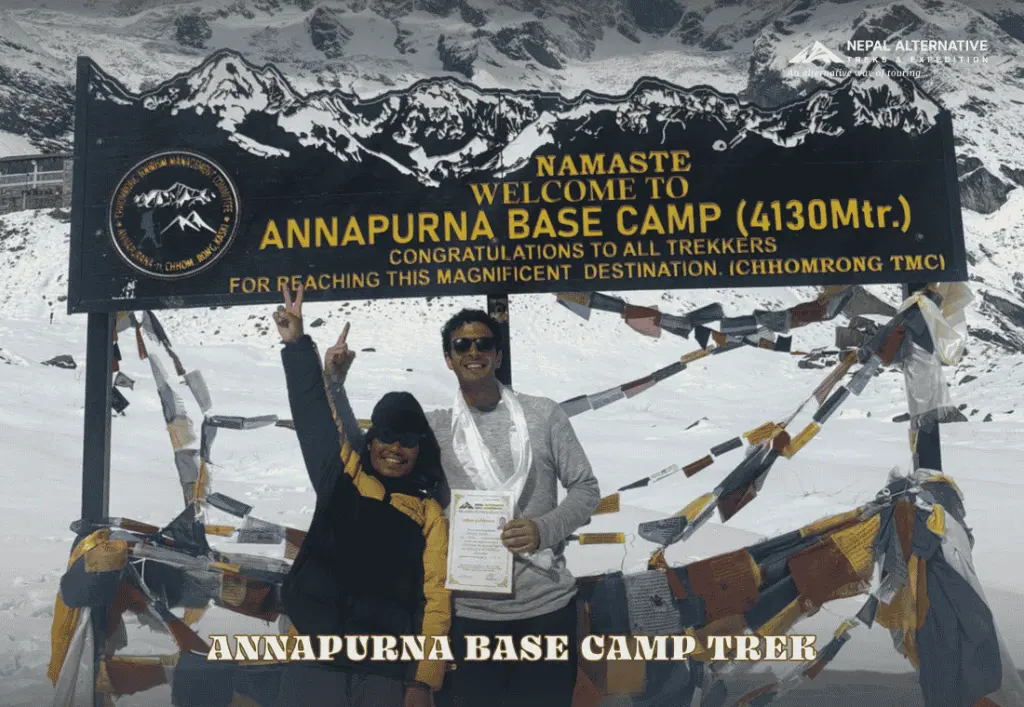
At the Annapurna Base Camp, the natural amphitheater of towering Himalayan giants will be in front of you. Himalayan giants include Annapurna I (8,091 m / 26,545 ft), Annapurna South (7,219 m / 23,684 ft), Machhapuchhre (6,993 m / 22,943 ft), Hiunchuli (6,441 m / 21,132 ft), Gangapurna (7,455 m / 24,459 ft), and Tent Peak (5,695 m / 18,684 ft).
The sunrise from Annapurna Base Camp is often considered one of the most memorable moments in Nepal. As the first rays of sunlight make the snow peaks glisten, the whole sanctuary turns into a golden landscape, something seen only in the Himalayas. And if you are a mountain person and want to get the most out of your short trek, the Short Annapurna Base Camp Trek is the best trekking experience in Nepal. The short Annapurna Base Camp trekking trail is perfect for both experienced hikers and fit beginners who are short on time.
Short Annapurna Base Camp Trek Highlights
- Reach Annapurna Base Camp (4,130 m / 13,550 ft) within just 5 trekking days.
- Trek through terraced fields, dense rhododendron forests, and glacial valleys into the Annapurna Sanctuary.
- Witness close-up views of Annapurna I, Annapurna South, Hiunchuli, Machhapuchhre, and Gangapurna.
- Experience sunrise over the Annapurna massif from base camp.
- Pass traditional Gurung and Magar settlements along the trail.
- Explore the famous Machhapuchhre Base Camp (3,700 m / 12,139 ft).
- Stay in authentic Himalayan teahouses at Upper Sinuwa, Deurali, Bamboo, and Jhinu Danda.
- Experience the rich culture and hospitality of the Annapurna region.
- Opportunity to relax at the natural hot springs of Jhinu Danda after your descent, depending on time.
Short ABC Trek Difficulty
In terms of difficulty, the Short Annapurna Base Camp Trek is graded as moderate, but it is slightly more demanding than the standard longer ABC itinerary. The route is compressed into just 5 days, so trekkers face longer walking hours each day, steeper ascents and descents, and less time for acclimatization.
To do this trek, you should be comfortable walking 4-8 hours per day with a daypack. The trail is well-established and non-technical, so no climbing experience is required, but you should be prepared for continuous uphill and downhill sections and long stone staircases, especially between lower villages and the forested mid-sections of the trail.
Detailed 5 Days Short Annapurna Base Camp Itinerary
Day 1
Drive from Pokhara to Samrung and Trek to Upper Sinuwa
|
Trekking Time Average |
55-60km drive (2.5-3 hours), 8-9 km Uphill hike (3-4 hours) |
|---|---|
|
Accommodation |
Hill Top Lodge |
|
Altitude |
2,340 m / 7,677 ft |
|
Included meals |
Lunch, Dinner |
You start your short Annapurna Base Camp Trek journey with an early morning drive from Pokhara to Samrung. The road journey climbs above the Modi Khola valley and passes small settlements and terraced fields. After leaving the lakeside city, the scenery changes gradually to a green river gorge. At times, you can spot distant hills and, if the sky is clear, the outline of Machhapuchhre.
You pass by Nayapul, Birethanti, and Siwai to arrive at Samrung. Then from Samrung, the trek begins. You cross a suspension bridge and join the famous Annapurna Base Camp trail passing Jhinu and Chhomrong. Here, you will instantly notice the change from road to steps and footpaths through the villages. The route goes up the terraces of farmland and patches of subtropical forest.
From Chhomrong, you descend to Chhomrong Khola, and after that, the last climb to Upper Sinuwa will take you through vibrant rhododendron and bamboo forests. By late afternoon, you reach Upper Sinuwa and settle into Hill Top Lodge, where you have a delicious hot dinner and also enjoy your first overnight stay while admiring the starry & quiet mountains around you.
Day 2
Trek from Upper Sinuwa to Deurali
|
Trekking Time Average |
11 km Uphill hike (5-6 hours) |
|---|---|
|
Accommodation |
New Panorama Point Hotel |
|
Altitude |
3,200 m / 10, 499 ft |
|
Included meals |
Breakfast, Lunch, Dinner |
Today’s trail goes deeper into the heart of the Annapurna Conservation Area, following a wonderful but sometimes hilly trail to Bamboo and further on. After breakfast, you leave Upper Sinuwa and head into a thick forest, following a trail that goes up and down the hillside occasionally with stone steps and narrow paths. This section of the path feels more enclosed and quiet, with the sound of the Modi Khola far below and the occasional birdsong breaking the silence.
After a while, the Bamboo village comes into view as a group of lodges hidden among the trees, presenting a natural spot for a short rest and tea break. Leaving Bamboo, the track steeply ascends the valley side. After passing Dovan and then Himalaya, the vegetation slowly thins, and the slopes become steeper and bare. You will notice the temperature drop and the ground surface becomes more alpine, which is a signal that you are moving closer to the heart of the Annapurna Sanctuary.
Waterfalls, small bridges, and occasional landslide-prone sections add variety and a bit of drama to the day. The last part to Deurali leads to a large valley where you get both a wider view and a feeling of the tall peaks that still hide behind the deep gorge walls. Overnight at Deurali.
Day 3


Trek from Deurali to Annapurna Base Camp via Machhapuchhre Base Camp
|
Trekking Time Average |
8-9 km Uphill hike (4 hours) |
|---|---|
|
Accommodation |
Annapurna Sanctuary Lodge |
|
Altitude |
4,130 m / 13,550 ft |
|
Included meals |
Breakfast, Lunch, Dinner |
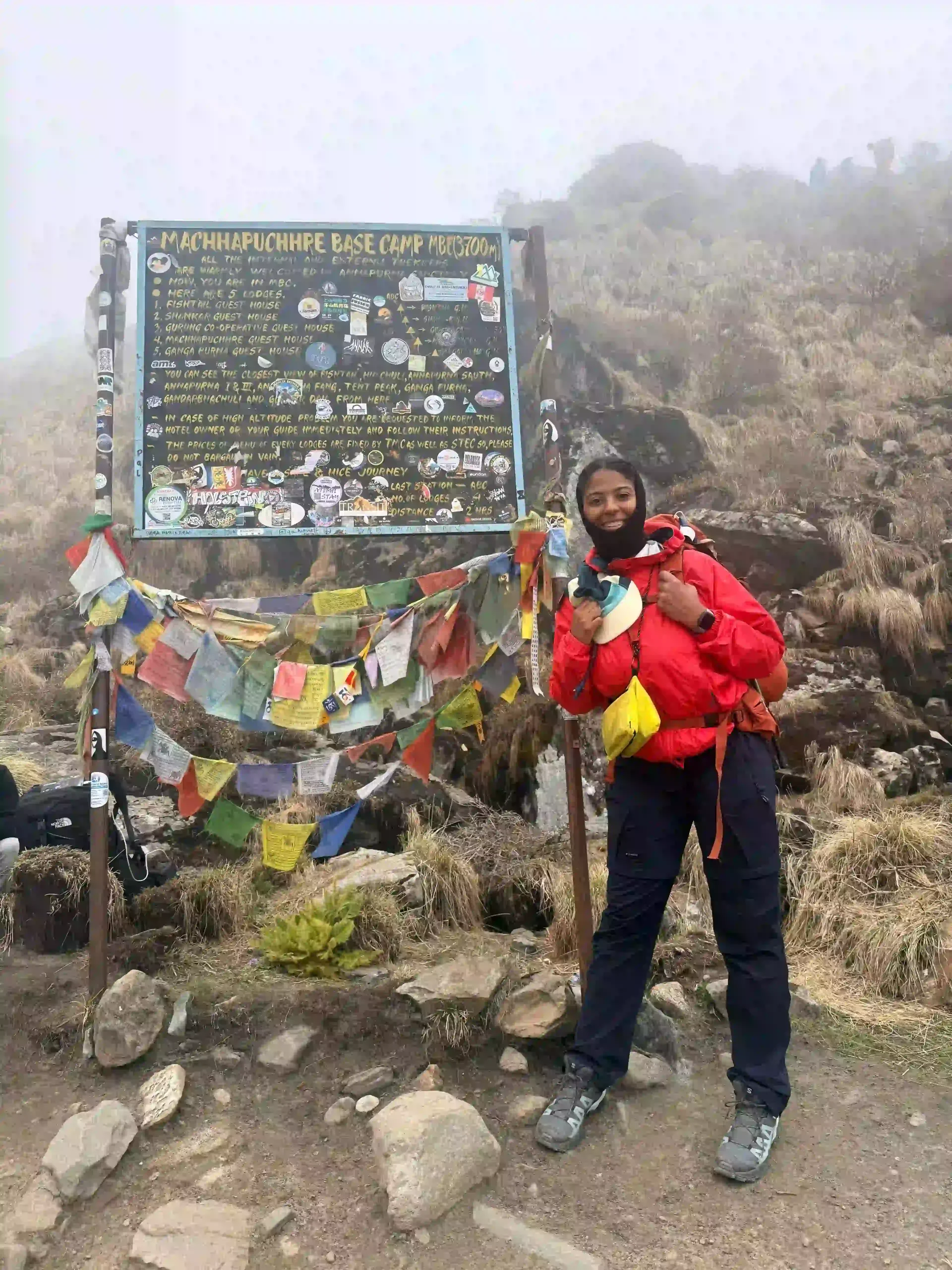
The third day of the ABC Short Trek is the most emotional point of the trek because you can finally reach Annapurna Base Camp. You begin your day at Deurali and slowly walk up the river. The path along the river is more exposed and open than the one under the forests. The valley gets bigger, and you start seeing cliffs and snow slopes around you, with the sound of the river becoming louder and closer. When you get to Machhapuchhre Base Camp, the views open from all sides and, if the weather is clear, Machhapuchhre’s triangular summit stands out, dominating the skyline.
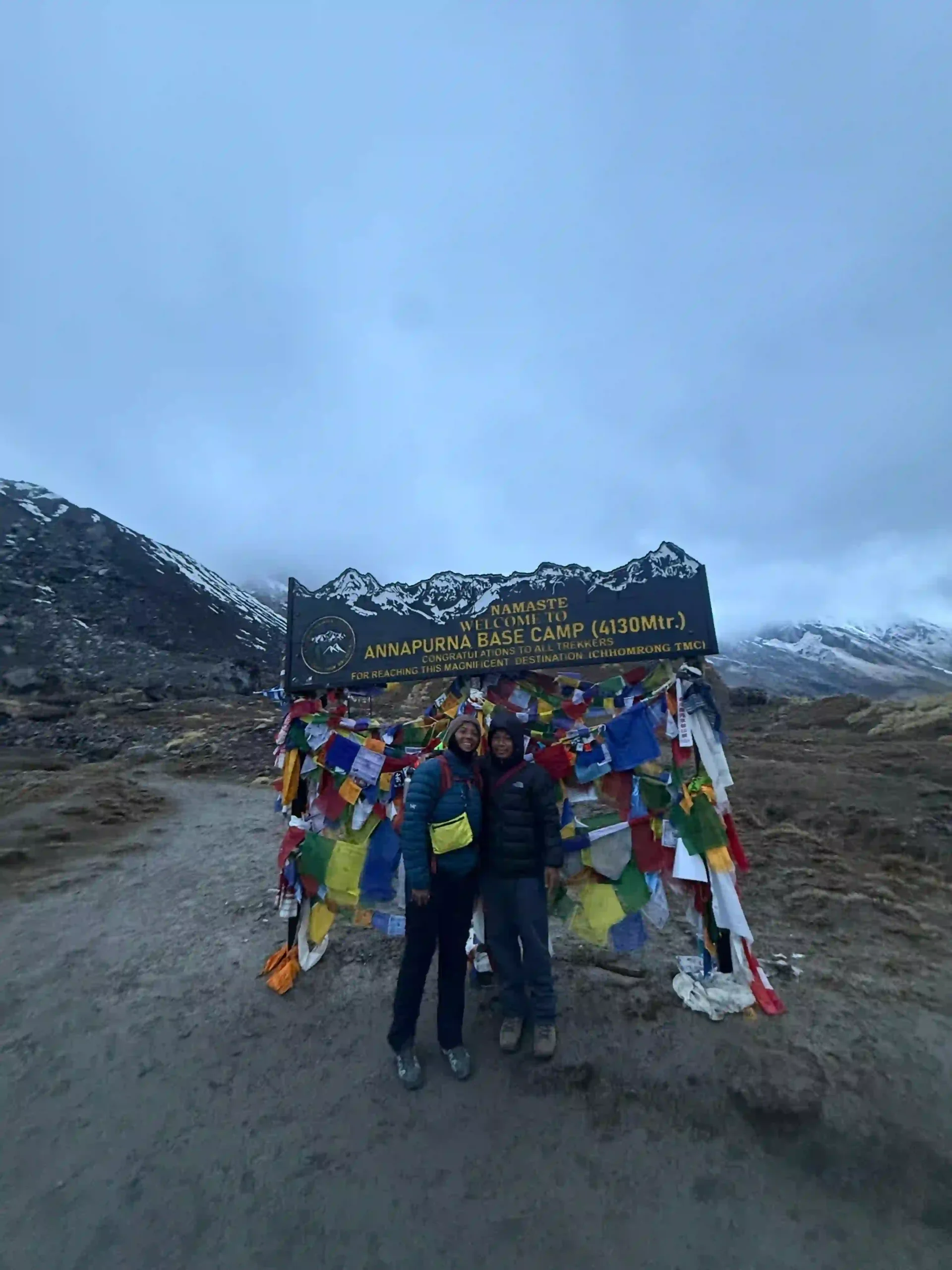
Reaching Machhapuchhre Base Camp gives you your first panoramic Himalayan view on this short trek to ABC, but the best part is still ahead. After a short rest, you continue on a rising path that bends and takes you to the Annapurna Sanctuary. The last part of the walk to Annapurna Base Camp feels almost surreal, as Annapurna I, Annapurna South, Hiunchuli, and other peaks form a wall of snow around the basin. When you reach Annapurna Sanctuary Lodge, you will have arrived at one of the most famous viewpoints in Nepal. You can spend the late afternoon exploring, soaking in the atmosphere, and preparing for a sunrise you are unlikely to forget.
Day 4
Trek from Annapurna Base Camp to Bamboo
|
Trekking Time Average |
13-15 km Downhill Hike (6-8 hours) |
|---|---|
|
Accommodation |
Trekker’s Guest House |
|
Altitude |
2,300 m / 7,590 ft |
|
Included meals |
Breakfast, Lunch, Dinner |
You start the day early to catch sunrise at Annapurna Base Camp and see the first light move across the face of Annapurna I and the surrounding peaks. The colors shift from cold blue to golden orange, and the entire sanctuary lights up in a way that makes the previous days of effort feel fully justified. Usually, it is very cold and quite windy at this hour, so you will have to juggle between taking photographs and enjoying the scenery. After enjoying the views, you will get back to the lodge to have breakfast.
Post-breakfast, you begin the long descent back down the same trail. You will retrace your steps through Machhapuchhre Base Camp, Deurali Himalaya, and Dovan. Going down the valley gives you a completely new perspective of views that you probably did not even notice on your way up, and the abundance of fresh air will gradually make walking more enjoyable.
Along the way, you will see the same lodges and landmarks, but the day will be tiring because of the long distance you cover. By late afternoon, you reach Bamboo, surrounded once again by thicker vegetation and forest sounds. Overnight at Bamboo.
Day 5
Trek from Bamboo to Jhinu Danda and Drive to Pokhara
|
Trekking Time Average |
8.5-11 km Downhill hike (5-6 hours), 60 km (2-2.5 hours) |
|---|---|
|
Accommodation |
Not included |
|
Altitude |
820 m / 2,706 ft |
|
Included meals |
Breakfast, Lunch |
The last day of your short ABC trek trail will take you down the hill terraces and through stone steps that people mainly associate with the Annapurna region. From Bamboo, you make a steady upward climb to Upper Sinuwa, returning to the ridge and then passing through the forest before finally arriving again at the more open areas of farmland and villages. After that, the path descends very steeply to the river and then climbs back up to Chhomrong. Chhomrong is the place where you need to tackle those famous stone steps, which are sometimes called a “final test” for your knees and thighs.
The trails from Chhomrong to Jhinu Danda are mostly downhill, and the good news is that the temperature rises as you descend, along with the humidity. At Jhinu Danda, you officially complete the walking portion of this short trek to ABC. Depending on your timing and the final plan you agree upon, you may have the option to walk down to the nearby natural hot springs at the river below Jhinu Danda. At Jhinu Hot Spring, you can soak and relax completely before you leave the mountains.
Afterward, you meet your vehicle and drive back to Pokhara, following the river valley and eventually rejoining the main road. Seeing the city lights come into view, the contrast between the peacefulness of the Annapurna Sanctuary and the hustle of Lakeside will make your accomplishment of reaching Annapurna Base Camp in just 5 days even more memorable. Then, you will check into your hotel (self-booked) in Pokhara, and the evening will be yours for resting, celebrating, or even planning your next adventure.
Extra: For travelers planning their journey from the capital, our detailed guide on Kathmandu to Annapurna Base Camp explains transportation options, travel times, and route choices.
What’s included
- Pick Up and Drop Off at hotel in Pokhara before and after Trek.
- Lodge accommodation on a twin-sharing basis during the trek
- All meals along the trek (breakfast, lunch, and dinner)
- One highly experienced, first-aid-trained, English-speaking, friendly, government-licensed trekking guide
- Porter service as required (one porter for every two trekkers)
- Guide and porter’s food, accommodation, salary, insurance, transportation, and necessary equipment
- All overland transportation, as mentioned in the itinerary
- Annapurna Conservation Area Project (ACAP) permit and all necessary trekking documents
- Trekking map
- Daily oxygen saturation (SpO2) check-up
- Beanie, basic first aid kit, water purification supplies, and fresh seasonal fruits during the trek
- Trekking completion certificate
- Company T-shirt
- All applicable government taxes and service charges
- Assistance in arranging emergency rescue and evacuation if required
- Public liability insurance
What’s not included
- Hotel accommodation and meals in Kathmandu and Pokhara
- Hot and soft drinks such as tea/coffee, bottled water, hot water, soft drinks (Coke, Fanta, etc.), alcoholic beverages, and bar bills
- Hot shower, device charging, and Wi-Fi, where applicable
- Personal travel insurance (mandatory)
- International flight tickets
- Nepal tourist visa fee
- Laundry and personal phone bills
- Tips for guide and porter (highly recommended)
Add-ons and Options
Make your Short Annapurna Base Camp Trek more comfortable with optional add-ons such as private ground transfers, quality gear rental, sightseeing tours, adventure activities, and upgraded hotels and lodges.
Steps to add trip add-ons:
- Click on the “Book the Trip” button on this Short ABC Trek page.
- Choose your preferred departure date.
- On the checkout page, select the add-ons you want (transport, gear, tours, flights, upgrades).
- Confirm quantities where needed and complete your booking.
Available Add-ons include:
- Gear rental: Rent essential trekking equipment so you don’t have to buy everything new. You can rent a sleeping bag (USD 10), a down jacket (USD 10), a pair of crampons/spikes (USD 10), and a pair of trekking poles (USD 10).
- Guided Pokhara sightseeing tour (USD 30 per person): Enjoy a guided tour of Pokhara’s highlights, including lakeside areas, viewpoints, and cultural sites, either before or after your trek.
- Trishuli river rafting (USD 45 per person): Add an exciting white-water rafting experience on the Trishuli River to break up the drive between Kathmandu and Pokhara or as an extra adventure after your trek.
- Paragliding in Pokhara (USD 90 per person): Soar above Pokhara with panoramic views of Phewa Lake and the Annapurna range for 45 minutes, a popular adventure activity for thrill-seekers.
- Zipline in Pokhara (USD 80 per person): Experience a high-speed zipline ride with mountain views, a quick and fun adrenaline add-on to your trip.
- Hotel Accommodation in Pokhara (USD 50 per night): Stay in a comfortable hotel in Pokhara with breakfast included.
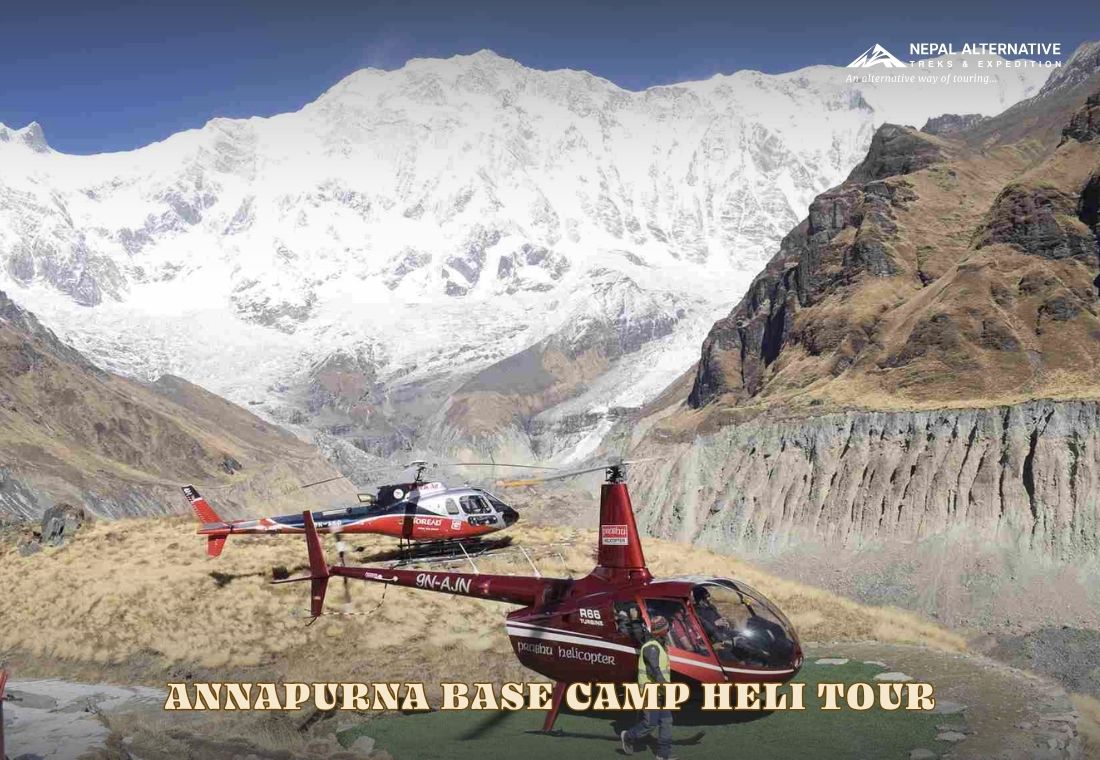
- Private helicopter transfer to Pokhara (USD 500 per person): Fly directly from Annapurna Base Camp to Pokhara by helicopter for a faster, more comfortable journey that avoids long, steep descents on the same trail and reduces fatigue.
- Personal porter (USD 100 per porter): Hire a dedicated porter to carry your main bag so you can walk with a light daypack and focus on enjoying the scenery and the trekking experience.
Weather Variation and Best Time for ABC Short Trek
January
-10°C to 5°C
-10°C to 5°C
February
-8°C to 7°C
-8°C to 7°C
March
-5°C to 10°C
-5°C to 10°C
April
-2°C to 12°C
-2°C to 12°C
May
2°C to 15°C
2°C to 15°C
June
5°C to 17°C
5°C to 17°C
July
7°C to 18°C
7°C to 18°C
August
7°C to 18°C
7°C to 18°C
September
5°C to 16°C
5°C to 16°C
October
-2°C to 11°C
-2°C to 11°C
November
-5°C to 8°C
-5°C to 8°C
December
-8°C to 5°C
-8°C to 5°C
The best time for the Short Annapurna Base Camp Trek is during the spring (March to May) and autumn (September to November) seasons when weather conditions are stable, mountain visibility is excellent, and trail conditions are at their best.
Spring Season (March-May):
Spring is one of the most beautiful times to trek in the Annapurna region. Highlights of trekking in spring include clear views of the Annapurna range, colorful rhododendron forests in full bloom, pleasant daytime temperatures, longer daylight hours, and excellent photography conditions. At Annapurna Base Camp, temperatures are usually around -2°C to 10°C. Also, if you’re planning a spring departure, our guide to the Annapurna Base Camp Trek in March and April provides detailed weather and trail insights.
Autumn Season (September-November):
Autumn is regarded as the best trekking season in Nepal, offering the clearest skies after the monsoon. Highlights include crystal-clear Himalayan panoramas, stable and dry weather conditions, comfortable trekking temperatures, very low chances of rain or snowfall, and ideal trail conditions throughout the route. At ABC, temperatures typically range from -5°C to 12°C, depending on the month.
Winter Season (December-February):
The trek remains possible during winter, but colder temperatures and occasional snowfall can make the higher sections more challenging. Winter trekking is suitable for experienced trekkers, travelers seeking fewer crowds, and photographers looking for snow-covered landscapes. Night temperatures at ABC can drop below -10°C.
Monsoon Season (June-August):
Monsoon is generally the least recommended season due to frequent rainfall, slippery trails, cloud cover, and increased leech activity at lower elevations. However, experienced trekkers who don’t mind occasional rain may still complete the trek safely with proper preparation.
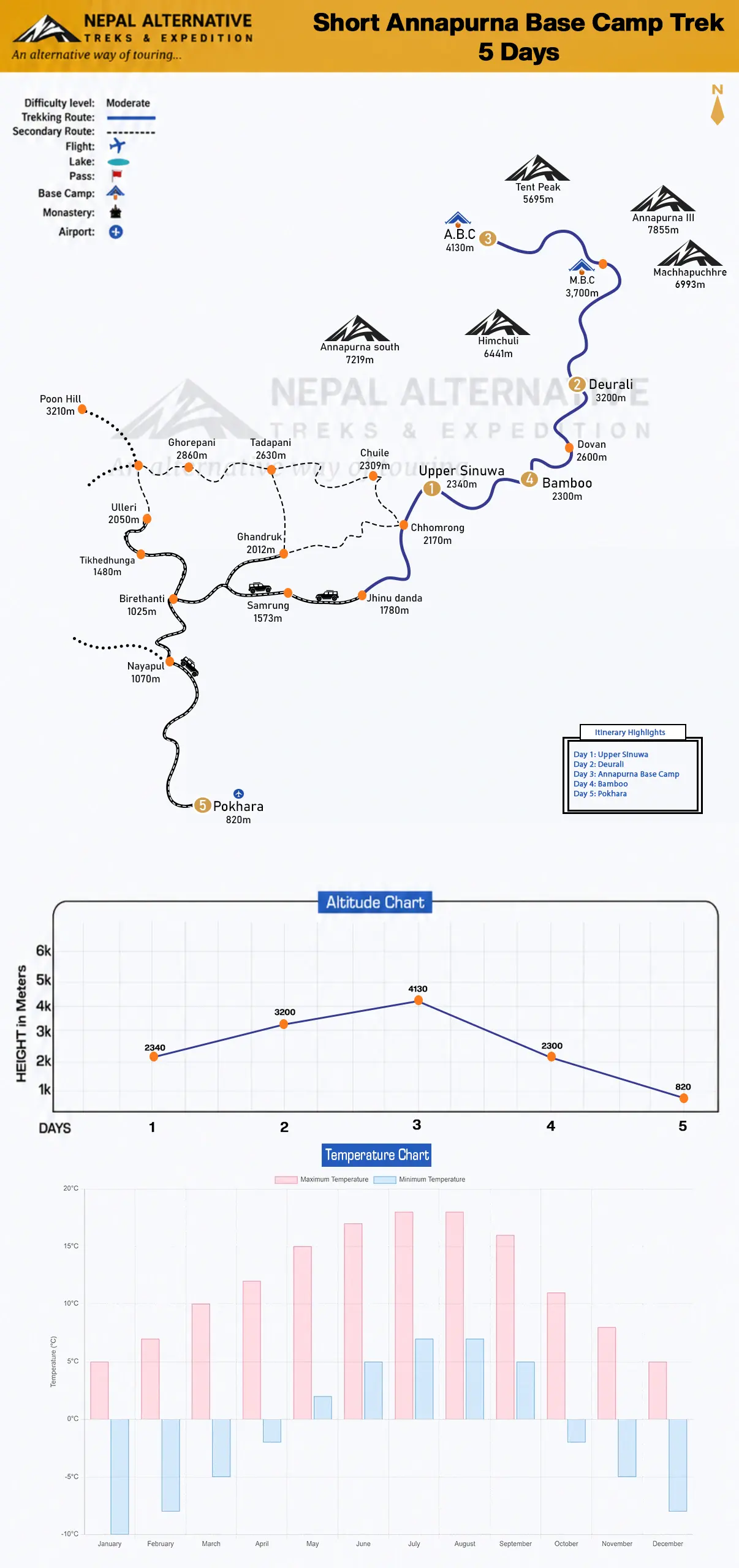
Annapurna Base Camp Short Trek Map
Join our group departures
Our scheduled group tours offer fixed departure dates, providing an excellent opportunity for travelers to join our small group trips.
Note : Our fixed group departure dates, services and price is guaranteed even if the group numbers are 1 person to maximum 18 persons. We will provide a guide cum porter if there is only 1 person to operate the trek and one more assistant guide if group size is above 10 persons. And of course, guide cum porter will carry 10 kg luggage
Book a private trip on your own date.
Every journey we create is uniquely tailored to you. Share your interests and passions, and our travel experts will design an unforgettable adventure filled with extraordinary, one-of-a-kind experiences crafted just for you.
Additional Information
Culture & Mountain Experience During Short Annapurna Base Camp Trek
Even though the itinerary is short, the cultural experience along the short Annapurna Base Camp trekking trail feels surprisingly rich. The journey begins in the lower hills of the Annapurna Conservation Area, where you pass through traditional Gurung and Magar villages. Villages such as Sinuwa, Jhinu Danda, and Deurali are predominantly Gurung and Magar, and you’ll see traditional stone houses, terraced fields, and everyday hill life as you pass through. Also, evenings in the dining room often turn into relaxed, family-style gatherings, especially in the smaller lodges. You will also experience the warm hospitality of local people, for which the Annapurna region is known.
As you climb higher, the human landscape slowly gives way to the mountain environment. From Deurali onward, the scenery becomes increasingly spectacular, with the Annapurna range slowly unfolding around you. By the time you reach Machhapuchhre Base Camp and Annapurna Base Camp, you are surrounded by a complete 360-degree circle of peaks. The sunrise and sunset light on Annapurna I, Annapurna South, Hiunchuli, and Machhapuchhre is the emotional core of this short trek to Annapurna Base Camp. Many trekkers remember the quiet, almost spiritual feeling at dawn in the sanctuary long after the trek is finished.
Short Annapurna Base Camp Trek Route
The Short Annapurna Base Camp Trek follows the classic Annapurna Sanctuary trail and uses road access from Pokhara to Samrung to reduce the overall trekking duration.
Route Overview:
Pokhara → Samrung → Chhomrong → Upper Sinuwa → Bamboo → Dovan → Himalaya → Deurali → Machhapuchhre Base Camp → Annapurna Base Camp → Bamboo → Jhinu Danda → Pokhara
On the first day, you drive from Pokhara to Samrung and trek to Upper Sinuwa. Day 2 continues through Bamboo, Dovan, and Himalaya to Deurali. On Day 3, you enter the Annapurna Base Camp from Deurali via Machhapuchhre Base Camp.
After reaching ABC on Day 3, you retrace the same route down to Bamboo on Day 4. The final day (Day 5) follows the route through Chhomrong and Jhinu Danda and drives back to Pokhara. The Short Annapurna Base Camp Trek covers approximately 50-55 km of walking, excluding the road transfers between Pokhara and the trailhead.
How to Prevent Altitude Sickness During the Short Annapurna Base Camp Trek
The short trek to Annapurna Base Camp is considered a moderate trek, but altitude sickness remains one of the most important factors to consider. The highest point of the trek is 4,130 m at Annapurna Base Camp, which you reach on Day 3. This means you gain elevation quickly. Also, at ABC, oxygen levels are approximately 40% lower than at sea level. Even though most trekkers complete the journey without serious issues, it is essential to take proper precautions to reduce the risk of Acute Mountain Sickness (AMS).
Here are some tips and measures to prevent altitude sickness during the short ABC trek:
- Stay hydrated: Drink at least 3 to 4 liters of water daily during the trek. Dehydration is one of the most common causes of headaches and fatigue at higher elevations.
- Walk at a steady pace: Avoid racing uphill. A slow and consistent pace allows your body to adapt more effectively to changing elevations and helps conserve energy for longer trekking days.
- Avoid alcohol and smoking: Alcohol and smoking can worsen dehydration and make altitude symptoms more severe. It is advisable to avoid them while trekking above 3,000 m.
- Eat proper meals: Even if your appetite decreases at altitude, continue eating carbohydrate-rich meals such as Dal Bhat, fried rice, potatoes, noodles, and soups. These foods provide the energy needed for acclimatization and recovery.
- Monitor oxygen saturation: One unique benefit of trekking with Nepal Alternative Treks is the daily oxygen saturation check-up, which helps guides monitor acclimatization and identify potential altitude-related concerns early.
- Recognize early symptoms: Common signs of mild altitude sickness include headache, fatigue, dizziness, loss of appetite, and difficulty sleeping. If symptoms worsen, descend to a lower elevation. It is the most effective treatment.
- Travel with an experienced guide: A licensed trekking guide understands the signs of altitude sickness and can respond quickly if assistance or emergency evacuation becomes necessary.
Food & Accommodation During Annapurna Base Camp Short Trek
Accommodation during the Short Annapurna Base Camp Trek is in simple mountain teahouses and lodges that provide a comfortable place to rest after each day’s walk. Most rooms are simple and include twin beds with mattresses, pillows, and blankets. Also, the lodges are clean, welcoming, and well-adapted to the needs of trekkers. The dining room is the social center of each lodge, where trekkers gather in the evening to enjoy meals, warm up around the stove, and share stories from the trail.
When you trek with Nepal Alternative Treks, we provide accommodation at the following lodges during the short ABC Trek:
| Location | Accommodation |
| Upper Sinuwa | Hill Top Lodge |
| Deurali | New Panorama Point Hotel |
| Annapurna Base Camp | Annapurna Sanctuary Lodge |
| Bamboo | Trekker’s Guest House |
Similarly, food along the ABC route is typical of the Annapurna region. There is a good variety of freshly prepared meals. Meal options include dal bhat (rice, lentil soup, vegetables, and pickles), noodle soups, fried rice, momos, pasta, potatoes, omelets, pancakes, and bread. Among these, dal bhat remains the most popular choice because it is nutritious, filling, and rich in carbohydrates and protein.
One thing to consider here is that as you gain altitude, menu choices may narrow slightly and food prices increase due to the difficulty of transporting supplies into the mountains. Also, meat items are strictly restricted beyond Upper Sinuwa, and only vegetarian meal options are available.
That said, you can still expect hot and satisfying meals throughout the journey. Also, since this is a relatively short but physically demanding trek, it is essential that you focus on carbohydrate-rich meals, stay well hydrated, and have warm drinks such as tea, ginger lemon honey, or soup to help maintain energy levels and support acclimatization.
Permits Required for Short Annapurna Base Camp Trek
For the short Annapurna Base Camp Trek, you need the same permits as the standard ABC itinerary. The first is the Annapurna Conservation Area Project (ACAP) entry permit, which supports conservation, trail maintenance, waste management, and community development initiatives in the region. The cost of an ACAP permit is NPR 3,000.
The second is the TIMS (Trekkers’ Information Management System) card, or any current equivalent permit system in effect at the time of trekking. However, obtaining a TIMS card is not mandatory. It is essential that you check recent regulations for this. These permits are checked at various points along the short ABC trek route, typically near the start of the trek and in key villages.
Your trekking company arranges all permits in advance based on the passport copies and information you provide before the trip. It’s a good idea to carry a few passport-size photos and keep your passport or a copy easily accessible for any on-trail checks. And if you are wondering whether permit costs are included in the Short ABC Trek package, yes, they are.
Is the Short Annapurna Base Camp Trek Beginner-Friendly?
Yes, the Short Annapurna Base Camp Trek is beginner-friendly and is suitable for fit first-time trekkers. There are several factors that make this trek accessible for first-time Himalayan trekkers. These include well-established trekking trails, comfortable teahouse accommodation throughout the route, no technical climbing sections, strong trekking infrastructure, and easy access from Pokhara.
That being said, the trek is still more demanding than the standard Annapurna Base Camp itinerary because the ascent and descent are compressed into just five days. This means there are no dedicated acclimatization days, trekkers gain altitude quickly, and there are continuous walking days. Thus, trekkers should be prepared to walk around 4 to 8 hours daily on stone steps and forest trails with continuous up-and-down sections, especially between Sinuwa, Deurali, and ABC.
For beginners who exercise regularly, enjoy hiking, or have completed a few long day hikes before their trip, this short trek to ABC can be their first rewarding Himalayan trekking experience. However, those who prefer a slower pace, shorter walking days, and a more gradual approach to altitude may find the standard 7-day or 10-day Annapurna Base Camp Trek more comfortable. The longer itineraries spread the ascent over additional days, providing better recovery time.
How To Prepare for the Short Annapurna Base Camp Trek
Proper preparation makes the Annapurna Base Camp Short Trek more enjoyable and comfortable. The trek involves 4 consecutive days of walking, rapid altitude gain, and frequent ascents and descents on mountain trails. A little preparation before starting the Annapurna trek in Nepal goes a long way. Here’s how to prepare for the short ABC trek:
Build Your Fitness Before the Trek
The short ABC itinerary includes daily walks of around 4 – 8 hours on steep stone staircases and uneven terrain. Thus, start some basic training 4- 6 weeks before your trip. Good preparation activities include hiking, stair climbing, jogging or running, cycling, and strength and endurance training. Also, focus on building stamina and consistency rather than speed.
Practice Walking with a Daypack
During the trek, you’ll carry a small backpack containing daily essentials such as water, snacks, a rain jacket, a camera, and personal items. Training with a light daypack before the trek helps your body adjust to walking comfortably for longer periods.
Pack the Right Trekking Gear
Having suitable gear is important for both comfort and safety. Here’s the packing list for the short ABC trek.
Clothing:
- Base layers
- Fleece jacket
- Down jacket
- Waterproof jacket
- Trekking pants
- Warm hat and gloves
Footwear:
- Comfortable, well-broken-in trekking boots
- Quality hiking socks
- Lightweight camp shoes or sandals
Accessories:
- Sunglasses
- Sunscreen
- Headlamp
- Trekking poles
- Power bank
- Reusable water bottle
Prepare for Altitude and Mountain Conditions
Although Annapurna Base Camp is lower than some of Nepal’s other high-altitude treks, it still reaches 4,130 m. Walking slowly, staying hydrated, eating well, and getting adequate rest are the best ways to help your body adapt to the altitude. And since this is a shorter itinerary with no acclimatization days, maintaining a steady pace is especially important.
Be Mentally Prepared
Many trekkers focus only on physical fitness, but a positive mindset is equally important. Mentally, understand that this short trek to ABC involves early starts, changing mountain weather, and some long stair sections on tired legs. Also, reviewing detailed ABC resources like Annapurna Base Camp Trek cost and Annapurna Base Camp trek difficulty helps you anticipate logistics, difficulty, and budget so you can focus on the walk itself.
Arrange Travel Insurance
Comprehensive travel insurance covering high-altitude trekking and helicopter evacuation is highly recommended. Although Annapurna Base Camp is considered a safe trekking destination, weather, illness, or altitude-related issues can occasionally require emergency assistance.
Short Annapurna Base Camp Trek vs Standard Annapurna Base Camp Trek vs Annapurna Circuit Trek
The Short 5 Days Annapurna Base Camp Trek is designed for trekkers with limited time. It uses road access to Samrung and maintains longer daily walking stages to reach Annapurna Base Camp in just 3 trekking days and returns in 2 days. The focus is almost entirely on reaching the Annapurna Sanctuary as efficiently as possible.
At the same time, the Standard Annapurna Base Camp Trek follows a more relaxed pace and takes 7 to 12 days. The itinerary includes additional cultural villages (Ghorepani, Tadapani, and Chhomrong) and more gradual altitude gain. This version of the trek offers a more balanced mix of mountain scenery, local culture, and trekking comfort.
In contrast, the Annapurna Circuit Trek is a much larger Himalayan journey. Instead of trekking directly to a base camp, it circles the entire Annapurna massif through Manang, Thorong La, Muktinath, and the Kali Gandaki valley, crosses the high Thorong La Pass (5,416 m), and passes through diverse landscapes ranging from subtropical valleys to high-altitude deserts. It requires more time, stronger endurance, and greater altitude tolerance.
Quick Comparison Table:
| Feature | Short ABC Trek | Standard ABC Trek | Annapurna Circuit Trek |
| Duration | 5 days | 7-10 days | 11 days |
| Maximum Altitude | 4,130 m (Annapurna Base Camp) | 4,130 m (Annapurna Base Camp) | 5,416 m (Thorong La Pass) |
| Difficulty | Moderate, with longer daily walking hours and a faster altitude gain | Moderate, with a more gradual ascent and shorter daily stages | Moderate to challenging due to higher altitude, longer duration, and high-pass crossing |
| Daily Walking Hours | 4-8 hours | 4-7 hours | 5-8 hours |
| Mountain Experience | Close-up views of Annapurna I, Annapurna South, Hiunchuli, and Machhapuchhre inside the Annapurna Sanctuary | Includes the same Sanctuary experience, often combined with viewpoints such as Poon Hill for additional panoramas | Offers the greatest variety of mountain scenery, including Annapurna, Dhaulagiri, Manaslu, the Tilicho region, and views from Thorong La Pass |
| Cultural Experience | Limited to villages such as Sinuwa and Jhinu Danda due to the shorter itinerary | Stronger cultural experience with visits to traditional Gurung and Magar villages such as Ghandruk, Ghorepani, and Tadapani | Most diverse cultural experience, passing through Gurung, Thakali, and Tibetan-influenced villages across multiple valleys |
| Landscape Variety | Forests, river valleys, and the high-altitude Annapurna Sanctuary | Forests, villages, terraced farmland, rhododendron forests, viewpoints, and the Annapurna Sanctuary | Subtropical forests, alpine valleys, high mountain deserts, deep gorges, rivers, and high Himalayan passes |
| Acclimatization | Limited; altitude gain is relatively rapid | Better altitude progression with more recovery time | Best acclimatization profile due to the longer itinerary and gradual ascent |
| Trail Type | Out-and-back route focused on reaching ABC quickly | Traditional ABC route with additional cultural and scenic highlights | Full circuit around the Annapurna massif with constantly changing scenery |
| Suitable for Beginners | Yes, for fit beginners comfortable with consecutive long trekking days | Yes, often considered the best option for first-time Himalayan trekkers | Better suited to trekkers with previous trekking experience or strong fitness |
| Time Commitment | Minimal | Moderate | Significant |
| Best For | Travelers with limited time who want to reach Annapurna Base Camp and experience the Sanctuary in the shortest practical timeframe | Trekkers seeking the classic Annapurna experience with a balance of culture, scenery, comfort, and acclimatization | Trekkers looking for a longer, more adventurous journey with greater landscape diversity, higher altitude, and a major mountain pass crossing |
Short Annapurna Base Camp Trek FAQs
Is 5 days enough for the Annapurna Base Camp trek?
What is the maximum altitude during the Short ABC Trek?
Are guide & porters included in the Short Annapurna Base Camp trek?
Can I extend & customize the ABC trek itinerary?
How much does the short Annapurna Base Camp trek cost?
What is the best month for the Short Annapurna Base Camp trek?
Is travel insurance required for the trek?
Related Trips