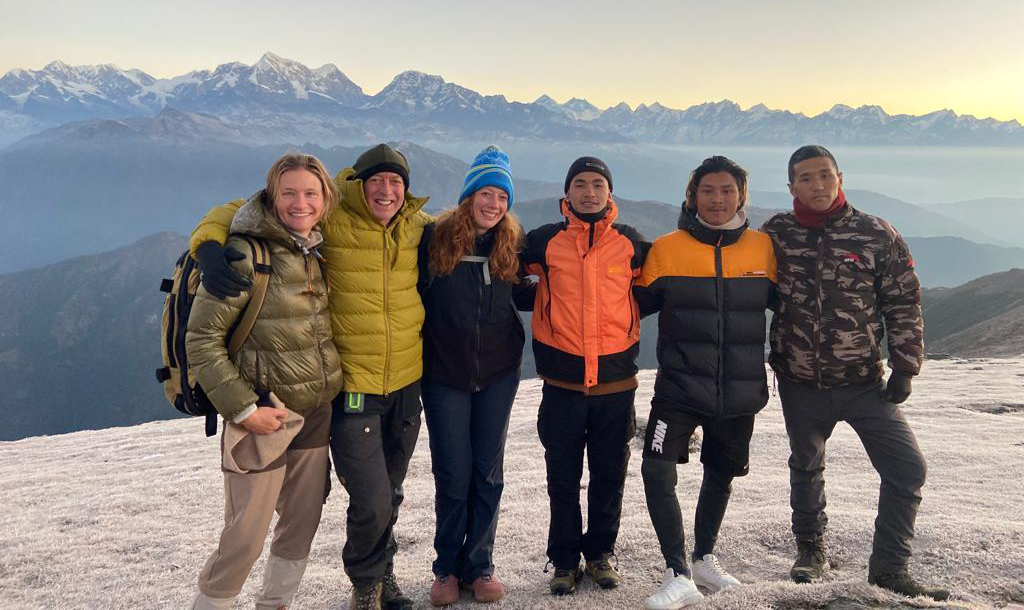
October and early November are the best times for the Pikey Peak Trek, and for a good reason. The months fall during the autumn season, peak trekking time in the Everest region of Nepal and other parts of the country. The period comes after the monsoon season with fresh atmosphere and clear air. Thus, the time offers a crystal-clear view of mountain peaks, including Everest, Kanchenjunga, Makalu, and the surrounding Himalayas. Similarly, watching the sunrise, for which the peak is famous, is well worth it at that time.
Furthermore, the spring season (March to May) is a worthy alternative, especially for those who want the added beauty of colorful rhododendron flowers. Also, the time is ideal for the Pikey Peak Trek, with favorable weather and trekking conditions, but pre-monsoon rain can be unpredictable.
Want to know why timing matters for the Pikey Peak trek? Which season is right for you? Season and month by month trail condition along the journey? This blog has got you covered. Read till the end.
Why Timing Matters More on Pikey Peak Than Many Other Short Treks
Most of the short treks in Nepal can be enjoyed throughout the year. However, Pikey Peak Trek is one of the few short Himalayan adventures where timing has a significant impact on the overall experience. Likewise, the best month, the right day in that month, and even the right time to reach the summit, all matter on the trek to Pikey Peak. Here’s why:
The View is the Main Highlight
Pikey Peak is a less-visited destination in the Solu region, where rhododendron forests, traditional Sherpa villages, and authentic mountain culture are highlights in their own right. But the main reason most people trek to Pikey Peak is for the incredible view, seen from the Pikey summit. The summit is also Sir Edmund Hillary’s favorite viewpoint, especially for views of Mount Everest.
Additionally, views of Kanchenjunga, Lhotse, Makalu, Cho Oyu, Manaslu, Annapurna, Shishapangma, Gaurishankar, Numbur, Thamserku, Mera Peak, and Kangtega are also visible from the Pikey summit. If the summit is covered by clouds, you’ll miss the trek’s biggest highlight. That’s why choosing the right weather is especially important for Pikey Peak.
The Summit is Often Covered by Cloud
At around 4,065 m, Pikey Peak is at a height where clouds and mist come together, especially during the monsoon and in the afternoon. Unlike higher destinations where strong winds can clear the sky, clouds can remain around the Pikey for hours. Even if you visit during the right season, choosing the wrong day can mean reaching the top without any mountain views. Thus, not only the month but also the best day for the Pikey Trek are important.
No Teahouse Buffer for Bad Days
On popular destinations like the Everest Base Camp Trek, bad weather generally isn’t a big problem because you can stay an extra day in a teahouse and try again when the skies clear. However, Pikey Peak is different. The location has fewer accommodation points, and trekkers have limited time to reach Pikey’s summit. If one day’s weather is poor, you miss the mountain views unless you can extend your trip by several days.

Which Season Is Right for Your Pikey Peak Trek?
Autumn (September to November) and spring (March to May) are the right trekking seasons for the Pikey Peak trek. Neither is always better than the other. So, among the two seasons, choose the one that fits your trekking goal.
If you want the clearest Himalayan views
Go in October.
If you want to visit Pikey Peak for the clearest possible mountain view, October is the best time to visit. Just after the monsoon season, October offers bright blue skies and clear mountain views, a result of rain clearing the air of dust and pollution. Thus, the season gives you the best chance of seeing Everest and the other Himalayan peaks in all their majesty.
If you want views and a more colorful landscape
Go in late October to early November.
Late October or early November is the best time for the Pikey Peak trek if you want mountain views along with a colorful landscape. The views remain clear throughout late October, and the forests begin to change to beautiful colors of gold and amber.
If you want rhododendron forests in bloom
Go in late March to mid-April.
Rhododendron is Nepal’s national flower and blooms during one of the best seasons: late March to mid-April. If you want to travel to Pikey Peak during the wildflower boom, choose the month between March and mid-April. During the time, the forests around Pikey Peak bloom with red, pink, and white rhododendron flowers. Early mornings also offer good mountain views, but haze and dust in the air make the distant Himalayan peaks look less clear than they do in autumn.
If you’re travelling with family or less experienced trekkers
Go in October or early November.
October and early November are two of the most ideal months of the autumn season for Pikey Peak, especially if you are traveling with your family or if you are less experienced. At this time, the weather is usually stable, the trails are dry, and the teahouses operate smoothly, which makes your adventure comfortable and offers some of the finest mountain views.

Seasons That Determine Your Pikey Peak Experience
Located at 4,065 m, Pikey Peak experiences four distinct seasons throughout the year, and each season offers a completely different trek experience even on the same trail. The scenery changes from red rhododendron flowers to dense green monsoon forests to golden autumn colors to snow-covered winter. Understanding how seasonal factors affect your overall trek experience is important when planning a trek to Pikey Peak.
Spring
If you’re planning to trek to Pikey Peak in spring, be sure to experience the transformation of the landscape. As snow melts in March, the rhododendron forests between 2,500 and 3,500 m start to bloom with deep red flowers at higher areas and pink, white, and purple lower down. By April, the flowers are at their peak, making the entire route colorful. Additionally, the weather is pleasant for hiking, with warm days and dry, clear air.
Summer/Monsoon
Summer is one of the warmest times of the year that the Pikey route experiences. Although summer is warm, the constant rainfall makes one experience more like a monsoon than a summer. Heavy rainfall during the season exceeds 100-150 mm. Leeches appear in lower forest areas, and mountain views are hidden by clouds. At the same time, the landscape becomes very green and stunning, with waterfalls everywhere and wildflowers in higher meadows.
Autumn
Autumn is the most famous and ideal time for the Pikey Peak Trek. As the monsoon ends in September, the air becomes very clear, giving some of the best visibility of the year. During this time, the lower hills remain green from the monsoon rains, while the higher areas turn gold and brown. By October, the weather is stable, and on clear days, you can see many Himalayan peaks from Annapurna in the west to Kanchenjunga in the east at sunrise. This is the view Sir Edmund Hillary praised as one of the best he had seen of Everest.
Winter
Winter at Pikey Peak surprises trekkers with colder temperatures and clear skies, offering sharp mountain views. The forests look peaceful and bare, and the trails are almost empty. By February, conditions start to improve, with the temperature becoming less harsh and snow beginning to melt.
Month-by-Month Conditions on the Pikey Peak Trail
Month-by-month conditions on the Pikey trail at a glance:
| Month | Views | Trail | Crowds | Recommended |
| January | Good/clear days | Snow-covered | Minimal | No |
| February | Good/clear days | Possible snow | Very low | No |
| March | Good-moderate | Clear, but some mud | Low | Yes (late March) |
| April | Moderate | Good | Moderate | Yes (early April) |
| May | Poor-moderate | Good | Low | No |
| June | Very poor | Wet, leeches | Very Low | No |
| July | Very poor | Difficult | Minimal | No |
| August | Poor | Wet but improving | Minimal | No |
| September | Moderate-good | Clear | Low | Yes (late September) |
| October | Excellent | Perfect | Moderate | Strongly yes |
| November | Excellent-good | Dry and cold | Low | Yes (early Nov) |
| December | Good/clear days | Cold and possible snow | Very low | No |
January:
Pikey Peak trail experiences the coldest time yet the clearest sky view in January. The cold, dry air offers a clean atmosphere, providing a crystal-clear view of Everest, Makalu, and Kanchenjunga. Additionally, the winter snowfall transforms the upper section into a stunning snowy landscape.
- Daytime Temperature: 5 to 12°C
- Night Time Temperature: −15 to −20°C
- Precipitation: Very low
- Daylight: 10.5 hours
February:
It is a transition period between winter and spring. The summit area of Pikey Peak still has snow patches, with temperatures remaining harsh, like January nights. However, daytime conditions are good for trekking.
- Daytime Temperature: 7 to 14°C
- Night Time Temperature: −10 to −15°C
- Precipitation: Very Low
- Daylight: About 11 hours
March:
March marks the start of the spring trekking season. From this month onward, the days get longer, the weather becomes warm and comfortable for hiking, and the trekking routes are dry. Rhododendron flowers also begin to bloom in forests between 2,500 and 3,500 m. Besides, the skies are clear most mornings, but afternoons are hazy.
- Daytime Temperature: 10 to 18°C
- Night Time Temperature: 0 to −5°C
- Precipitation: Occasional light rain
- Daylight: About 12 hours
April:
April is the best month of the spring season for Pikey Peak Trek. The lower hillside is full of color during the time of bright red, pink, and white rhododendron flowers. The weather is perfect, with comfortable daytime temperatures. Birds are also very active during this time, and you can hear cuckoos and might spot Himalayan pheasants. The skies are also clear, which offer amazing sunrise views of Mount Everest, Lhotse, Makalu, Cho Oyu, Numbur, and Gauri Shankar
- Daytime Temperature: 15 to 22°C
- Night Time Temperature: 0 to 5°C
- Precipitation: Very low
- Daylight: About 13 hours
May:
May is the last month of the spring trekking season and a less preferable time for the Pikey Peak Trek. The trails are warm, green, and easy to walk, but the drawback of this month is pre-monsoon clouds and unclear mountain views from the summit.
- Daytime Temperature: 18 to 25°C
- Night Time Temperature: 5 to 10°C
- Precipitation: Pre-monsoon rain
- Daylight: About 13.5 hours
June:
The monsoon season begins in June on the Pikey trail, bringing heavy daily rain that makes trekking difficult. Trails become muddy and slippery, and leeches are common in the forests below 2,500 m. Likewise, clouds hide the mountain views for days.
- Daytime Temperature: 18 to 24°C
- Night Time Temperature: 10 to 14°C
- Precipitation: High
- Daylight: About 13.5 hours
July:
July is the peak of the monsoon season, and it is the most difficult time for the Pikey Peak trek. However, the landscape is at its greenest, with countless waterfalls. Still, slippery, muddy trails with leeches make trekking in July more difficult.
- Daytime Temperature: 18 to 23°C
- Night Time Temperature: 12 to 15°C
- Precipitation: Very High
- Daylight: About 13.5 hours
August:
August is slightly drier than July as the monsoon slowly begins to reduce. But trekking in Pikey during the time is not recommended. By late August, there are occasional breaks in the clouds, but trekkers must check the weather before choosing the time.
- Daytime Temperature: 17 to 22°C
- Night Time Temperature: 11 to 14°C
- Precipitation: High
- Daylight: About 13 hours
September:
September marks the transition period between the monsoon and the peak trekking season, autumn. Although it rains frequently in early September, it dries out by late September, with streams running full and fresh and the air clean after rainfall. The temperature also gets comfortable, and the mountain views become much clearer.
- Daytime Temperature: 12 to 18°C
- Night Time Temperature: 2 to 8°C
- Precipitation: Moderate early, low by late Sept
- Daylight: About 12 hours
October:
October is the best month to do the Pikey Peak Trek. During this time, the rain fully stops, the skies are clear, and the mountain views are at their finest. The famous sunrise from Pikey Peak is especially beautiful during this time. The weather is ideal for trekking, with pleasant days, cool evenings, and cold but comfortable nights.
- Daytime Temperature: 10 to 15°C
- Night Time Temperature: −5 to 2°C
- Precipitation: Negligible
- Daylight: About 11.5 hours
November:
November is another good month for the Pikey Peak Trek, with clear skies and amazing mountain views. During the month, the weather stays dry, and the trails remain in ideal condition. However, by late November, signs of winter appear near Pikey Peak with cold temperatures, especially at night.
- Daytime Temperature: 7 to 13°C
- Night Time Temperature: −5 to 0°C
- Precipitation: Very low
- Daylight: About 11 hours
December:
December is the start of the winter season and the end of autumn. From this month, snow begins to cover the upper section of the Pikey trail. The cold, dry air provides some of the clearest mountain views of the year, but harsh weather doesn’t suit trekking during this time, especially for beginners.
- Daytime Temperature: 5 to 10°C
- Night Time Temperature: −10 to −15°C
- Precipitation: Low
- Daylight: About 10.5 hours
Which Month Offers the Best Sunrise From Pikey Peak?
October is the ideal month that offers the best sunrise view from Pikey Peak. The month has a visibility success rate of more than 95%, providing trekkers a high chance of views of Mount Everest and the surrounding peaks. With comfortable temperatures and outstanding visibility, no other month offers such a memorable sunrise.
The main reason October is the best time for the Pikey Peak Trek is the exceptionally clear air after the monsoon. With less dust and haze in the atmosphere, mountain views are at their finest. At such a stunning moment, when the first rays of sunlight light up the mountain peaks, they turn to gold and orange before daylight fully arrives. The timing is also famous because Sir Edmund Hillary described the sunrise from Pikey Peak as one of the finest mountain views in Nepal.
Moreover, November is another excellent month for the Pikey Peak sunrise view, with around 92% visibility. April is also among the best times for sunrise views with clear weather and excellent mountain views. Similarly, winter also offers some of the clearest mountain views with 85-88% clarity, but comes with challenges. And May is the last good month for trekking before the monsoon season begins, with clarity of around 55-60%.
Choosing Between Spring and Autumn for Pikey Peak Trek
| Feature | Spring | Autumn |
| Visibility and sky clarity | 72-90% clear skies. April has around 90% clear visibility. By May, increasing haze makes mountain views less reliable. | 78-97% clear skies. October consistently exceeds 95%. The post-monsoon weather brings clean, clear skies with excellent visibility. |
| Sunrise View | Excellent in April. Bright sunrise with blooming rhododendron flowers. By May, the haze becomes thicker, making views less clear. | Outstanding in October–November. The clearest atmosphere of the year with the sharpest mountain view. |
| Landscape and Scenery | Peak rhododendron bloom is in April. The landscape becomes greener through May, and birds are very active. | Bright green landscapes after the monsoon slowly change to shades of red, orange, and gold in November. Yak pastures active. |
| Trail conditions | Excellent in April. March can carry light snow on the summit ridge. May trails are clear but dustier. | Excellent in October-November. In early September, the trails are still wet from the monsoon. |
| Crowds | Moderate. April sees the highest crowds, but the trails are quieter than in October. | October is the busiest month of the year. Teahouses fill fast. By November, the trails become peaceful and crowded. |
| Teahouse availability | All teahouses open. Booking is not required except for late April. | All open in October and early November. Some teahouses begin closing after mid-November. |
| Precipitation risk | Low in March-April. Light afternoon showers possible from mid-May. | Very low in October-November. Late September is generally safe for trekking, while early September can still be wet. |
| Overall | Best month: April. pleasant weather, beautiful flowers, and fewer crowds, along with great mountain views. The rhododendron flower is the highlight. | Best single month: October. Highest probability of a perfect sunrise. Clearest skies and best visibility. Best for first-time trekkers. |
FAQs
Which season is best for Pikey Peak Trek?
Autumn (September to November) and spring (March to May) are the best times to trek Pikey Peak Trek with the most reliable weather, comfortable temperatures, and clear views of the mountain peaks.
What is the weather like on Pikey Peak?
The weather conditions on Pikey Peak vary with altitude and time of the year. In general, the Pikey Peak area faces a cold mountain climate with comfortable daytime temperatures but freezing nights. Likewise, the weather changes quickly, with frequent wind and mist.
Is Pikey Peak crowded in October?
Yes, Pikey Peak is crowded in October, as it is one of the peak trekking seasons. Since the trek is less-traveled in the Everest region, the Pikey trail still experiences few trekkers and offers peaceful trekking conditions.
Can I do the Pikey Peak Trek in December?
Yes, you can do the Pikey Peak Trek in December. However, expect very cold conditions with possible snow, especially near the summit of Pikey Peak. Thus, proper winter gear is essential.
Is spring or autumn better for Pikey Peak?
Yes, spring and autumn are the best times to do the Pikey Peak. Still, autumn is regarded as better for its clearest skies, stable weather, and the best mountain views.
What month has the clearest mountain views?
The months of October and November offer the clearest views of the mountains. The season comes right after the monsoon, so the air is clean, the skies are stable, and visibility is at its finest.
Is Pikey Peak Trek suitable during the rainy season?
The Pikey Peak Trek is not suitable or recommended during the rainy season. The slippery and muddy trail with risk of landslides in lower forested areas and leeches makes the journey challenging throughout the trek.
When should I avoid the Pikey Peak Trek?
You should avoid the Pikey Peak Trek during the monsoon season (June to August) due to heavy rain, leeches, landslides, and poor visibility. Also, be careful in late January-February, when snow and extreme cold can make trails sometimes unsafe.