

Khopra Danda is one of the underrated Himalayan trekking routes in the Annapurna region. The destination lies within the north-east of Pokhara city, bordering Myagdi and Kaski districts within the Annapurna Conservation Area. It is also one of the peaceful trek routes, away from the crowds of the busier Annapurna route. If you’re planning to explore this lesser-traveled route, this guide will help you.
This Khopra Danda trek cost and planning guide provides a comprehensive resource, covering budget planning and permit requirements, transportation, accommodation, and trekking preparation. The blog ensures you’ll have a clear understanding of how to plan your Khopra Danda Trek efficiently and estimate your budget for a memorable and budget-friendly trek in the Annapurna region of Nepal.
How Much Does the Khopra Danda Trek Cost in 2026/27?
The total cost for a 6-day Khopra Danda Trek is between USD 420-480 per person, depending on group size. The cost covers most of the essential expenses required for the trek, including permits, accommodation, meals, guide fees, and ground transportation.
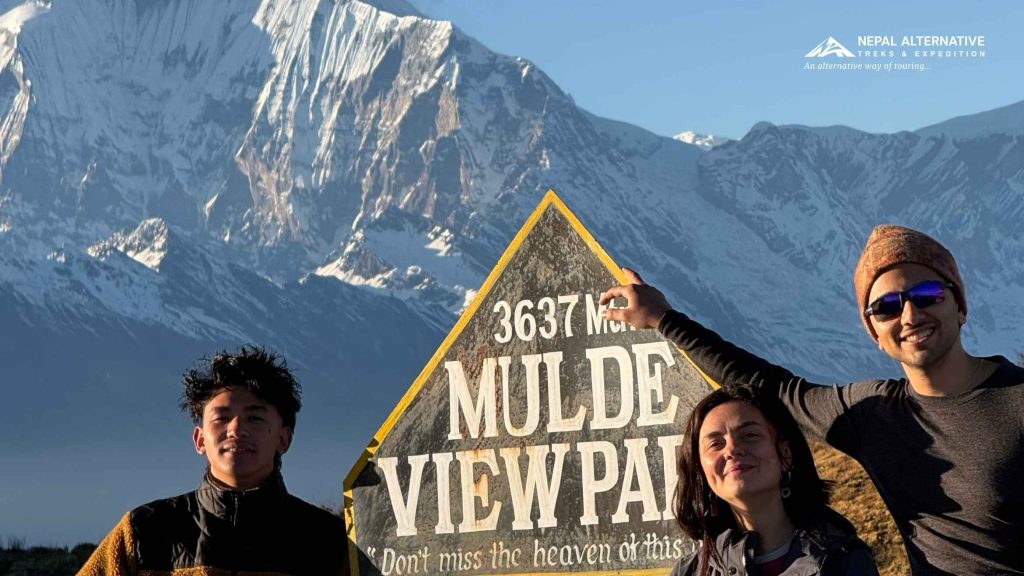
Khopra Danda Trek Cost Breakdown Table:
| Expenses | Estimated Cost (USD) |
| Annapurna Conservation Area Permit (ACAP) | 30 |
| Guide | 140-180 |
| Porter | 100-120 |
| Accommodation (per night) | 5-10 |
| Meals (per day) | 15-20 |
| Transport (Pokhara to trailhead & back) | 10-25 |
| Miscellaneous | 20-30 |
Note: The above costs are approximate and may vary depending on group size, season, and trip customization.
Average Khopra Danda Trek Cost
If you’re trekking solo or with about 4 people, hire a guide and stay in a local teahouse; the Khopra Danda Trek costs about USD 480 per person. But if you’re trekking in a large group of 13-18 people, the cost of the trek decreases by USD 60, bringing the overall cost to USD 420. If you want to save money, you can choose to skip hiring a porter, carry your own snacks, and use local buses. In that case, the cost can drop to around USD 380.
Cost for Nepali vs Foreign Trekkers
One notable cost difference between Nepali and foreign trekkers is the permit. Besides, most of the other costs are the same for foreigners and Nepalis. The cost of the vehicle, accommodation, meals, guide, and porter is the same for every individual, regardless of nationality. The Annapurna Conservation Area Permit (ACAP) costs only about NPR 100 (around USD 0.75) for Nepali citizens, while foreign trekkers should pay USD 20. Besides, Nepali trekkers know the route and can communicate easily with locals; they trek without a guide, which minimizes the overall trek cost.
Solo Trek vs Group Trek Cost
Solo treks cost significantly more than group treks. Joining a group trek can save you about USD 100-180 compared to trekking alone. This is because the costs of guides, porters, and other expenses are shared among the group.
| Expenses | Solo Trek | Group Trek |
| Guide Fee (per person) | USD 140-200 | USD 70-120 |
| Porter Fee (per person) | USD 100-140 | USD 50-80 |
| Transport (per person) | USD 15-20 | USD 8-12 |
| Accommodation (per night) | USD 5-10 | USD 5-8 |
Daily Expense Estimate
| Daily Expenses | Estimated Cost (USD) |
| Breakfast | 4-6 |
| Lunch | 5-7 |
| Dinner | 6-8 |
| Teahouse accommodation | 5-10 |
| Snacks and drinks | 3-5 |
| Miscellaneous | 2-3 |
Khopra Danda Trek Permit Cost
Khopra Danda Trek requires an Annapurna Conservation Area Permit (ACAP). Obtaining the permit helps authorities manage tourism, support conservation efforts, and ensure the safety of trekkers along the route. Before starting the trek, you should arrange the required permits through authorized agencies or official permit-issuing offices in Nepal. Additionally, carrying permits throughout the trek is important, as they may be checked at various entry points and checkpoints along the trail.
Annapurna Conservation Area Permit (ACAP) Fee
As the Khopra Danda Trek takes place within the Annapurna Conservation Area, obtaining an ACAP permit is mandatory. Annapurna Conservation Area permit helps regulate tourism activities and supports the conservation of the area’s rich biodiversity, natural landscapes, and cultural heritage.
Obtaining ACAP for the Khopra trek means you’re contributing to environmental protection programs, route maintenance, community development projects, and sustainable tourism strategies within the region. Having a valid permit ensures a smooth trekking experience while supporting responsible tourism in the Annapurna region.
Cost of Annapurna Conservation Area permit (ACAP):
| Nationality | Cost |
| Foreign Nationals | NPR 3,000 (approximately USD 20) |
| SAARC Nationals | NPR 1,000 (about USD 8) |
TIMS Card Requirement
For years, the TIMS (Trekkers’ Information Management System) card was required, along with the ACAP permit, for trekking in the Annapurna region, including the Khopra Danda Trek. But, as of 1 April 2023, Annapurna trekkers are no longer required to obtain a TIMS permit. This change directly applies to the Khopra Danda Trek, which falls within the Annapurna Conservation Area. Along the Khopra route, checkpoints do not ask for a TIMS Card, and you are required to present only your ACAP when requested.
Note: Some agencies still include the TIMS card arrangement as part of their package. While it is not wrong to carry one, you should not pay for an unnecessary card. Always confirm with your registered trekking agency before paying for any additional permit arrangements.
Why is the ACAP Permit Cost different for SAARC and Foreign Nationals
The Annapurna Conservation Area Permit (ACAP) fee structure differs for SAARC and foreign nationals as part of Nepal’s tourism and regional cooperation policies. SAARC was established to encourage cooperation, friendship, and easier travel among South Asian countries. By offering lower permit fees to citizens of other SAARC countries, Nepal supports these goals. Similar discounts can be found across South Asia for visa fees, entry tickets to historical sites, and permits for national parks.
Moreover, another reason for the ACAP cost difference between SAARC and foreign nationals is the varying income levels between countries. Most SAARC countries (India, Bangladesh, Pakistan, Sri Lanka, Bhutan, Maldives, and Afghanistan) are developing economies with income levels similar to or lower than Nepal’s. Tourists arriving from Western Europe, North America, Australia, or East Asia come from far wealthier countries with stronger currencies.
If Nepal charged the same fee to everyone, it could make travel more expensive for visitors from neighboring countries. For example, NPR 3,000 can be a significant expense for a traveler from Bangladesh but a much smaller cost for a traveler from Germany.
However, this practice is not unique to Nepal. Many national parks and tourist sites in Africa, Southeast Asia, and Latin America also use different pricing for local residents, regional visitors, and international tourists.
Where to Obtain Trekking Permit & What Documents Are Required for the Trek Permit?
You can obtain ACAP from the Nepal Tourism Board, located in Kathmandu and Pokhara. The office is located in Bhrikutimandap, Kathmandu, and near the Tourist Police Station in the Lakeside area, Pokhara. Likewise, applying for the permit through a trekking agency is the most hassle-free option. If you’re trekking with a registered agency, they will handle the entire permit process on your behalf.
Additionally, you can apply for ACAP through the NTNC’s official e-permit portal at epermit.ntnc.org.np. After successful payment, your permit is sent directly to your email, and you do not need to visit the office to collect it.
To obtain the permit for the Khopra Danda Trek, you will need your original passport with at least 6 months of validity, along with a photocopy of the photo page. Likewise, two recent passport-sized photos measuring 35mm × 45mm on a white background are also necessary. For the photo specifications, if you are applying online, you will need to upload a digital photograph in JPEG format with a minimum resolution of 300 DPI and a file size under 2 MB. Regarding payment, permit offices accept cash only, so carry Nepali Rupees. If paying online, the additional 2.9% charge applies.
Guide and Porter Cost for Khopra Danda Trek
While hiring a guide and porter for the Khopra Danda Trek is not legally required, doing so can make a big difference in your overall trek. The Khopra Danda trail is quieter and more remote than the popular Annapurna Base Camp trek and Annapurna Circuit, with fewer signs along the way. Hiring a guide is helpful for finding the right path, handling emergencies, and learning about the local culture and communities. A porter is not required, but it is highly recommended if you want to enjoy the trek without carrying a heavy backpack, especially at higher altitudes like Khayer Lake (an optional side trip from Khopra Ridge).
Guide Cost
Trekking guides for routes in the Annapurna region charge about USD 25-35 per day. However, this fee generally covers only the guide’s base salary and daily wages. Adding the cost of the guide’s food and teahouse accommodation, which is usually around USD 15-20 per day, brings the total cost to about USD 40-50 per day. So, it is advisable to trek through a trekking agency, and their package price covers the guide’s cost along with expenses.
Porter Cost
Hiring a porter for Khopra Danda costs around USD 15-25 per day. One porter can carry luggage for two trekkers, so solo trekkers pay the full cost, while couples or small groups can share the expense. Moreover, a porter can carry a maximum load of 18-20 kilograms.
Transportation Cost for Khopra Danda Trek
The Khopra Danda Trek begins with a drive from Pokhara to Ghandruk and concludes with a drive from Banthanti back to Pokhara. The distance between the locations is short, but the route involves mountain roads, so your vehicle choice matters for comfort, cost, and travel time.
Pokhara to Ghandruk
Ghandruk lies 57-61 km from Pokhara, and the drive takes 2.5 to 4 hours, depending on traffic and road conditions, and vehicle type. The road is paved and smooth up to Birethanti, but the final section from Syauli Bazar to Ghandruk is rough and unpaved. Because of this, a 4WD vehicle is recommended for a more comfortable and reliable ride.
- Private Jeep: Hiring a private jeep from Pokhara to Ghandruk costs USD 60 to 90, and it carries up to 6 to 7 people, which makes it easy to split the cost among a group.
- Shared Jeep: Shared jeeps cost around USD 10 to 15 per person and depart from Hari Chowk in Pokhara.
- Local Bus: Local buses to Ghandruk depart from the Baglung Bus Park in Pokhara, and tickets cost NPR 450 per person.
Banthanti to Pokhara
Banthanti is located on the Ghorepani trail and is accessible by road from Nayapul and Birethanti, where you can catch a vehicle back to Pokhara.
- Private jeep or taxi: A private taxi/car from Birethanti back to Pokhara costs around NPR 4,000-NPR 5,000 and NPR 7,500-NPR 10,000 for a private jeep. The vehicle’s costs can be shared among others, reducing the overall cost.
- Local bus: For those on a tighter budget, local buses on the Baglung Highway depart from the Baglung Bus Park, and any bus heading toward Pokhara from Beni or Baglung will stop at Banthanti to pick up passengers. The bus fare costs NPR 200-300 per person.
Accommodation Cost During Khopra Danda Trek
Unlike more developed treks, Khopra Danda features a unique Community Lodge system, especially at higher elevations (Khopra Ridge and Dobato). The local Magar and Gurung communities manage the community lodges, which provide a chance to experience the local lifestyle up close, either alone or with a group of fellow trekkers.
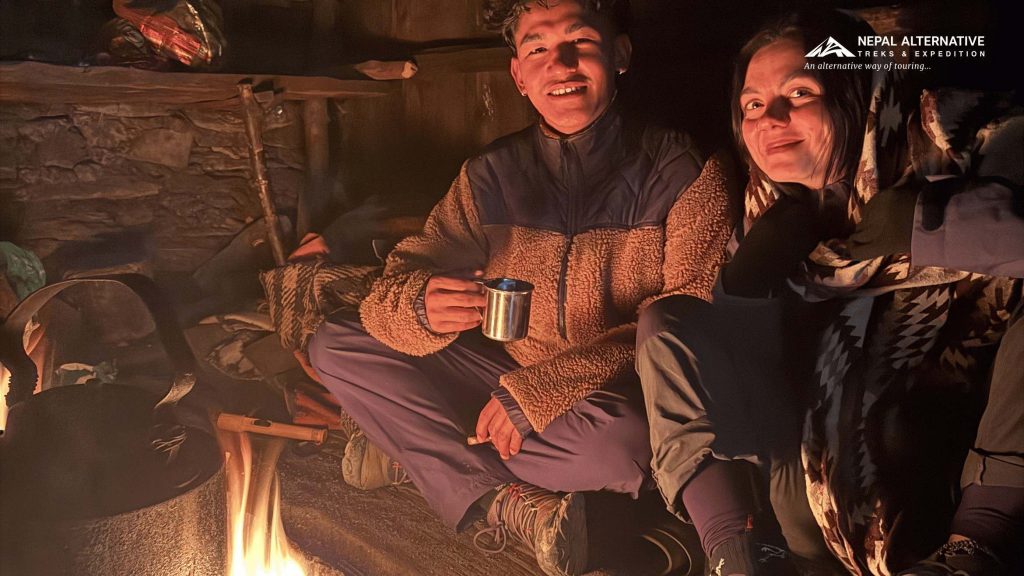
On the Khopra trek route, expect to pay slightly more for accommodation as you move due to limited facilities and no road access. Here are the general accommodation costs per person per night, depending on the location:
- Low Altitude (Nayapul, Birethanti) = USD 3-5
- Mid Altitude (Ghandruk, Tadapani) = USD 5-7
- High Altitude (Dobato) = USD 6-8
- Highest Point (Khopra Ridge) = USD 7-10
Besides accommodation cost, the lodging point also charges additional costs for additional facilities, including:
- Hot Shower = 2-5
- Wi-Fi and Charging = 2-4 per use

Khopra Danda Muldai View Point Trek – 6 Days

Mohare Danda, Khopra and Muldai View Point Trekking – 9 Days
Food and Drink Cost During the Trek
Food and drink prices on the Khopra Danda Trek are generally on a “price ladder” system, meaning the cost increases with altitude. As you reach higher up the trail, transporting supplies becomes more difficult, so meals and beverages become more expensive.
Here is a general breakdown of meal prices at different elevations along the Khopra trek:
| Location | Breakfast Cost | Lunch Cost | Dinner Cost | Tea/Coffee Cost |
| Nayapul / Birethanti | USD 4-5 | USD 5-6 | USD 6-7 | USD 1-2 |
| Ghandruk | USD 5-6 | USD 6-7 | USD 7-9 | USD 1-2 |
| Tadapani | USD 6-7 | USD 7-8 | USD 8-10 | USD 2-3 |
| Dobato | USD 7-8 | USD 8-9 | USD 9-11 | USD 3-4 |
| Khopra Ridge | USD 8-10 | USD 9-11 | USD 10-13 | USD 3-5 |
Does Trek Cost Change by Season?
Yes, the cost of the Khopra Danda Trek changes by season. While peak seasons (autumn and spring) come with higher prices, low seasons (summer/monsoon and winter) come with discounted prices.
Peak Season Cost (Autumn and Spring)
Autumn (September to November) and spring (March to May) are the best times to do the Khopra Danda trek, which comes with stable weather, clear skies, and blooming wildflowers throughout the rhododendron forest (in spring). Consequently, demand is highest at this time. While trekking trails are generally less crowded, teahouses are packed. During the season, you won’t find discounts, but booking in advance ensures your price and guarantees availability.
Low Seasons (Winter and Summer/Monsoon)
Winter (December-February) is the coldest time that Khopra Danda experiences. While clear skies and stunning mountain views are the season’s highlight, snowfall and temperatures below freezing degrees are its drawbacks. Community lodges during this time are also silent, with very few trekkers. Similarly, teahouse menus and accommodation rates are technically the same, but you have more negotiating power during winter.
Summer or monsoon is the least recommended season for most of the treks in Nepal, including Khopra Danda. Heavy rain, leeches, slippery trails, and obstructed mountain views make the season less favorable for trekking. Due to fewer preferred seasons, limited trekkers visit the destination, which also means you are in a strong position to negotiate package prices as agencies and accommodation points try to fill spots.
How to Save Money During the Khopra Danda Trek
The Khopra Danda Trek is one of the off-the-beaten-path adventures that offers views of the Annapurna and Dhaulagiri mountains without heavy crowds. However, trekking in the Himalayas can still be expensive if you are not careful with your spending. Here are some of the easy ways to manage your budget while experiencing the raw beauty of the Khopra Ridge Trek:
Join Group Treks
One of the most effective ways to reduce the cost of the Khopra Trek is to join a group trek rather than book a private or solo trip. A group trek can help reduce your overall cost by 20-35% compared to private trips, as costs such as guides, permits, transportation, and other logistics are shared among several trekkers.
Use Shared Transportation
To begin and return from the trailhead, you must take a vehicle. If you choose the private vehicle option, it can significantly increase your trip costs. Choosing local buses or shared jeeps to and from Pokhara instead of private vehicles can save you anywhere from NPR 3,000 to NPR 6,000 (about USD 22-45) per person each way.
Stay in Basic Teahouses
As Khopra Danda is getting popular yearly, the number of teahouses is also growing. While newer lodges provide additional comfort and modern facilities, traditional community-run tea houses are more budget-friendly. Choosing basic accommodation instead of upgraded lodges can help reduce your daily expenses by NPR 200-400. Besides being affordable, community tea houses also provide an authentic opportunity to experience the local culture and hospitality of the region.
Budget Trekking Tips
- Carry a reusable water bottle and use purification tablets or a filter instead of buying bottled water, as it saves around NPR 150-300 per day (USD 1-2).
- Pack snacks like nuts, energy bars, and dried fruit from Pokhara rather than buying them on the route, it saves NPR 500-1,000 over the full trek.
- Consider having your meals at the same teahouse where you stay. Many tea houses offer discounted accommodation to guests who dine there.
- Avoid trekking in peak season trek by traveling in shoulder seasons (late November or early March) when accommodation and package prices are slightly lower.
Essential Tips Before Trekking Khopra Danda
Whether you are trekking in the Himalayas for the first time or have completed several treks before, proper preparation is essential for a safe and enjoyable trek to Khopra Danda. Here are some essential preparation tips before starting your journey.
Carry Enough Cash
As you begin your Khopra Danda Trek, you’ll enter cash-only territory. ATMs and banking facilities are unavailable along the trek route, so it’s important to withdraw enough Nepali Rupees before you start your trek. Budget about NPR 2,500-4,000 (USD 18-30) per day to use just in case of an emergency.
Travel Insurance and Safety Tips
Travel insurance is highly recommended for the remote Khopra Danda Trek. Make sure your insurance covers high-altitude trekking (ideally up to 4,000 m if planning to trek to Khopra Danda and 5,000 m if planning to take the Khayer Lake trek), emergency helicopter evacuation, and trip cancellation. Additionally, altitude sickness can affect anyone at any time, so acclimatize properly, ascend gradually, and never ignore symptoms like headache, nausea, or dizziness.
Packing Essentials for Khopra Trek
Packing smartly for the Khopra Danda Trek is another essential tip for adventure, as overpacking and underpacking both can make your journey challenging. Here’s what you should not leave Pokhara without:
- Layered clothing
- Trekking boots
- Waterproof and windproof jacket
- Sleeping bag
- Trekking poles
- Headlamp
- Sunscreen, sunglasses, and a sun hat
- Reusable water bottle with water purification tablet
- Snacks and energy bars
- Permit documents
Conclusion
Planning your Khopra Danda Trek in 2026/27 is easier when you understand the above cost breakdown, permit requirements, transportation choices, accommodation prices, and daily expenses. By following the budgeting tips and preparation advice in this guide, you can enjoy the journey in the most cost-effective way while exploring some of Nepal’s most stunning mountain scenery.


