Safety update: our trekking groups are safe, and our routes are running as planned. Read full flood notice.

Safety update: our trekking groups are safe, and our routes are running as planned. Read full flood notice.
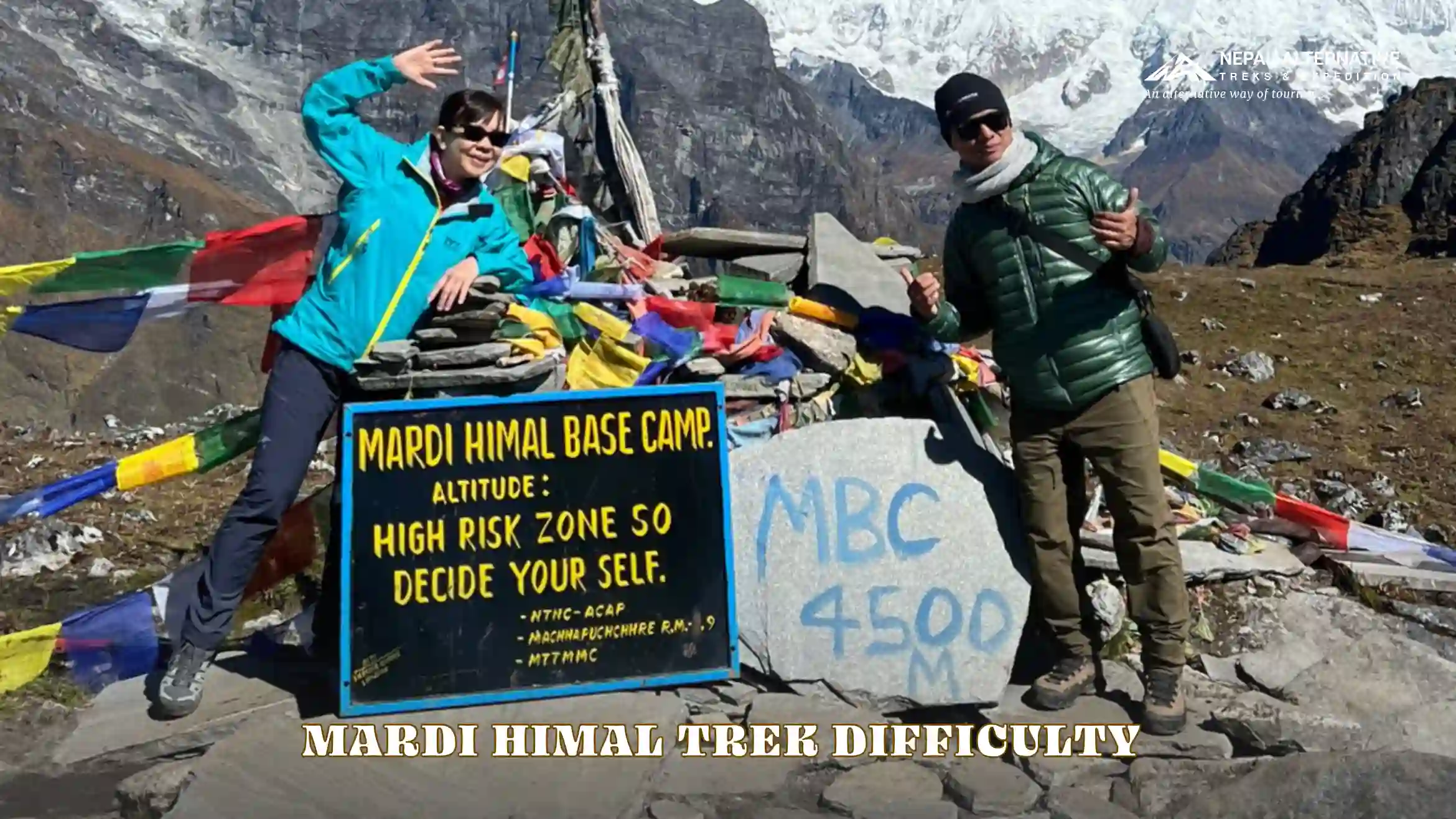
The Mardi Himal Trek is a moderate journey in Nepal’s Annapurna region and an ideal choice for both beginners and experienced trekkers. The trek doesn’t involve any technical climbing sections, nor does it require technical climbing skills. So, the Mardi Himal trek is a great option for first-time trekkers wanting to experience the beauty of the Himalayas.
However, the Mardi Trek is moderate, not easy, which means it does involve some challenges, but not extreme ones. One of the major challenges on the trek to Mardi Himal is the route from Forest Camp to High Camp, which gains about 1,000 m of elevation in a single day. The ridge walk above High Camp is another challenging part of the trek, with narrower sections and steep slopes dropping away on both sides. Furthermore, altitude and unpredictable weather are other factors that make the Mardi Himal Trek more difficult.
This blog gives you a clear and realistic understanding of what the Mardi Himal trek is actually like. You’ll understand the daily difficulty breakdown, learn about the major factors that make the trek physically and mentally difficult, and see how it compares with other popular Annapurna region treks.
This day’s first real difficulty comes just after Deurali, where the trail starts climbing through the forest. There is no gradual section to ease into the hike, so many trekkers who have just gotten off the jeep find themselves out of breath from the forest climb. About an hour before reaching Forest Camp, the pathway becomes muddier and is covered with tree roots, where some trekkers may slip, especially in wet conditions. Apart from these sections, the walk is manageable.
After Forest Camp, the trek route becomes steeper as it winds through thick rhododendron trees. This is the section where trekkers first feel real leg burn, since there’s no flat sections for almost an hour. As you hike higher and the forest begins to thin out, the trail changes into a series of short but steep uphill sections that can feel harder. During the final walk to Badal Danda, the afternoon mist rolls in, and visibility decreases as the cold increases. By this point, most trekkers are already tired, so the colder weather can make this the toughest part of the day.
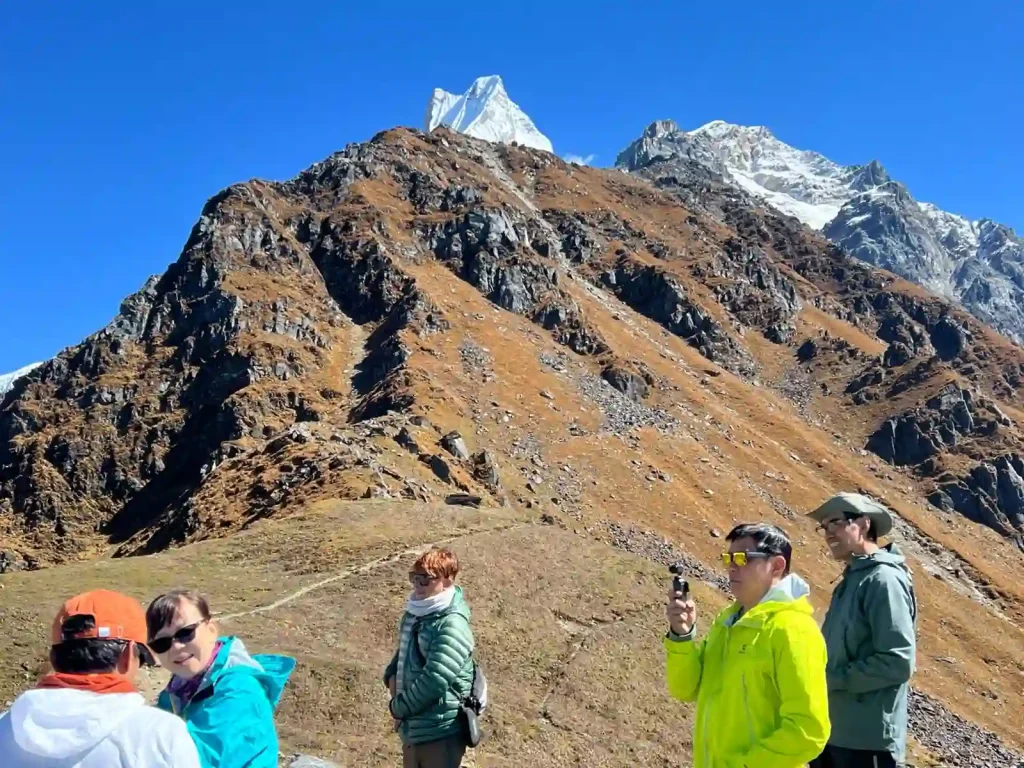
From the beginning of the day’s hike, trekkers find the section between Badal Danda and High Camp quite challenging. In this section, the trail leaves the tree line and enters completely different surroundings. Due to the open section, trekkers are fully exposed to the sun or strong winds, which can be tiring. About two-thirds of the way to High Camp, the trail passes a rocky, uneven section where the risk of ankle-twisting is high, so careful walking is necessary.
As you get closer to High Camp, strong crosswinds are common, and this is also where many trekkers first notice the effects of the higher altitude. Some trekkers develop a mild headache or feel out of breath on this section.
The day starts with a pre-dawn walk, a steep climb from High Camp along a narrow ridge with steep slopes on both sides. Starting before dawn in cold, windy conditions and walking over loose rocks is the hardest part of the trek, both physically and mentally. The final walk to the Mardi Himal Viewpoint and Base Camp is where altitude hits hardest, as it lies at 4,200 m and 4,500 m above sea level. Trekkers experience headaches, dizziness, nausea, or extreme tiredness, especially due to the cold morning air.
Moreover, the long descent back through High Camp and Low Camp to Badal Danda comes with a different challenge. Your legs are already tired from the morning climb, and the steep downhill can be tough on the knees.
As you leave Badal Danda, you have to walk through a steep downhill section that’s hard on your knees and ankles, especially after the long descent the day before. As you get closer to Siddhing, the route passes through uneven sections where careful walking is necessary. Although this day involves less climbing than the previous days, it is still tiring because of the fatigue from the past four days.
The Mardi Himal trek requires you to be in good physical condition and able to walk on an uneven trail at a moderate altitude, rather than demanding super fitness. Cardiovascular fitness is one of the most important requirements for the Mardi Himal Trek. The route has long, steep uphill sections, especially from Forest Camp to High Camp and on the early morning climb to the viewpoint. If you’re involved in aerobic exercise like jogging, cycling, swimming, or fast walking, you can manage the trek much better than those who are only active once in a while.
Similarly, leg strength, especially in the thighs (quads), calves, and ankles, is important for the Mardi Himal trail due to its downhill sections. The long descents from the Mardi Himal viewpoint to Sidhing put a lot of pressure on your knees and legs. Having strong ankle muscles also helps you stay balanced and reduce the risk of twisting an ankle on the loose, rocky trails near High Camp and the viewpoint.
Additionally, if you are comfortable walking for 4-5 hours on hilly terrain for 5-6 days while carrying a 5-8 kg backpack without needing long breaks, you’re probably fit for the Mardi Himal Trek. If you think you lack those qualities, then it is a good idea to spend 4-6 weeks preparing by:
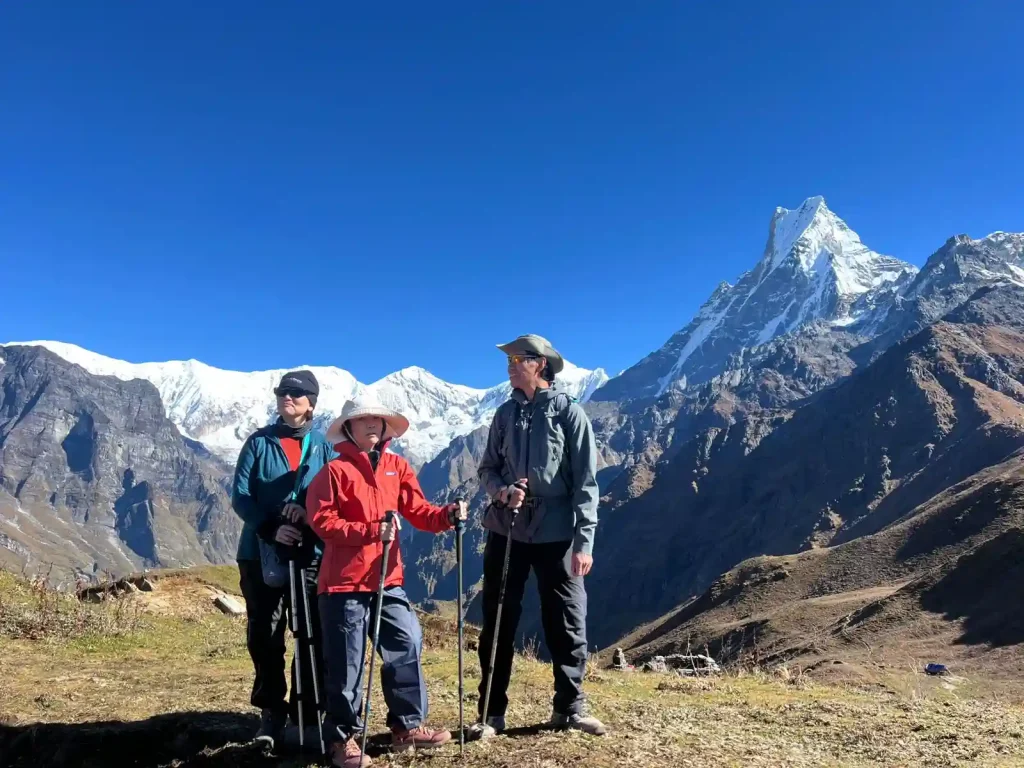
Unlike the Annapurna Base Camp or Everest Base Camp treks, which include rest days to help your body adjust to the altitude, the standard Mardi Himal Trek itinerary doesn’t include an extra acclimatization day. But the trek has a fast ascent compared to many other popular treks. The journey takes you from 1,650 m at Deurali to 4,500 m at Base Camp in just four days without a dedicated acclimatization day. This can actually add to the difficulty of the trek, with the risk of altitude sickness if trekkers are not well prepared.
One of the things that makes the Mardi Himal Trek more challenging is its long, continuous uphill climbs. Unlike trails such as the Annapurna Circuit, which have many gentle switchbacks, the path from Forest Camp to High Camp follows a more direct route up the ridge. This means there are fewer flatter sections where you can rest and recover, so the climb can feel more challenging even though the distance is not very long.
From High Camp onward, the trail follows a narrow, open ridge with steep slopes on both sides. Unlike the forested trails lower down, this section experiences strong winds and has narrower footing. The narrow ridge is one of the unique features of the Mardi Himal Trek and also a factor of its difficulty.
On the Mardi Himal Base Camp or Viewpoint hike, trekkers must leave High Camp between 4:00 and 5:00 AM to reach the destination before clouds cover the mountain. Thus, you have to walk in the dark with a headlamp on, even in freezing or below-freezing temperatures. The combination of cold weather, high altitude, and an early start makes the final climb difficult.
On most itineraries, you’ll hike to the Viewpoint and Base Camp in the morning, then descend all the way back to Badal Danda on the same day. This means 8-9 hours of trekking, including more than 2,000 m of downhill walking. After the tough morning climb, the long descent can be tiring on the knees and legs, further challenging the trek.
Mardi Himal trek, Annapurna Base Camp (ABC) Trek, and Ghorepani Poon Hill Trek are among the three treks in the Annapurna region that are often compared together. Each of the three treks starts from Pokhara and takes place within the Annapurna Conservation Area. However, each trek’s difficulty varies. Similarly, the main difference between these treks isn’t just the highest altitude. It’s also about how quickly you gain altitude, whether the itinerary includes rest or acclimatization days, and how challenging the trail is.
| Factor | Mardi Himal Trek | Annapurna Base Camp Trek | Ghorepani Poon Hill Trek |
| Overall difficulty | Moderate | Moderate | Easy to Moderate |
| Duration | 4-6 days | 10-11 days | 4-5 days |
| Maximum altitude | 4,500 m (Mardi Base Camp) | 4,130 m (Annapurna Base Camp) | 3,210 m (Poon Hill) |
| Trail difficulty | High due to a narrow ridge near the summit | Moderate with valley and forest trail | Low with mostly forested sections |
| Altitude sickness risk | Moderate | Moderate | Low |
| Teahouse comfort | Basic, especially at High Camp | Good due to the developed route | Good, well-established route |
| Toughest single day | Mardi Himal Base Camp and Viewpoint walk + descend to Badal Danda | Final Walk to Annapurna Base Camp | Pre-dawn Poon Hill sunrise hike |
The climb from High Camp to Mardi Himal Viewpoint is the hardest day during the entire Mardi Himal Trek. It involves a steep ascent, thinner air due to higher elevation, and cold or windy weather.
The maximum altitude reached during the Mardi Himal Trek is 4,500 m / 14,764 ft at the Mardi Himal Base Camp. But some trekkers end their trek at the Mardi Himal Viewpoint, at an elevation of 4,200 m.
Yes, the Mardi Himal Trek is generally considered safe for solo travelers. In fact, it is one of the safest destinations to trek in Nepal, especially during the peak trekking seasons of spring (March to May) and autumn (September to November). Still, hiring a licensed guide is highly recommended.
The Mardi Himal trek generally requires 6 days to complete. The duration covers the drive from Pokhara to Deurali, the trek up to Mardi Himal Base Camp and viewpoint, the return to Sidhing, and the drive back to Pokhara.
Yes, altitude sickness can affect trekkers on the Mardi Himal trek; however, the risk is lower than on longer Himalayan treks. Still, some trekkers experience mild symptoms, so proper acclimatization and hydration are important.
No, previous trekking experience is not mandatory for the Mardi Himal Trek. But having experience with day hikes or short treks can help you handle the steep sections more comfortably.
The Mardi Himal Trek is moderately difficult, neither strenuous nor easy. The trek involves several steep ascents and descents, long hours of walking, and high-altitude conditions. Thus, the trek is suitable for trekkers with a reasonable level of fitness.
Need assistance? Our travel expert Tej Bahadur Gurung is here to help! Please fill out the form below to initiate a chat and get your queries resolved quickly.