Safety update: our trekking groups are safe, and our routes are running as planned. Read full flood notice.

Safety update: our trekking groups are safe, and our routes are running as planned. Read full flood notice.
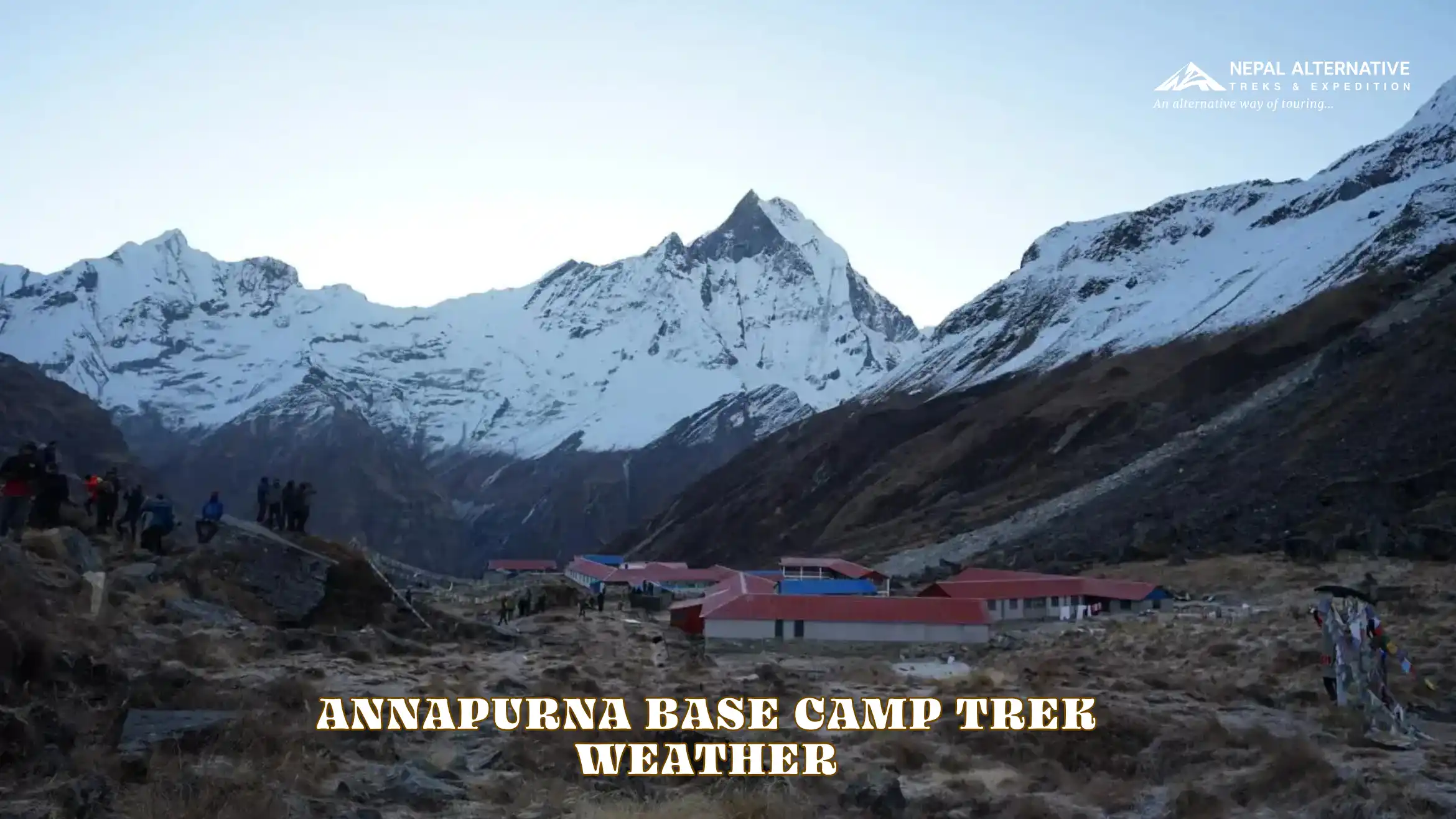
Annapurna Base Camp Trek weather is cold at night, milder on the walk in, and strongly seasonal. Thus, when planning the Annapurna Base Camp Trek, you must take into consideration Annapurna Base Camp Trek weather. This is because the weather conditions shape your views, your daily walking conditions, and how your body handles altitude.
The Annapurna Sanctuary sits at 4,130 m, so the air is thin, the sun is sharp when the sky is clear, and clouds can fill the amphitheater by afternoon in the wet months. You cannot treat Pokhara’s lakeside forecast as the weather you will sleep in at Base Camp.
This blog breaks down Annapurna Base Camp trek weather by season and altitude, from Pokhara up to the sanctuary. It explains what to expect in spring, monsoon, autumn, and winter, how the trail changes through the year, and how to choose the right season based on your priorities.
We walk this trail from Pokhara with our Nepali guides in the seasons when the path is in good condition. The notes below are how those days actually feel, not a copied climate table from another website.
| Fact | Detail |
| Base Camp elevation | 4,130 m |
| Clearest walking season | Spring (March to May) and autumn (September to October) |
| Wettest trail months | Monsoon (June to August) |
| Coldest nights at camp | Winter (December to February) |
| What the forecast cannot see | Wind in the sanctuary and afternoon cloud boiling up from the Modi Khola |
This quick overview sets the scene, but to really plan your trip, you need a clearer picture of what the weather feels like along the whole route, not just at base camp.
The weather at Annapurna Base Camp is alpine: bright sun when the sky is open, a hard drop in temperature after sunset, and a real chance of snow on the ground outside the two main seasons. Days on the way up through Chhomrong and Deurali are warmer than the night you sleep under Hiunchuli and Annapurna South.
The trek climbs through very different zones, so the weather changes as you go:
After discussing ABC trek weather above, it’s clear that because the weather patterns shift so much from Pokhara to base camp, it helps to look at the year month by month before you fix your dates.
Spring is one of the two best windows to trek to Annapurna Base Camp. The lower forest is decorated with rhododendron blooms, the staircase days are cool enough to walk, and the sanctuary often opens for Machhapuchhre and the Annapurna wall in the morning. Temperatures during the day are comfortable for walking in the lower valleys, but nighttime temperatures get progressively colder as you climb.
By the time you reach Machhapuchhre Base Camp and Annapurna Base Camp (higher altitudes), you should expect frost most nights and possible snowfall, especially in March. Haze can also build on some April afternoons, and snow can still sit on the last rise to camp in early March. Thus, pack a warm sleeping layer even in May.
Monsoon weather on this ABC trek means cloud, heavy rainfall, slippery trails, wet stone, leeches on the lower path, and views that may never arrive. The sanctuary can sit in a white bowl for hours. If you still do this trek, expect rain covers for your pack and slow, careful steps on the stairs.
Rain usually builds through the day. Mornings can start clear, then clouds move up the Modi Khola by afternoon. Flights to Pokhara and road travel can be less reliable in this season, so extra buffer days are wise if you have a tight international schedule.
Autumn is the other best season for Annapurna Base Camp trekking. Early autumn (late September) can still feel like an extension of monsoon in some years, with more cloud and occasional rainfall. By mid-October through November, skies are usually more stable, and the air feels crisper, especially at night.
October is the month guests remember for a clear view at sunrise. Nights at 4,130 m are cold. The trail is busy, teahouses are full, and you still need the same down layer you would take in April.
Winter at Annapurna Base Camp is about short days, frozen water taps, and snow that can close or slow the last section. The sky can be very clear when a system has passed. Winter trekking is not a first-trek season unless you already know cold camping and we have confirmed the path.
On clear winter days, the sun feels strong at midday, but temperatures drop fast once the sun leaves the sanctuary. Many teahouses keep the dining room warm with a stove, but bedrooms are unheated, so a good sleeping bag and warm layers matter.
On the Annapurna Base Camp trek, temperature, rainfall, and snowfall all change with altitude and season. The lower trail in the Annapurna region near Nayapul and Bamboo feels very different from the sanctuary at 4,130 m, and monsoon rain in the valley is not the same as winter snow at Base Camp.
Temperature gets colder as you climb. Days on the lower stairs (Nayapul, Tikhedhunga, Bamboo) can be warm enough to walk in a light layer in spring and autumn. By the time you reach Chhomrong and Deurali, mornings and evenings feel noticeably cooler. At Machhapuchhre Base Camp and Annapurna Base Camp, nights are always cold, even in the best seasons, and frost is common. In winter, sub-zero nights at Base Camp are normal, and daytime temperatures can struggle to rise much above freezing when the sun is behind the peaks.
Likewise, rainfall is mostly a lower and middle-elevation story. The monsoon (June to August) brings regular rain to the Modi Khola valley, especially in the afternoons. Lower villages and forest sections get the most rain, so wet stone steps, muddy paths, and leeches on the trail are common. As you climb higher, rain often turns into cloud and mist around Machhapuchhre Base Camp and the sanctuary. That is why you can have a dry morning in Chhomrong and a white-out at Base Camp by afternoon in the wet months.
Similarly, snowfall is mainly a winter and early-spring issue at higher elevations. From December to February, snow is common on the upper section from Deurali to Annapurna Base Camp, and the trail can hold snow for days after a storm. In March and sometimes early April, late snow can still cover the last climb to Base Camp, especially after a cold spell. In autumn, snow is less common but still possible after a strong weather system. In monsoon, you are more likely to see rain and cloud than a stable snowfield, except after unusual cold snaps.
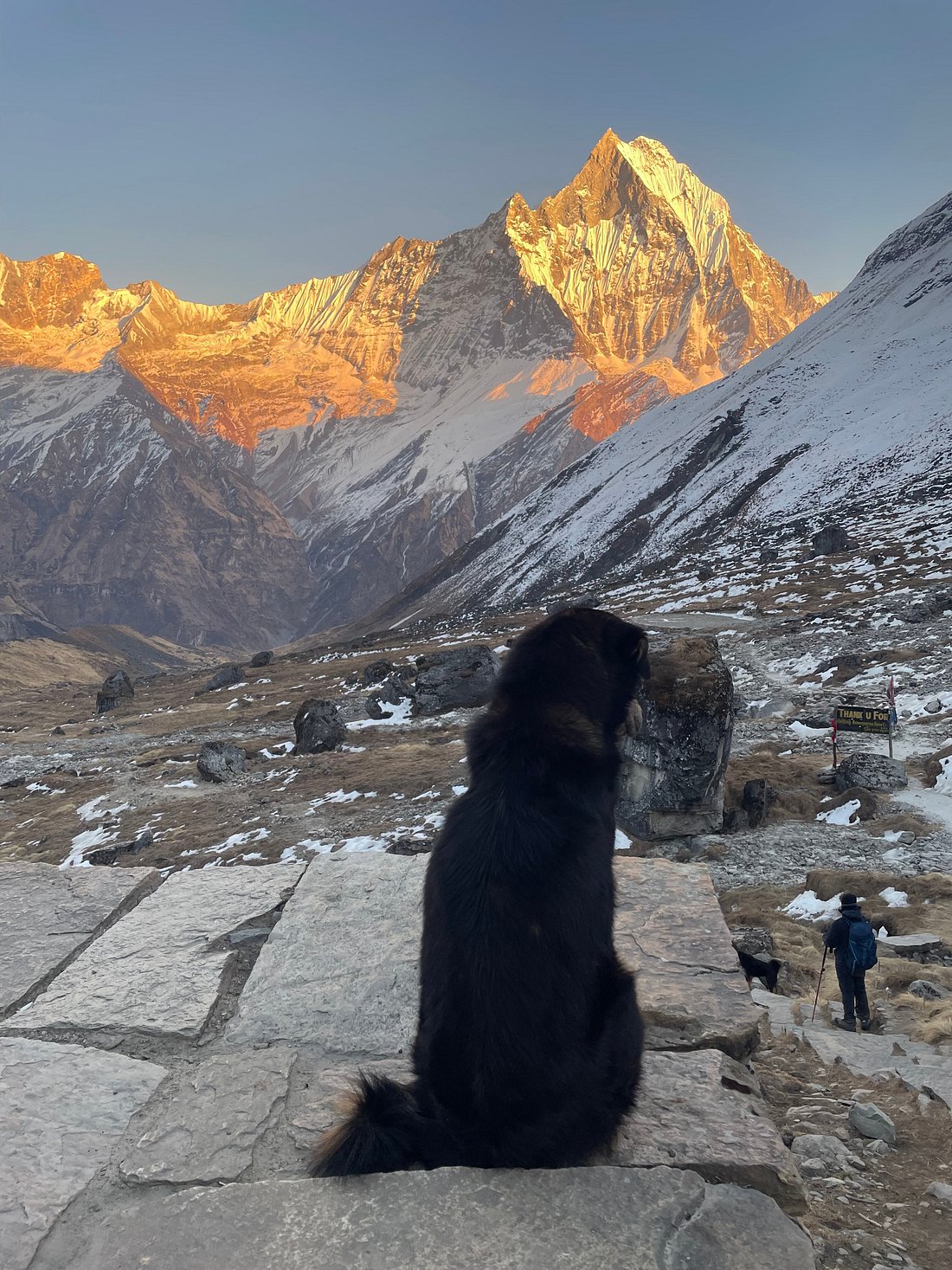
Altitude is not weather, and they stack. Thin air makes a cold night feel colder and a sunny noon feel harsher on skin. UV is strong when the sanctuary is clear. Wind at camp strips heat faster than the same wind in Chhomrong.
At this height, small weather changes matter more. A clear, calm evening can turn into a windy, very cold night once clouds move in. Hydration, warm clothing, and a steady pace become part of how you “read” the weather, not just the sky above you. How the weather feels also depends on the condition of the trail, which changes a lot from season to season.
In spring and autumn, the trail is generally in its most stable condition, with fewer weather-related disruptions. In monsoon, landslides can sometimes block sections of the lower path, causing delays. In winter, snow and ice on the upper section can make the last climb to Base Camp slower and more demanding, especially before sunrise.
Also, most of the walk takes place on stone steps. In monsoon, they are slick and slippery. In winter, they can hold ice in the shade. In peak October, they hold a queue. Poles help on the descent from camp either way. After heavy snow, your guide decides whether Base Camp is the turnaround or a slower extra night lower down. All of this is why the best time for ABC is really a weather and trail decision, not just a calendar date.
There is no single best month for everyone. The right season depends on what you care about most: clear views, warmer walking days, fewer people, or seeing snow. Use the list below to match your priority to the right window.
If your main goal is the clearest mountain views, choose October and November. Autumn usually gives the most stable, clearer skies and the clearest mornings in the sanctuary. October is the peak month for postcard views of Annapurna and Machhapuchhre. Trade-off: nights are cold, and the trail is at its busiest.
If you want rhododendron forests and spring scenery, choose March and April. Lower forests are in bloom, especially with rhododendrons. Days are pleasant for walking, and mornings are often clear. Trade-off: some haze can appear later in April, and there may still be snow on the upper trail in early March.
If you prefer warmer trekking conditions, choose April and May. Late spring has the warmest walking days on the lower and middle sections. Nights at Base Camp are still cold, but the approach feels milder than in autumn or winter. Trade-off: afternoon cloud becomes more common towards late May.
If you want fewer trekkers on the trail, choose December to February or June to August. Winter and monsoon see far fewer people on the trail, so it is less crowded. In winter, you trade crowds for cold and possible snow on the upper section. In monsoon, you trade crowds for cloud, rain, and limited views. Both can be good choices if solitude matters more than perfect skies.
If you want to avoid heavy rain, choose October to November or March to April. These are the driest windows on the ABC route. You can still get a shower, but long days of heavy rain are less likely than in monsoon. This is the safest bet if you do not want wet stone and leeches on the lower trail. Trade-off: these are also the most popular months, so teahouses can be full.
If you want to experience snow, choose winter, especially at higher elevations. If you want to walk in snow, winter gives you the best chance, especially above Chhomrong and around Machhapuchhre Base Camp and Annapurna Base Camp. Trade-off: colder nights, shorter days, and a small risk that heavy snow could slow or shorten the final climb.
Pack for cold nights at 4,130 m, strong sun, and the chance of rain or snow. So, pack something light next to your skin, a warm middle layer, and a wind- and rain-proof outer layer.
In winter, add extra warm layers. In monsoon, focus more on rain gear and quick-dry clothes. You do need to be ready for cold, wind, and changing weather.
The best month for Annapurna Base Camp is October. April is the spring month most guests pick. In October, the sky is usually clearer after the monsoon, so you get better mountain views. In April, days feel warmer, and the rhododendron forests are in bloom, but afternoon clouds are more likely.
At night, the ABC is cold enough that you will wear a down or synthetic jacket in the dining room and sleep in a warm bag. Nights at base camp often go below freezing, even in the main seasons, so bring a good sleeping bag and warm layers.
Yes, it snows at Annapurna Base Camp in winter and sometimes in early spring on the last section. Snow is most likely from December to February and can slow the upper trail for a day or two. In late spring and autumn, expect mostly dry trails with a small chance of light snow at the top.
Yes, you can trek to Annapurna Base Camp in monsoon, but you have to be prepared for some monsoon hazards. You can walk in the rain. You may not see the wall. Stairs are slick, and the lower forest is wet. During monsoon, leeches are common in the lower forest, and landslides can delay travel, so the experience is very different from the dry seasons.
Poon Hill is lower and closer to Pokhara. You still get a pre‑dawn start, but you are not sleeping at 4,130 m. ABC weather is colder at camp and more about the sanctuary cloud. If you want a short ridge sunrise, choose our Poon Hill trips. If you want the amphitheater, ABC is the one for you. Since ABC is higher, nights are colder, and the weather can change faster, so you need warmer gear and flexible plans.
Need assistance? Our travel expert Tej Bahadur Gurung is here to help! Please fill out the form below to initiate a chat and get your queries resolved quickly.